Six days past the solstice, and the daylight lasts a minute longer than it did on that shortest day. We’re still in the period when the change is barely perceptible. It won’t be until early January that the gain will rise to over a minute a day. It feels almost as if the world has paused.
Maybe it’s this sense of stopped time, at the darkest time of the year, that drives so many people to be frantically social, an atavistic response. Safety in numbers, safety in the lights inside and out, presents given and feasts offered to strengthen social bonds.
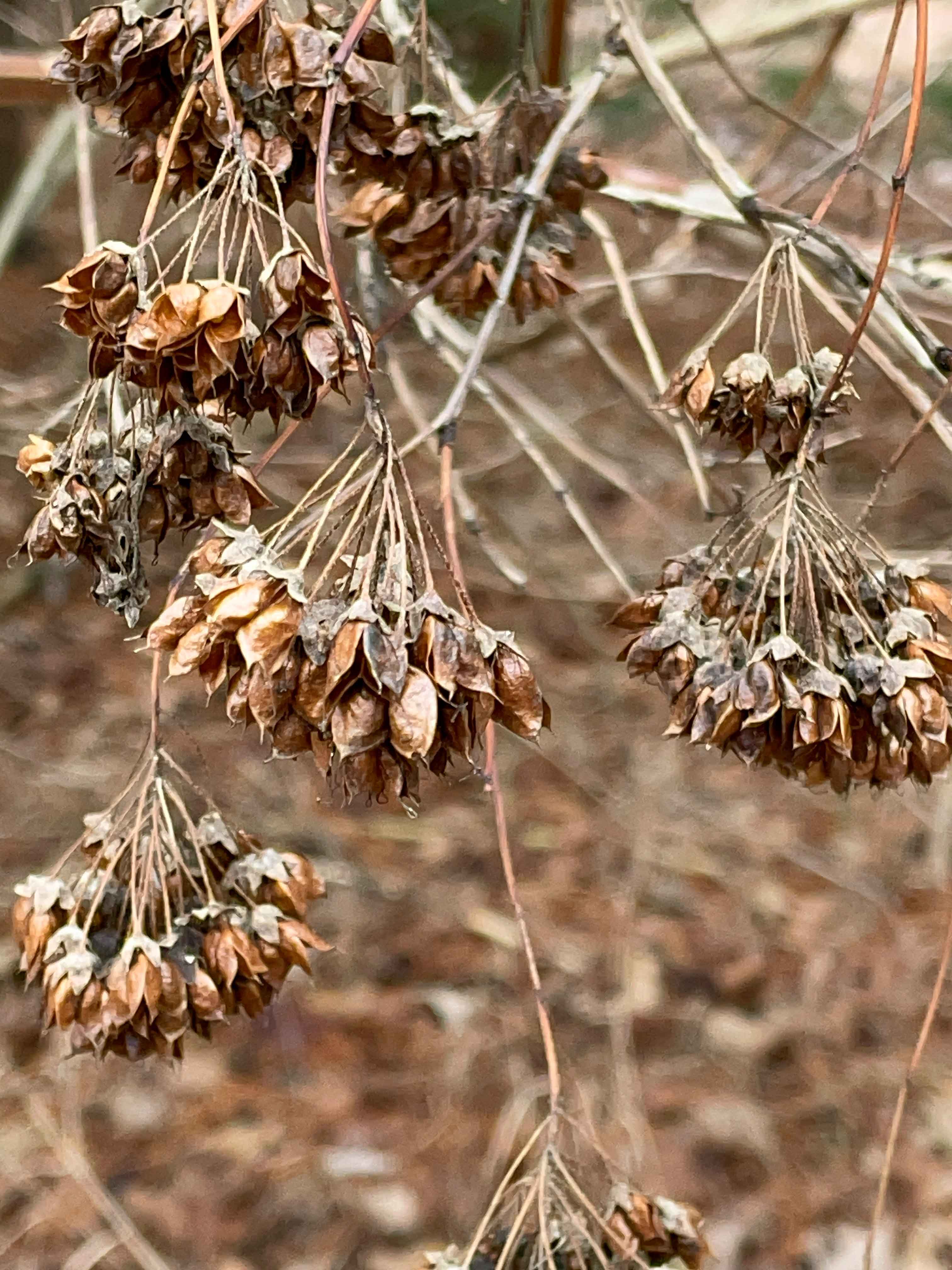
In nature, it’s a time to be wrapped up tight, if possible. It’s not been cold enough this year for mammals to be curled up asleep in dens or dreys; squirrels are still out foraging, the beavers are still cutting down trees. But most insects are dormant, and seeds wait for spring, on or under the soil, or wrapped in a protective layer of cells soft or hard: berries, cones, shells.




The last few days have been either raining or foggy. Red squirrels seemed annoyed by the weather, scolding at me with more vigour than usual. Smaller birds fed almost constantly: juncos among the grasses; starlings on the berry bushes; pine siskins at the cones. In Wild Goose Woods the drum of a pileated woodpecker searching for insects echoed against bare trunks. Only the crows were apparently unperturbed by the damp.
When I first saw the crows, I thought there were two, huddled together in the fog on the top of a glasshouse frame. Two became three, and three became four. They hopped around a bit, made a few conversational caws. And then they took off, all four of them, with purpose and wild, angry calls, to intercept a raven flying by.
They twisted. It dived. They followed. It ascended. They spiraled upward, still shouting. The spinning, sinusoidal dance repeated three times, until the raven had had enough. It arrowed away, the crows following for a few meters. Then they turned almost as one, and flew leisurely back to perch again, a gang of ruffians causing havoc just for fun.
The raven flew east. As I will be, in just over a week, east and 9 degrees of latitude further north. Where the daylight is an hour less than it is here…but for the three paradoxical months where, here, the hours of sun are longer but the air is colder and the world swathed beneath snow, it will be warmer. There are already snowdrops out, and on fields and in woodland and on mudflats and beaches, the northern birds that have come south to Norfolk from Scandinavia are feeding. Pink footed geese and redwings, shore larks and snow buntings. Godwits and redshanks, and, in numbers beyond counting, golden plover and red knots and oystercatchers on the bare mud of the Wash.

 Random Ramblings