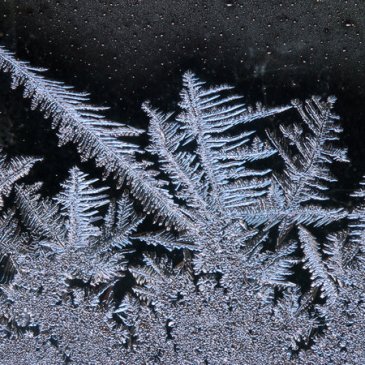
First Frost

I had to scrape ice off my car windows yesterday morning, before I could go to town.  A mid-October frost is normal here; I wasn’t surprised by it.  The scraper was already in the car.

Other years this frost would have been one more source of stress in a too-busy life.  The advent of winter meant getting up fifteen minutes earlier, or changing my routine somehow to find the extra five to ten minutes needed to clean my car of ice or snow (or both) every morning.  Now, I’m not in any hurry, so there’s no stress.

Friends and family are already bemoaning the frost on Facebook.  Winter is coming. Yes, it is.  Yes, the days will shorten, snow will fall, life will get more difficult.  On the other hand, there are no mosquitoes, no grass to cut or weeds to pull, no pollen allergies or need for sunscreen, and people are friendlier and more helpful to one another in the winter, in the face of shared adversity.  Life moves from the patio to the fireside, but the beer, friendship, conversation and laughter are just as good in either place.

First frosts aren’t always about temperature.  First frosts can be the first gray hair, the first twinge of arthritis, the first child leaving home.  The first promotion of someone younger over you; the first time you can’t open a jar lid.  The first pair of readers.  The first death of someone you love, or someone you work with.  Some first frosts are light, and some are hard freezes.  But just as our attitude towards snow and ice and freezing temperatures affects how we see winter, our attitude towards aging affects how we age. There are some things we can’t change, but there are many we can.  When my father’s eyesight began to finally fail him in his late nineties, he could have mourned his inability to read his beloved history books; instead, he asked for an iPAD and learned to use iBooks, increasing the font size until he could read the words.

It will snow soon.  The first falls will be light, and will need no shovelling, and maybe not even a scattering of salt.  But at some point it will really snow.  Snow shovelling is my job, mostly, due to BD’s back problems. Last year, I was less than six months post-major-abdominal-surgery and still on lifting restrictions.  But with an ergonomically-designed snow shovel, and moving only small amounts in each scoop, the pathways got done, and I did myself no damage, and probably some good.  It took me longer.  Other things didn’t get done.  But it was a priority.  Winter is good at sorting out what really has to be done, and what doesn’t; what is worth the time and energy, and what can wait, or go by the wayside altogether.

Winter, aging or serious illness teach many of the same lessons.  Both summer and winter are beautiful, but they both ask and give different demands and different gifts. Like everything else in this world and this life, both demands and gifts are transient.  We do best when we appreciate that simple fact.
Lifelong Learning

I am sitting in ‘my’ study carrel at the university, the one I’ve been using on and off for thirty-something years.  Today I noticed some new(ish) graffiti on one side: ‘Today is my last day in the library EVER’.

How sad I find this, because it implies to me that the person who wrote it finds learning, books, and study a chore, or worse than that, just something to be endured so that real life can begin.  I’ve come to the library today not to write, as I often do, but to check out books, something I’m allowed to do as an alumna, and these are books I need for my new course.  While learning and books aren’t my whole life by any means, they remain – even thirty years after graduation from university – a hugely important part of it.

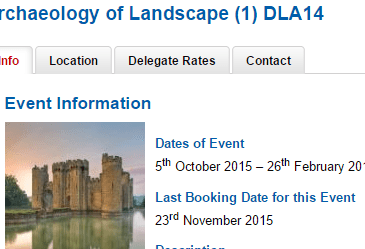
I am unbelievably excited about this new course – The Archaeology of Landscape I, offered through the University of Exeter Distance Learning program.  Unlike the two I took last fall and winter, this one wasn’t free, so I had to really think about whether or not I wanted to spend the money (and time) such a course requires.  But it really wasn’t that hard a decision.

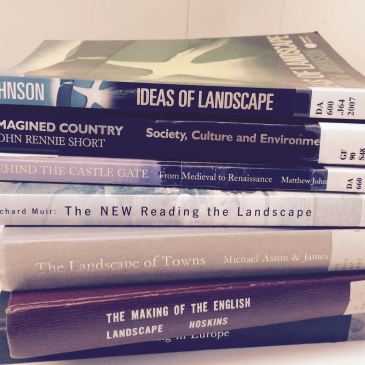
And now I’m looking at a pile of seven books to be read for the first three weeks of the course.  They have titles like “Ideas of Landscape” and “Imagined Country:  Society, Culture and Environment”. I can imagine what most of you are thinking!  But for me, this is feeding a deep need.

And that’s what the best learning is about.  Don’t turn your back on it, just because school and university were perhaps not quite what you hoped.  I can remember being less than impressed with some aspects of my graduate program and quite a few of my undergraduate.  High school was worse.  Then I taught, and was less than impressed with some of what the curriculum required.  I did my best to make it relevant and interesting, but it was a hard go sometimes.

But now I am (again, as I did last fall) learning for the love of it, learning things that will change forever the way I see my world.  Someone (maybe George Bernard Shaw?) said once that education is wasted on the young. I don’t agree with that, but it is certainly not the sole province of the young.  My father was telling me of new things he’d learned through reading and documentaries to within a few weeks of his death at 98.  I hope, very much, to emulate him.

In Another Life

How many times have you used that phrase?  I have, many times, and usually about the same thing:  my career choice. Had I known, forty years ago, there was such a profession as landscape archaeologist…well, my life might look very different now.

A landscape archaeologist interprets and translates human-built or human-transformed landscape features as part of a larger understanding of human settlement and history. On a simplistic level, it’s what I’m doing when I walk in the regrowth forests east of my village, and stumble over a limestone-boulder boundary wall hidden deep in the trees, and interpret that as evidence that these treed lands were once cleared and farmed. Or when I look at my local landscape on Google Earth, and see the roddens, the ‘ghosts’ of waterways that still show under ploughed soil, indicating that these croplands were once marsh.

For whatever reasons, landscape archaeology calls to me. I can study maps and Google Earth for hours on end. When I walk in a landscape, I’m looking for those hints of land use and habitation. But, until the great British TV series Time Team, I hadn’t a clue there was a profession that did this too. I imagine BD still remembers my reaction on discovering that Time Team member Stewart Ainsworth got paid to do exactly that.  And so for twenty years or so, I’ve been saying ‘In another life, I’d have been a landscape archaeologist’.

Except there isn’t another life. There is only this one. I’m nearly fifty-eight, and I have no reason to pursue a career as a landscape archaeologist. But why should I not pursue it as an amateur, in the true meaning of that word – one who does something for the love of it?

In this digital, connected, on-line world, I can take courses from anywhere. Including courses from the British universities of Exeter and/or Cambridge on various aspects of landscape archaeology. I could, in theory, even get a degree through on-line studies. I doubt I’ll go that far….but who knows? I’m going to start with an introductory course and see where it leads. In this life.

Spaces in Togetherness

I haven’t been writing much recently – either in the blogs or on my novel, or in any other genre – and it’s taken me a while to work out why.  For a number of reasons – mostly to do with house renovation work – when I’ve gone walking, I’ve gone with BD.  And as much as I love my husband, and like walking with him, it’s a different experience than walking alone.

BD’s a talker.  I’m not.  So while walking with him is a good time to talk out issues, or brainstorm ideas, it’s not conducive to the half-daydreaming, let-the-thoughts-swirl workings of my creative mind. Sooner or later (sooner, I think) I’m going to get bitchy.  I need to write.  To write, I need alone time, preferably walking-alone time.

It seems so silly, to take two cars in different directions to walk separately.  (We may live in the country, but the roads are busy enough, and hilly, and there are no sidewalks and no real shoulders, so walking from the front door is unwise except early on weekend mornings.)  If I add a walk to my errand trips to town, all well and good; I’m there anyway.  But I am having trouble giving myself permission to not walk with BD, when it’s the more sustainable/less consumptive option on any given day.

But, of course, I must, or I won’t write.  And it’s not like this is new revelation.  The title of this post is a paraphrase of a quote from Kahil Gibran, and was part of the reading I did at our wedding, thirty-four years ago.  I knew then I needed that alone time.  We’ve had twenty-five years of summers off together to practice what retirement life would be like, and this issue has come up then too.  It’s not even really a ‘problem’: unless we haven’t seen each other for some days, BD is completely happy to walk without me – in fact, he mostly prefers it, as he acknowledges that my presence means he is less observant of his environment, and therefore he sees fewer birds.

So the real problem is my unconscious falling into patterns of behaviour because they are familiar, or appear superficially easier, or satisfy an immediate need rather than a long-term one.  Problems almost all of us confront, daily or weekly.  The problems that remind us that life isn’t to be lived on automatic pilot, but should be considered, contemplated, parsed.  That give us opportunities to outgrow habits and behaviours that are not healthy, and grow towards ones that are.

Budget Check!

It’s the first of the month, the day I add up and analyze all the expenses that I entered into the spreadsheet all of the previous month. And because it’s the 1st of October, it’s also time to do a larger analysis, which I do every three months.

Let me preface this by saying I pretty well made up our budget: the numbers I assigned to categories other than fixed expenses were fairly random, my gut feeling on what we had been and should be spending. It turns out I was right on the money (forgive the pun, it was unintended) on some things, and out to lunch on others.

Here’s where I was right (defined as being with 10% of the average monthly expenditure): car maintenance (not gas); the cats; clothing, health – over-the-counter drugs and anything our drug plan doesn’t pay for – and holidays.

What I overestimated: lawn and garden expenses, and, house repair and maintenance. Given we’ve been doing a fair bit of house renovations this year, this latter one surprises me – but it’s mostly been cosmetic, and paint just doesn’t cost that much, I guess.

Now for what I underestimated – the longest list!

Car running expenses. This one surprised me, since we’re not commuting to work any more. We live in the country, so all shopping, library visits, movies, etc., mean a drive. I didn’t realize how much of this I did on my way home from work before, trips that now entail driving to town. I need to get better at consolidating trips!

Charity: well, we should be giving more than I had budgeted, so this one is a good thing.

Entertainment: twice what I had budgeted. But we like going to movies…and the occasional play. Expensive rural internet means Netflix or its competitors isn’t an option. Hmmm.

Groceries: we choose local and sustainable over cheap for meat, fruits and vegetables. It costs. BD’s allergies also mean some specialized foods that are also expensive. I try to make up for it by buying other things at NoFrills, but I don’t think I’ll ever get the monthly expenses down to what I thought I could.

Household: this was a catch-all for anything that wasn’t health and wasn’t groceries, like a new broom or picture hangers. I’m surprised by how high it is, given that we try not to buy much. A surprisingly high portion of it is fees: drivers’ license renewal, memberships, credit-card renewal fees (worth it, though, because we use our air miles frequently).

And then there is Miscellaneous – which differs from Household in that it involves things like haircuts and pedicures and anything else that didn’t fit anywhere else. I probably should just amalgamate these last two.

Our variable expenses are running about 20% higher overall than I thought they would. Now, this isn’t a huge problem – we’re still spending less than what is coming in, but it’s not leaving us with as big a cushion as I would like, and, because we only retired in the spring, the tax withheld from our pension cheques probably is underestimated, which means we’ll be paying a chunk of income tax in the spring. Once I see how much that is, I’ll have the pension deductions adjusted appropriately so it doesn’t happen in another year. BD turns sixty this month, so he starts receiving a small government pension in November as well, which will also need considering when it comes to tax time.

The completely flexible piece in our budget is the holiday spending. If I take that line out of the budget we’re spending about 70% of our net pensions, so overall I think we’re doing fine. We’re not touching our registered retirement savings plans, or our other savings, at all, and we have no debt. There were a lot of raised eyebrows and voiced concerns when I chose to retire two years early, reducing my potential pension by about 20%, but I was fairly confident we could do it. So far, fingers crossed, it looks like I was right.

Words to Live By

Not all of us can do great things. But we can do small things with great love.

This quote, apparently wrongly attributed to Mother Theresa, remains one of my favourites.  It doesn’t matter who actually said it – it remains a valid and validating statement.

I can’t, for example, paint a masterpiece.  But I can create art for handmade birthday cards, the image usually one I think will have some extra meaning for the person receiving it.

I will never write a best-seller.  But my first novel has been enjoyed by quite a few people, and has been well reviewed.

I will never be a master chef, but I can create meals from scratch that are enjoyed by friends and family.

I am no design guru or master renovator, but I have mudded and caulked and painted and wallpapered and laid tile with care to help create a home we love.

At the end of my career I received a provincial award for contributions in my field of education, completely unexpectedly.  I had never done anything huge, just a lot of small things over many years.

In a recent article in the New York Times, OpEd writer David Brooks asked readers how they found purpose in life.  He writes  “a surprising number of people found their purpose by… pursuing the small, happy life.”

Small things with great love.  Words to live by, at least for me.

Fall Migration

Late yesterday afternoon I walked at Point Pelee National Park in southern Ontario. Known world-wide as a birding mecca in the spring, it’s quieter in the fall, although migrants still pass through. Yesterday it was blue jays, in the thousands, and in two – or perhaps three – layers. The highest birds were flying south, towards the tip of the sandspit that is Point Pelee, jutting out into Lake Erie. From here – or to here, in the spring – birds can fly over the the lake, never too far from land, following the point and then the islands – Pelee, Middle, – to the other shore. It’s why it’s such a hotspot for birding, the first landfall for tired birds making the long trek across the lake.

But jays don’t like to fly over water, so the waves of birds fly south, see the water, and turn back, to follow the shoreline around to the west and cross the Detroit River.So the second layer of jays, lower than the southbound birds, is flying north. There are so many birds the skies look like Toronto highways in rush hour, except the birds are moving faster.

The third layer of birds are those that have dropped down to tree height to feed. Migration needs energy, and the woods are full of jays seeking any source of energy they can find. Like all corvids (the crow family) blue jays are omnivores, and dragonflies, migrating monarchs, other insects, berries, – just about anything edible – will provide fuel for this long flight.

Other than the jays, the park is quiet. A few cyclists on the empty roads, a few other walkers, no other birders late in the afternoon. I don’t think I have ever been here on a weekday afternoon in September, although I have been walking these trails since I could toddle. I grew up close by, and the park was a frequent Sunday afternoon destination for our family.

Here, too, I brought BD when he first started to make the long trek from Toronto to my childhood home to see me the first summers we were going out, and, perhaps most importantly of all, it was here I introduced him to birding.  I’d been a casual birder since earliest childhood, identifying the birds of woodland and fields from a children’s bird-book, part of learning my world, along with trees and wildflowers and insects and rocks. One May afternoon  – probably Mother’s Day weekend – as we walked along the west beach trail, BD said “What are all those people looking at?” “Birds,” I answered, and pointed out in quick succession a yellow warbler and a Baltimore Oriole.  One casual question, an equally casual response – and our lives changed forever.

We learned to bird properly in the early 80s, taught in the field by the companionship, generosity, and good nature of some of the top Ontario birders. It’s been a passion ever since, although what that looks like changes with time. We no longer come to Pelee in the spring: the long drive, crowds, and the too-competitive nature of some birders (and the disregard for the fragility of the ecosystem by some bird photographers) has kept us away. We’ve evolved now into patch-watchers, birding our own local area and watching and recording the seasonal and yearly changes – the return of ravens and sandhill cranes, the increase in red-bellied woodpeckers, the disappearance of house sparrows. It’s a way of birding I prefer: not a competition, but a study, deepening our understanding of where we live, of our world. And as much of it is done on foot, or after a very short drive, it’s more sustainable.

But it’s good to come back to a place that nurtured and nourished us as beginner birders all those years ago. At every turn of the trail memories of what we saw there – a screech owl in that clump of cedars,the red-headed woodpeckers on that snag, the northern waterthrush in this swamp – come back to me.  A passion born on these trails has taken us to seven continents, to places in China and India and Tibet that most Westerners never see, and given us friends and contacts around the world.

Like these north-flying jays, we’re looking now for easier ways to do things.  Long trips over water are no longer as appealing as they once were, and moving to warmer climates for the winter holds great attraction.  But as long as there are trails to walk, birds to watch, and a place to hang a feeder or two, we’ll be fine.

Dreaming of Soup

It must be fall.

I woke up this morning from a dream about making soup. Italian wedding soup, to be precise. Of course, I’m craving it now, but as I have none of the ingredients in the house, and no trip to town planned for today, it will have to wait a day or two.

I don’t usually dream about food, but I think a number of factors came together to produce this dream. I was planning menus yesterday, and thinking about making soups for lunches, now we’re home all day. I have either a doozy of a cold or the worst fall allergies I’ve ever experienced – can’t tell which, as my nose is running like an open tap but I have no aches, pains, or lack of energy – so there’s an association with soup as a comfort food. Plus, I actually did make soup yesterday.

While I was away, BD bought the biggest cauliflower he could find, on the basis he didn’t need to buy any other vegetables. (This is the man that eats the same thing every day for breakfast, and another ‘same thing everyday’ for lunch, unless I intervene.) Half of it was still left when I got home Tuesday. We ate part of it in a frittata, but there was still a chunk left, so I looked around for what else we had – potatoes, half a box of frozen vegetable broth, garlic, onion. Definitely enough for soup.

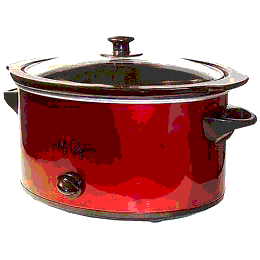
Some years ago I bought myself a second slow cooker, a small one. Except ‘slow’ cooker is the wrong term for this device: it’s a fast cooker. The chopped cauliflower and potato, frozen broth, and garlic was boiling within an hour on high, and then simmered away for another half-hour or so until I could first mash it, and then use my stick blender to puree the mix. I adjusted the seasonings, added cumin, and voilá! -today’s lunch. I’ll turn the ‘fast cooker’ on soon, on low, and bring it back to a simmer, and eat it for lunch with sourdough toast and a sharp cheese for me, and hummus for BD.

And tomorrow when I go to town, I will buy what I need to make Italian Wedding Soup (with chicken or turkey meatballs, for BD’s allergies). I suspect the ‘fast cooker’ is going to be out on the kitchen counter most days now, as the bite of fall sharpens the air, and good long fall hikes sharpen the appetite.

What are your favourite soups? Do you have recipes to share?

Finding Space

Vacations, for me, are about finding space. I mean this literally. If a trip doesn’t include time spent in at least one of grassland, salt-marsh, range land, moorland or desert then I’m not getting what I need from it. Wide open skies in a huge blue bowl above me; views that go on for miles, the song of birds somewhere in the air.

So when BD’s cousin Liz and I went west for ten days we spent some of the time in the Rockies (almost obligatory when showing a visitor from Scotland the west of Canada) but we spent more of it in the prairies. I have no idea why I need space the way I do. I grew up in flat farming country, mostly untreed, and I carry the genes of generations of fen and salt-marsh dwellers. Is that enough to explain it? All I know is that places that others find bleak, or boring, are the places I love the most.

This love of grassland is the only part of Lena, the protagonist of my novels, that I took directly from myself. Her reaction in the excerpt below was mine, the first time we drove east from Denver and looked down on the High Plains.

Two days later, in mid-morning, we rode up from the bowl of a grassy valley between two ridges of land. We urged the horses up to the crest. As Clio came abreast of the larger horses, I reined her to a stop and looked out. I gasped.

Beyond this final ridge, the land fell away quickly in a series of declining hills. A sea of grass extended far beyond sight toward the horizon. From this height, we could see the roll of the land and the sweep and ripple of the pale, sere grasses. The sky soared above us, and the boundary between land and air looked like a hazy blur on the distant edge of vision. As I gazed at the space and enormity of the grasslands, an unrealized tension eased. I felt an inner expansion, the loosening of constraint. I could live down there, I thought, suddenly, fiercely, wanting it. I could lose myself in that land, below that sky, in all that emptiness.

This time we flew to Calgary, and drove from there, and I felt exactly the same way again at the point the land changes from the mountains to the grass and cereal lands of the prairies. I’ve walked on a few of the world’s great open spaces – the Tibetan Plateau, the Kalahari, the moorlands of northern England and Scotland, the tundra of the Canadian Arctic and the snowfields of the Antarctic – and my reaction is always the same.

BD is good about this. Papua New Guinea? he suggested, to look for birds. (It’s forest.) You go, I said, I’ll go to North Dakota. Peru? he tried, another time. He went; I spent the week in Texas birding the salt-marshes. I’ve spent my time in the forests of the Amazon, and Malaysia, and northern Canada, and I have wonderful memories. I don’t regret those trips, but thinking about them doesn’t soothe my soul the way the memories of sky and wind and space do.

What speaks to you, soothes your soul, loosens your constraints?

The Real Start of Retirement

This is Labour Day weekend, the weekend that for BD and me has been the real “New Year” start for all our lives. Here in Ontario, school starts the Tuesday after Labour Day, so for all our years of school – elementary, secondary, university and post-graduate – this was the start of something new – new teachers, new schools, new courses, new friends. New cities, once we were in university. Even when we were working at the university after grad school, this was still the start of the new school year, with new grad students, and sometimes professors, arriving, and new undergrads needing direction and help around the campus. The campus changed from quiet to busy; new lecture series, concerts and plays started up; excitement was in the air.

Then we left research for teaching and so September continued to be the start of the year. I was off last fall recuperating from surgery, but even so I was connected with work, answering e-mails, helping out the person who had stepped into my role. So this is the first September since we were six years old that school or work, in one form or another, isn’t starting for us. I’m not sure it’s really sunk in yet.

This weekend is also our anniversary: BD and I have been married for thirty-four years today. But it’s more than our wedding anniversary: we moved in together thirty-six years ago this weekend, and we met this weekend thirty-seven years ago.

So, as you can see, this is a weekend of significance for us. There have been a lot of new starts this first weekend of September, and this year is another one, the true start of our retirement life. Because up to now, it’s just been a summer like the last twenty-five of teaching. Only on Tuesday, when work and school starts without us, will we begin to fully realize we’re retired. I think we’ll go to a movie matinee, just because we can.