Learning to Listen

Thoughts of an Aging Birder

I’m standing on a boardwalk through a wet woodland: deciduous trees, damp soil, emerging plants, ephemeral ponds. Superficially, it’s not so different from the boardwalk through wet woodland I was standing on less than two weeks ago. One on the eastern side of the Atlantic, a kilometer from the North Sea; one on the western side, 1500 km inland. Different ecosystems, certainly, but what I notice today is the difference in the soundscapes.

Boardwalk, Wild Goose Woods, University of Guelph Arboretum.
My photo.

Recognizing all but the most common bird songs is a skill that has eluded me for fifty and more years. But at sixty-six, my vision a little compromised both by vitreous detachment and its resultant floaters, and by incipient cataracts, I’ve been trying harder to sort out the songs, to identify by sound. (My aging and arthritic spine also appreciates not having to hold up even my light Swarovski 10 x 32s as much, too.)

My hearing remains good, thankfully. In On the Marsh, Simon Barnes writes of friends who can no longer hear the high contact calls of goldcrest; the screams of swifts overhead, he tells us, are inaudible now to Sir David Attenborough. That day will no doubt come for me, but it’s not here yet. I can still pick out goldcrest in England, and its almost-doppleganger cousin the golden-crowned kinglet, here in Canada.

In the first week of April, the soundscape at RSPB Titchwell was dominated by onomatopoeic chiff-chaff calls. European robins sang from low bushes; a blackcap added its melody from a higher perch. Wood pigeons, endlessly cooing, added a bass line, punctuated by the equally endless screaming of black-headed gulls and the occasional explosive chatter of a Cetti’s warbler.
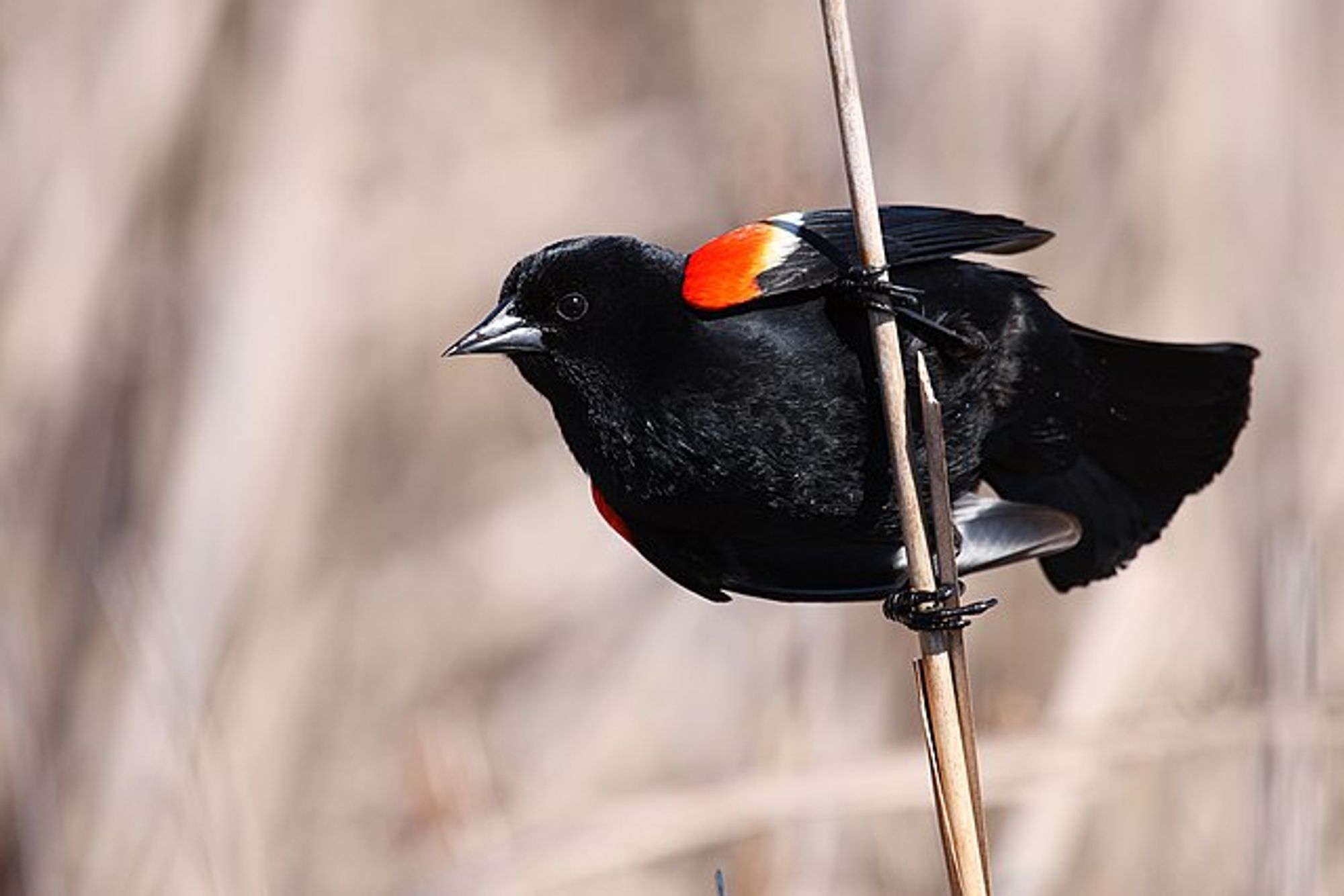
Red-winged Blackbird male, Point Pelee National Park, Ontario, Canada. Photo by Cephas, CC BY-SA 3.0 <https://creativecommons.org/licenses/by-sa/3.0&gt;, via Wikimedia Commons

Here in Guelph, on the boardwalk through Wild Goose Woods a few hours after dawn, the dominant sound is the chirr of red-winged blackbirds, the screeching laughter of northern flickers a close second. Another bird calls its own name: fee-bee, fee-bee. American robins sing cheerily from mid-level branches, and from the nest on the light standard over the playing fields I hear an osprey’s plaintive cry.

I’d know where I was—roughly—from either soundscape. While I’m focusing more on what I’m hearing through necessity and a wish to understand more of the landscape I’m moving through, looking at all the parts of the whole and not just on birds (I can identify a phoebe by song at the same time I’m looking at a bloodroot flower unfurling, for example), I’m also thinking about it in terms of my other life, that of the writer. Of the seminar on worldbuilding I’ve offered to give here in Guelph in the autumn, and all the things that are part of a convincing fictional world or will evoke a real one. Soundscapes are one of them: part of the whole which both characters and the reader, one hopes, inhabit.

Whether any writer can separate entirely the slice(s) of the world in which they live from their created worlds, I don’t know. I can’t. In this, I can only write what I know. There’s a circularity to this: writing has made me pay attention to aspects of the world I might have not noticed; a lifetime spent outdoors whenever I could informs what I write. The Titchwell soundscape?  It has a place in the story that’s beginning to unfold, and perhaps that book will be just a little richer because my aging eyes have made me listen more and look less. I’m fairly sure my life is richer, too.

The Last of Norfolk: March 30 – April 3

The last of Norfolk birding for the spring of 2024, at least! We plan, as always, to return.


March 30: A nuthatch yelps from high in a bare oak; coal tits call, ‘it’s me, it’s me,’ from low branches. In the meadow a jay forages among shelduck & Egyptian geese. A silver squirrel climbs a stump. The larches are bright green with new growth; new leaves unfurl on the brambles. We’re walking footpaths and lanes at Houghton, a sheltered walk on this windy day. In the sheep field a new statue stands: the figure of a man, or a cyberman, almost human. “Disconcerting, at dusk,” a woman walking her dog tells us. Later we learn it’s part of a new art installation by Anthony Gormley.

Photo by: Mmparedes, CC BY-SA 2.5 <https://creativecommons.org/licenses/by-sa/2.5>, via Wikimedia Commons

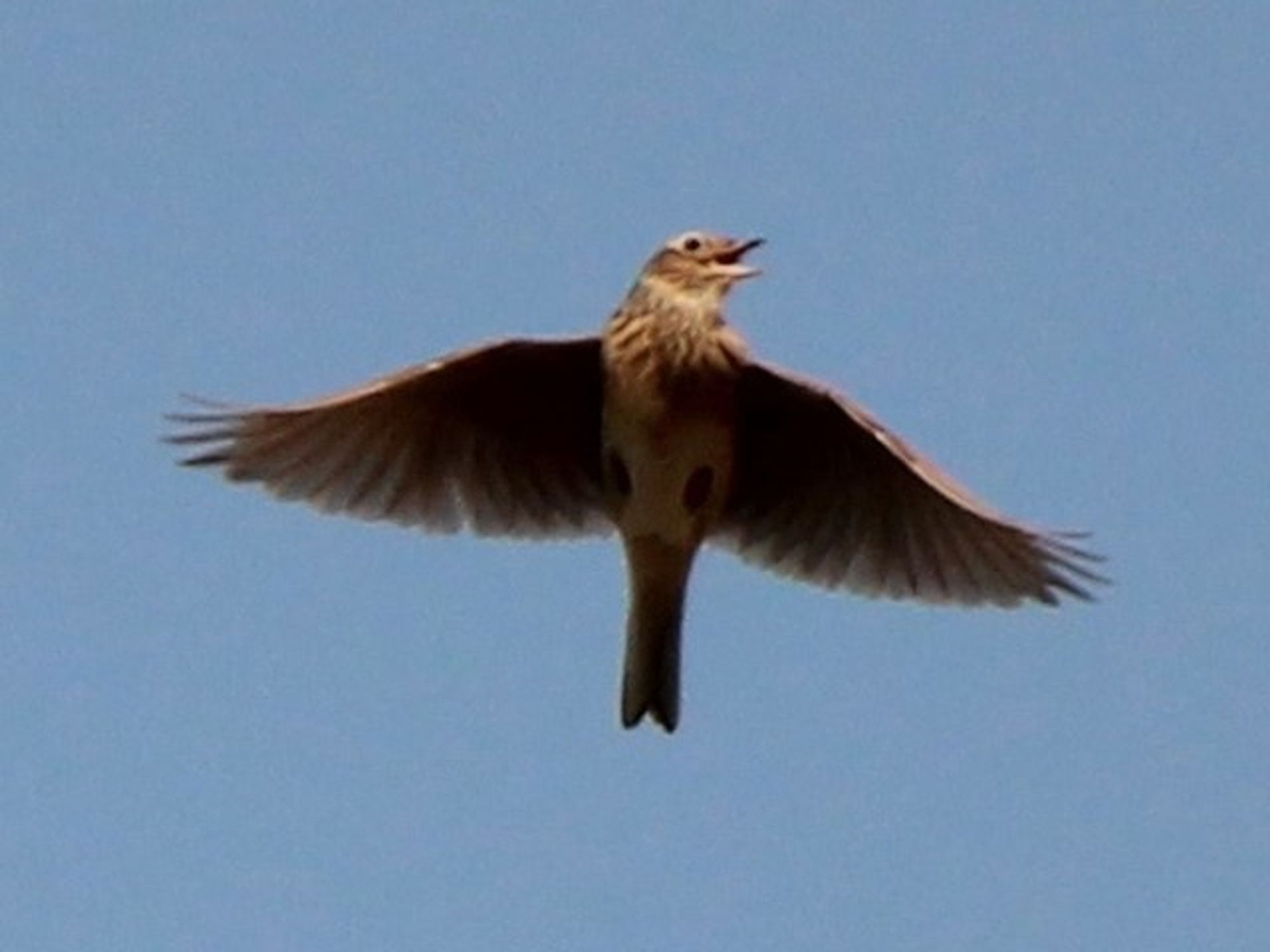
March 31: Drove to visit friends, through countryside and villages. Gulls, common and black-headed, followed ploughs. Pheasant and red-legged partridge, shoot survivors, scurried or flew across hedged lanes. The sound of tires and the barrier of glass & steel couldn’t block out the skylarks, singing, singing. A little owl lives in the barn down the road, our friends tell us; it’s driven out the barn owl.

Alpsdake, CC BY-SA 3.0 <https://creativecommons.org/licenses/by-sa/3.0>, via Wikimedia Commons

April 1: Footpath birding today, along the old railway line, now part of the Jubilee Trail. In Life Woods, the first mallard ducklings of the spring; on Snettisham common, a green woodpecker yaffles from a utility pole. We walk up into Ken Hill’s pine woodlands. A tree creeper circles the high branches of a still-bare oak. From the western height of land, we look out on the distant marsh and the Wash: it’s too wet still to walk out, without wellies. Shelduck are scattered across the wetland, gleaming white. I think about the torcs of the Snettisham hoard, found by a farmhand ploughing the field below us. I went to look at them (again) at the British Museum last week.

Dr W E Lee / Avenue of Beeches, Edge of Ken Hill Woods. CC BY-SA 2.0 <https://creativecommons.org/licenses/by-sa/2.0&gt;, via Wikimedia Commons

April 2: Walked out between farm fields to the mudflats of the Wash. Wrens sang from bramble or reeds every 50 paces; goldfinches twittered from greening willows. In the sunshine, both stonechats and reed buntings announced themselves, males proclaiming ‘this is my territory’.

rkl, CC BY 4.0 <https://creativecommons.org/licenses/by/4.0>, via Wikimedia Commons

Where Boathouse Creek joins the Wash avocets and ruddy turnstones fed on the mud; linnets flitted and fed along the shingle foreshore. On the gravel pits, among the black-headed gulls, pairs of Med gulls stood out, tall and proud. Sunshine, water, breeze.

Later, reading this in Simon Barnes’s On the Marsh, I recognized its inherent truth. I delighted today in red kites and marsh harriers, in singing skylarks and wrens, but mourned for the dead or dying oystercatchers on the mudflats, the lack of lapwings wheeling, the paucity of finches, all the losses.


April 3: Last visit to Titchwell today, under showery skies. Rain or no, the day gave us a bearded reedling in a rare fully open view. In the woods, a blackcap sang its bubbling, lilting song; a Cetti’s warbler exploded both into song and into view, briefly. Out on the freshmarsh, among black-tailed godwits turning chestnut and avocets up to their bellies in the water, a lone ruff, its back mottled chestnut & black, probed the mud.

Ken Billington, CC BY-SA 3.0 https://creativecommons.org/licenses/by-sa/3.0, via Wikimedia Commons

But the surprise of the day was a polecat, never before seen, feeding on roadkill at the side of the A149. We circled back at the next roundabout, took a second look. While our brains said ‘pine marten’; sensibility said ‘not a chance’. A little research revealed the identification. Norfolk, it seems, still holds secrets.

Nicolas Weghaupt, CC0, via Wikimedia Commons

Ten Days of Spring

March 20: First day of spring, and two magpies in the field beside the track. Two for joy, the verse says. Blackthorn flowering, the hedgerows as white as the gulls following the ploughs. Plant barley when blackthorn flowers, but prepare too for a cold spell, blackthorn winter. There’s no hint of it in the forecast.

Blackthorn in flower. My photo.

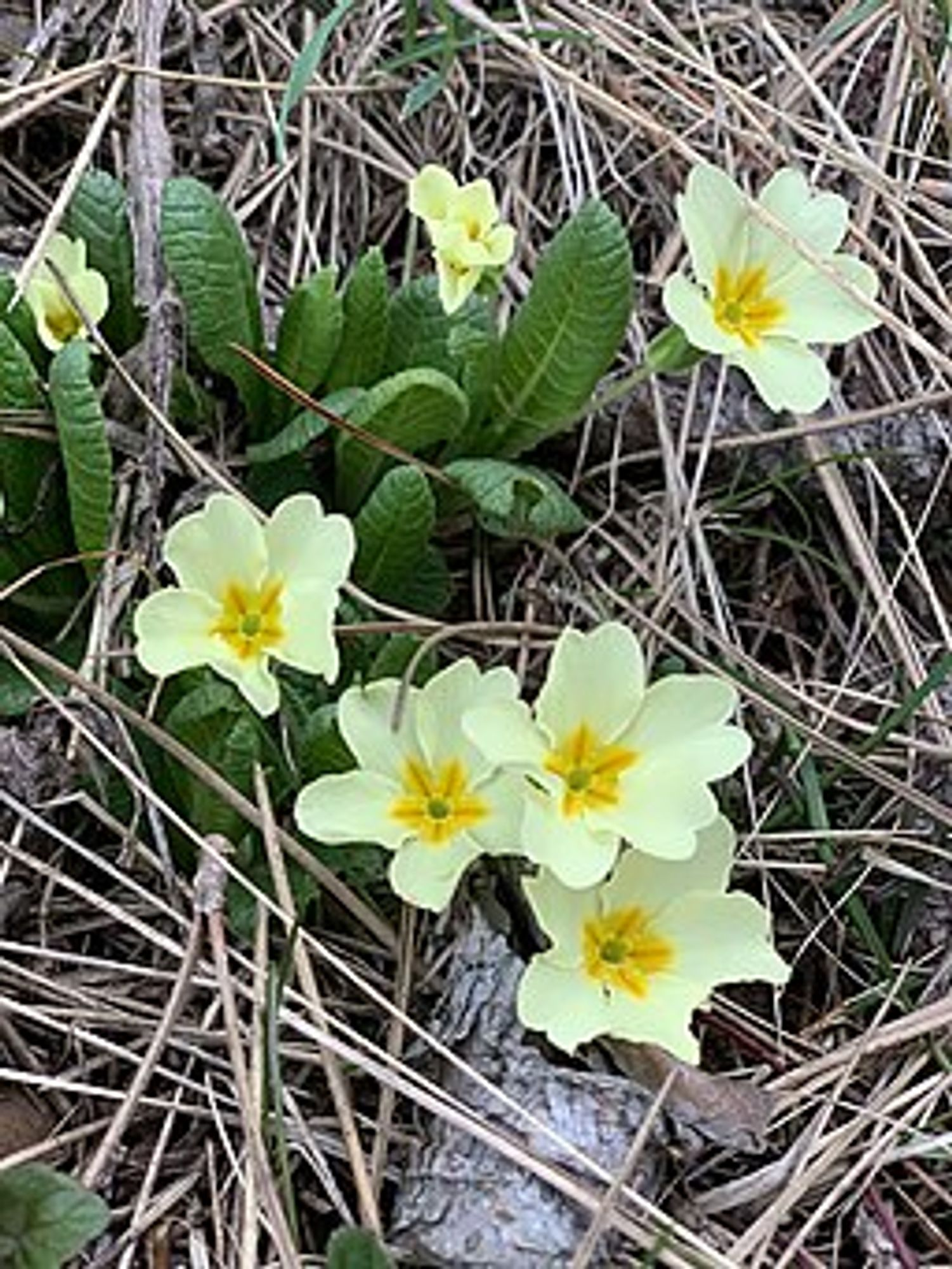
March 21: Today brings primroses, pale yellow against the leaf litter of the woodland, and cowslips in a greening meadow. A fox redder than terra cotta emerges from the hedge, sees us, leaps away, its brush full and the white tip gleaming. Chiff-chaffs see-saw in the bushes every twenty paces or so; dunnocks and robins and wrens sing in the spaces between. Willows are greening; the verges are verdant with alexanders, and the fields ring with pheasant calls, survivors of the winter’s shoots.

Primroses on a forest floor.
Alexandra Kaganova, CC BY 4.0 <https://creativecommons.org/licenses/by/4.0>, via Wikimedia Commons

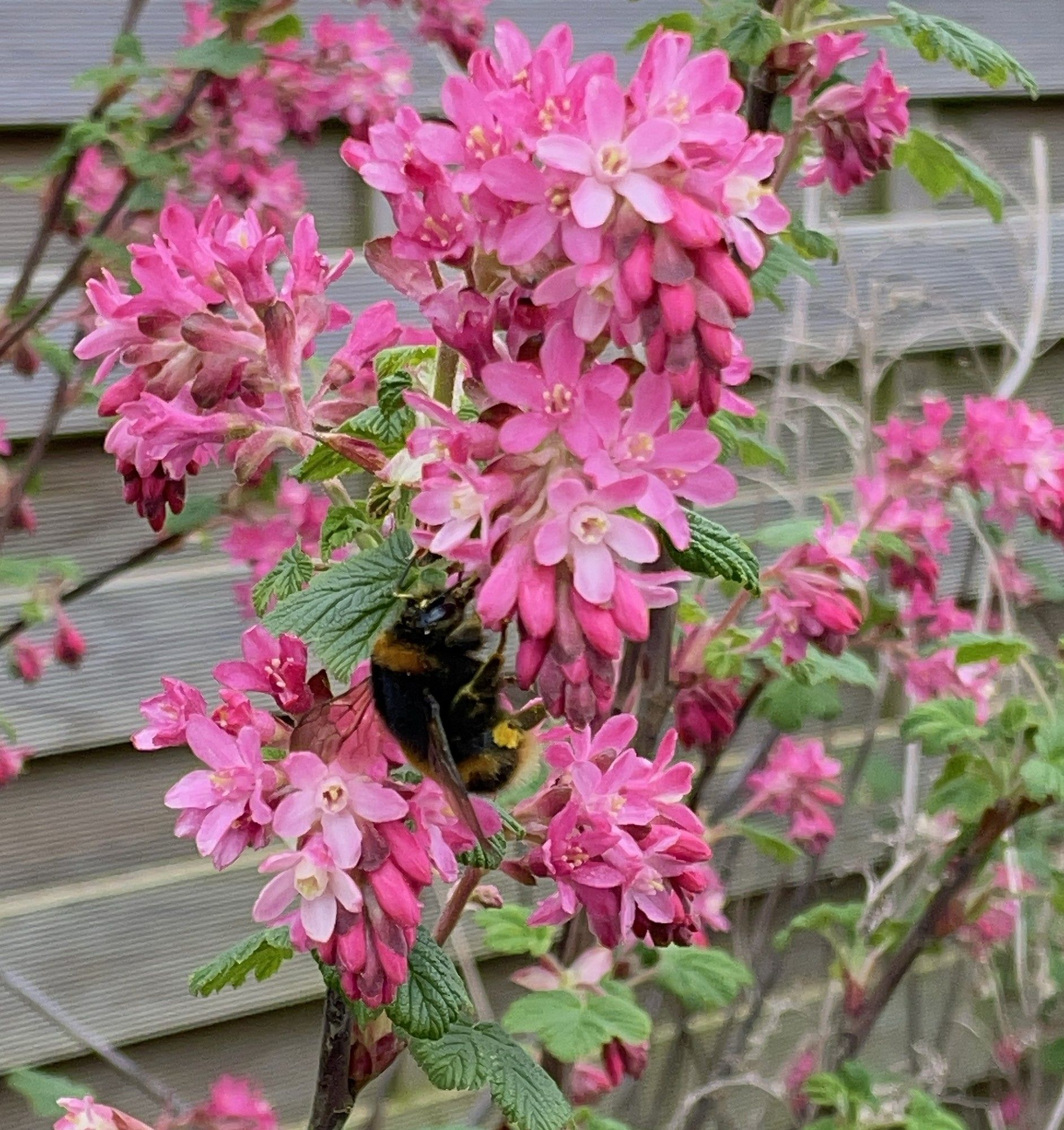
March 22  : Greenfinches buzzing all along the footpath this morning; queen bumblebees out foraging; a wood pigeon on its nest. In the next village, magnolia petals litter the pavement, bruised pink and white.

Buff tailed bumblebee on pink ornamental currant flowers; my picture.

March 23: The world is wind-whipped today, clouds moving southwest in towers of grey; blue sky winking in and out. A jackdaw sails by with nesting material in its beak. Petals from the ornamental prunus in the garden blizzard down.

Image by 3238642 from Pixabay

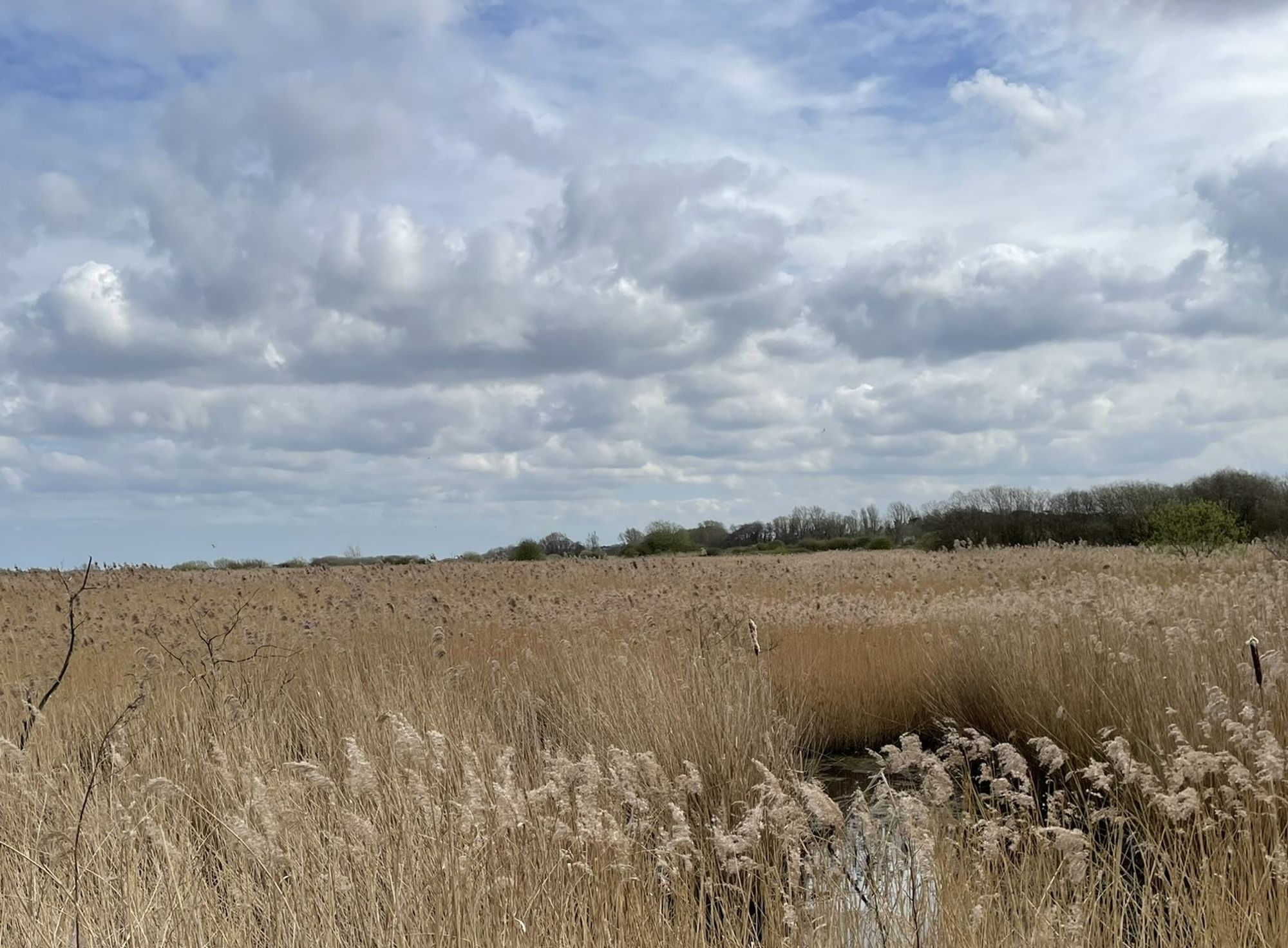
March 25: Marsh harriers drift over the marsh; a blackcap sings in the woods. Brent geese in their evening dress graze the short grass; in the reeds, a Cetti’s warbler staccato song explodes.

Reedbeds under a blue sky half-covered by puffy clouds. (Titchwell RSPB reserve, my photo).

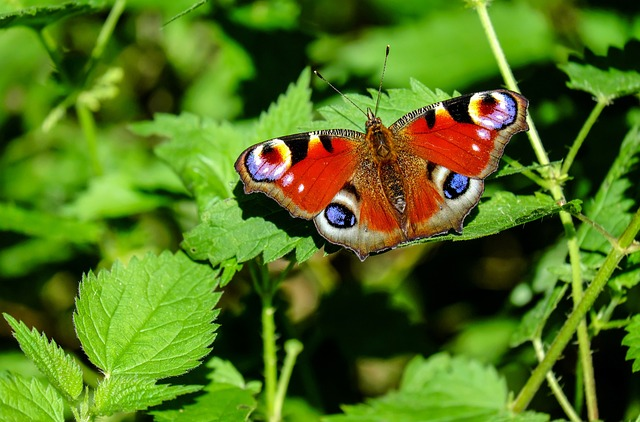
March 26: A continuous chorus today: skylark from the heights; lower, wren & dunnock, robin & chaffinch, blue tit & chiffchaff, late redwings. Bee-loud hedges bright with blossom, hung with butterflies – brimstone, comma, peacock. Buzzards drift in the blue sky.

Image by Couleur from Pixabay

March 27: The train took me to London and back again. In King’s Cross station, pigeons cooed from atop a sign. From the train, swans grazed in the Cambridgeshire fields; rooks carried nesting material; red kites circled. Willows were greener on the afternoon journey than in the morning.

Image by snibl111 from Pixabay

March 28: A nuthatch yelps from high in a bare oak; coal tits tell the world ‘it’s me, it’s me’ from low branches. In the meadow, a jay forages among shelduck and Egyptian geese. A silver squirrel climbs a stump. The larches are bright green with new growth; new leaves unfurl on the brambles.

Photo by: Mmparedes, CC BY-SA 2.5 <https://creativecommons.org/licenses/by-sa/2.5>, via Wikimedia Commons

March 29: Yellowhammers sing from the hedgerows, still white with blackthorn blossom in places. Hares streak across flinty fields or gather in groups in the young wheat. A pair of lapwings circle and cry: will they nest? (Will the nest survive, if they do?) Oystercatchers patrol the furrows; a line of fallow deer crosses the skyline.

Photo by caroline legg, CC BY 2.0 <https://creativecommons.org/licenses/by/2.0>, via Wikimedia Commons

December Diary II: At the Turning of the Year.

Six days past the solstice, and the daylight lasts a minute longer than it did on that shortest day. We’re still in the period when the change is barely perceptible. It won’t be until early January that the gain will rise to over a minute a day. It feels almost as if the world has paused.

Maybe it’s this sense of stopped time, at the darkest time of the year, that drives so many people to be frantically social, an atavistic response. Safety in numbers, safety in the lights inside and out, presents given and feasts offered to strengthen social bonds.

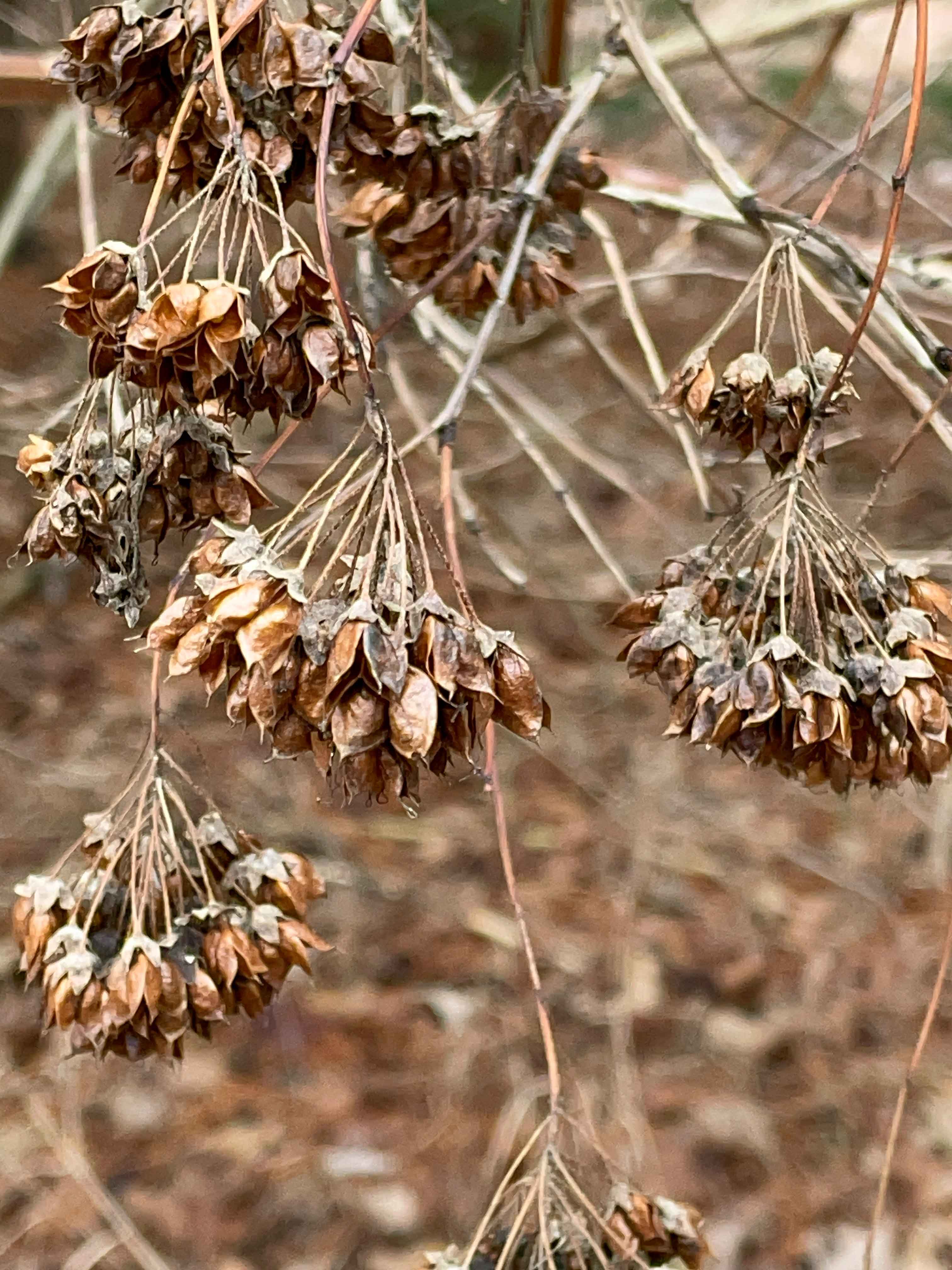
In nature, it’s a time to be wrapped up tight, if possible. It’s not been cold enough this year for mammals to be curled up asleep in dens or dreys; squirrels are still out foraging, the beavers are still cutting down trees. But most insects are dormant, and seeds wait for spring, on or under the soil, or wrapped in a protective layer of cells soft or hard: berries, cones, shells.

The last few days have been either raining or foggy. Red squirrels seemed annoyed by the weather, scolding at me with more vigour than usual. Smaller birds fed almost constantly: juncos among the grasses; starlings on the berry bushes; pine siskins at the cones. In Wild Goose Woods the drum of a pileated woodpecker searching for insects echoed against bare trunks. Only the crows were apparently unperturbed by the damp.

When I first saw the crows, I thought there were two, huddled together in the fog on the top of a glasshouse frame. Two became three, and three became four. They hopped around a bit, made a few conversational caws. And then they took off, all four of them, with purpose and wild, angry calls, to intercept a raven flying by.

They twisted. It dived. They followed. It ascended. They spiraled upward, still shouting. The spinning, sinusoidal dance repeated three times, until the raven had had enough. It arrowed away, the crows following for a few meters. Then they turned almost as one, and flew leisurely back to perch again, a gang of ruffians causing havoc just for fun.

The raven flew east. As I will be, in just over a week, east and 9 degrees of latitude further north. Where the daylight is an hour less than it is here…but for the three paradoxical months where, here, the hours of sun are longer but the air is colder and the world swathed beneath snow, it will be warmer. There are already snowdrops out, and on fields and in woodland and on mudflats and beaches, the northern birds that have come south to Norfolk from Scandinavia are feeding. Pink footed geese and redwings, shore larks and snow buntings. Godwits and redshanks, and, in numbers beyond counting, golden plover and red knots and oystercatchers on the bare mud of the Wash.

January 27, 2023

Elemental Norfolk

I wrote this poem a number of years ago, after we started spending a couple of weeks over the turn of the year in England. It was one of my first published works.

Earth

Lane and common, heath and ploughed ground

Lie frozen underfoot. The lands

Decline to the sea: downland and saltmarsh

Diked and ditched by countless hands

Against the sea and winter floods.

Beyond the marshes, the named sands

Will rise and fall with the tide.

Air

Skiff and windpump, sails of cloth and wood,

Are battened down and still. The gust

Strikes salt and icy; harness and rigging,

Tarred and treated for rot and rust,

Await the end of winter’s gales.

Above the marshes, the wind’s cold blast

Will rise and fall with the sun.

Fire

House and cottage, farm and village row

Sit tightly closed and warm. Fire

Kindles in the hearths; desire and habit

Pruned and piled the garden pyre

Against the night and winter’s end.

Beside the marshes, the year’s bonfire

Will rise and fall with the wind.

Water

Stream and river, pond and open broad,

Wait silently for spring. The snow

Bleaches all colour; hedgerow and reedbed,

Trimmed and tight in winter’s throe,

Withstand the wind and killing frost.

Within the marshes, the water’s flow

Will rise and fall with the moon.

© Marian L Thorpe

Image: John Crome, Moonlight on the Yare, Public domain, via Wikimedia Commons. Original in the National Gallery, London.