Spring, Rewound

When we left the UK on April 11th spring, at least in Norfolk, was well underway. Birds were claiming territories, wrens and chiffchaffs singing and singing. Jackdaws carried nesting material; med gulls clustered in pairs at Snettisham, and the black-tailed godwits had turned their rich chestnut. Buff-tailed bumblebees foraged among blackthorn and Malus flowers, and the yellow flowers of early spring brightened the ground, coltsfoot and dandelions, primroses and cowslips, and in the wetlands, kingscup.

Eight hours on a plane, London to Toronto, and someone’s hit rewind. Not by a lot, this year: spring is early here. On the 21st, as I write this, the first of the ornamental cherries that line our streets are in flower. But the kingscup – or marsh marigold, as it’s called here – in Wild Goose Woods is still in bud, although I expect it to flower this week.
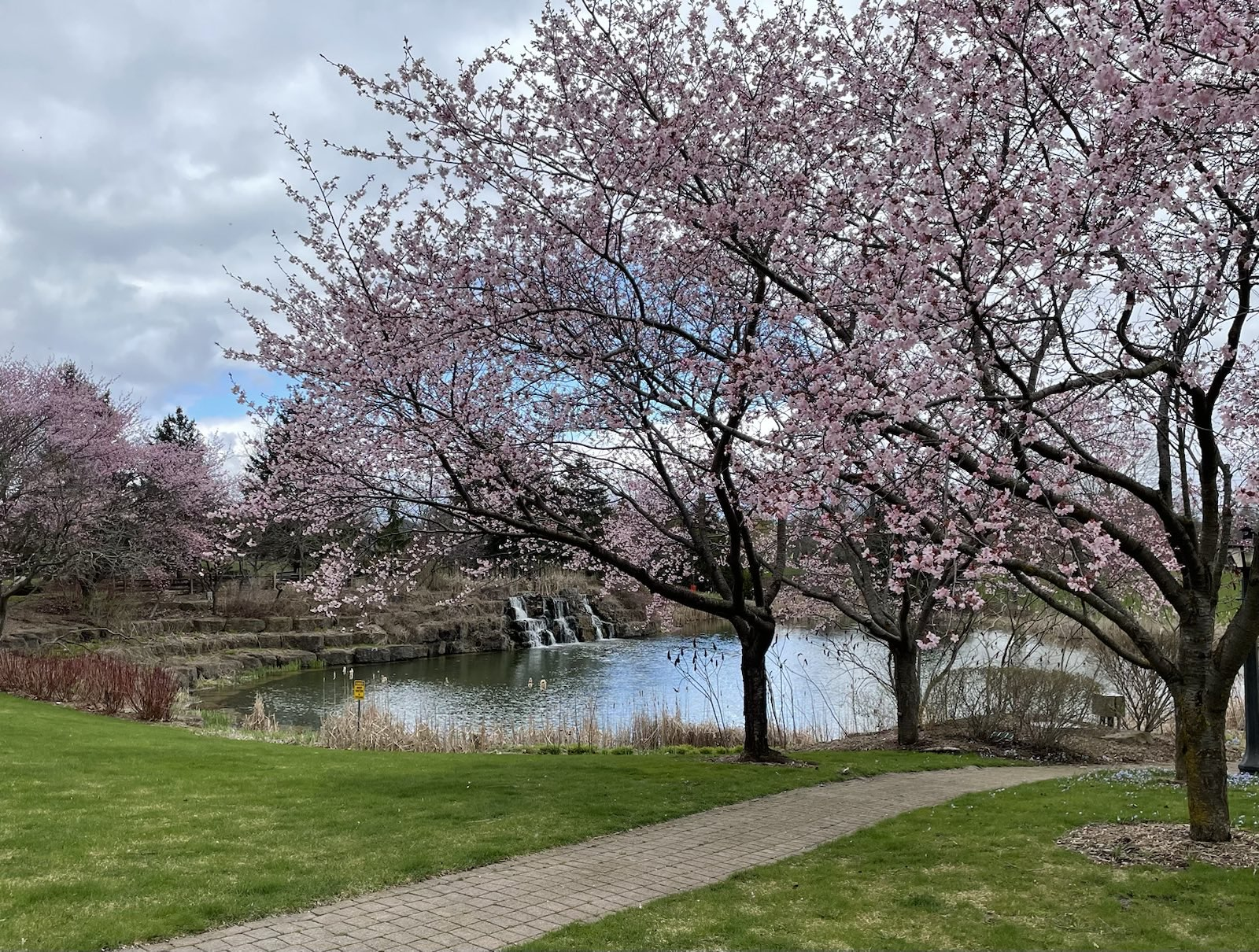
Ornamental cherries, Guelph, April 20. My photo.

I heard my first pine warbler this past week, and saw my first myrtle (yellow-rumped) warbler, watched tree and barn swallows dancing over the Grand River and phoebes flycatching from low branches in the maple swamp. Canada geese are hatching goslings, male goldfinches are moulting into summer plumage, and red admiral butterflies – maybe emerging from hibernation, maybe migratory – fluttered along the path we walked Friday, high above the Eramosa River. Bloodroot now stars the forest floor in Victoria Woods.

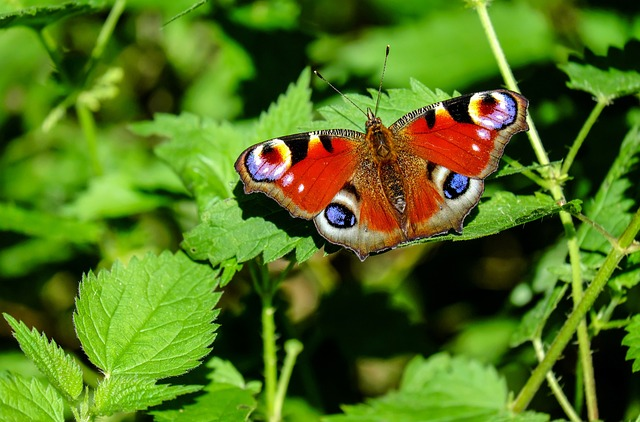
Red Admiral (Vanessa atalanta); my photo

Twenty years ago, or perhaps thirty, I used to get impatient for spring here; growing up in Essex County, by mid-April spring was much more advanced. Now, looking at e-Bird checklists for Point Pelee, I’m not seeing the same differences. With a couple of exceptions – blue grey gnatcatcher, common yellowthroat – the returning bird species look pretty much the same.  But a snapshot is misleading: a quick look back through e-Bird records finds a yellow-rumped warbler reported on the 7th of April.

Myrtle (Yellow-rumped) Warbler
(Dendroica coronata coronata), by Cephas, CC BY-SA 3.0 <https://creativecommons.org/licenses/by-sa/3.0&gt;, via Wikimedia Commons

The 7th of April. A yellow-rumped warbler. Some forty years ago or so, we had an Ontario record-early pine warbler – always the first to return – at Long Point on the 6th of April.

I won’t belabour the reasons; we all know them. But I wish I’d never been impatient for spring; I wish my first sight of a yellow-rumped warbler could be one of pure delight, not shadowed by ‘but it’s too early’.

 I wish a rewind was possible.

Learning to Listen

Thoughts of an Aging Birder

I’m standing on a boardwalk through a wet woodland: deciduous trees, damp soil, emerging plants, ephemeral ponds. Superficially, it’s not so different from the boardwalk through wet woodland I was standing on less than two weeks ago. One on the eastern side of the Atlantic, a kilometer from the North Sea; one on the western side, 1500 km inland. Different ecosystems, certainly, but what I notice today is the difference in the soundscapes.

Boardwalk, Wild Goose Woods, University of Guelph Arboretum.
My photo.

Recognizing all but the most common bird songs is a skill that has eluded me for fifty and more years. But at sixty-six, my vision a little compromised both by vitreous detachment and its resultant floaters, and by incipient cataracts, I’ve been trying harder to sort out the songs, to identify by sound. (My aging and arthritic spine also appreciates not having to hold up even my light Swarovski 10 x 32s as much, too.)

My hearing remains good, thankfully. In On the Marsh, Simon Barnes writes of friends who can no longer hear the high contact calls of goldcrest; the screams of swifts overhead, he tells us, are inaudible now to Sir David Attenborough. That day will no doubt come for me, but it’s not here yet. I can still pick out goldcrest in England, and its almost-doppleganger cousin the golden-crowned kinglet, here in Canada.

In the first week of April, the soundscape at RSPB Titchwell was dominated by onomatopoeic chiff-chaff calls. European robins sang from low bushes; a blackcap added its melody from a higher perch. Wood pigeons, endlessly cooing, added a bass line, punctuated by the equally endless screaming of black-headed gulls and the occasional explosive chatter of a Cetti’s warbler.

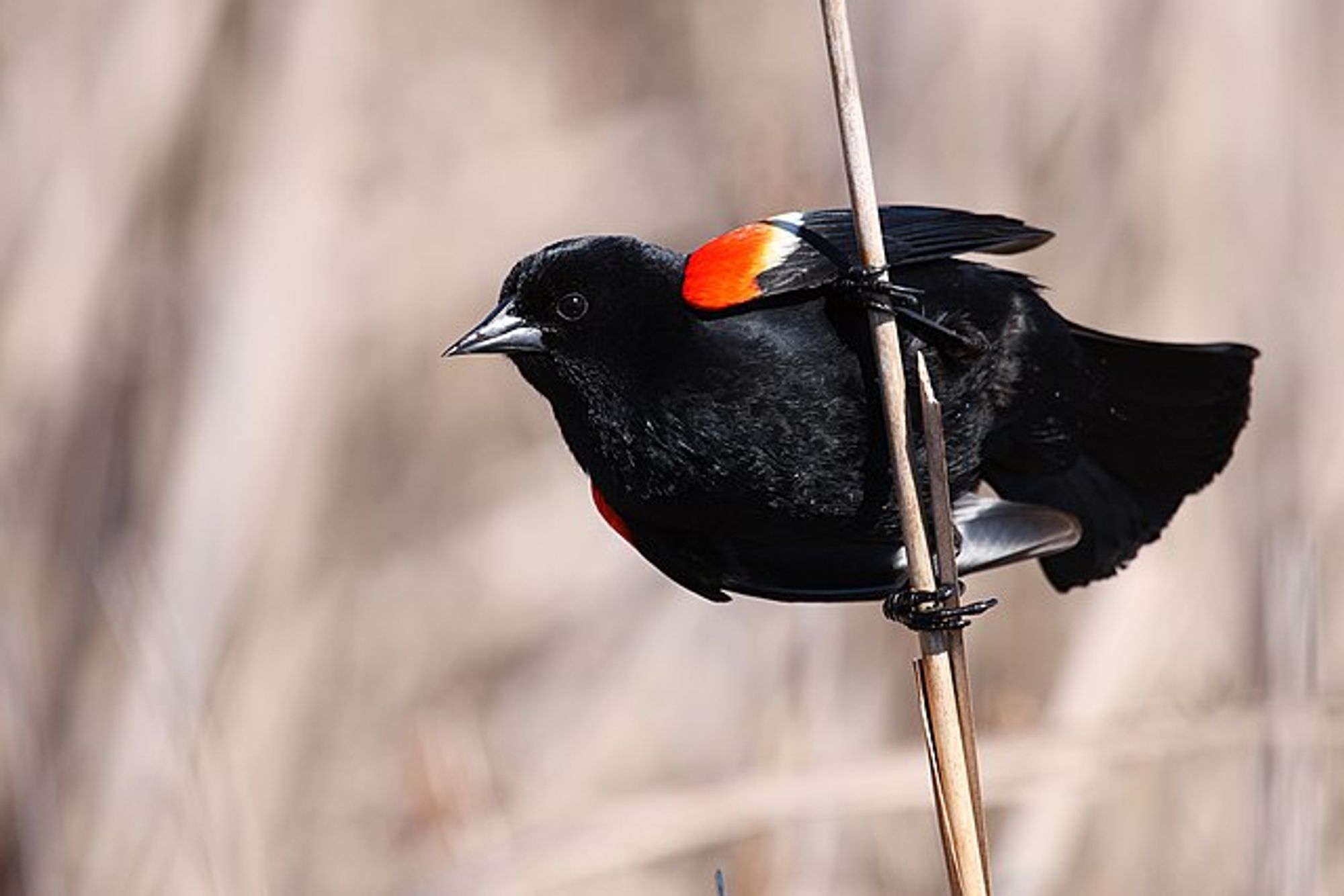
Red-winged Blackbird male, Point Pelee National Park, Ontario, Canada. Photo by Cephas, CC BY-SA 3.0 <https://creativecommons.org/licenses/by-sa/3.0&gt;, via Wikimedia Commons

Here in Guelph, on the boardwalk through Wild Goose Woods a few hours after dawn, the dominant sound is the chirr of red-winged blackbirds, the screeching laughter of northern flickers a close second. Another bird calls its own name: fee-bee, fee-bee. American robins sing cheerily from mid-level branches, and from the nest on the light standard over the playing fields I hear an osprey’s plaintive cry.

I’d know where I was—roughly—from either soundscape. While I’m focusing more on what I’m hearing through necessity and a wish to understand more of the landscape I’m moving through, looking at all the parts of the whole and not just on birds (I can identify a phoebe by song at the same time I’m looking at a bloodroot flower unfurling, for example), I’m also thinking about it in terms of my other life, that of the writer. Of the seminar on worldbuilding I’ve offered to give here in Guelph in the autumn, and all the things that are part of a convincing fictional world or will evoke a real one. Soundscapes are one of them: part of the whole which both characters and the reader, one hopes, inhabit.

Whether any writer can separate entirely the slice(s) of the world in which they live from their created worlds, I don’t know. I can’t. In this, I can only write what I know. There’s a circularity to this: writing has made me pay attention to aspects of the world I might have not noticed; a lifetime spent outdoors whenever I could informs what I write. The Titchwell soundscape?  It has a place in the story that’s beginning to unfold, and perhaps that book will be just a little richer because my aging eyes have made me listen more and look less. I’m fairly sure my life is richer, too.

The Last of Norfolk: March 30 – April 3

The last of Norfolk birding for the spring of 2024, at least! We plan, as always, to return.


March 30: A nuthatch yelps from high in a bare oak; coal tits call, ‘it’s me, it’s me,’ from low branches. In the meadow a jay forages among shelduck & Egyptian geese. A silver squirrel climbs a stump. The larches are bright green with new growth; new leaves unfurl on the brambles. We’re walking footpaths and lanes at Houghton, a sheltered walk on this windy day. In the sheep field a new statue stands: the figure of a man, or a cyberman, almost human. “Disconcerting, at dusk,” a woman walking her dog tells us. Later we learn it’s part of a new art installation by Anthony Gormley.

Photo by: Mmparedes, CC BY-SA 2.5 <https://creativecommons.org/licenses/by-sa/2.5>, via Wikimedia Commons

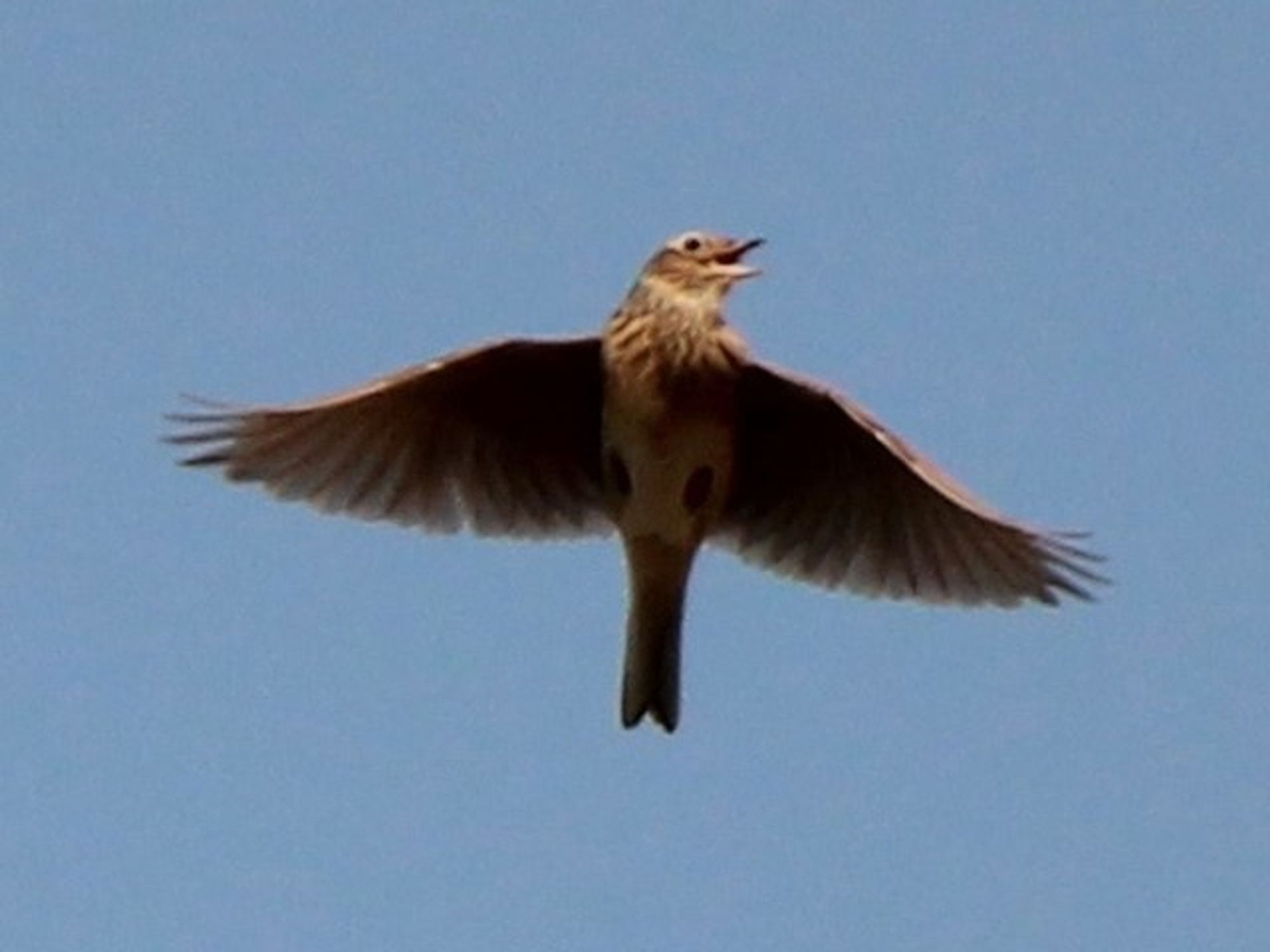
March 31: Drove to visit friends, through countryside and villages. Gulls, common and black-headed, followed ploughs. Pheasant and red-legged partridge, shoot survivors, scurried or flew across hedged lanes. The sound of tires and the barrier of glass & steel couldn’t block out the skylarks, singing, singing. A little owl lives in the barn down the road, our friends tell us; it’s driven out the barn owl.

Alpsdake, CC BY-SA 3.0 <https://creativecommons.org/licenses/by-sa/3.0>, via Wikimedia Commons

April 1: Footpath birding today, along the old railway line, now part of the Jubilee Trail. In Life Woods, the first mallard ducklings of the spring; on Snettisham common, a green woodpecker yaffles from a utility pole. We walk up into Ken Hill’s pine woodlands. A tree creeper circles the high branches of a still-bare oak. From the western height of land, we look out on the distant marsh and the Wash: it’s too wet still to walk out, without wellies. Shelduck are scattered across the wetland, gleaming white. I think about the torcs of the Snettisham hoard, found by a farmhand ploughing the field below us. I went to look at them (again) at the British Museum last week.

Dr W E Lee / Avenue of Beeches, Edge of Ken Hill Woods. CC BY-SA 2.0 <https://creativecommons.org/licenses/by-sa/2.0&gt;, via Wikimedia Commons

April 2: Walked out between farm fields to the mudflats of the Wash. Wrens sang from bramble or reeds every 50 paces; goldfinches twittered from greening willows. In the sunshine, both stonechats and reed buntings announced themselves, males proclaiming ‘this is my territory’.

rkl, CC BY 4.0 <https://creativecommons.org/licenses/by/4.0>, via Wikimedia Commons

Where Boathouse Creek joins the Wash avocets and ruddy turnstones fed on the mud; linnets flitted and fed along the shingle foreshore. On the gravel pits, among the black-headed gulls, pairs of Med gulls stood out, tall and proud. Sunshine, water, breeze.

Later, reading this in Simon Barnes’s On the Marsh, I recognized its inherent truth. I delighted today in red kites and marsh harriers, in singing skylarks and wrens, but mourned for the dead or dying oystercatchers on the mudflats, the lack of lapwings wheeling, the paucity of finches, all the losses.


April 3: Last visit to Titchwell today, under showery skies. Rain or no, the day gave us a bearded reedling in a rare fully open view. In the woods, a blackcap sang its bubbling, lilting song; a Cetti’s warbler exploded both into song and into view, briefly. Out on the freshmarsh, among black-tailed godwits turning chestnut and avocets up to their bellies in the water, a lone ruff, its back mottled chestnut & black, probed the mud.

Ken Billington, CC BY-SA 3.0 https://creativecommons.org/licenses/by-sa/3.0, via Wikimedia Commons

But the surprise of the day was a polecat, never before seen, feeding on roadkill at the side of the A149. We circled back at the next roundabout, took a second look. While our brains said ‘pine marten’; sensibility said ‘not a chance’. A little research revealed the identification. Norfolk, it seems, still holds secrets.

Nicolas Weghaupt, CC0, via Wikimedia Commons

Ten Days of Spring

March 20: First day of spring, and two magpies in the field beside the track. Two for joy, the verse says. Blackthorn flowering, the hedgerows as white as the gulls following the ploughs. Plant barley when blackthorn flowers, but prepare too for a cold spell, blackthorn winter. There’s no hint of it in the forecast.

Blackthorn in flower. My photo.

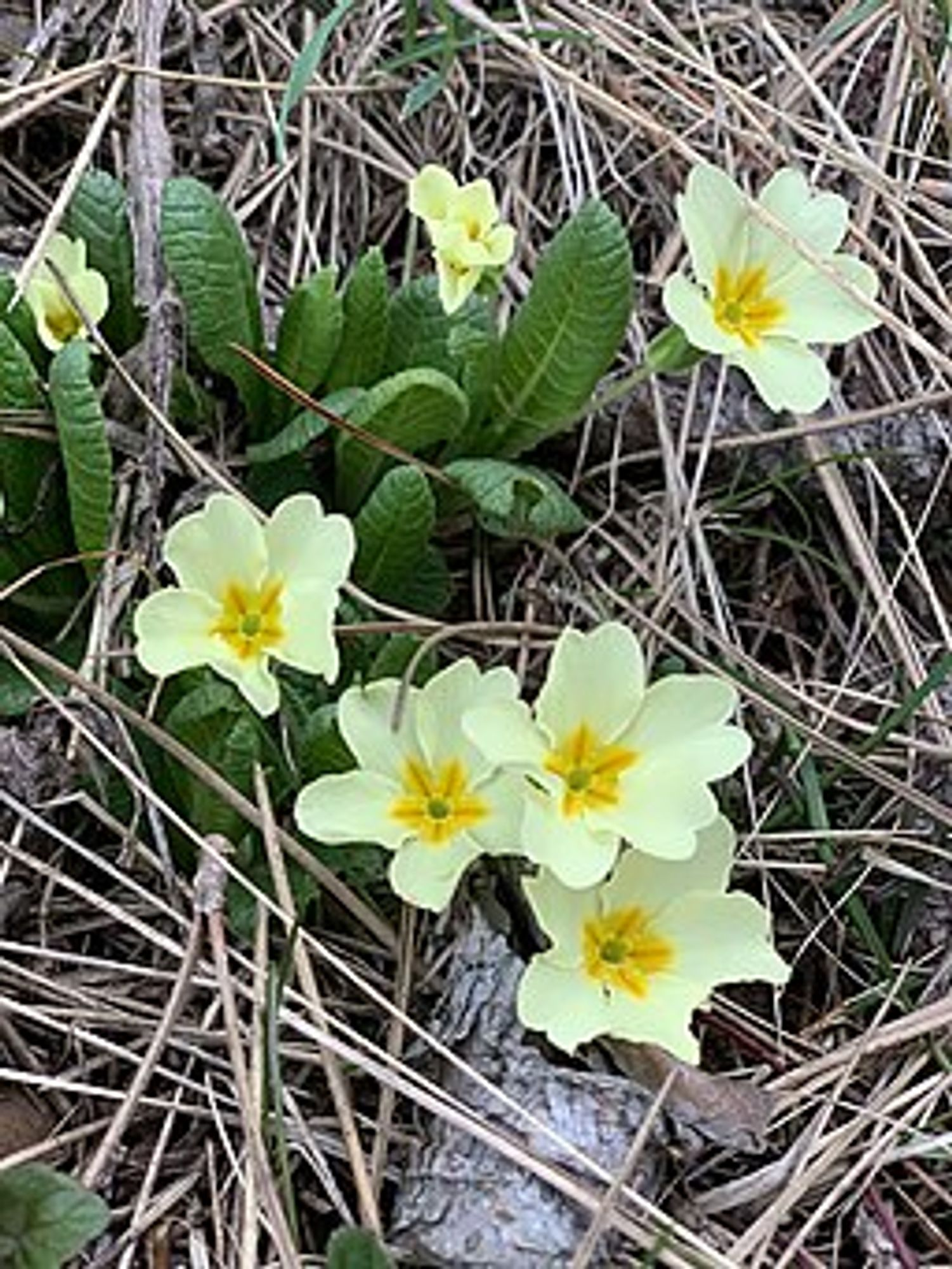
March 21: Today brings primroses, pale yellow against the leaf litter of the woodland, and cowslips in a greening meadow. A fox redder than terra cotta emerges from the hedge, sees us, leaps away, its brush full and the white tip gleaming. Chiff-chaffs see-saw in the bushes every twenty paces or so; dunnocks and robins and wrens sing in the spaces between. Willows are greening; the verges are verdant with alexanders, and the fields ring with pheasant calls, survivors of the winter’s shoots.

Primroses on a forest floor.
Alexandra Kaganova, CC BY 4.0 <https://creativecommons.org/licenses/by/4.0>, via Wikimedia Commons

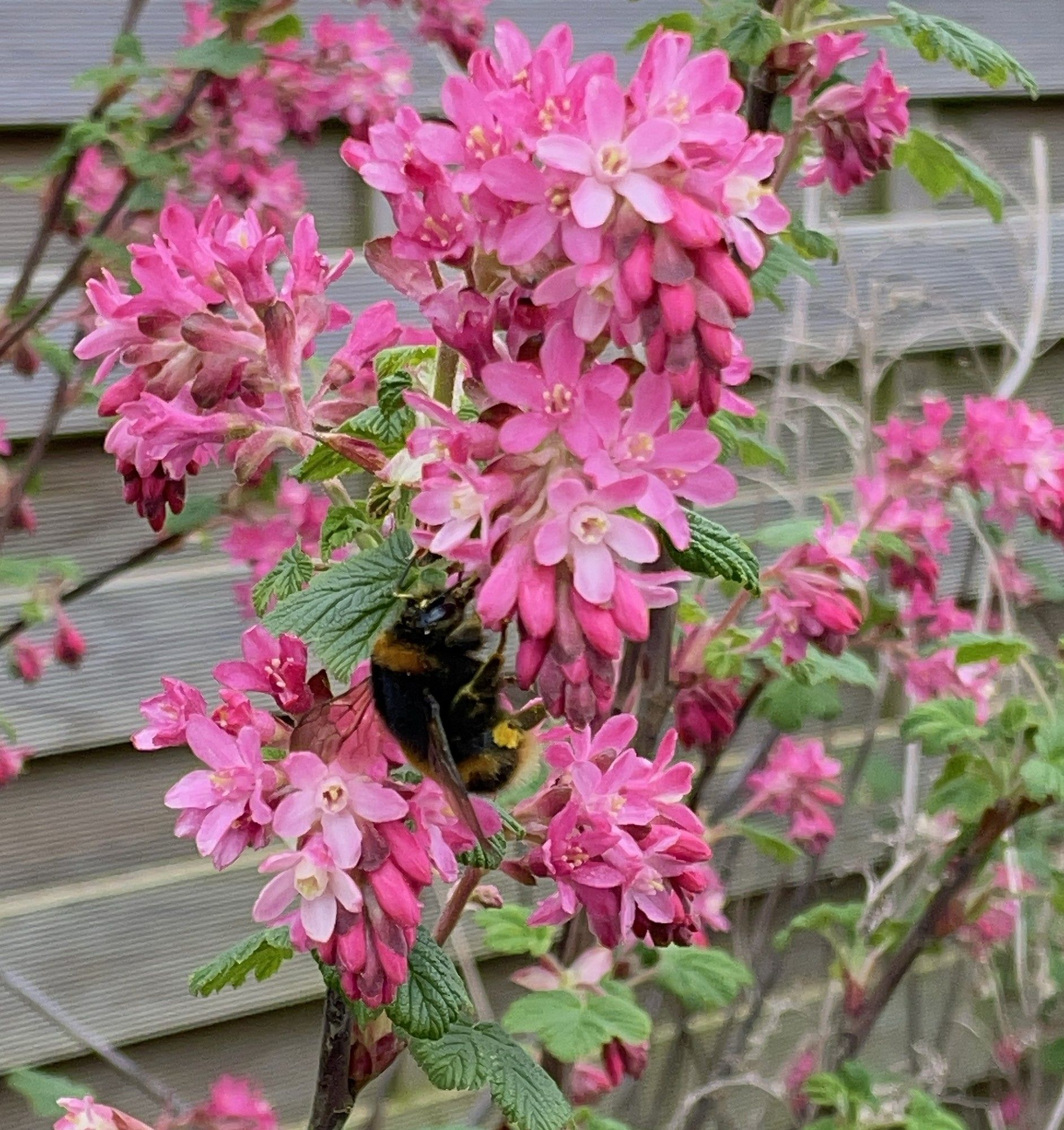
March 22  : Greenfinches buzzing all along the footpath this morning; queen bumblebees out foraging; a wood pigeon on its nest. In the next village, magnolia petals litter the pavement, bruised pink and white.

Buff tailed bumblebee on pink ornamental currant flowers; my picture.

March 23: The world is wind-whipped today, clouds moving southwest in towers of grey; blue sky winking in and out. A jackdaw sails by with nesting material in its beak. Petals from the ornamental prunus in the garden blizzard down.

Image by 3238642 from Pixabay

March 25: Marsh harriers drift over the marsh; a blackcap sings in the woods. Brent geese in their evening dress graze the short grass; in the reeds, a Cetti’s warbler staccato song explodes.

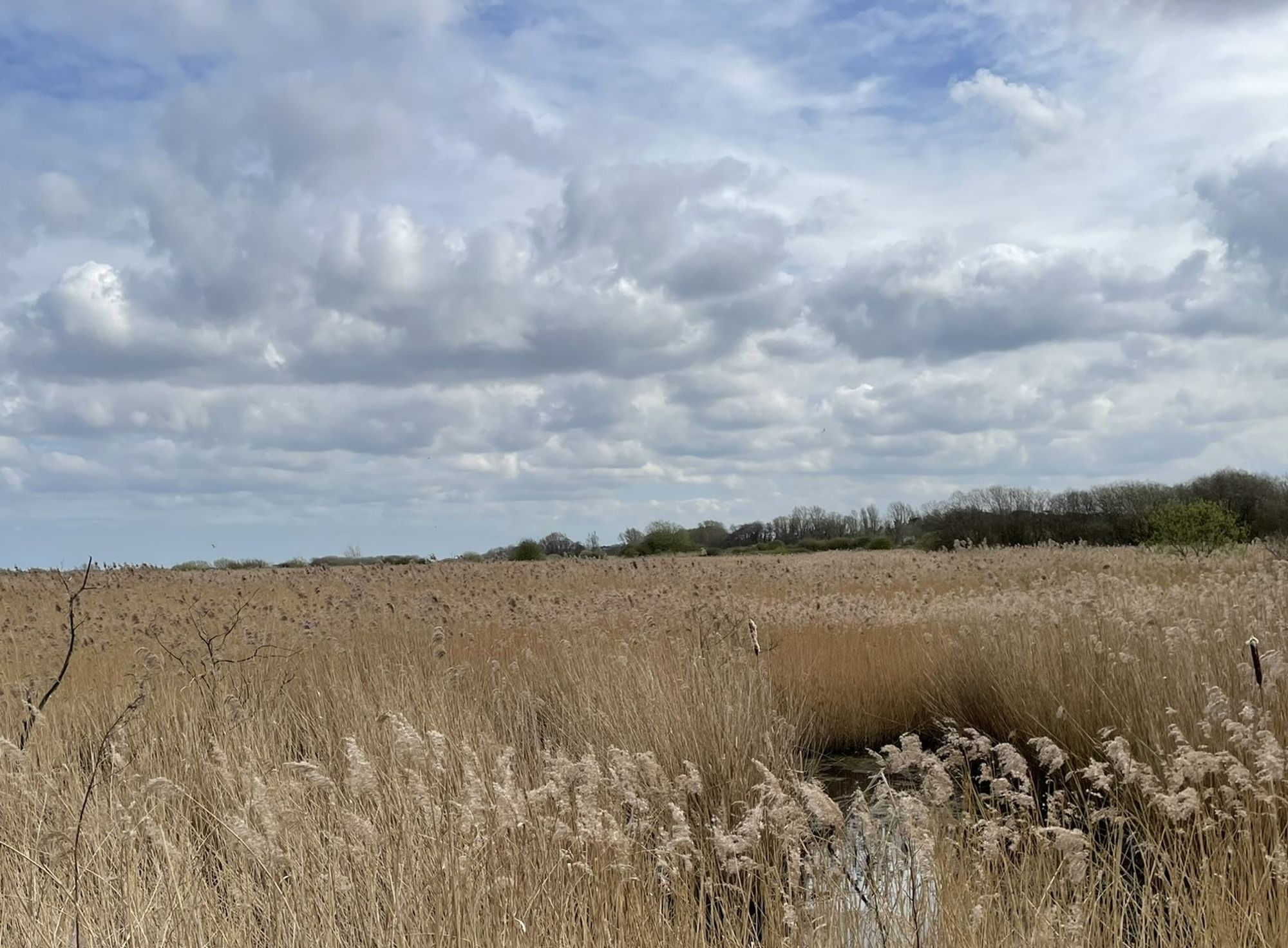
Reedbeds under a blue sky half-covered by puffy clouds. (Titchwell RSPB reserve, my photo).

March 26: A continuous chorus today: skylark from the heights; lower, wren & dunnock, robin & chaffinch, blue tit & chiffchaff, late redwings. Bee-loud hedges bright with blossom, hung with butterflies – brimstone, comma, peacock. Buzzards drift in the blue sky.

Image by Couleur from Pixabay

March 27: The train took me to London and back again. In King’s Cross station, pigeons cooed from atop a sign. From the train, swans grazed in the Cambridgeshire fields; rooks carried nesting material; red kites circled. Willows were greener on the afternoon journey than in the morning.

Image by snibl111 from Pixabay

March 28: A nuthatch yelps from high in a bare oak; coal tits tell the world ‘it’s me, it’s me’ from low branches. In the meadow, a jay forages among shelduck and Egyptian geese. A silver squirrel climbs a stump. The larches are bright green with new growth; new leaves unfurl on the brambles.

Photo by: Mmparedes, CC BY-SA 2.5 <https://creativecommons.org/licenses/by-sa/2.5>, via Wikimedia Commons

March 29: Yellowhammers sing from the hedgerows, still white with blackthorn blossom in places. Hares streak across flinty fields or gather in groups in the young wheat. A pair of lapwings circle and cry: will they nest? (Will the nest survive, if they do?) Oystercatchers patrol the furrows; a line of fallow deer crosses the skyline.

Photo by caroline legg, CC BY 2.0 <https://creativecommons.org/licenses/by/2.0>, via Wikimedia Commons

November Diary 3

November 20: University of Guelph Arboretum

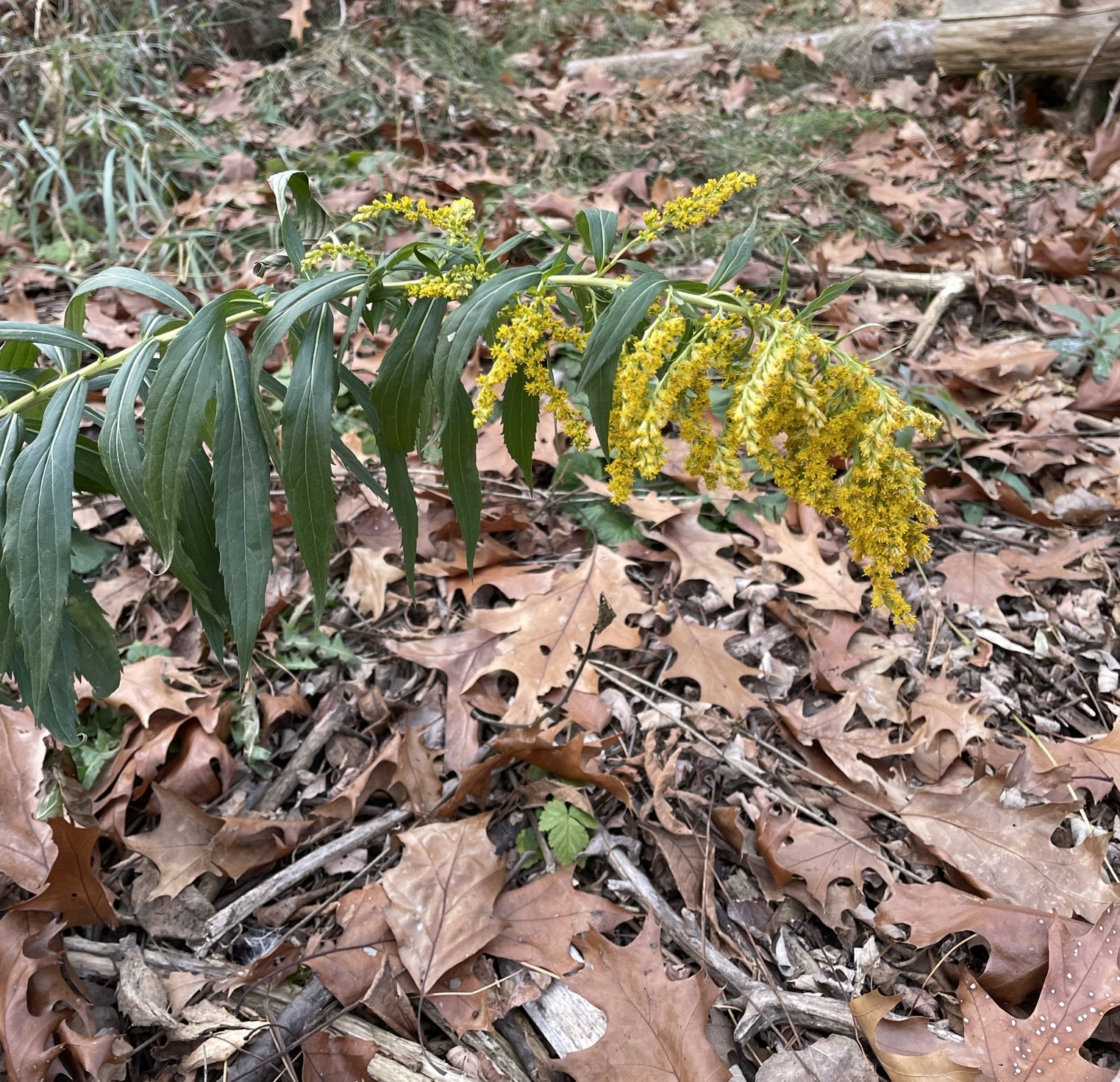
Regardless of the hard frost, a few goldenrod plants are still flowering, bright against the brown leaves. As are the bright red berries of a shrub I can’t identify. The goldenrod is wild, wind or bird seeded; the shrubs are planted. One is likely more appreciated than the others by humans, but I know which the chickadees prefer.

November 22: University of Guelph Arboretum

Neither flowers nor berries were needed to enhance this landscape: the diffuse light, the time of day, the copper and gold of goldenrod and grasses combined were enough. The field glowed.

Further along the path, the white-berried bushes – grey dogwood? – were full of birds. First a flock of starlings, sounding like rusty hinges and oblivious to my presence (or simply not caring); then a dozen robins arrived. Starlings and robins mixed without issue, but in a close bare tree, ten bluebirds (or greybirds, on this cloudy day) waited for the larger birds to leave.

The deciduous trees are bare now, except for the few beeches and oaks still hanging onto their brown leaves. November begins to show us the hidden things, nests in the forks of trees and shrubs, wasps’ nests hanging from branch tips, and high in a maple tree near the old quarry, a porcupine, too far away for my iphone camera to capture anything but a lump.

The last surprise of the day was the fruit of an Osage Orange (Maclura pomifera) at the edge of a hedgerow, their almost lemon-yellow colour standing out against the leaves. Three fruits, scattered across a small area. The closest (and only, I think) Osage Orange tree in the Arboretum is some distance away. I expect these were human-gathered and human-discarded. Will they be there the next time I walk this path?

November 24: University of Guelph Arboretum

First snow, a bare sprinkling arriving mid morning. The air is crisp still at 10 am. I round a curve on one of my favourite paths and freeze. On a waist-high stump not more than 6 or 8 meters from me, a young red-tailed hawk is devouring a squirrel. (The picture below is a terrible record shot, but it’s the best my phone could do.)

I watch the bird through my binoculars for several minutes, its head dipping, the strong yellow beak tearing at flesh, the head rising again, the beak red with blood and meat, the ripple of the throat as it swallows. The hawk is hungry after the cold night, and pays me no attention at all. Even when I move again, it just keeps feeding.

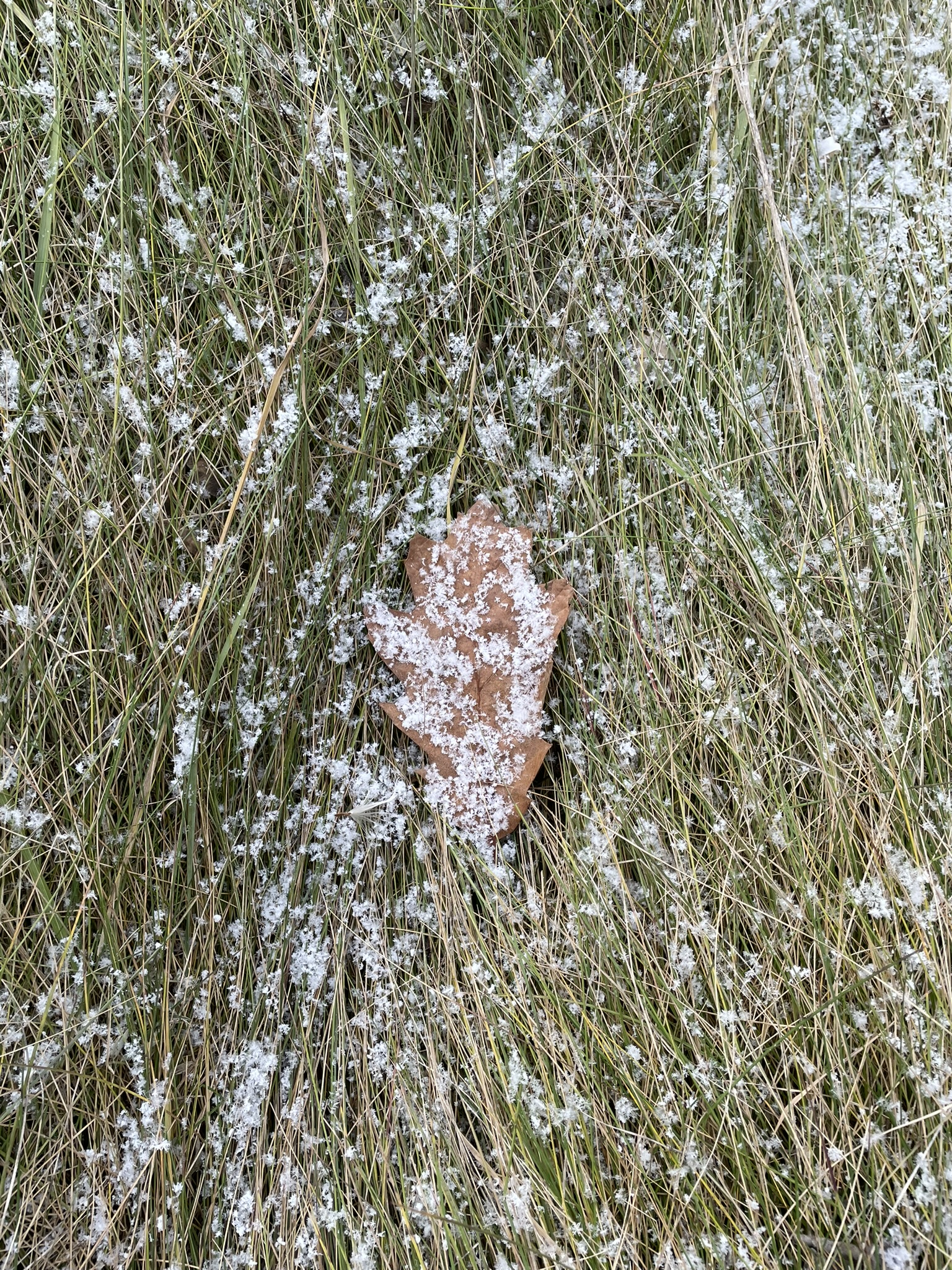
I walk my usual route, looking at the patterns of snowflakes on grass and leaves, hearing juncos and chickadees and crows. When I return to where the hawk was, forty minutes later, there is nothing but a few wisps of fur on the stump.

November 26: University of Guelph Arboretum

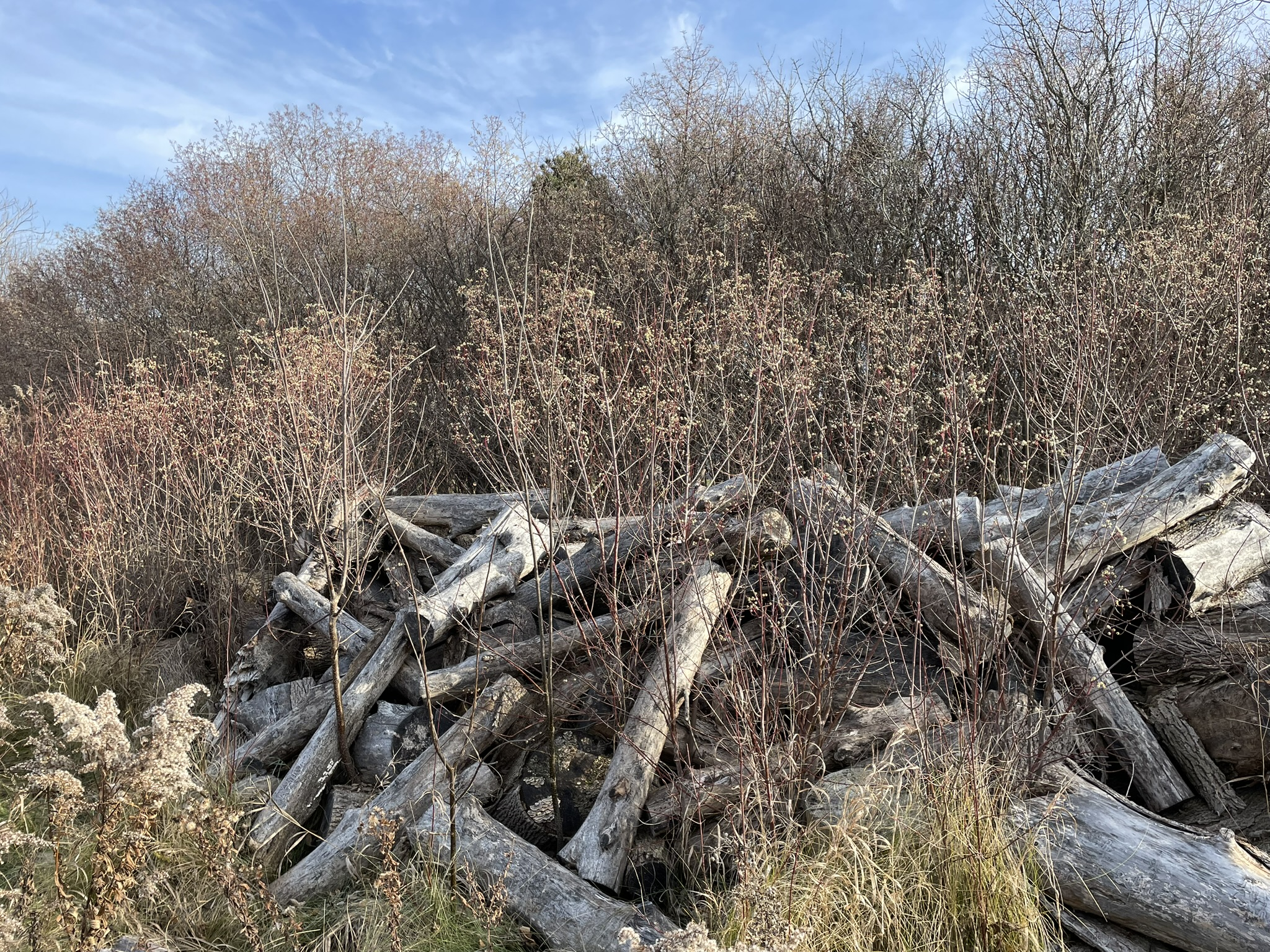
Still sluggish after my COVID shot, I walk slowly around my favourite paths. This location intrigues me: the pile of logs, the perennial plants, the white-berried shrubs (gray dogwood again?) behind them makes for excellent habitat. (The shrubs are full of cardinals this morning, feeding.) If there’s snow on the ground before we leave for England in early January, I’ll come back here to look at the tracks leading in and out of the logpile, to see what stories they tell.

When I’m almost back to the car, the many shades of brown of these red oak leaves catches my attention. On a cloudy day, they probably wouldn’t have, but in the morning sunshine they gleam, a patch of subtle beauty easily overlooked.

Spring, Week V

Rain, this morning, staccato against the skylight. Outside the water puddles in every low spot, overflowing to gurgle into drains. It’s been a week of contrasts and extremes. After the heatwave only a few days earlier, the week began with snow. Daffodils lay flat, and violets were edged with frost like sugar crystals. By Thursday, it was sunny and warm again, the snow long gone.

Over the river, one barn swallow hunted sparse insects alongside the tree swallows. The ospreys are all on their nests, and Canada geese hiss and snap at anyone who comes too close to their brooding partner.  Regardless of the vagaries of temperature and precipitation which my aging human sensibilities object to, the imperatives of spring continue. Reproduction is all, if enough food can be found to sustain life. If enough places remain to provide that food and nesting habitat.

Image by Brigitte Werner from Pixabay 

I sat at a picnic table on the university campus yesterday in 18C sunshine, listening to a cardinal sing from the Norway spruces.  Forty-five years ago, in my first year as an undergraduate at this particular university, I was doing the same.  The cardinal I was listening to then was a forefather of this one by at least fifteen generations, given the average length of a wild cardinal’s life. Little has changed in this spot, although slowly across the entire campus open ground—research plots and gardens and greens, old barns with open courtyards, old fields—has gradually been paved over, or built upon: more student housing, more parking lots, more teaching and research facilities, more sports fields. More land leased for private development, offices and retail. Even the Arboretum loses ground (literally) to research buildings and parking and managed plots. I doubt the cardinal notices, nor will the development affect it or its descendants much. Cardinals like gardens and shrubs and feeders.

But a huge swath of land once leased research ground will become housing in the next five years, and the woods and old fields and riverine habitat on either side of it will be under greater pressure, not just from a greater number of people (and dogs, and roaming cats) but from a desire for more sports fields and playgrounds rather than unkempt and wilder land. Already meadowlarks are sparse, and the sparrows and warblers that need scrubby grassland habitat.

My sense already this spring is that the birds are fewer; it’s my sense every spring now, and I think a valid one for most species. I can rejoice in ravens and sandhill cranes and bluebirds, and the ospreys and bald eagles—but the small birds of woodland and hedgerow and understory are largely disappearing. It’s not all recent; it’s not all climate change or pesticide use or avian viruses or fatal building collisions, but all contribute.

I’m noticing a reluctance to go walking some days, to be confronted by the sparsity of birds, and by woods and fields far too quiet—or disrupted by the sound of chainsaws and diggers. But—almost equally—I know I should, for a myriad of reasons that include bearing witness to what is being lost and appreciating what remains. The cardinal still sings.

Walking Downtown

The past two Sundays I’ve had writer-group meetings downtown in the early afternoon, and on both days I’ve chosen to walk. It’s about 4.5 km (2-3/4 miles) by the most direct route; it takes me about an hour, and it’s a walk I’m growing to love again: we used to do it all the time, back in our university days, but those were thirty-five years ago.

The first part of the walk takes me through the university campus, on its bricked walkways, walking between buildings that range in age and architectural style from the limestone houses of the 1870s to the concrete, wood and glass of the twenty-first century. Only a few students are out and about so the wide walkways aren’t crowded, unlike Monday to Friday. I cross College Avenue and follow a minor path behind MacDonald Hall, in all its red-brick and terra-cotta glory, to University Avenue – and then down a footpath that joins two dead-end streets that more-or-less parallel the main road to downtown. The footpath follows the road allowance, it’s unmarked but partially stabilized with pavers, and I have never known if it’s an official city path or not, but I’ve been walking it for over thirty years and there are no signs to tell me not to.

This brings me out onto Gordon Street, the main road, a steep-ish downhill and busy, but the sidewalk is wide and I only have to use it for 600 m or so. At the bridge over the Speed River I stop to look at the waterfowl: Canada Geese and mallards at the confluence with the Eramosa, and a few ring-billed gulls. Just beyond the bridge is the Boathouse, home to ice-cream and canoe rentals in the summer months, afternoon tea well into December, and the point at which I turn and walk along the gravel driveway to the covered footbridge over the river.

I remember the bridge being built: in 1992, the Timber Framers Guild held a conference in Guelph, and 400 volunteers built this bridge to an 1880’s design, raising it by hand. It was an impressive project, and an important one, because it meant the river trails on either side of the Speed were now continuous. We lived for a decade or so at the far east end of the river trail, and I would walk home from work at the university down Gordon Street and across the bridge, along the trail and home. And vice versa, in the morning.

But now I cross the bridge and turn left, away from the river and towards downtown. I walk up past the Armoury and into downtown proper, find the cafe where the meeting is, buy a coffee and start talking.

Two hours later and it’s time to come home, after a short detour to buy a loaf of bread from one of the downtown bakeries. I have two choices: I can re-trace my steps from earlier, or, at the covered bridge, I can turn east and walk along the river trail to Victoria Road, watching the river for bird life, greeting the dogs out for walks, and avoiding tiny children learning to walk or ride bikes along this safe trail. At Victoria, I turn south, up the hill, walking here on a wide road shoulder for a few hundred meters until a trail turns west into the University’s Arboretum. From here I can follow the trails and gravel roads back to the University gates on Stone Road, and cross the road to home. It’s longer: it takes me about ninety minutes to walk that way, but it’s a lovely walk.

Last Sunday I came home through the longer way; today I chose to retrace my steps. Another day I may go downtown by the long route and come back up Gordon Street hill. There is always something to see: I can stop to look at architectural detail on campus, or watch a soccer practice; on the walk down Gordon the spires of the Basilica dominate the skyline. The downtown itself I never tire of. And if I choose the river-and-arboretum walk, I’m guaranteed some birds, even if it’s just a flock of friendly chickadees. Yes, it takes me two hours at a minimum. But I plan to walk for at least two hours every day, and if some days that walk is in the city rather than the fields and woods of the Arboretum and the river, well, it fills a different need. And not just because I can stop at the Boathouse for a pastry!

The Moving Diaries: Phase 2: Juggling Two Houses

We took possession of the new house on April 29th. It was mid-afternoon before the lawyer’s office called to say everything was done; we immediately drove over to take another look at the house, inside and out.

It’s an opportunity that doesn’t come very often in a life, wandering around the new living space, thinking about wall colours, furniture placement, what will go in the kitchen cupboards. In our thirty-eight years together, we’ve moved five times before: three apartments, two houses. This is the first time the move is to a house that needs only cosmetic upgrades, and the first time we have enough money to make the changes before we move in.

Yesterday and today I cleaned, the kitchen, pantry and bathroom cupboards: everything else was spotless, but these needed a better cleaning than they, for the most part, had had. BD put up shelves in the basement, and took down the curtain rods and runners: we prefer blinds. We bought a couple of new light fixtures, and new knobs for the kitchen cupboards, and collected paint samples.

And now we’re kind of in holding mode. Tomorrow we meet with the person who will measure the three bay windows for blinds, and the day after with the contractor who is doing the painting and minor repairs that are needed. Thursday we meet with another contractor, this one to choose the gas fireplace we’re having installed. We’re hoping the timelines will be such that we’ll be able to move in at the beginning of June.

But until this work is done, we can only move so much stuff over. The basement is getting things that are of low priority (like boxes of Christmas things, and winter boots, and the picnic basket) and the garage is the repository for the boxes that need unpacking fairly quickly. Now the cleaning is done, we actually need to spend more time here, sorting and packing, and then making runs to town to drop off things at the charity shop or the new house. But the temptation to go to the new house is so strong!

I’m also making endless lists. Things to ask the contractors. Things to bring over – tape, magnets for the fridge, teabags. Things to consider – can we replace the track lighting near the kitchen island with a different type of fixture? We won’t know until later in the year, when it’s dark at meal preparation time. Will the north-facing deck get enough sun to need a sunshade? Again, it’s too early to know: the two trees shading it haven’t leafed out yet.

And at the other end, we’re waiting to hear if the person who wants to buy this house can get the financing. I make other lists for this house: what needs fixing, where I need to send change-of-address notices. Reminders to get the well tested, the septic tank pumped, the insurance changed.

It’s a lot of work. But yesterday, taking a break from the cleaning, I walked out the door, got on my bicycle, and biked the short distance over to the Arboretum. I locked my bike to the rack provided, and walked for an hour, listening to the birds, taking pictures of spring wildflowers, watching a raccoon (this one where it should be, and not in our chimney!) hunting through the mud at the edge of pond for food. The Canada geese nesting on a hummock in the swamp have goslings now: I stood on the boardwalk and watched them exploring their brand new world. And then I unlocked my bike, and five minutes later I was back home. It’s definitely worth the work.

Good Fences

Good fences make good neighbors, Robert Frost wrote, in Mending Wall.  Between our property and the neighbours on both sides, a split-rail fence delineates the property lines.  We built the fence ourselves, getting on for twenty years ago, pulling the cedar rails out of the brush of an old farm at the edge of the village, gladly given to us by the elderly farmer. When the fence was done, he walked down one day to see them in their new incarnation. “Good to see them used again,” he said, of the old swamp cedar rails, probably even then well over a hundred years old.

But in a massive thunderstorm earlier this year, with drenching rain and high winds from the east, unusual for here, the young butternut that grows just at the edge of our eastern neighbour’s property shifted just a little, leaning into the fence, and took down three rails. Oddly enough, it didn’t break them: the steady pressure on the fence snapped the wire that held them to the posts. But they couldn’t go back up – the trunk of the butternut was in the way now.

We debated taking the tree down, but I really didn’t want to. Another young butternut, at the edge of the maple swamp behind us, also listed in the storm, but it straightened itself up within a couple of weeks.  I decided to wait. Yesterday, mulching leaves, I took a good look at the tree, and realized it had grown straight again, but from about five feet off the ground, meaning its lower trunk still was an impediment to replacing the rails.

BD and I brainstormed, and decided the simplest thing to do was to add a post directly beside the one north of the tree. This would allow us to run the rails from the new post to the existing one south of the tree, creating a slight zig-zag (or, really, only a zig). We throw almost nothing out in term of wood, so hiding down with the compost bins was a huge old post that had once supported the far end of the washing line. Cut down and wired securely to the existing post, it was the perfect size.

It took us about half an hour to fix the fence, on a glorious November day, sunny, very warm, no wind. Overhead ravens swore at and chased migrating red-tail hawks. The chickadees went back and forth to the feeders, ignoring us, joined by two species of nuthatch and two of woodpeckers. The squirrels – black and red – are happy to have their highway contiguous again, and neighbouring dogs and grandchildren have their limits back. Good fences do, indeed, make good neighbours.

Fall Migration

Late yesterday afternoon I walked at Point Pelee National Park in southern Ontario. Known world-wide as a birding mecca in the spring, it’s quieter in the fall, although migrants still pass through. Yesterday it was blue jays, in the thousands, and in two – or perhaps three – layers. The highest birds were flying south, towards the tip of the sandspit that is Point Pelee, jutting out into Lake Erie. From here – or to here, in the spring – birds can fly over the the lake, never too far from land, following the point and then the islands – Pelee, Middle, – to the other shore. It’s why it’s such a hotspot for birding, the first landfall for tired birds making the long trek across the lake.

But jays don’t like to fly over water, so the waves of birds fly south, see the water, and turn back, to follow the shoreline around to the west and cross the Detroit River.So the second layer of jays, lower than the southbound birds, is flying north. There are so many birds the skies look like Toronto highways in rush hour, except the birds are moving faster.

The third layer of birds are those that have dropped down to tree height to feed. Migration needs energy, and the woods are full of jays seeking any source of energy they can find. Like all corvids (the crow family) blue jays are omnivores, and dragonflies, migrating monarchs, other insects, berries, – just about anything edible – will provide fuel for this long flight.

Other than the jays, the park is quiet. A few cyclists on the empty roads, a few other walkers, no other birders late in the afternoon. I don’t think I have ever been here on a weekday afternoon in September, although I have been walking these trails since I could toddle. I grew up close by, and the park was a frequent Sunday afternoon destination for our family.

Here, too, I brought BD when he first started to make the long trek from Toronto to my childhood home to see me the first summers we were going out, and, perhaps most importantly of all, it was here I introduced him to birding.  I’d been a casual birder since earliest childhood, identifying the birds of woodland and fields from a children’s bird-book, part of learning my world, along with trees and wildflowers and insects and rocks. One May afternoon  – probably Mother’s Day weekend – as we walked along the west beach trail, BD said “What are all those people looking at?” “Birds,” I answered, and pointed out in quick succession a yellow warbler and a Baltimore Oriole.  One casual question, an equally casual response – and our lives changed forever.

We learned to bird properly in the early 80s, taught in the field by the companionship, generosity, and good nature of some of the top Ontario birders. It’s been a passion ever since, although what that looks like changes with time. We no longer come to Pelee in the spring: the long drive, crowds, and the too-competitive nature of some birders (and the disregard for the fragility of the ecosystem by some bird photographers) has kept us away. We’ve evolved now into patch-watchers, birding our own local area and watching and recording the seasonal and yearly changes – the return of ravens and sandhill cranes, the increase in red-bellied woodpeckers, the disappearance of house sparrows. It’s a way of birding I prefer: not a competition, but a study, deepening our understanding of where we live, of our world. And as much of it is done on foot, or after a very short drive, it’s more sustainable.

But it’s good to come back to a place that nurtured and nourished us as beginner birders all those years ago. At every turn of the trail memories of what we saw there – a screech owl in that clump of cedars,the red-headed woodpeckers on that snag, the northern waterthrush in this swamp – come back to me.  A passion born on these trails has taken us to seven continents, to places in China and India and Tibet that most Westerners never see, and given us friends and contacts around the world.

Like these north-flying jays, we’re looking now for easier ways to do things.  Long trips over water are no longer as appealing as they once were, and moving to warmer climates for the winter holds great attraction.  But as long as there are trails to walk, birds to watch, and a place to hang a feeder or two, we’ll be fine.