Today There Was Birdsong and Wind

My head was full of voices. The voices of the complex characters of the book I’ve been editing for the last month. The voices of the characters of my own work-in-progress, the four protagonists jostling to be heard. Real life voices from my volunteer work; voices from the books I’m reading or listening to, voices from the tv shows I’m watching. Family voices. Friends. I needed silence.

Today dawned windy and cool, a day stolen from fall. The foot pain that’s been plaguing me for the past two weeks has gone, rest, exercises and new orthotics doing their job. A day for walking, then. (Not too far, so I don’t aggravate the foot again.) It wasn’t until early afternoon I actually escaped my desk for the Arboretum, hoping the cool, occasionally showery day meant it would be fairly empty.

It was. I walked the internal trails, rather than the perimeter, which is always busier. A house wren chattered at me; indigo buntings and redstarts sang from cover. From the canopy, a red-eyed vireo repeated ‘see me see me see me please’ over and over. There were no voices, human or imagined or electronic.

I saw a couple of people, exchanged quick ‘hellos’. The only other mammals were squirrels. I took pictures of wildflowers: in this regenerating old-field ecosystem, they’re the immigrant flowers of southern Ontario: Queen Anne’s lace, birds’ foot trefoil, vetch, clover, ox-eye daisies.

When I reached my favourite bench, with its view over grassland and bushes, I sat. An eastern kingbird hunted insects in graceful swoops. Butterflies flitted from flower to flower. A crow called. Bees buzzed; a chipping sparrow echoed them with its tree-top trill. No one disturbed me.

I didn’t sit long, maybe fifteen minutes. My mind stayed quiet. Has stayed quiet, so far. Tomorrow there are characters to listen to again, and friends, and the ambient hum of the cafe where on Mondays we meet to write and then have lunch and talk. It’ll be fine. Because today, there was birdsong and wind.

What are the odds? ONE resolution for 2024.

As 2024 approaches, my ‘finish by the end of the year’ list is just about manageable. My ‘to do in January’ list is—umm—a little packed. More so than it should be, but it’s so I can take February off completely and go birding in Spain and Portugal.

Except…I have a book coming out in February: Empire’s Passing, the eighth and last of my Empire’s Legacy series. But it isn’t a standalone, and if people who’ve read the others don’t find out it’s out for a few weeks, frankly, so what?  Books don’t go bad. My nine-year-old first book, Empire’s Daughter, still sells steadily. There would have been I time I would have worried about not being present online for Passing’s release. That time is past.

I’m making one New Year’s resolution this year: to stop overachieving. This past year is a blur. I spent three months nearly 6000K away from home, dealing with the funeral and settling the estate of a cousin, learning to navigate a new legal and tax system, clearing the house, selling the house. And writing a book, because I had promised it would be out, and I was going to honour that promise.

 I also wrote five short stories, four for an on-line magazine (of which I am also the webmaster) and one for an anthology. And edited three other books. And chaired and edited our community newsletter, co-coordinated a writing group, read and reviewed a number of books for a book tour company, drove a van with my niece’s furniture to Nova Scotia, took a cousin on a ten-day driving holiday, developed and ran two full day planning sessions for a community group, gave a guest lecture in Philadelphia, kept up (well, sort of) with my two blogs and my newsletter, and tried to maintain some sort of social media presence. While attempting to learn Spanish, volunteering for another community writer’s group, and doing in-person book sales and open mic nights. Are you tired yet?  I am.  And not just from this year.

2014 – a decade ago, nearly– was a watershed year for me: a year in which I was diagnosed with Stage 3, high-grade cancer. It was also the year in which my publisher went out of business, the rights to Empire’s Daughter reverting back to me. In that year of surgery, radiation, and chemotherapy, I got Daughter ready for self-publication (I wasn’t going to spend another two years querying again – I didn’t know if I HAD another two years). While renovating the house, driving myself back and forth to radiation (an 80 k round trip, five days a week, for five weeks), and doing almost all the grocery shopping and cooking.  Are you rolling your eyes yet? But I was determined. Life went on as close to normal as it could, I learned to create an epub, and then format a paperback, and navigate KDP.

Two weeks after my chemo ended, we flew to Texas to go birding. Then I went back to work for a short time, and took official retirement, as did my husband, on the 15th of May. The next day, we flew to England for a month. Then we came home, bought a new house in town, and put the country one up for sale. My father had died (at almost 99) that winter of my treatments, and I helped (a bit) with clearing that house, as well as packing up our own,

We moved. I started volunteering with the community newsletter, and with a local writing group. I started the next book, and a blog, and then another one. I walked a lot, biked, and birded. I started editing and formatting books for others, and began a small imprint that has now published my own eight books and five for other people. We went to England in the winter to walk and bird. I took a lot of on-line university courses, on Roman and medieval history, and on landscape archaeology.  I read a lot of books, and wrote a few more. They were short-listed for and/or won a bunch of awards, which was nice.

We travelled, a lot: Australia, Fiji, New Caledonia. The Caribbean – ten islands in ten days, or close to it, for birds. Japan, Taiwan, Mongolia, for the snow leopard I thought I’d never see. Rome, for me, for research. And always England, for ten weeks or so each January to March.

One year I flew back from England for four days for my brother’s funeral, a too-quick, too-young death from cancer. Then I went back, and kept writing, and walking, and birding, because that’s what I do, and came home and kept on doing what it is I do here, too. You don’t waste second chances, and I got one. My brother didn’t.

And then came COVID, and the world changed. I wrote more books, of course. Social media became more important, just to talk to people and make connections. Zoom became part of my life: the community newsletter meetings, the writing group meetings, even family. Until this year.

Maybe a younger person, or a better organized one, could have juggled things better. Maybe I should have just admitted I’m 65 years old and I don’t have the physical or mental energy I once had. And it did all get done – the newsletter and writing group meetings done across time zones 5 hours apart; the newsletter layouts done and PDFs made and emailed for printing; the social media posts scheduled, the Amazon ads planned and monitored. Books were read and reviewed. Short stories were written. The English estate was settled, the house sold, the legacies distributed. Empire’s Passing was finished, and beta read, and edited (and edited and edited) and formatted. Maps got drawn. I even went birding, and wrote some blog posts, and did all the other things I listed in the fourth paragraph.

But I’m tired, as I said. It’s enough. It’s more than enough. I’ve proven, mostly to myself, that I could do what I always wanted to, and write good books, and the series is done. I’m not planning to stop, but I am going to slow down. (My husband is laughing, by the way. He doesn’t believe me.) More reading. More photography, maybe a return to some artwork and some poetry. Things I’ve neglected. Less productivity. Fewer social media posts, probably fewer blog posts. Some new learning, and some ‘getting to know you’ stories about new characters. Longer walks. A slower life.

Think I can do it?

Image by Gordon Johnson from Pixabay
Equinoctial Thoughts

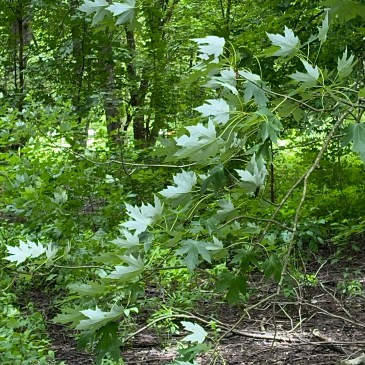
I left spring behind in England, missing the reported return of chiff-chaffs to Norfolk by two days. I’d heard of other migrants arriving—stone curlew to a secret site, for one—at the same time the last of the winter redwings were leaving, heading north. The blackthorn was in full flower, the local woods were full of primroses between the stiff green stalks of bluebells poking through the leaf litter, and the wood pigeons were courting in the garden.


Outside my window there is freshly fallen snow, on top of the several centimeters already on the ground. Tomorrow is the first official day of spring, and the forecast is for warmer weather, but also for more snow, falling in the cold nights.


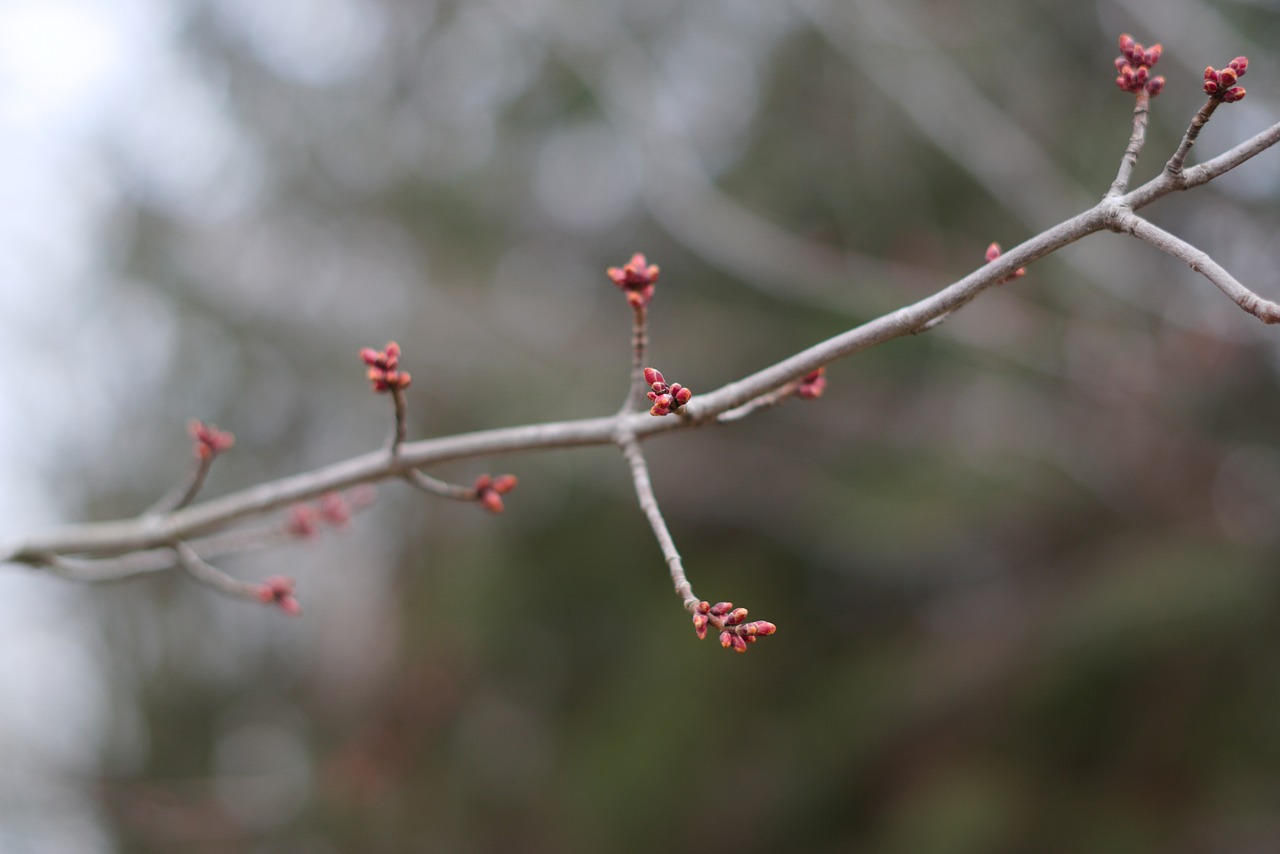
But I will have a year of two springs. Already the turkey vultures are back, and the hooded mergansers; red-winged blackbirds buzz in the swamps and flocks of tundra swans whiten corn stubble fields a little further south and west. Sap is rising; maple syrup is being made.


Over the nine weeks I was in England I watched the field across the road go from stubble to fresh-ploughed soil, gulls and rooks following the tractor, to the hazy green of an emerging cereal. The belt of trees up on the hill changed colour subtly, the dull grey of winter overlaid with the golds and pinks and greens of swelling buds. The blackbirds and robins began singing earlier every day, and continued later.


It’s harder here in my suburban bungalow to watch the gradual shift into spring than it was in my edge-of-village house in England. But I intend to return to paying attention this year. Almost fifty years ago, the first serious writing I did was a journal of the coming of spring to my southern Ontario home, a project sadly interrupted by mononucleosis and a month of exhaustion. That too was from an edge-of-village, mostly rural setting. But I have easy access to woods and fields, rivers and parkland, and little excuse not to observe and record. A.E. Houseman wrote:

Now, of my threescore years and ten,
Twenty will not come again,
And take from seventy springs a score,
It only leaves me fifty more.

And since to look at things in bloom
Fifty springs are little room,
About the woodlands I will go
To see the cherry hung with snow.

A Shropshire Lad

Of my threescore years and ten, sixty-five will not come again. So I shall go look at things in bloom, and listen to birdsong, and watch the gradual transformation of a winter world.

Image by Noma Lotern from Pixabay 

Biking

One of the many attractive features of moving back to town was the opportunity to bike everywhere: to the farmer’s market, to the grocery store, to the library. This city has a wonderful mixed-use trail network plus a lot of bike lanes, and, for the most part, drivers, used to hordes of university students on bikes, are watchful for and respectful of bikes.

It’s taken me a couple of weeks to get my biking muscles up to speed, but for the last week or so I’ve been biking frequently. (The good weather helps, too.) I have a set of panniers that fit over my rear wheel, in which I can stuff my straw hat, a book, my laptop, shopping bags, water bottle, or whatever else I need to take, depending on my destination. My bike is a 21-speed ‘hybrid’: not quite a mountain bike, but sturdier and wider-tired than a road bike, with front shocks, perfect for the gravel trails as well as the roads.

Saturday morning I biked to the farmers’ market downtown. I kept the panniers empty except for a shopping bag or two, and ventured off down what is a new route for me: the bike lane down the major thoroughfare that leads downtown. Before the bike lane, which is relatively new, this was far too dangerous, and I’m still not sure I’d want to do it at a busier time. But fairly early on a Saturday morning, I felt it was safe enough.

It’s downhill most of the way, and a fairly steep downhill. I kept my speed slow, and enjoyed not having to pedal while keeping a close eye on the traffic. But there were no issues, and I reached the market in about fifteen minutes. I locked the bike and my helmet up, took my bag, and did my regular shopping, potatoes and peppers, kamut wraps, asparagus and cherries, greens. Then I stowed them all neatly in the panniers, bought a glass of freshly-squeezed (extracted?) carrot/orange juice, and considered my ride home.

I wasn’t going to tackle riding up the hill, so going back the way I came was out of the question. Basically, my choices were ride either west or east along the river trail, and then head south. I chose to ride east, which brings me out to a short-but-steep hill (I walked my bike) and then takes me into the Arboretum, and a short ride through its trails to our residential development and home. The whole trip – about 12 km – took me less than an hour, including the time shopping.

Today I biked on quiet residential streets over to the butcher’s (with a small insulated bag and ice pack stowed in the panniers), and then on to Staples to get a document bound, a quick 10 km trip. Tomorrow it will be back downtown, to my Monday morning writer’s group, and then a  loop home along the river, westward this time, and up the trail, back to Staples to pick up the document I took in today, a ride of about 14 or 15 km. I’m still challenged by some of the city’s hills, but I’m also old enough not to be discouraged (or embarrassed) by having to get off and walk occasionally.

BD bought a new bike last week, replacing his road bike with one similar to mine: a couple of trips on the trail system convinced him this was necessary. Older bones need a softer ride! He’s out every day, riding downtown to the library, or around the trails to new birding spots. Our gasoline use, even with BD going to check on the other house every second day, has dropped by half, and likely to drop more as we both bike for errands rather than drive. I’m seriously wondering how long we’ll keep two cars, although we certainly won’t make that decision until we see how we manage in colder, wetter weather. There are times when driving is still preferable: I’ve got a couple of evening events coming up, and I don’t want to bike in the dark (or even in the dusk), but the reasons for having two cars are rapidly disappearing. And there is a good bus system here, if we needed a back-up.

I’m very glad that one of my theoretical reasons for moving has rapidly become a viable reality. It’s a strong reinforcer that this was the right move, and the right time to make it.

A Day to Spoil Myself

Yesterday was a day for relaxation. After six weeks of packing, culling, moving and cleaning, I was truly tired, physically and mentally. We’d officially moved in on Wednesday, spent Thursday and Friday cleaning the old house from attic to basement, readying it for sale. Saturday I ran errands – the market and groceries, and unpacked some boxes; in between we watched the cats adjusting to their new house and thought about where pictures should hang.

Sunday morning I went for a long walk, eight kilometres from the house, around and through the Arboretum, and then made a strawberry-rhubarb pie when I got home. I think I misjudged how tired I was from the house cleaning, because by the time a friend and I had done a garden tour in the afternoon, and I’d cooked supper for us all, I was frankly exhausted. Luckily there was nothing scheduled for Monday except the natural gas barbecue installation, and overseeing that was BD’s responsibility. I could spoil myself.

So off I went, first for a haircut, which includes a head massage (lovely) and then for a pedicure – which includes a leg massage, as well as the back massage from the chair. By the time those were done, I was feeling much more relaxed. Along with the pampering had come some good conversation with another customer at the pedicure salon, a man a bit older than I getting his feet seen to. He was erudite and thoughtful, and it was just one of those wide ranging conversations – from life in the depression to music – that happen with strangers, a nice bonus on my ‘day off’.

After lunch I just puttered around, reading a bit, until four thirty, when our new neighbour across the street had invited us for tea and nibbles. Or rather, her idea of such, which was definitely a full meal, with delicious spreads (one, made with avocado, hard-boiled egg, mayo and lemon juice was outstanding, something BD can eat, and will definitely be added to our menus!), lots of fresh veggies and fruit, crackers and wraps, scones and loaf and cookies…and after more than two hours of another good conversation she sent us home with doggie bags. So I didn’t have to cook dinner, rounding out my day of relaxation perfectly. I ended it with a glass of wine and Game of Thrones. I slept like the proverbial log, and woke up completely refreshed and re-energized this morning.

It’s easy to forget to take care of ourselves when life is busy. I was certainly guilty of it when I was working, and I notice that in all the planning, organizing, and managing the move needed, I was falling back into work habits, not good for my health, mental or physical. But the move is done, all the important boxes are unpacked (and the rest can be done at leisure), the cats are no longer hiding, and we’re settling in to our new life…one designed to be relaxed, simple, and low-stress , after all!

Image credit: By Mozilla, CC BY 4.0, https://commons.wikimedia.org/w/index.php?curid=44547865


The Moving Diaries: Gardening

.

Our new deck now has a line of pots, planted this morning to herbs and tomatoes. The front porch has six blue ceramic pots of flowers and foliage plants. For the first time in twenty-two years, it was a pleasure to plant these. I worked in the garage, the door open to the sun and breeze, and there wasn’t a mosquito or blackfly in sight.

Unlike here in the old house, where after about April 30 doing anything outside means repellent and long sleeves. Backing onto swamp, surrounded by trees, the bugs are just a part of the nature around us, benefiting the birds and bats, frogs and fish – but not me. I can tolerate mosquitoes, but I react very badly to blackfly, bites swelling to the size of a quarter very quickly. Getting the containers planted every spring was an endurance test…and every year I planted fewer. This year, I’ve pruned the shrubs, and the only other thing we’re doing is keeping the grass cut and edged, until it sells.

I find myself looking forward to gardening again, getting my hands in the soil, planning plantings, in a way I haven’t for some time. The new garden is smaller, and already well planted to perennials, which helps – I’m not having to decide between birding or gardening in May – there is time for both. And for sitting on the deck with a drink and a book, just relaxing. A robin is nesting in one of our trees, and the shrubs had foraging cardinals and chipping sparrows this morning. I’ve put a hummingbird feeder up, along with a couple of hanging baskets of red Calibrachoa to attract them: no luck yet (that I’ve seen), but I live hopefully.  Eighteen days until moving day!


As Christmas Approaches

December, and time here in Canada to start thinking about the holidays. While we acknowledge the need for ritual and gathering in the shortest, darkest days of the year, Christmas is not a holiday BD and I usually celebrate, for a number of reasons. Neither of us are conventionally religious, and therefore the Christian reasons for the holiday are not relevant to us. The rampant consumerism that has taken it over in most of the western world also repels us, and, finally, BD – who has the two-sided gift called Asperger’s Syndrome – is overwhelmed by the lights, music, colours and crowds of the season. So, over the years, we’ve distanced ourselves from the mad rush of Christmas.

For many years we’ve travelled over the period, removing ourselves from it altogether. We’ve been, on December 25th, places as far-flung as Antarctica (it’s summer there, in mid December), India, China and England. But this year, since we are no longer bound by the two-week school holiday, we’re not travelling until January, and will be home.

We’re spending Christmas Day with BD’s brother’s family, his nephew home from Australia, where he’s in grad school; his niece home from a closer university. We haven’t yet decided who is contributing what to the meal, but it will be a shared effort. We’ll tell stories and learn what the kids have been up to, and be respectful of this family’s Christian beliefs, as they will be respectful of our agnosticism. Then we’ll head down to my sister’s house for the 27th, to spend some time with her and her husband, and my brother and his family. This is the first year without anyone from our parent’s generation: both my father, and my sister-in-law’s father, died this past year, and so we are gathering differently, to share food and wine and laughter in a different house than other years, a new chapter in the story.

When I look back on my childhood, what I remember of Christmas – what stands out – is never the presents. I remember the food, the turkey and stuffing, the cranberry sauce and the mince tarts. There were almost always extra people at that dinner: widowed friends, an elderly childless couple, my mother doing her best to alleviate loneliness for one day. I remember decorating the tree each year, bringing out the old, battered decorations, having their stories retold each year, maybe adding one or two new ones, often hand-made. I remember sitting one year with my older brother singing Silent Night in front of the tree. I remember the long games of Monopoly on Christmas afternoon. And the few presents I do remember were ones made with love and by hand: a new outfit for my favourite doll, when I was about 4 or 5; a purple corduroy housecoat when I was thirteen, a hand-carved plaque saying Sid (because my hair, in the mornings, looked like Sid Vicious’s,) that BD made me early on in our relationship.

Our families on both sides have long ago given up on exchanging anything more than token, consumable presents: none of us need anything, and so the money we would have spent goes to support a cause we believe in – anything from the local food bank to mosquito nets, wildlife habitat to refugee sponsorship. Some of those battered decorations will be on my sister’s Christmas tree this year, and the stuffing and mince tarts are still my mother’s recipes. Our extended celebrations will be spread over the days between the solstice – December 22nd this year – when we light a candle that will burn through the night, an acknowledgement of the shortest day, to New Year’s Day, when we’ll host friends and family for a late lunch.

Whatever you celebrate or acknowledge in late December, whether or not your family is close or not, there is a deep atavistic need for light and warmth and companionship in the darkest days in the northern hemisphere. I wish that for everyone, although I know it isn’t possible for many. As you plan your Christmas, think about what you remember. I am old enough that a tangerine in my stocking was a special treat of the season. Such a small thing…but given with great love. That is what I remember.

Old, Cold Houses

Yesterday it rained all day, heavily, the last gasp of Hurricane Patricia reaching up into the edge of Canada. Today the winds blew hard, gusting to about 90 km/hr, bringing a cold front with them, and stripping most of the remaining leaves from the trees.

Parts of the house are cold tonight.  A four-square built in 1911, it’s grown a bit from the original; a summer kitchen renovated to a rec room in the sixties; the attic made into living space sometime earlier than that; our own addition of a sunroom.  Insulation didn’t exist originally and was minimal when added sometime later.  The windows aren’t quite sealed.  We’ve added pink fibreglas and vapour barriers in all the places we’ve stripped the walls down to the beams, and in the new sunroom.  The rest of the house had insulation blown into the walls a few years ago.  It helps.  It doesn’t make the house completely airtight, and on a day like this, bits of it are cold.

We’ve grown used to this, over the years.  We wear fleece-lined slippers, and layers of warm clothes. There are throws to snuggle into on the couch of an evening.  I have tea after dinner, reading or watching television.  The new high-efficiency oil furnace (no other choice except electricity, where we are) chugs away, doing its best.

All the heating to the bedroom floor is by convection, open grates in the floors and the wide staircase allowing heat to move upward.  Now we’re both home all day, the bedrooms are much warmer than when we were working, and had the thermostat turned down when we were out. We’re still adjusting to that, both of us liking cold bedrooms to sleep in.  I do wonder how the grandmother who slept in the attic survived, though – it’s just plain COLD up there – no heating at all, ice on the windows in the winter, damp in the spring and fall.  I suspect pneumonia carried her off.

We bought the house from a woman who had been born in it, about seventy-five years earlier.  She told us how the pipes use to freeze in the kitchen, unless the cupboard doors under the sink were left open in the winter. How the drains out to the dry well and the septic tank would freeze, too. The house wasn’t built with a bathroom; it came later.  I imagine going out to the privy on a cold winter’s night, or bathing in the kitchen in a tin tub.  We may only have the one bathroom, and when the winter wind is from the northwest prepare to shiver if you forget to turn the electric heater on – but luxury compared to that.

And that is what I am thinking about, this first windy, cold night of the fall.  What exactly do we need, and when does more become, in the words of a Monty Python skit, “bluddy luxury”? We could warm the house more – it would be simple:  turn the heat up, and turn more of the electric space heaters on. But not only would that cost us money, it would produce more greenhouse gases, more climate change, more pollution. Just because we can have something, should we? Doesn’t the attitude that says ‘sure, have more’ lead to obesity, metabolic disease, debt crises, foreclosures, addiction, and all the sins and symptoms of our material world?

Perhaps that’s an advantage of an old, cold, house.  It makes you think.

First Frost

I had to scrape ice off my car windows yesterday morning, before I could go to town.  A mid-October frost is normal here; I wasn’t surprised by it.  The scraper was already in the car.

Other years this frost would have been one more source of stress in a too-busy life.  The advent of winter meant getting up fifteen minutes earlier, or changing my routine somehow to find the extra five to ten minutes needed to clean my car of ice or snow (or both) every morning.  Now, I’m not in any hurry, so there’s no stress.

Friends and family are already bemoaning the frost on Facebook.  Winter is coming. Yes, it is.  Yes, the days will shorten, snow will fall, life will get more difficult.  On the other hand, there are no mosquitoes, no grass to cut or weeds to pull, no pollen allergies or need for sunscreen, and people are friendlier and more helpful to one another in the winter, in the face of shared adversity.  Life moves from the patio to the fireside, but the beer, friendship, conversation and laughter are just as good in either place.

First frosts aren’t always about temperature.  First frosts can be the first gray hair, the first twinge of arthritis, the first child leaving home.  The first promotion of someone younger over you; the first time you can’t open a jar lid.  The first pair of readers.  The first death of someone you love, or someone you work with.  Some first frosts are light, and some are hard freezes.  But just as our attitude towards snow and ice and freezing temperatures affects how we see winter, our attitude towards aging affects how we age. There are some things we can’t change, but there are many we can.  When my father’s eyesight began to finally fail him in his late nineties, he could have mourned his inability to read his beloved history books; instead, he asked for an iPAD and learned to use iBooks, increasing the font size until he could read the words.

It will snow soon.  The first falls will be light, and will need no shovelling, and maybe not even a scattering of salt.  But at some point it will really snow.  Snow shovelling is my job, mostly, due to BD’s back problems. Last year, I was less than six months post-major-abdominal-surgery and still on lifting restrictions.  But with an ergonomically-designed snow shovel, and moving only small amounts in each scoop, the pathways got done, and I did myself no damage, and probably some good.  It took me longer.  Other things didn’t get done.  But it was a priority.  Winter is good at sorting out what really has to be done, and what doesn’t; what is worth the time and energy, and what can wait, or go by the wayside altogether.

Winter, aging or serious illness teach many of the same lessons.  Both summer and winter are beautiful, but they both ask and give different demands and different gifts. Like everything else in this world and this life, both demands and gifts are transient.  We do best when we appreciate that simple fact.

On William Morris

Recently I’ve read a number of posts, or comments on posts, where the writer states that the impetus for beginning a more minimalist life was the experience of clearing out a relative’s home after their death. I’ve shared that experience, more than once, and I too believe it was a major reason I try to live as simply as possible. Even so, I seem to have accumulated more possessions than I’d like.

Minimalism, for me, isn’t about bare counters and ‘everything in its place’. My credo is that of William Morris: Have nothing in your house that you do not know to be useful, or believe to be beautiful’.

In clearing out my parents’ house finally this spring, the two categories of things we found hardest to deal with were my mother’s watercolour paintings, and, the objects – mostly porcelain and china – that had made the journey from England, and in some cases had been in my mother’s or father’s family for several generations. Heirlooms. Not of any financial worth, but all had stories attached.

Even among three children and three grandchildren, we couldn’t keep all of my mother’s flower paintings. She was prolific, and, at the height of her talents, good. We all chose a couple we truly loved, gave a few away to friends, and gave the rest to the local horticultural society for their monthly draw table, knowing that way they’d go to people who loved flowers (and who chose the painting as their prize from the table, as that’s how those things tend to work.)

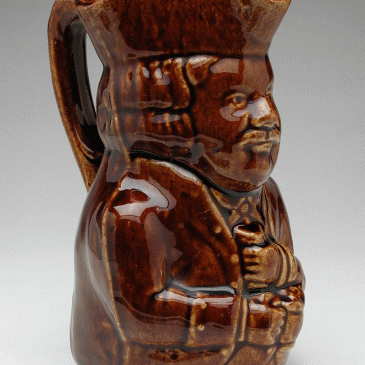
And the heirlooms, some of which are neither beautiful nor obviously useful? We kept those, even though they added to our possessions. How could we not? Our history as a family is reflected in them: the Toby jug from the pub my great-great-great grandmother kept; the vases my sea-captain great-great uncle brought back from China; the willow-pattern plates my father ate his Sunday dinners from at his grandfather’s house. We don’t own these things; we keep them in trust for the next generations, as repositories of the stories that go with them. They make the family history tangible, and, therefore, are both useful and meaningful.

So perhaps for me William Morris’s statement needs a slight revision: Have nothing in your house that you do not know to be useful, believe to be beautiful…or know to be meaningful‘.