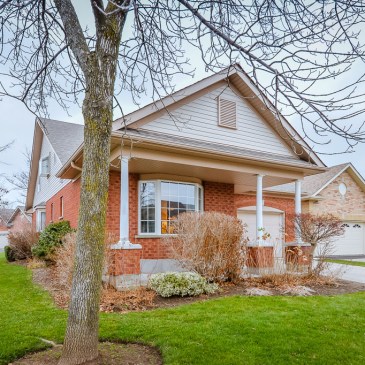
Seven Things – no, Eight – I Love about Our New House


We’ve been here two months next week. Here’s what I love about the new house.

front3

  1. Its location. I’ve written about this before, so I’ll keep this short. I can walk or bike to the university’s arboretum, which alone gives me a 6 km walk if I do the perimeter paths alone, and a lot more if I wander the interior trails…and it’s an easy connect to the city’s multi-use trail system, which takes me downtown, or up to the big north-end park, or further out to the lake. Or along the river system, east, west, or north. I can also walk or bike easily to grocery stores, two butchers, a seasonal local-produce stand, and all the shops and services I could want.
  2. The recreation centre that’s about 250 metres away. Which includes a 25 metre pool, where I’m learning to swim again; a fitness centre, an excellent library, billiard rooms, bocci and tennis courts, concert and theatre venues, and lots of other activities to participate in, should I choose to.
  3. Air conditioning! It’s a hot and humid summer. The previous house didn’t have air conditioning; it kept cool with huge old shade trees and windows open at night, but it would have struggled this summer. We use it judiciously, but we appreciate having it here.
  4. The natural gas barbecue. No propane tanks to buy and change and take back. We’ve barbecued more here in the last month than I think we did in the last house in the past five years. (This is related to reason 6, too.)
  5. New construction. Our previous house was built in 1911. This one was built in 1998. Its windows fit, its doors fit. Floors are flat. It has good insulation. I dusted today for the first time in two months, whereas the old house – well, you dusted, and a few hours later you wondered why you’d bothered.
  6. No mosquitoes! OK, it’s a very dry summer. But it hasn’t stopped the mozzies at the other house, which is rural and in an area with a lot of maple swamps. Here, there’s the occasional one, but I can go outside to pick herbs and tomatoes without insect repellent, which wasn’t the case before.
  7. The city it’s in. I’m hugely biased: I lived here for sixteen years, between 1978 and 1994, before we moved a bit further south to make our commutes do-able. I always wanted to come back – but there was good reason for that. I’ve talked about the trail system, but to that I can add beautiful parks along the rivers, a good arts centre, one of the best bookstores in the world with welcoming writers’ community, some wonderful old architecture, the university’s library, music performances and theatre, the year-round farmer’s market, the best-behaved off-leash dogs I’ve met outside of Paris, and a strong local-food movement. All the things that make a city livable, for me.
  8. The community-within-the-city. Friendly, welcoming neighbours who balance that friendliness with respect for personal space and choices about lifestyle and involvement in community activities.

The biggest thing we’ve had to get used to (again) is paying for water. We’ve been on our own well for the last twenty-two years, and while we were always careful during other drought summers, the water was, essentially, free, although of course there was pump maintenance and replacement, as well as water-tank replacement in those years, and the electricity to run the pump. (Sometime I’ll do the arithmetic on that and see which one was, in the long run, more expensive!) Here, not only do we pay for water use, but we are bound by water restrictions – the city uses groundwater, and in a dry summer like this one we are limited to which days and which hours we can water flowerbeds; lawns are out of the question. I have no problem with that at all – essentially it’s no different than what we did with our own well. I’m not complaining about either paying for water (we should) or the restrictions (necessary and responsible): it’s just the one thing that wasn’t on our radar for the last twenty-two years.

So, when people ask me do I miss the old house, the honest answer is no. It was time to move. I’m glad we did.

The Moving Diaries: The Last Week

We’re now at the point where we’re basically camping at two houses. The new house has a basement full of boxes, most of the dishes, pots and pans, and non-perishable food; the old house has most of the furniture, the perishable food, and very little else. We drive between them half-a-dozen times a day, always with more boxes. Sometimes we eat there, sometimes here.

We’re both tired. It’s been six weeks of renovations, cleaning, packing, moving things, unpacking, and there’s another week to go. The movers come Wednesday, so by the end of that day the new house will be mostly set up. Then two days of cleaning and touch-ups on the old house, and it goes on the market on Saturday. We have to keep an eye on it, for insurance purposes, and keep the grass cut and the gardens weeded, until we hand over the keys to the new owners. Which, we hope, will happen sooner rather than later, of course!

Surprisingly, we’ve managed to stay good-tempered throughout this whole process, even in putting together the new gas barbecue (and, to a lesser extent, the new bedframe, which came with some of the worst instructions I’ve ever seen). In part this is because we’ve each taken responsibility for areas the other either can’t do, or dislikes doing: some of the physical work needed here was simply beyond my strength, so BD has done that, as well as a fair bit of packing, moving, and either taking things apart or putting them together; I’ve basically been project manager for all the renovations at the new house, arranged the movers, dumpster, window cleaners and wildlife removal needed here, done the hazardous waste drop-offs, kept the grass cut and the books balanced, done a lot of packing, been BD’s gofer and assistant as needed, kept the master lists of what needs doing and what’s been done – oh, and done the grocery shopping and cooking so we don’t starve.

The unpacking – much of it – can happen more leisurely. I’m thinking one or two boxes a day, no more. BD has the perfect excuse – Euro 2016 – the European Football Championships (soccer, to the uninitiated) start June 10th, and he’ll be glued to the tv. He has a brand new HD digital recorder at the new house…which means never missing a game. And since my study at the new house is a completely separate room, with a door, (unlike here, where I took over the dining room, which has two doorways onto the living room…which is where the tv is) he can watch all the games he wants and it won’t disturb me. And maybe I’ll get some writing done.

The Moving Diaries: Clearing the Attic

This was the weekend of the attic. Fairly typical of American Foursquare houses, our attic is large, a big square space with two dormers front and back. With a total floor space of about 400 square feet, and a ten-foot ceiling, it’s a space with promise. We always thought we might turn it into a studio for me…but it never happened. So it became a place to store things, as attics do.

Friday I spent a couple of hours sorting: garbage, thrift store, keep. Three piles. Then I lugged boxes and bins and bags up the steep stairs and consigned the piles to containers. And that was enough, for one day.

Saturday, I brought the containers holding the ‘keep’ items down one floor to the spare bedroom, which is becoming the box repository. Then I left BD watching soccer and went to a friend’s open barn day,

kid
Adorable Angora Kid

where she shows off her spring crop of angora goat babies, and gives tours of her woolen mill and shop. Angora kids are adorable, and the colours she dyes the wool are enough to make me want to start knitting again. After we move.


Sunday – today – I started the day with a good two hour walk, birding the woodlands and open spaces of the university arboretum. Spring migration is just starting, resident birds are defending territory and building nests, and the air was loud with song and the drumming of woodpeckers. I needed scarf and gloves for most of the walk, but by ten it was warm enough to shed both – but it was also time to head for home and finish the attic.

I surveyed the spare room, and realized my first step was to move the ‘keep’ items – or most of them – from the blue plastic bins to boxes. The plastic bins are meant for taking items to the new house that we’ll unpack immediately, the bins returning to the car for another trip. So I packed boxes, carefully labelling them: “Board game, desk lamp, miscellaneous” one box says. “Various winter things,” another says. Sometimes what goes into a box is determined by the size of the items and the box, not the relatedness of the items. But since this was all in the attic, none of it is needed immediately we move, and these boxes will be relegated to the basement shelves.

Then I took the boxes back up to the attic, and packed up the items for the thrift store, carrying them all to the attic stairs landing. Now, the stairs are narrow, steep, and have a bend part way down, and I’m not what you might call agile. BD was out birding. So I carefully stepped backward down the stairs, bumping a box from one step to the next, until I was on the bedroom floor landing and could stand up with the box in my arms. Eight times. Then down the next flight of stairs, and out to the car, where I put the boxes in the back seat.

That left about eight largish pictures in frames, and two large mirrors that were in the attic when we moved in twenty-two years ago. Plus two portable baseboard heaters. These were beyond me. When BD came home, he, much more agile, carried them down the stairs and stowed them in the trunk of my car. The thrift store has a nice young man of about twenty who will take them (and the boxes) out of my car tomorrow.

What is left up there? Six garbage bags, which we’ll bring down in stages for curbside pickup – we’re limited to three bags every second week. A desk and a bookshelf which will wait for the professional movers. The painting equipment that is still in use. I think that’s it. BD will finish painting the space in the next week or two….and then the people that view the house, and the eventual buyer(s), can dream about what they will do with it: a studio? A nanny flat? A playroom? The wide pine boards under the carpet could be sanded and finished. A skylight or two could be installed, along with a spiral staircase to replace the awkward existing stairs. All things I thought about. But I went to Antarctica and Tibet and the Himalayas, to the Amazon and the Serengeti and the jungles of Borneo instead, leaving the promise of the attic space to someone else, in the end.

The Moving Diaries: April 20th

I started on the bedroom this week, sorting out the two drawers full of toiletries, travel miscellany, jewellery, make-up, and OTC remedies. This generated a lot of garbage – more than I would have liked, but there is nothing else to do with dried-up eye makeup or solidified hand cream. The expired OTC drugs are going back to the pharmacy, and the thrift store will be getting a few things.

Tomorrow I’ll start packing clothes into boxes. We’re in the in-between season here – it was 25 C the other day (77 F), but it’s supposed to snow on Monday, so it’s not as simple as packing away all my winter clothes, but instead trying to second-guess what I’ll need, and gamble on the long-range weather forecast approaching reality. If I’m sensible, I’ll label the boxes precisely, for the day it’s ten degrees hotter than it was supposed to be and I need my shorts.

Once a week or so I go over to the new house to take pictures of the gardens, so I know what early spring bulbs are planted where. The house is empty, so no-one minds this. I almost missed the early species iris – it was so hot the week they bloomed they only flowered for a couple of days. The daffodils are just starting, and the lawn is full of violets. I think about the new plantings – scilla, snowdrops, species Narcissus – I’ll put in come the autumn.

In-between, I make the necessary arrangements with the utility companies, the lawyer, arrange for a real estate agent to come to value this house….reassuringly, his estimate and the financial institution’s assessment are nearly identical. I’ve also booked appointments with the renovator and the HVAC company that will install our new gas fireplace.

You will note that it’s “I” that does all this. BD’s Aperger’s-related anxiety is showing itself in subtle ways, mostly by retreat to things he can control – his detailed TV recording/watching schedule, his even-more-detailed bird records, his daily walks and cycling. He’ll be fine in the new house: he’s spent hours and hours looking at the 360-degree visuals of each room on the internet; he’s done schematics for furniture layout, he’s planned his new cycling routes and walks with the help of Google Maps. But the actual work of arranging the move has too many details, too many people to talk to, too many periods of uncertainty for him. If he could do things one at a time, he’d probably be ok….but that isn’t how it works. So it falls to me.

We’re off this afternoon to Home Depot to look at window treatments, having decided that the north-facing bay window in the living room and the sliders in the family room will need something in the winter months – originally we were going to leave them without blinds, but have reconsidered. After lunch: my number one rule for this sort of shopping is never on an empty stomach!

The Moving Diaries, April 15th

I packed the first boxes this week. I started with the spare room, which holds my out-of-season clothes, a cupboard full of wrapping paper, gift bags, and related items, a couple of bookshelves, and not much else other than the futon-sofa-bed, the ironing board, and the wireless router. I thought this would be a fairly simple room to begin on.

I wasn’t far wrong. I ended up with one stuffed garbage bag, three boxes for donation, three for moving, two for paper recycling. The hardest part was sorting the books. I don’t buy a lot of books, and so what I have are ones I will tend to re-read. So, not surprisingly, I ended up keeping most of them, sending a dozen or so to the thrift store and another dozen or so (collapsing, yellowed paperbacks) to recycling.

What surprised me is how it made me feel. Two winters ago, not working due to health issues but with a fair bit of energy much of the time, I cleaned and culled almost every room in the house. That was actually fun: I was focused on de-cluttering my life, and it gave me something to think about that wasn’t my health. This process now isn’t depressing, but it does make me a little bit sad. As much as I like our new house and just about everything about it – the layout, the neighbourhood, the city it’s in – I’m still a little bit sad to be leaving this house and this village after twenty-two years. I suppose that’s normal.

We’re leaving because it’s time to, because the new house and its location is better for my health and BD’s, easier for me to walk and bike every day, less stress for both of us in driving back and forth to town for everything we need. It’s also only twenty years old, not a hundred and twenty, and won’t need the constant and sometimes exhausting maintenance this one does. But while the neighbourhood is nestled between the university’s arboretum and its nature reserve, and attached to the city’s multi-use trails – all good things, and the defining reason for buying there – we won’t be looking out on twenty acres of woodland, as we do now. (On the other hand, we’ll actually be able to sit on our new deck and not be eaten by mosquitoes between April and October.) We won’t have foxes running through the garden, and red squirrels beating up the larger black ones, and the wild turkeys coming to the feeders…but I also won’t be paying a small fortune to have a nest of raccoons removed from my fireplace chimney, as I am on this coming Monday. Compromises.

The three boxes have gone to the thrift store, the boxes to be moved are taped and labelled. Garbage and recycling waits till next Thursday. The spare room is basically done. Tomorrow I’ll start on the bathroom – just the cupboards there, really, to be done.

And while part of me is sad, part of me is excited. I mull over paint colours and window treatments as I drive. I think about light fixtures. But mostly I think about what my daily routine will look like, about being able to walk or bike into nature from my front door, but also bike to the grocery store and the public library. To attend plays or hear speakers or listen to concerts at the university and walk home in fifteen minutes. To access the university library seven days a week, instead of only weekends when the parking is free. All of that makes me smile. Sad and happy, an end and a beginning, goodbye and hello.

Quiet

For the worst two months of Ontario’s winter we’ve escaped to a small English village in the still mostly rural county of Norfolk; it’s winter here too, but here that means the occasional overnight frost and daytime temperatures anywhere between 4 and 12 degrees C. There are flowers out, snowdrops and winter aconite and primula. It rains a bit, but we also have beautiful sunny days, and it rarely rains hard enough, or long enough, to mean we can’t get a good walk in every day.

This morning, in glorious 7 degree C sunshine, we were standing on a high point on Roydon Common, a large expanse of heathland a few miles from our village. It’s about 2 km square (a bit more than a square mile), inhabited by birds and roe deer, netted with walking paths, grazed by some Dartmoor ponies, and mostly empty of humans except a few dog walkers. We were looking north-east: to the west is the market town of King’s Lynn and the bay of the North Sea called The Wash; in all other directions, it’s farmland.

We have something here we didn’t realize we were missing even in our rural home in Ontario: quiet. The Ontario house is 4 km or so north of the major highway into Toronto (the equivalent of an interstate or a motorway) and it is never quiet: truck and car traffic is heaviest morning and evening but it is constant, all day, every day. Even 4 km away, with the prevailing winds bringing the sound to us, the highway is a background noise to all we do, in or out of the house. A railway runs through our home village: it’s a spur line, with trains two or three times a day, but it’s still noise. We’re on the flight path for take offs and landings at Pearson International Airport. All of this adds up.

But here…our rental cottage is as quiet as can be, even in its village location. During the day, walking the footpaths and lanes, there is farm equipment, the sounds of livestock, a few cars. The major road is a couple of kilometers a away, and has less traffic than my commuter route from when I was working. We sleep deeply here, undisturbed by background noise that we didn’t even realize was affecting our sleep. The first sound I hear most mornings is the call of the pink-footed geese as they fly over the cottage, moving from The Wash to the fields where they feed.

Quiet is a luxury in our world, and one I suspect many people don’t know they don’t have. I didn’t…compared to many places, our Ontario home is quiet…it’s just not this quiet. I’ve experienced quiet before, camping in remote places, travelling through the highlands of Scotland, but I’ve never lived in it for an extended time since childhood. It’s been an added blessing in our winter escape. Along with flowers in January, wide skies, and skylarks singing.

The Quiet Joy of Enough

Walking today on the snowy trails at our local conservation area, BD expressed once again his sense of disbelief that we are actually retired. Like many – if not most – of our generation, he’d expected to work to 65. ‘But,’ I gently pointed out, ‘many people just wouldn’t be prepared to take the pay cut we did, to retire early.’

‘Enough’ played its role in determining it was time to retire.  Both in it’s negative sense: ‘I’ve had enough of this job.’ and in its positive: ‘We have enough money to retire.’  The latter statement was true only if we kept the positive concept of ‘enough’ in our minds.  ‘What isn’t need is greed’: I don’t know who said that, and I’m not sure I entirely agree with it – but that depends on how you define need. If you acknowledge that the soul has needs as well as the body, then it’s not a bad quote.

‘Enough’ sometimes is difficult.  My health issues have meant I have had to learn what ‘enough’ is with regard to certain foods; that one glass of wine is plenty; that I have physical limitations that must be considered. BD has had similar lessons to learn.  But ‘enough’ is also marvelous: there is enough time now for me to write, to read and review books, to edit for others, to walk every day: all the things that the demands of the salaried job took away from me.  And even better, there is enough money that I can do these things as a true amateur, for the love of them, and not for profit, and so I have only myself to answer to. But this is true because I can say this of so many things: clothes, furnishings, possessions of all sorts –  ‘I have enough’.

I will honestly admit to greed in the past. I had too many clothes; I liked food and wine all too well, and no-one needs the travel experiences we have had, although how can you regret the sight of a tiger hunting along an Indian river, or an Adele penguin standing at your feet, peering up at you? I can’t.  But I can also say, even about that, ‘enough’.  We have the memories.

Our world is smaller now, but our time is…ours.  I wake every morning with quiet joy, knowing I have enough.


Landscape and Story

A few minutes ago I clicked on a Twitter link on marketing (vs. selling) e-books.  I read through the strategies, and sighed.  I don’t want to do any of this…but should I be?  And then I realized: no.  I quite like what I do, where I am as an author, where I’m going.  I don’t actually want to be a ‘best-selling’ author if that entails hours of publicity, marketing, talks…..that’s not why I write.

All my life I have explained my world to myself in words.  As I get further into my coursework in landscape archaeology, I realize that much of Empire’s Daughter, and much of Empire’s Hostage, the in-progress sequel, is actually, at one level, a fictionalized interpretation of the landscape archaeology of Britain in the post-Roman world.  I ‘kind-of’ knew that, but two days ago I opened a textbook to a map almost identical to the one I drew in the planning of Empire’s Hostage – the northern European world seen upside down – with north to the bottom of the map. An epiphany. Two of my deep passions melding, and a realization, that in my own way, like J.R.R. Tolkien, I am creating, in my writing, a world to mirror and interpret the real landscape that holds my heart.

So I will keep writing with a fuller understanding of why I do.  I’ll keep connecting, through my reviews and blog posts and Twitter, with other indie writers; some of those connections are pure serendipity, like the review I’ll be doing of Ian Cumpstey’s Warrior Lore, English verse translations of Scandinavian warrior ballads – ballads that just happen to play a role in Empire’s Hostage. I hope my reviews help other indie writers sell books. Some of them will take a look at or give a shout out to Empire’s Daughter. Others won’t. Either is fine with me, now I know, viscerally, why I’m writing what I write.  It really is for me, and for the landscape that tells its stories to me. Only, and all, that.

Raking Leaves

The winds that brought in a cold front a couple of days ago also brought down almost all the leaves hanging on to our two Norway maples. Norway maples – Acer platanoides – have, as their scientific name indicates – huge, plate-like leaves, and they don’t decompose easily. I have a couple of choices – I can rake them onto a tarp, and move them to the edge of the maple swamp behind us, in a (useless) attempt to smother the goutweed that someone planted there, long before our tenure in this house. Or I can mulch them into small fragments, and leave them to enrich the lawn. Burning isn’t an option – that requires a burn permit (if you’re at all law-abiding, anyhow) – and on our small property there is nowhere that meets the criteria.

I choose to mulch them into the lawn with the electric lawnmower. But first I have to rake them away from the porch, and the shrubs, and the garage doors where the wind has pushed them. It’s a cool last day of October, and this is just the right thing to be doing. Last year I was still on post-surgery restrictions, and the years before that I was working, gone from the house from dark to dark, and it seemed to rain every weekend. So for some years a landscape service has taken care of our leaves. But this year, it’s all mine, and I’m reveling in it.

I rake the leaves onto the front and side lawns into more-or-less even drifts, and plug in the mower. I start with the mower set at 3 1/2 inches, and go over the leaves, dropping the mower height down as the leaves are chopped. Across the road, a neighbour with a much larger property is burning hers: the smell takes me back to childhood, when we all burned leaves: the scent of fall.

It takes me about an hour and half to do the front and side lawns, clean the mower, sweep bits off the driveway and the walks. The leaves have been reduced to tiny fragments that will decompose easily, returning their nutrients to the soil, feeding earthworms and micro-flora, strengthening the grass and clover that make up our lawn.

There is something that just feels right about taking care of what we own ourselves, instead of paying a service to do it. I draw the line at the highly specialized or dangerous (BD and I are having a debate about our very tall chimney, which needs repointing. I think it’s too tall for him to do; he thinks otherwise. I point out we only re-shingled the one-storey additions and the garage ourselves, summer jobs, and left the high roof of our three-storey house to the professionals. And the chimney is higher than that roof. He’s ‘thinking about it’.) But raking leaves, cutting the grass, pruning…and inside, cleaning, painting, repairing….I like doing these, and they connect me to my house and my garden. I prefer to be a steward, with all the responsibility that implies, than a occupant, leaving the responsibility to others. Too often, in our working days, we felt more like occupants, renting services to keep the place going.

It rained heavily last night, so I can’t mulch more leaves today. I’ve still got twice as much to do – the other side lawn and the back, the the leaves from one Norway maple and a host of other, smaller-leaved trees – but that’s ok. The weather is promising to be warm all this coming week (unseasonably so, actually) and I have the time now. I’ll wave at neighbours, chat over the fence, watch the chickadees completely ignore me as they go back and forth to the feeders. What better way to spend a sunny, early November day?

Old, Cold Houses

Yesterday it rained all day, heavily, the last gasp of Hurricane Patricia reaching up into the edge of Canada. Today the winds blew hard, gusting to about 90 km/hr, bringing a cold front with them, and stripping most of the remaining leaves from the trees.

Parts of the house are cold tonight.  A four-square built in 1911, it’s grown a bit from the original; a summer kitchen renovated to a rec room in the sixties; the attic made into living space sometime earlier than that; our own addition of a sunroom.  Insulation didn’t exist originally and was minimal when added sometime later.  The windows aren’t quite sealed.  We’ve added pink fibreglas and vapour barriers in all the places we’ve stripped the walls down to the beams, and in the new sunroom.  The rest of the house had insulation blown into the walls a few years ago.  It helps.  It doesn’t make the house completely airtight, and on a day like this, bits of it are cold.

We’ve grown used to this, over the years.  We wear fleece-lined slippers, and layers of warm clothes. There are throws to snuggle into on the couch of an evening.  I have tea after dinner, reading or watching television.  The new high-efficiency oil furnace (no other choice except electricity, where we are) chugs away, doing its best.

All the heating to the bedroom floor is by convection, open grates in the floors and the wide staircase allowing heat to move upward.  Now we’re both home all day, the bedrooms are much warmer than when we were working, and had the thermostat turned down when we were out. We’re still adjusting to that, both of us liking cold bedrooms to sleep in.  I do wonder how the grandmother who slept in the attic survived, though – it’s just plain COLD up there – no heating at all, ice on the windows in the winter, damp in the spring and fall.  I suspect pneumonia carried her off.

We bought the house from a woman who had been born in it, about seventy-five years earlier.  She told us how the pipes use to freeze in the kitchen, unless the cupboard doors under the sink were left open in the winter. How the drains out to the dry well and the septic tank would freeze, too. The house wasn’t built with a bathroom; it came later.  I imagine going out to the privy on a cold winter’s night, or bathing in the kitchen in a tin tub.  We may only have the one bathroom, and when the winter wind is from the northwest prepare to shiver if you forget to turn the electric heater on – but luxury compared to that.

And that is what I am thinking about, this first windy, cold night of the fall.  What exactly do we need, and when does more become, in the words of a Monty Python skit, “bluddy luxury”? We could warm the house more – it would be simple:  turn the heat up, and turn more of the electric space heaters on. But not only would that cost us money, it would produce more greenhouse gases, more climate change, more pollution. Just because we can have something, should we? Doesn’t the attitude that says ‘sure, have more’ lead to obesity, metabolic disease, debt crises, foreclosures, addiction, and all the sins and symptoms of our material world?

Perhaps that’s an advantage of an old, cold, house.  It makes you think.