The Monthly Menu

In the first months of retirement, it felt good to be able to shop every day or so, especially with the farmer’s markets in full swing. It was a luxury I hadn’t had in my working days.

But over this autumn, as my days of leisure become fuller with the work of my third, chosen, career, it’s becoming a nuisance. The markets are closed, except for the Saturday ones, and the roads are becoming icy, so last month we went back to the monthly menu.

Once a month, we sit down and plan meals. I create a four-column chart: Date, Meal, Prep on Day, Need to Buy. This goes on the fridge, and can be modified as needed – if I only use half a tin of chopped tomatoes in the curry, then a note is made on the next meal that needs them that they’re in the freezer. I use this chart to determine monthly and weekly shopping lists; I tend to buy meat monthly and freeze it, and everything else weekly, with a quick top-up shop half-way to buy milk or yoghurt or eggs, as our fridge isn’t big enough to keep large supplies of these on hand. It also reminds me what to thaw and what other prep is needed on the day.

This works because there are only two of us, and our lives are fairly predictable. If we decide to go out to a movie and dinner with friends, that’s ok -that meal either doesn’t get made, or, it gets moved to the next day, and that meal cancelled, whichever is easier. Meals can be moved around without too much difficulty, and left-overs always have a meal to be included in.

The other advantage is that in six weeks, when we leave for an extended vacation, we’re not leaving behind a freezer and fridge half-full of food. We left once for a two-week holiday over Christmas, only to have our area hit by a vicious ice-storm that meant our house was without power for eight days. All the freezer foods, all the fridge perishables, had to be discarded (luckily our cat sitter is very flexible on what tasks she’ll take on – oh, and the cats went to live with a friend for that time) as we kept in touch by text from England. I’d like not to put her in that situation again, so both fridge and freezer will be empty of anything that could go bad.

Will I keep this up in the summer, when the markets are open again and fresh local food abounds? Probably not….or I’ll modify it a bit…but for the winter months, it works for us.

The Quiet Joy of Enough

Walking today on the snowy trails at our local conservation area, BD expressed once again his sense of disbelief that we are actually retired. Like many – if not most – of our generation, he’d expected to work to 65. ‘But,’ I gently pointed out, ‘many people just wouldn’t be prepared to take the pay cut we did, to retire early.’

‘Enough’ played its role in determining it was time to retire.  Both in it’s negative sense: ‘I’ve had enough of this job.’ and in its positive: ‘We have enough money to retire.’  The latter statement was true only if we kept the positive concept of ‘enough’ in our minds.  ‘What isn’t need is greed’: I don’t know who said that, and I’m not sure I entirely agree with it – but that depends on how you define need. If you acknowledge that the soul has needs as well as the body, then it’s not a bad quote.

‘Enough’ sometimes is difficult.  My health issues have meant I have had to learn what ‘enough’ is with regard to certain foods; that one glass of wine is plenty; that I have physical limitations that must be considered. BD has had similar lessons to learn.  But ‘enough’ is also marvelous: there is enough time now for me to write, to read and review books, to edit for others, to walk every day: all the things that the demands of the salaried job took away from me.  And even better, there is enough money that I can do these things as a true amateur, for the love of them, and not for profit, and so I have only myself to answer to. But this is true because I can say this of so many things: clothes, furnishings, possessions of all sorts –  ‘I have enough’.

I will honestly admit to greed in the past. I had too many clothes; I liked food and wine all too well, and no-one needs the travel experiences we have had, although how can you regret the sight of a tiger hunting along an Indian river, or an Adele penguin standing at your feet, peering up at you? I can’t.  But I can also say, even about that, ‘enough’.  We have the memories.

Our world is smaller now, but our time is…ours.  I wake every morning with quiet joy, knowing I have enough.


Old, Cold Houses

Yesterday it rained all day, heavily, the last gasp of Hurricane Patricia reaching up into the edge of Canada. Today the winds blew hard, gusting to about 90 km/hr, bringing a cold front with them, and stripping most of the remaining leaves from the trees.

Parts of the house are cold tonight.  A four-square built in 1911, it’s grown a bit from the original; a summer kitchen renovated to a rec room in the sixties; the attic made into living space sometime earlier than that; our own addition of a sunroom.  Insulation didn’t exist originally and was minimal when added sometime later.  The windows aren’t quite sealed.  We’ve added pink fibreglas and vapour barriers in all the places we’ve stripped the walls down to the beams, and in the new sunroom.  The rest of the house had insulation blown into the walls a few years ago.  It helps.  It doesn’t make the house completely airtight, and on a day like this, bits of it are cold.

We’ve grown used to this, over the years.  We wear fleece-lined slippers, and layers of warm clothes. There are throws to snuggle into on the couch of an evening.  I have tea after dinner, reading or watching television.  The new high-efficiency oil furnace (no other choice except electricity, where we are) chugs away, doing its best.

All the heating to the bedroom floor is by convection, open grates in the floors and the wide staircase allowing heat to move upward.  Now we’re both home all day, the bedrooms are much warmer than when we were working, and had the thermostat turned down when we were out. We’re still adjusting to that, both of us liking cold bedrooms to sleep in.  I do wonder how the grandmother who slept in the attic survived, though – it’s just plain COLD up there – no heating at all, ice on the windows in the winter, damp in the spring and fall.  I suspect pneumonia carried her off.

We bought the house from a woman who had been born in it, about seventy-five years earlier.  She told us how the pipes use to freeze in the kitchen, unless the cupboard doors under the sink were left open in the winter. How the drains out to the dry well and the septic tank would freeze, too. The house wasn’t built with a bathroom; it came later.  I imagine going out to the privy on a cold winter’s night, or bathing in the kitchen in a tin tub.  We may only have the one bathroom, and when the winter wind is from the northwest prepare to shiver if you forget to turn the electric heater on – but luxury compared to that.

And that is what I am thinking about, this first windy, cold night of the fall.  What exactly do we need, and when does more become, in the words of a Monty Python skit, “bluddy luxury”? We could warm the house more – it would be simple:  turn the heat up, and turn more of the electric space heaters on. But not only would that cost us money, it would produce more greenhouse gases, more climate change, more pollution. Just because we can have something, should we? Doesn’t the attitude that says ‘sure, have more’ lead to obesity, metabolic disease, debt crises, foreclosures, addiction, and all the sins and symptoms of our material world?

Perhaps that’s an advantage of an old, cold, house.  It makes you think.

Kitchen Gadgets I Wouldn’t Want to be Without #2: The Stick Blender

The simple stick blender is a gadget I use almost every day. In the last two days, it’s been used to make smoothies, blend a roux into chicken broth to thicken a stew, and transform left-over roast vegetable salsa into pasta sauce.

I often don’t use electric appliances – I own a hand-held mixer, but usually I mix cake or cookie or muffin doughs by hand, with a solid dinner fork. I might as well use a few more calories up before I eat what I’ve baked! But blending is a different thing.

My sister gave us a traditional blender as a house-warming present the year BD and I moved in together – 1979 – and we still have it. BD uses it to make hummus weekly, and I use it occasionally, but the stick blender has replaced it for most uses. It’s just simpler, and easier to clean.

I’m on my second one. The first one I bought was bottom-of-the-line, inexpensive, since I wasn’t sure how much use it would get. Eventually it burned out – but not immediately – so I bought a better one. Two in fifteen years isn’t too bad!

Here’s how I transformed the salsa to pasta sauce – I’ll start with the salsa recipe, full of local, seasonal vegetables bought at the farmers’ market on its last day for this year.

Roasted Vegetable Salsa

2 red peppers

2 small eggplants (about 3 inches each)

1 medium zucchini

6-12 garlic cloves, depending on how much you like garlic

1 small onion

10-12 grape/cherry tomatoes, preferably roma type

1 cup finely diced butternut squash

1/2 c olive oil

2 Tbsp balsamic vinegar

rosemary

basil

oregano

sea salt

black pepper

1/2 c feta cheese

Preparation

Peppers: seed and dice finely

Eggplant: peel and dice finely

Zucchini: dice finely

Garlic: peel and dice finely

Onion: peel and dice finely

Tomatoes: dice finely

Squash: peel and dice finely

Toss diced vegetables with olive oil and spices and spread on parchment paper on two cookie sheets. Roast at 360 degrees F for 30 minutes. (A higher temperature than this destroys much of the goodness of olive oil.)

Add 1 Tbsp each of dried rosemary, basil, oregano, and 1 Tbsp sea salt, and 1 tsp coarsely ground black pepper, plus the 2 Tbsp balsamic vinegar. Mix well. Adjust seasonings to taste and add more olive oil if desired. Let sit at room temperature to blend flavours.

Just before serving, add 1/2 c feta cheese. Serve with crostini.

This makes about 3 cups. I had just over a cup left over.

To make pasta sauce:

Add 1 c chicken or vegetable broth, preferably low sodium as there is a fair bit of salt in the salsa. Bring to a boil gently. Cool somewhat, and blend in the saucepan with a stick blender.

This gives you a creamy, tangy pasta sauce. Use as a vegetarian sauce with more cheese if desired, or, add ground chicken, turkey or whatever you like.

Now, those of you who follow this blog know that BD is allergic to all dairy. So I actually made two versions of this, one with feta and one without, and did this sauce twice: both worked well, but I would definitely add ground turkey or spicy turkey sausage to the dairy-free version for protein.

Budget Check!

It’s the first of the month, the day I add up and analyze all the expenses that I entered into the spreadsheet all of the previous month. And because it’s the 1st of October, it’s also time to do a larger analysis, which I do every three months.

Let me preface this by saying I pretty well made up our budget: the numbers I assigned to categories other than fixed expenses were fairly random, my gut feeling on what we had been and should be spending. It turns out I was right on the money (forgive the pun, it was unintended) on some things, and out to lunch on others.

Here’s where I was right (defined as being with 10% of the average monthly expenditure): car maintenance (not gas); the cats; clothing, health – over-the-counter drugs and anything our drug plan doesn’t pay for – and holidays.

What I overestimated: lawn and garden expenses, and, house repair and maintenance. Given we’ve been doing a fair bit of house renovations this year, this latter one surprises me – but it’s mostly been cosmetic, and paint just doesn’t cost that much, I guess.

Now for what I underestimated – the longest list!

Car running expenses. This one surprised me, since we’re not commuting to work any more. We live in the country, so all shopping, library visits, movies, etc., mean a drive. I didn’t realize how much of this I did on my way home from work before, trips that now entail driving to town. I need to get better at consolidating trips!

Charity: well, we should be giving more than I had budgeted, so this one is a good thing.

Entertainment: twice what I had budgeted. But we like going to movies…and the occasional play. Expensive rural internet means Netflix or its competitors isn’t an option. Hmmm.

Groceries: we choose local and sustainable over cheap for meat, fruits and vegetables. It costs. BD’s allergies also mean some specialized foods that are also expensive. I try to make up for it by buying other things at NoFrills, but I don’t think I’ll ever get the monthly expenses down to what I thought I could.

Household: this was a catch-all for anything that wasn’t health and wasn’t groceries, like a new broom or picture hangers. I’m surprised by how high it is, given that we try not to buy much. A surprisingly high portion of it is fees: drivers’ license renewal, memberships, credit-card renewal fees (worth it, though, because we use our air miles frequently).

And then there is Miscellaneous – which differs from Household in that it involves things like haircuts and pedicures and anything else that didn’t fit anywhere else. I probably should just amalgamate these last two.

Our variable expenses are running about 20% higher overall than I thought they would. Now, this isn’t a huge problem – we’re still spending less than what is coming in, but it’s not leaving us with as big a cushion as I would like, and, because we only retired in the spring, the tax withheld from our pension cheques probably is underestimated, which means we’ll be paying a chunk of income tax in the spring. Once I see how much that is, I’ll have the pension deductions adjusted appropriately so it doesn’t happen in another year. BD turns sixty this month, so he starts receiving a small government pension in November as well, which will also need considering when it comes to tax time.

The completely flexible piece in our budget is the holiday spending. If I take that line out of the budget we’re spending about 70% of our net pensions, so overall I think we’re doing fine. We’re not touching our registered retirement savings plans, or our other savings, at all, and we have no debt. There were a lot of raised eyebrows and voiced concerns when I chose to retire two years early, reducing my potential pension by about 20%, but I was fairly confident we could do it. So far, fingers crossed, it looks like I was right.

Words to Live By

Not all of us can do great things. But we can do small things with great love.

This quote, apparently wrongly attributed to Mother Theresa, remains one of my favourites.  It doesn’t matter who actually said it – it remains a valid and validating statement.

I can’t, for example, paint a masterpiece.  But I can create art for handmade birthday cards, the image usually one I think will have some extra meaning for the person receiving it.

I will never write a best-seller.  But my first novel has been enjoyed by quite a few people, and has been well reviewed.

I will never be a master chef, but I can create meals from scratch that are enjoyed by friends and family.

I am no design guru or master renovator, but I have mudded and caulked and painted and wallpapered and laid tile with care to help create a home we love.

At the end of my career I received a provincial award for contributions in my field of education, completely unexpectedly.  I had never done anything huge, just a lot of small things over many years.

In a recent article in the New York Times, OpEd writer David Brooks asked readers how they found purpose in life.  He writes  “a surprising number of people found their purpose by… pursuing the small, happy life.”

Small things with great love.  Words to live by, at least for me.

Dreaming of Soup

It must be fall.

I woke up this morning from a dream about making soup. Italian wedding soup, to be precise. Of course, I’m craving it now, but as I have none of the ingredients in the house, and no trip to town planned for today, it will have to wait a day or two.

I don’t usually dream about food, but I think a number of factors came together to produce this dream. I was planning menus yesterday, and thinking about making soups for lunches, now we’re home all day. I have either a doozy of a cold or the worst fall allergies I’ve ever experienced – can’t tell which, as my nose is running like an open tap but I have no aches, pains, or lack of energy – so there’s an association with soup as a comfort food. Plus, I actually did make soup yesterday.

While I was away, BD bought the biggest cauliflower he could find, on the basis he didn’t need to buy any other vegetables. (This is the man that eats the same thing every day for breakfast, and another ‘same thing everyday’ for lunch, unless I intervene.) Half of it was still left when I got home Tuesday. We ate part of it in a frittata, but there was still a chunk left, so I looked around for what else we had – potatoes, half a box of frozen vegetable broth, garlic, onion. Definitely enough for soup.

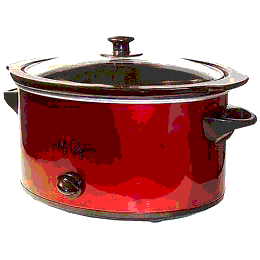
Some years ago I bought myself a second slow cooker, a small one. Except ‘slow’ cooker is the wrong term for this device: it’s a fast cooker. The chopped cauliflower and potato, frozen broth, and garlic was boiling within an hour on high, and then simmered away for another half-hour or so until I could first mash it, and then use my stick blender to puree the mix. I adjusted the seasonings, added cumin, and voilá! -today’s lunch. I’ll turn the ‘fast cooker’ on soon, on low, and bring it back to a simmer, and eat it for lunch with sourdough toast and a sharp cheese for me, and hummus for BD.

And tomorrow when I go to town, I will buy what I need to make Italian Wedding Soup (with chicken or turkey meatballs, for BD’s allergies). I suspect the ‘fast cooker’ is going to be out on the kitchen counter most days now, as the bite of fall sharpens the air, and good long fall hikes sharpen the appetite.

What are your favourite soups? Do you have recipes to share?

Looking at Advertising

Hot and humid weather meant I did my walking indoors last week, at the local shopping mall. While it doesn’t have an organized early-morning mall-walking club as some do, its doors open at 6:30 a.m. due to the presence of a fitness club on the lower level, and people are free to walk the enclosed and air-conditioned space any time after that.

I entertained myself during my walks by thinking about the advertising that is, of course, splashed everywhere – it is the job of stores to get you to spend money, after all. And at one level I don’t have a problem with it – I can’t, given that I do it myself with regard to advertising my young-adult novel (which you can currently download for free as a promotion – details here). But it’s still interesting and instructive to look at how it’s done.

The advertising fell into one of three broad categories: the straightforward: e.g., 50% off all summer styles; the not-quite straightforward: BOGOs (buy one get one for x% off) fall into that category, in my opinion, and the ‘lifestyle’ inducers (We Sell Adventure). Straightforward descriptive advertising I have little problem with, and I’ve taken advantage of many of those sales myself in the past. BOGOs need a little more analysis.  Buy one, get one for 50% off seems to be the most common now. And it’s fine too, as long as you went shopping meaning to buy two of something, but if it induces you to spend half again as much as you had planned, or, to buy two of something when you only needed one, then you’ve fallen for their advertising. Even more insidious was this one: “Buy more save more.”  Think about it.  You cannot save money by spending it. Deconstruct that ad carefully. If you really need three new backpacks for the kids for school, and the deal is 50% off the second one if you buy two, and 70% off the third one if you buy three, then it’s worth considering. But only in that type of situation. It’s not worth it when it induces you to buy three skirts when you went to get one, and the other two don’t match anything in your wardrobe.

One store had an interesting twist on this. Inside the display windows was the banner for the BOGO – 50% off the second item. Painted on the display window itself, and overlaying the banner, was the “70% off selected items” ad. With all the other visual clutter in stores, to me this looked as if it was purposely designed to confuse, so that the consumer doesn’t remember which offer was which. Interestingly, this advertising belonged to a store whose clientele are more likely to be middle-aged or older (my age), and potentially less able to sort through the multiple, confusing ads. (I realize that’s a generalization, but it’s based on my own experience – the older I get, the more I can’t handle visual clutter.)

The ‘lifestyle’ ads are telling you that buying something will make your life more exciting or you more interesting. Alcohol ads are very good at this, and I’m old enough to remember that these were the primary means of selling cigarettes, so we know they work. But here in my urban shopping mall, these two caught my eye: “We sell adventure,” and “Amazing is in your hands.” The first one was on the window of a clothing store that sells casual clothing with a bit of a ‘northern’ flavour (whatever that means). They are not an outfitter for outdoor sports.  They are telling you, subtly, two things: one, the ‘right’ clothes make you more adventurous; two: that you need these clothes to fit in at the cottage or resort you’re heading to (or would like to look as if you were.)  Ask yourself how true either of these messages are.

Amazing is in your hands,” was – you guessed it – at an electronics store, pushing the newest phone or tablet. Now, I’m a techie person, and this house has two laptops, two iPADs, two iPhones, and one iPOD. But we also still use a VCR, not a PVR, and a DVD player, because they ‘ain’t broke’. The iPADs are a case in point: they are iPAD-2s, and they serve us well. Why would I buy a new one? – the one I have does everything I need it to, including being my primary writing tool when I’m travelling, and it’s considerably sturdier than the newer models. Some of what the newer technology does is amazing – but is it an amazing you need, want, or will use?  Much of what technology does is driven by the gaming market, and unless you’re a serious gamer, you probably don’t need it.

What I’m really saying is this: be conscious of how advertising is trying to get you to buy things you don’t need or actually even want, and, be very mindful of what it is you do need/want when you go shopping. Then use specials to their maximum.  When my health issues last fall meant BD and I needed a way to be in touch quickly, easily, and unobtrusively (he was still a classroom teacher at the time) I knew our new phones would have to be iPhones. BD had just learned the basics of using an iPAD, and he needed the phone to be effectively the same, or he’d abandon it; he is very easily frustrated by technology. I bought the phones Labour Day weekend in the university town, filled with specials aimed at returning university students, and knowing full well the newest iPhone model was due out shortly. The result was I got the phones – the soon-to-be discontinued model- for free along with the cell-phone plans I was going to buy anyway (having done my research, which had told me that bundling our new phones with our existing wireless and home-phone service was going to give us the best price.) So our iPhones aren’t the latest, but, honestly…do I know the difference? I can call, text, Google stuff, take photos and play Scrabble on it, and it reminds me to take my blood pressure pill. That’s more than enough.

I haven’t even touched on the even more subtle messages – the size and colour of the mannequins clothes are shown on; the overt sexualization of small girls in children’s clothing store ads; the co-opting of social justice messages to sell tween/teen clothing that may well still be made in a sweatshop. But if you’re looking for entertainment on a wet or cold or humid day, go to the mall….not to shop, but to deconstruct the advertising.  It’s quite a bit of fun..and educational.

Loving Leftovers, with a bit of help

Leftovers don’t happen to often in our house, because we plan menus in advance and buy only what we need, but on occasion we do misjudge – usually vegetables – this week it’s too many Brussels sprouts and carrots.  Both keep well, so I’ll likely just work them into next week’s menu.  But an article in yesterday’s newspaper caught my attention, making reference to a web-based tool for planning meals around left-overs.  Intrigued, I went looking for more, and found one other that is specific to using leftovers, not just ‘recipe by ingredients’.  Then I tried them out.

The first one I tried is part of the Tesco (a British grocery store chain) website.  It’s a very simple tool to use – you can enter up to three ingredients and it generates recipes.  It couldn’t, however, generate a recipe that used both carrots and Brussels sprouts; it gave me one for the Brussels sprouts, similar to the recipe I buy them for (penne with Brussels sprouts, broccoli and cheese) and many more than incorporated the carrots, from salads to soups to sandwiches and stews.  When I added chicken to the list, the tool focused on the chicken, giving me lots of good-looking chicken recipes but not really helping with the vegetables.

Then I tried Big Oven’s leftover tool. It uses pretty much the same format – you enter up to three ingredients.  I started with just the two vegetables, as before – and got far better results.  It even sorts them into main dishes, side dishes, etc.  One recipe:  for apple-kielbasa bake – will be tried out almost immediately, using turkey sausage.  When I added chicken to the list of ingredients, the site let me choose to be very specific about the chicken, offering me ‘cubed, wings, broth, whole chicken’  which generated more recipes for me to try…I really liked the look of chicken with winter vegetables. (I’d leave the ‘chicken’ choice as just chicken – narrowing it down to ‘cubed chicken’ really limited the recipes, and I can adapt the recipe as needed.)

Another British grocery store chain, Sainsbury’s, has a leftover tool in development.  It would seem that the UK is taking food waste seriously and attempting to address it right from the suppliers.

I’m not really sure that these ‘leftover’ tools differ from the ‘recipe by ingredient’ tools that are out there – I rather think they’ve just been packaged differently.  But if they help with combatting food waste, I’m all for them.  And they gave me two new recipes to try..so that alone was worth the half-hour I spent testing them!

I’m sure there are more tools out there…which ones have you used and found useful?  Please share!

Reasonably Well-Off in Early Retirement: How Did We Get Here?

Instead of responding to individual questions, I’m going to write one post about our journey to being sufficiently well-off in early retirement. First off, let me define early retirement: I retired six weeks after my 57th birthday; BD, who retired on the same day, was six months short of his 60th birthday. So this isn’t retiring at forty, but nor is it retiring at sixty-five or seventy.

Secondly, let me say that I know we were fortunate in many ways, and this is simply our story. Some of it was luck, and some of it was planning.  I don’t want to sound smug, or patronizing, or that I’m telling anyone how to do this. This is simply how it played out for us.

Thirdly, if you don’t want to read the story-telling version, and just cut to the chase, I recapped in the third-last paragraph!

BD and I met in university in 1978, in my second year and his last year of our respective undergraduate degrees (Now, for both the sake of my non-Canadian readers, and those younger than us, let me explain two things. One is that Canadian universities all cost more or less the same for undergraduate programs; there are not the private universities costing multiples of ten thousand a year vs. less-costly state universities that there are in the U.S.  Secondly, when we were in university, tuition was a smaller percentage of a year’s costs than it is now, so overall university wasn’t as expensive.  We were, I seem to remember, spending about $1000/yr on tuition each and a few more thousand each to buy books and to live, versus about $6000 a year on undergraduate tuition in Canada now.)

Both BD and I had been brought up by frugal immigrant parents. Neither of our sets of parents paid for our university educations. Both of us took a year off to make money before going ahead with university. He’d had very good factory jobs in his year off and in the summers and had no student loans at all; I had one smallish loan from my first year and after that had been able to make good enough money in the summer to not take out any further loans, although I did qualify for some grants, and both of us for some scholarships. BD had enough money saved, in fact, to buy a car (used and very small) at the end of his last undergraduate year; I had gone home for the summer (since I had a very good job waiting) and he wanted to be able to come to see me – and he lived 200 miles away.

We lived for the next six years on part-time work and graduate student stipends, and with hand-me-down furniture and little else. But all our friends were in the same boat, so it was just normal, and we had a lot of cheap fun playing cards, occasionally visiting somebody’s parents’ summer cottage, and going for $0.99 all-you-can-eat spaghetti at a local chain on Tuesday nights. But we actually also tucked away a little bit of money over those years into a special savings program that existed at the time to allow young people to save for a house and gave them a tax break. So the day we learned the little house we were renting had been put up for sale, we could actually, just, buy it, with a 95% mortgage. But, the mortgage payments were cheaper than the rent had been, and we were gaining equity in a rising market.

Grad school ended with a Ph.D for BD and an M.Sc. for me — we defended our theses two weeks apart – and then we did research at the same university for a few years, our tiny salaries being paid from successful grant applications we had written. (Talk about incentive to write a good one!) Somewhere around turning thirty (me, not BD) we realized while this was lots and lots of fun, it wasn’t exactly stable and the long-term prospects didn’t look rosy. So we did some hard thinking and talking about what to do next.

We already knew we didn’t plan to have children. We wanted to do something useful for society, but that would provide us with reasonable salaries and a decent pension. We weren’t interested in getting rich or being entrepreneurs. One of the things we’d both really liked about grad school was being teaching assistants – teaching the seminar or lab portions of classes to undergraduates. High school teaching (we both couldn’t see ourselves with smaller children) ticked all the right boxes.

(Another explanation here…the vast majority of kids in Canada are in public schools, not private or charter schools; in Ontario (all I can comment on) school districts pay their teachers respectably well once you get to the top of the salary grid, there are only minor differences in salary from one school district to another, and the pension plan is defined-benefit:  a guaranteed pension based on years of service and salary, with built-in cost-of-living increases. The result of a respectable, respected (mostly), and well-compensated education system is that is extremely difficult to get into a Faculty of Education to get your teaching degree. You need very high marks, lots of teaching-type experience, and, probably, luck.)

But lucky we were (plus all that grant-application writing stood us in good stead) and in consecutive years (we couldn’t afford to both go in one year) spent the requisite year becoming qualified. And got jobs, with the same school district.  So finally, at thirty-three and thirty-one, we entered the world of real salaries.

So, from 1991 to 2015, we taught – or to be precise, BD taught all those years; I taught for ten and then moved into a regional central-office position, but still directly involved with students and teachers. The pension plan took 13% of our gross salaries, and we put away on top of that every penny we were legally allowed to (it wasn’t much) into Canada’s Registered Retirement Plans, plus we paid off our mortgage by using weekly payments as well as yearly lump-sum payments. By 1993 we were free of mortgage debt, and that was the only debt we had – and we did it by not changing our grad-school life style (except for buying some teaching clothes) for those first two years.  We even only had one car – BD dropped me off at my school and then drove on to his, fifteen miles further south.

Then we took another look at finances and our lives. We sold the little house for twice what we’d paid for it, bought a fixer-upper closer to our schools for double the money we’d got for the little house – but we put 50% down on it, so the mortgage was easy to carry, and a second (used) car. Until this mortgage was paid (it took six years) all our holidays were in tents – some of them for six weeks at a time. BD had learned woodworking and construction from his father, so he (with me as barely-competent help) did the vast majority of renovations to the house.

That first car BD bought back in grad school was a tiny sub-compact, and we’ve never driven anything else except for one – my first used car, a $1000 Chevy Impala I drove for four years. Those sub-compacts – Civics, Escorts and Accents – were all driven to 300,000 km before being traded in; they’ve taken us up the gravel Dempster Highway through the Yukon and Northwest Territories to the furthest northern point you can drive in Canada, and across the US three times (and not on interstates), loaded with camping and hiking equipment.  A standard transmission, decent tires, and front-wheel drive will take you most places in North America.  And we’ve never paid more than $15,000 for any one of them, even new.

We never ever carried credit-card debt, but we put everything possible onto our credit cards in exchange for rewards:  first the Driver’s Edge rebates, which paid for big chunks of several of our cars, and more recently, once we began travelling more, a frequent flyer program which has taken us to many many places.  It’s worth paying $150 a year for a card that means you can both fly to Australia for just the taxes, while it pays for the insurance on the rental car while you’re there, and recompenses you for all your expenses when a delayed flight means a missed connection.

So, when my health took a turn for the worse in 2014, and I realized the stress of my job wasn’t helping anything, we discussed options again, and decided that early retirement was the best thing for me. It didn’t seem fair for me to retire if BD didn’t, so, we crunched numbers and decided we could do it.  The mortgage had been paid for fifteen years; our rural taxes are low; and we’d never forgotten how to be frugal.  What we were giving up was travel, but we had chosen not to wait for retirement for that – we’d seen too many people get to retirement and get hit by heart disease or cancer or diabetes, so we’d spent the last fifteen years travelling, every chance we could – spring breaks, Christmas holidays, summers.  We’d been to all seven continents, most of them more than once.   We had chosen to live on BD’s lower salary, and use mine for savings and travel.  And our combined pension incomes would be almost exactly equal to BD’s salary.

(Now, again, remember, this is Canada.  Health care is free (well, no, but paid for from our taxes), and I am alive and healthy today because it’s also, in my experience,  excellent, as are all our other friends and family who’ve been hit by the nasty and sometimes obscure diseases of middle age.  So health care costs, such a huge concern and expense in some countries – don’t significantly enter into our calculations. That is not to be underestimated.)

Here’s the recap. We got here, after only twenty-five years of actually working at real jobs with real salaries, by the following means:  we never lived above our means, and when we had to defer something – university, a car – we did.  We targeted employment in a field that would be personally rewarding but also pay us sufficiently and had a defined-benefit pension, choosing the long-term view over the possibilities of higher pay, bonuses, or entrepreneurial success (and were lucky enough to find employment in it.) We use credit cards to gain rewards that have real value to us.  As our salaries grew, we didn’t give in to ‘life-style creep’, but instead put the money into the mortgage and retirement savings, again deferring expensive travel until we could afford it.  We didn’t buy “starter” houses with granite and ceramic tile (nor do we have those things now) but instead bought older houses that needed work and put a lot of ‘sweat equity’ into them.  We still drive sub-compact, fuel-efficient cars.

We took a pension hit by retiring early, especially me, as I retired two years before my eligibility for a 50% unreduced pension, based on a formula of age plus years of service.  BD took a much smaller hit, as he was actually eligible to retire at the end of this year. As well, our pensions, by our choice, carry 75% survivor benefits and are set so in the first ten years of pension benefits, the survivor gets 100% of the deceased’s pension to the end of that ten years. We chose those benefits, and they cost us a bit each month, but we wanted to ensure whoever outlived the other had a good quality of life.

This isn’t going to work for everyone.  There is an element of luck in it, and what was possible to do in the 1980s when we were in university isn’t necessarily what is possible today. Not having children is a very personal choice, but one that also significantly affects finances.

Our next (probable) step is to realize the equity in this house by taking advantage of a healthy market in this part of Ontario and moving to the area where I grew up, where my sister and her husband live, and where housing costs are one-half to one-third of what they are here.  We’ll probably then use that available cash to continue to travel, but we’re still analyzing this in more detail.  And keeping an eye on what happens if China devalues its currency again.  Meanwhile, we’re enjoying our (frugal) life -and that’s what really matters.  And that’s what I’ll go back to writing about, after this.