Seven Things – no, Eight – I Love about Our New House


We’ve been here two months next week. Here’s what I love about the new house.

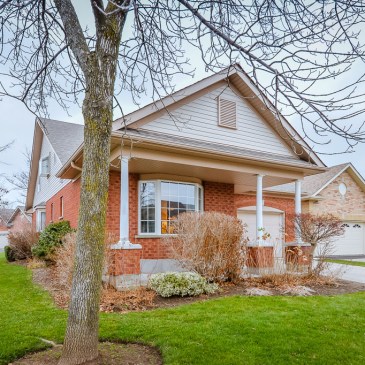
front3

  1. Its location. I’ve written about this before, so I’ll keep this short. I can walk or bike to the university’s arboretum, which alone gives me a 6 km walk if I do the perimeter paths alone, and a lot more if I wander the interior trails…and it’s an easy connect to the city’s multi-use trail system, which takes me downtown, or up to the big north-end park, or further out to the lake. Or along the river system, east, west, or north. I can also walk or bike easily to grocery stores, two butchers, a seasonal local-produce stand, and all the shops and services I could want.
  2. The recreation centre that’s about 250 metres away. Which includes a 25 metre pool, where I’m learning to swim again; a fitness centre, an excellent library, billiard rooms, bocci and tennis courts, concert and theatre venues, and lots of other activities to participate in, should I choose to.
  3. Air conditioning! It’s a hot and humid summer. The previous house didn’t have air conditioning; it kept cool with huge old shade trees and windows open at night, but it would have struggled this summer. We use it judiciously, but we appreciate having it here.
  4. The natural gas barbecue. No propane tanks to buy and change and take back. We’ve barbecued more here in the last month than I think we did in the last house in the past five years. (This is related to reason 6, too.)
  5. New construction. Our previous house was built in 1911. This one was built in 1998. Its windows fit, its doors fit. Floors are flat. It has good insulation. I dusted today for the first time in two months, whereas the old house – well, you dusted, and a few hours later you wondered why you’d bothered.
  6. No mosquitoes! OK, it’s a very dry summer. But it hasn’t stopped the mozzies at the other house, which is rural and in an area with a lot of maple swamps. Here, there’s the occasional one, but I can go outside to pick herbs and tomatoes without insect repellent, which wasn’t the case before.
  7. The city it’s in. I’m hugely biased: I lived here for sixteen years, between 1978 and 1994, before we moved a bit further south to make our commutes do-able. I always wanted to come back – but there was good reason for that. I’ve talked about the trail system, but to that I can add beautiful parks along the rivers, a good arts centre, one of the best bookstores in the world with welcoming writers’ community, some wonderful old architecture, the university’s library, music performances and theatre, the year-round farmer’s market, the best-behaved off-leash dogs I’ve met outside of Paris, and a strong local-food movement. All the things that make a city livable, for me.
  8. The community-within-the-city. Friendly, welcoming neighbours who balance that friendliness with respect for personal space and choices about lifestyle and involvement in community activities.

The biggest thing we’ve had to get used to (again) is paying for water. We’ve been on our own well for the last twenty-two years, and while we were always careful during other drought summers, the water was, essentially, free, although of course there was pump maintenance and replacement, as well as water-tank replacement in those years, and the electricity to run the pump. (Sometime I’ll do the arithmetic on that and see which one was, in the long run, more expensive!) Here, not only do we pay for water use, but we are bound by water restrictions – the city uses groundwater, and in a dry summer like this one we are limited to which days and which hours we can water flowerbeds; lawns are out of the question. I have no problem with that at all – essentially it’s no different than what we did with our own well. I’m not complaining about either paying for water (we should) or the restrictions (necessary and responsible): it’s just the one thing that wasn’t on our radar for the last twenty-two years.

So, when people ask me do I miss the old house, the honest answer is no. It was time to move. I’m glad we did.


Chickpeas and Couscous

It’s hot today, and humid: a good day for a quick, vegan salad supper. My deck garden is starting to supply some of the ingredients, and the others are pretty much pantry staples for us. Here’s how I throw together a Chickpea-Couscous salad for two:

2/3 c couscous

1/2 c cooked (canned) chickpeas

1 c cherry tomatoes, halved

1 c broccoli florets, divided into very small pieces

1 small red pepper, diced into 1/4” squares

a handful of chives, finely chopped

a handful of mint leaves, finely chopped

a handful of oregano leaves, finely chopped

1/4 c olive oil

1/4 c lemon juice

salt and pepper to taste

Put the couscous in a 2 cup measuring cup and add 2/3 c boiling water. Cover and let sit for 5 minutes.

Drain the chickpeas and rinse well: I use half a standard tin, so I freeze the other half for next time.

Mix the olive oil and lemon juice together.

Mix the chickpeas, cooked couscous, all the veggies and the herbs, pour in the dressing, mix some more, add salt and pepper to taste, and refrigerate for an hour or more.

That’s it. You can serve it over lettuce, or not. You can add garlic, or not. Or harissa spice. Or raisins. It has veggies, protein, carbohydrates, and a bit of good oil. And it takes less than ten minutes to make. What could be better on a hot and humid day?

Art, Tools, and Ice Cream

On Saturday, I biked the 4.5 km downtown to do three things:  go to the farmers’ market, enjoy ‘Art on the Street’, and drop a few small things off at the new tool library.

Our market is a year-round market, rare in Ontario, but it’s been a fixture of this city for over 180 years, and it has its own building.  In the summer it expands to the outdoors; in the winter, it shrinks.  Fair enough; there’s very little food grown here in the winter, outside of the greenhouse industry, but the baked goods and meats and cheeses remain.  I dropped in only to buy kamut wraps and toss coins into the guitar cases of the buskers, who never fail to make me hum along on a Saturday morning.

Then it was off to the tool library, a few streets over.  While not a new concept, this is a new initiative for our city. If you’re not familiar with the concept, it’s pretty simple:  if you need a tool, from rice cookers to cement chisels, from stock pots to a screwdriver, you can borrow it from the tool library. I’d first discovered them when I was looking for a place to donate my garden tools from the old house.  A volunteer had come to pick up that load – there were quite a few tools – but now I had a few more things to give them, things that fit in the panniers of my bike.

The space was functional but effective, and all the tools are being catalogued and bar-coded for inventory control.  In a city with a lot of students, its share of low income families, and a strong community ethic towards sustainable and cooperative living, the tool library is a logical addition.  I’m eyeing the tile-cutter in my basement now: I kept it as we consider what to do with the backsplash in the kitchen…but I could always borrow it back.

I left my bike and helmet locked to the rack outside the tool library, and walked over to Art on the Street.  One street had been closed off to house this annual, tented art display and sale, and the place was crowded, cheerful and noisy.  I wandered among the art for the best part of an hour, coveting but not buying a set of glass coasters from one artist,  a mug and vase from another.  Both ‘covets’ had a raven theme, which calls to me strongly.  I’m always torn at art shows:  I am trying not to buy things, to add to the items we own because we really don’t need anything.  I have a dozen coasters and more than a dozen mugs.  But on the other hand, as an independent artist myself…we need people to buy things.  Even when there isn’t financial need, there’s the need for people to appreciate and value the art we make, whether visual or written or aural.  I’m regretting the coasters, just a bit.

I finished off with a small cone of what might be the best chocolate ice cream I’ve ever had, from a small creamery that makes ‘small-batch’ ice cream from mostly-local, in-season product, before biking the longer-but-flatter river path route home.  In retrospect, I should have had the raspberry-rhubarb ice cream….but it’s Wednesday today, the summer Wednesday market will be on downtown; we’re biking down for an afternoon showing at the little rep cinema…and the creamery will be at the market, steps from the cinema.  What better way to fuel up before the ride home?


Biking

One of the many attractive features of moving back to town was the opportunity to bike everywhere: to the farmer’s market, to the grocery store, to the library. This city has a wonderful mixed-use trail network plus a lot of bike lanes, and, for the most part, drivers, used to hordes of university students on bikes, are watchful for and respectful of bikes.

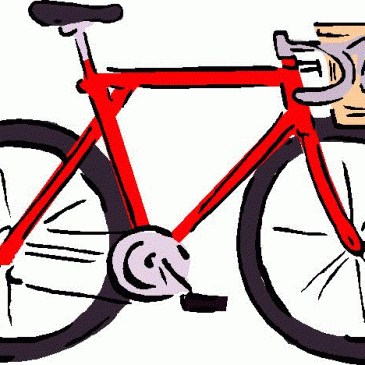
It’s taken me a couple of weeks to get my biking muscles up to speed, but for the last week or so I’ve been biking frequently. (The good weather helps, too.) I have a set of panniers that fit over my rear wheel, in which I can stuff my straw hat, a book, my laptop, shopping bags, water bottle, or whatever else I need to take, depending on my destination. My bike is a 21-speed ‘hybrid’: not quite a mountain bike, but sturdier and wider-tired than a road bike, with front shocks, perfect for the gravel trails as well as the roads.

Saturday morning I biked to the farmers’ market downtown. I kept the panniers empty except for a shopping bag or two, and ventured off down what is a new route for me: the bike lane down the major thoroughfare that leads downtown. Before the bike lane, which is relatively new, this was far too dangerous, and I’m still not sure I’d want to do it at a busier time. But fairly early on a Saturday morning, I felt it was safe enough.

It’s downhill most of the way, and a fairly steep downhill. I kept my speed slow, and enjoyed not having to pedal while keeping a close eye on the traffic. But there were no issues, and I reached the market in about fifteen minutes. I locked the bike and my helmet up, took my bag, and did my regular shopping, potatoes and peppers, kamut wraps, asparagus and cherries, greens. Then I stowed them all neatly in the panniers, bought a glass of freshly-squeezed (extracted?) carrot/orange juice, and considered my ride home.

I wasn’t going to tackle riding up the hill, so going back the way I came was out of the question. Basically, my choices were ride either west or east along the river trail, and then head south. I chose to ride east, which brings me out to a short-but-steep hill (I walked my bike) and then takes me into the Arboretum, and a short ride through its trails to our residential development and home. The whole trip – about 12 km – took me less than an hour, including the time shopping.

Today I biked on quiet residential streets over to the butcher’s (with a small insulated bag and ice pack stowed in the panniers), and then on to Staples to get a document bound, a quick 10 km trip. Tomorrow it will be back downtown, to my Monday morning writer’s group, and then a  loop home along the river, westward this time, and up the trail, back to Staples to pick up the document I took in today, a ride of about 14 or 15 km. I’m still challenged by some of the city’s hills, but I’m also old enough not to be discouraged (or embarrassed) by having to get off and walk occasionally.

BD bought a new bike last week, replacing his road bike with one similar to mine: a couple of trips on the trail system convinced him this was necessary. Older bones need a softer ride! He’s out every day, riding downtown to the library, or around the trails to new birding spots. Our gasoline use, even with BD going to check on the other house every second day, has dropped by half, and likely to drop more as we both bike for errands rather than drive. I’m seriously wondering how long we’ll keep two cars, although we certainly won’t make that decision until we see how we manage in colder, wetter weather. There are times when driving is still preferable: I’ve got a couple of evening events coming up, and I don’t want to bike in the dark (or even in the dusk), but the reasons for having two cars are rapidly disappearing. And there is a good bus system here, if we needed a back-up.

I’m very glad that one of my theoretical reasons for moving has rapidly become a viable reality. It’s a strong reinforcer that this was the right move, and the right time to make it.

The Monthly Menu

In the first months of retirement, it felt good to be able to shop every day or so, especially with the farmer’s markets in full swing. It was a luxury I hadn’t had in my working days.

But over this autumn, as my days of leisure become fuller with the work of my third, chosen, career, it’s becoming a nuisance. The markets are closed, except for the Saturday ones, and the roads are becoming icy, so last month we went back to the monthly menu.

Once a month, we sit down and plan meals. I create a four-column chart: Date, Meal, Prep on Day, Need to Buy. This goes on the fridge, and can be modified as needed – if I only use half a tin of chopped tomatoes in the curry, then a note is made on the next meal that needs them that they’re in the freezer. I use this chart to determine monthly and weekly shopping lists; I tend to buy meat monthly and freeze it, and everything else weekly, with a quick top-up shop half-way to buy milk or yoghurt or eggs, as our fridge isn’t big enough to keep large supplies of these on hand. It also reminds me what to thaw and what other prep is needed on the day.

This works because there are only two of us, and our lives are fairly predictable. If we decide to go out to a movie and dinner with friends, that’s ok -that meal either doesn’t get made, or, it gets moved to the next day, and that meal cancelled, whichever is easier. Meals can be moved around without too much difficulty, and left-overs always have a meal to be included in.

The other advantage is that in six weeks, when we leave for an extended vacation, we’re not leaving behind a freezer and fridge half-full of food. We left once for a two-week holiday over Christmas, only to have our area hit by a vicious ice-storm that meant our house was without power for eight days. All the freezer foods, all the fridge perishables, had to be discarded (luckily our cat sitter is very flexible on what tasks she’ll take on – oh, and the cats went to live with a friend for that time) as we kept in touch by text from England. I’d like not to put her in that situation again, so both fridge and freezer will be empty of anything that could go bad.

Will I keep this up in the summer, when the markets are open again and fresh local food abounds? Probably not….or I’ll modify it a bit…but for the winter months, it works for us.

Kitchen Gadgets I Wouldn’t Want to be Without #2: The Stick Blender

The simple stick blender is a gadget I use almost every day. In the last two days, it’s been used to make smoothies, blend a roux into chicken broth to thicken a stew, and transform left-over roast vegetable salsa into pasta sauce.

I often don’t use electric appliances – I own a hand-held mixer, but usually I mix cake or cookie or muffin doughs by hand, with a solid dinner fork. I might as well use a few more calories up before I eat what I’ve baked! But blending is a different thing.

My sister gave us a traditional blender as a house-warming present the year BD and I moved in together – 1979 – and we still have it. BD uses it to make hummus weekly, and I use it occasionally, but the stick blender has replaced it for most uses. It’s just simpler, and easier to clean.

I’m on my second one. The first one I bought was bottom-of-the-line, inexpensive, since I wasn’t sure how much use it would get. Eventually it burned out – but not immediately – so I bought a better one. Two in fifteen years isn’t too bad!

Here’s how I transformed the salsa to pasta sauce – I’ll start with the salsa recipe, full of local, seasonal vegetables bought at the farmers’ market on its last day for this year.

Roasted Vegetable Salsa

2 red peppers

2 small eggplants (about 3 inches each)

1 medium zucchini

6-12 garlic cloves, depending on how much you like garlic

1 small onion

10-12 grape/cherry tomatoes, preferably roma type

1 cup finely diced butternut squash

1/2 c olive oil

2 Tbsp balsamic vinegar

rosemary

basil

oregano

sea salt

black pepper

1/2 c feta cheese

Preparation

Peppers: seed and dice finely

Eggplant: peel and dice finely

Zucchini: dice finely

Garlic: peel and dice finely

Onion: peel and dice finely

Tomatoes: dice finely

Squash: peel and dice finely

Toss diced vegetables with olive oil and spices and spread on parchment paper on two cookie sheets. Roast at 360 degrees F for 30 minutes. (A higher temperature than this destroys much of the goodness of olive oil.)

Add 1 Tbsp each of dried rosemary, basil, oregano, and 1 Tbsp sea salt, and 1 tsp coarsely ground black pepper, plus the 2 Tbsp balsamic vinegar. Mix well. Adjust seasonings to taste and add more olive oil if desired. Let sit at room temperature to blend flavours.

Just before serving, add 1/2 c feta cheese. Serve with crostini.

This makes about 3 cups. I had just over a cup left over.

To make pasta sauce:

Add 1 c chicken or vegetable broth, preferably low sodium as there is a fair bit of salt in the salsa. Bring to a boil gently. Cool somewhat, and blend in the saucepan with a stick blender.

This gives you a creamy, tangy pasta sauce. Use as a vegetarian sauce with more cheese if desired, or, add ground chicken, turkey or whatever you like.

Now, those of you who follow this blog know that BD is allergic to all dairy. So I actually made two versions of this, one with feta and one without, and did this sauce twice: both worked well, but I would definitely add ground turkey or spicy turkey sausage to the dairy-free version for protein.

Crumble, Crisp or Buckle: Fall Fruit Desserts

Saturday mornings are for visiting the farmers’ markets, and this time of year the stalls are overflowing with fall fruit: plums, apples, raspberries, grapes, and pears. I wanted to buy some of each!

I had promised dessert for a dinner with friends last night, so I did buy some pears along with my usual apples. Driving home, I reviewed what I could do with them, and settled on one of my favourites, a pear-and-ginger crumble. It’s so simple and tastes wonderful. Here’s the recipe, which uses oil rather than butter because of BD’s allergies; you can use butter, of course, if you want.

Pear-and-ginger Crumble

6 medium pears, peeled, cored, and sliced

1/2 cup dried cranberries

6 pieces candied/crystallized ginger, chopped into small pieces

1/2 c brown sugar

3/4 c oatmeal

3/4 c all-purpose whole wheat flour

1/2 c light oil – I use safflower, but sunflower or corn works too

1 tsp powdered ginger.

Preheat the oven to 350 degrees. Spread the sliced pears over the bottom of a 9″ square pan. Sprinkle the cranberries, chopped ginger, and 1/4 cup of brown sugar over the pears.  Add about 1/4 c water (unless the pears are very ripe) to provide moisture.

Mix the dry ingredients (including the other 1/4 cup of brown suger) with the 1/2 c oil and spread over the fruit.  Bake for 40 minutes.  Serve warm, with ice cream, cream or yogurt if you want.

Now, I call this a crumble; others might call it a crisp.  I also have a recipe for a fruit buckle, which is slightly different.

1/4 c light oil

1/4 c brown sugar

1 egg

1/2 tsp salt

2/3 c whole wheat flour

1 tsp baking powder

1/3 c liquid – milk, buttermilk, or water all work

2 cups chopped fruit

Topping:

1/4 c light oil

2 Tbsp brown sugar

1/3 c whole wheat flour

1/2 tsp cinnamon, ginger, cloves or a mix

Preheat the oven to 350.  Mix together the first 1/4 c oil, sugar, egg and salt; add 1 c flour, baking soda, and liquid and mix well.  Spread in a 8 or 9 inch greased square pan; cover with the chopped fruit. Mix together the remaining ingredients, spread over the fruit.  Bake at 350 for 40 minutes. (This recipe is adapted from the Blueberry Buckle recipe in my beloved Harrowsmith Cookbook Volume 1. I don’t know why it’s called a ‘buckle’; the recipe originated in Nova Scotia, so it may be a regional term.)

Both of these are very simple to make and are adaptable to many fruits or combination of fruits. (I also like to think they are healthier than a pie, although I may be fooling myself with that thought!)

What are your favourite fall fruit desserts? Please share your recipes!

Kitchen Gadgets I Wouldn’t Want to be Without # 1: the Mouli-Julienne

home

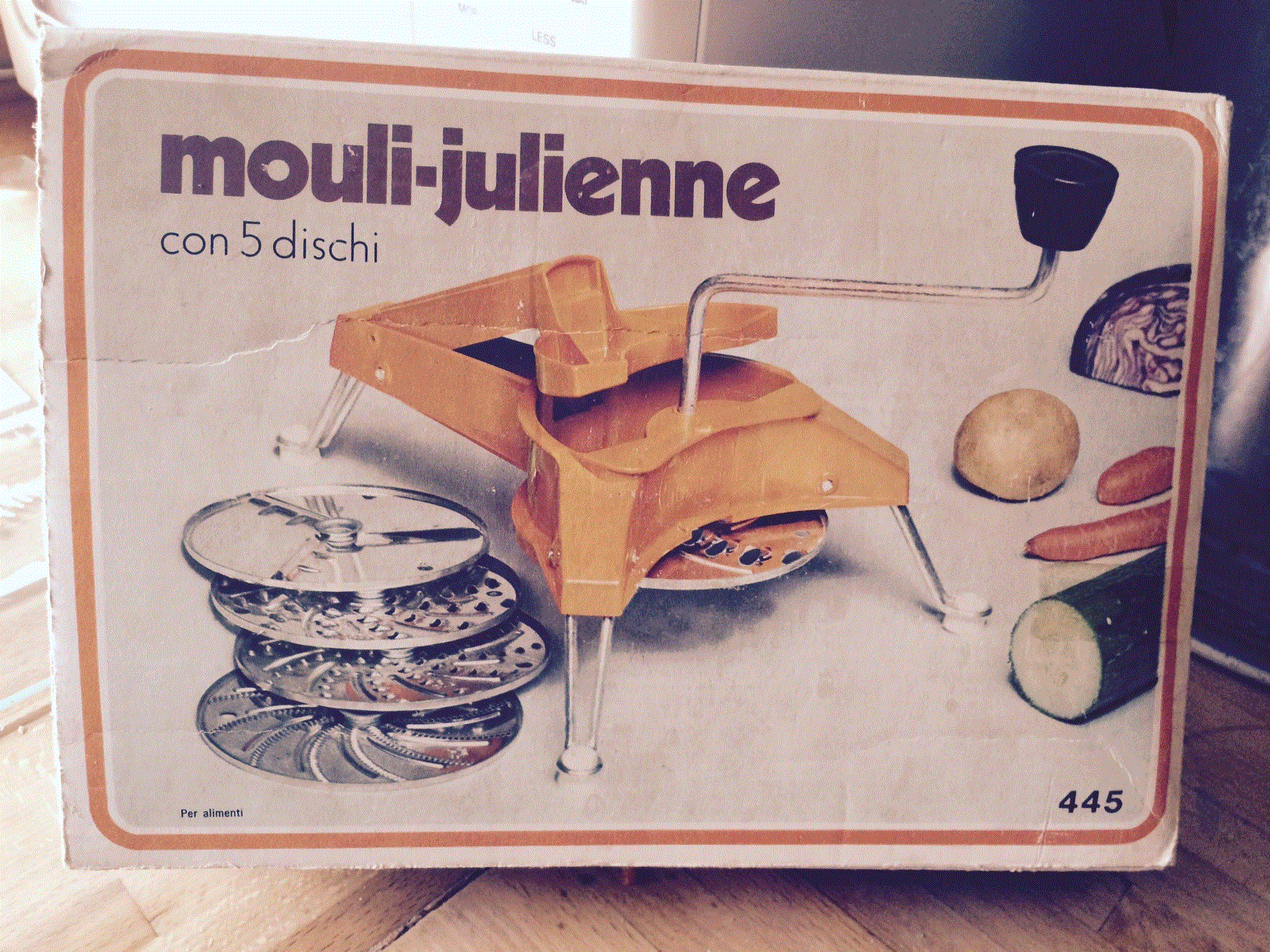
I’ve had this little manual food processor for at least thirty years.  Surprisingly, I still have both the original box and all five of the processing discs, but not the manual – not that it’s needed. It’s only got three parts: the body, the handle, and the disc. This is one of the simplest but effective tools I use in the kitchen.

Today I used it to make just enough carrot-and-broccoli slaw for lunch.  It took two minutes, I used up part of the broccoli stems I’d saved from making a stir-fry earlier in the week, and the slaw was, of course, super-fresh and therefore very tasty.  Stuffed in a kamut wrap with a bit of sliced sharp cheddar, it was a darned good lunch, along with iced green tea and greek yogurt and blueberries.

Over the years I’ve used it to grate cheese, slice radishes, cucumbers, and just about any other sort of vegetable you can think of, shred potatoes for potato cakes…even grate frozen butter for pastry. It cleans up easily:  if I’ve grated cheese, I usually put it in the top shelf of the dishwasher – the whole thing, not just the wheel; if I’ve been doing vegetables, I just hand wash it.  The wheels haven’t rusted or significantly discoloured, and they remain sharp.

I went on-line to see if they are still available; there are a few on e-bay (one described as ‘rare, vintage’ (!)) and a similar product by Westmark on Amazon.  I no longer remember where mine came from; it might have been a present from my parents, as I know they also had one.

It’s easy to use, does what it’s supposed to, has lasted a very long time, and uses no electricity.  Four stars in my book!

What are your favourite kitchen gadgets, the ones you can’t imagine cooking without?

One chicken, four meals.

When we were both working, most Friday night dinners were completely predictable:  rotisserie chicken.  According to a recent article in the Toronto Star, “rotisserie chickens are as ubiquitous as burgers or tacos without falling victim to being dubbed trendy” – at least here in the “Greater Toronto Area”. (As an aside, I can’t help but laugh about that sobriquet – technically my tiny crossroads hamlet is part of the GTA, but what we have in common with the ‘mega-city’ to the east of us continues to elude me.)

Unless it’s a love of food.  Because I’m not talking about the rotisserie chickens drying out under lights at the back of the grocery store.  For $12, I would buy a free-run, clean-fed chicken, rubbed with herbs and olive oil, moist and tender.  They were simply better than any roast chicken I’ve ever made, and at the end of a long week they were satisfying and fast.

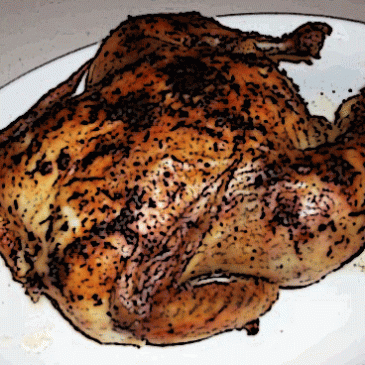
One chicken, a bit over a kg in weight (2.5 lb. more or less) gave us four meals.  The first dinner would be just roast chicken:  the leg and thigh for BD, who prefers dark meat; the breast for me. Served with cranberry chutney from Rose’s, a salad and oven fries (BD makes great oven fries, potato chunks tossed in olive oil, black pepper and rosemary, and roasted at 360 degrees for 45 – 50 minutes) that used, roughly, a bit less than half the chicken.

The equivalent pieces – the other leg and thigh, and the other breast, went into the freezer, to be gently reheated over a pan of water in a slow oven another time.  But at this point there was still a lot of meat on the carcass.  I’d chill it overnight, and then on Saturday strip the rest of the meat from the bones, chopping it into small pieces.

These smaller pieces of meat were destined for either ‘poulterer’s pie’: our version of shepherd’s pie created once BD couldn’t eat red meat, or chicken curry.  I’ve never actually written the recipe for poulterer’s pie down, but basically it’s a mix of chicken and vegetables, herbs and spices, in a thickened chicken broth, topped with a mash- I’ve used potatoes, sweet potatoes, a combination of the two, or a combination that includes parsnips; all work – and baked in the oven until bubbly.  It’s a great cold-weather meal.

Once I’d removed the meat from the bones, the carcass is destined to make chicken broth.  Roasting the bones in a slow oven for a while – 45 minutes or so – before making broth does give a richer flavour but it isn’t necessary if you’re using the carcass of a cooked chicken.  I put the bones, a chunk of chopped onion, and a bit of garlic in my slow cooker, fill it with water, and let it cook all day on low.

Once it’s cooked down to about half of the amount of water originally put in, I strain it and let it cool.  The bones are destined for the compost at this point (we have a municipal kitchen-waste composting pick-up here – the town takes it away once a week, composts it at the waste management site, and gives it away in the spring. When we did back-yard composting of kitchen waste, I stopped composting bones because there is a feed mill in the village…and feed mills attract rats…which like bones and meat scraps.  And I don’t like rats.)

I may do one of two or three things with the broth:  make soup immediately; freeze it in mason jars for later use, or, freeze it in ice-cube trays to give me chunks of broth to use when a recipe needs a small amount.  Mostly I make soup, which served with warm bread and pickles from Rose’s often make up Sunday suppers.  We’ve likely had pancakes and sausage for brunch, so a small evening meal is all we need.  And there is usually enough soup left over for at least one lunch.

So there it is:  one chicken, four meals. BD likes these chickens better than the one’s I’ve roasted (I’m not insulted, because I agree with him) so I think we’ll probably continue buying them, once the cool weather returns.  They fit our food ethics – they are locally raised, and I’m supporting a local small business by buying them, and I’m pretty happy with four meals for two from a twelve-dollar chicken.

The weather forecast calls for highs of 19 degrees C (66 F) later this week.  I think that’s cool enough for roast chicken, don’t you?

Sustainable or frugal?

Living on roughly half of our previous income, even though we are not by any stretch of the imagination impoverished, still presents some challenges. In the months previous to retiring, I analyzed our spending each month down to the penny, to ensure that we would continue to have a decent quality of life.  For us, quality of life includes being true to our belief in buying local, ethical, and sustainable food whenever possible.

But such food is not inexpensive.  I can buy a dozen factory-farmed eggs for just about half what I pay for eggs from traceable, ethically housed, local free-run chickens.  California greens, even with their drought , are still currently cheaper than the ones from the organic farm up the road.  Food is our biggest single monthly expense, and were I to further change my buying habits, I probably could reduce it by about thirty percent.

I’m not going to, though.  The value of buying the food we do goes well beyond satisfying our own tastes.  A much larger percentage of the money I spend goes directly to the local economy, into the pockets of my neighbours, than if I bought the equivalent products at grocery store.  Animal welfare is improved.  Farming remains viable, which means land remaining productive, and supporting, in the field margins and fence-lines, a healthier bird and wildlife population than would exist if the same land became a housing development.  I can ask the producers of my eggs and meat what they feed their animals, which matters not just in terms of general health for both the animals and us, but because of BD’s allergies.

I am fortunate to be able to afford to buy food like this.  I am fortunate to live in a place that supports, within a ten-mile radius, five seasonal farmers’ markets and one year-round, and innumerable farm stands.  Local food maps are published yearly.  Later today I will go out to buy sweet corn and tomatoes for tonight’s dinner from a farm stand up the road, which sits among the fields where the corn and tomatoes grow.

Frugality has a different meaning for us, when it comes to food.  It means ensuring food is not wasted – broth is made from chicken bones, older fruits and vegetables go into baking (I’ll write about my ‘garbage loaf’ at another time), portion sizes of meats are small.  Vegetarian meals make up half our dinners.  We buy almost nothing prepared; we have the luxury of time, and the skills, to cook from scratch (for which I perpetually thank my parents, who, living through both the depression and the rationing of WWII in Britain, were both frugal and creative with food).

And that sweet corn, tonight, lightly steamed and brushed with olive oil, then sprinkled with salt and pepper, will taste like the essence of earth, water, and summer sunshine in every bite.