Lifelong Learning
I am sitting in ‘my’ study carrel at the university, the one I’ve been using on and off for thirty-something years. Today I noticed some new(ish) graffiti on one side: ‘Today is my last day in the library EVER’.
How sad I find this, because it implies to me that the person who wrote it finds learning, books, and study a chore, or worse than that, just something to be endured so that real life can begin. I’ve come to the library today not to write, as I often do, but to check out books, something I’m allowed to do as an alumna, and these are books I need for my new course. While learning and books aren’t my whole life by any means, they remain – even thirty years after graduation from university – a hugely important part of it.
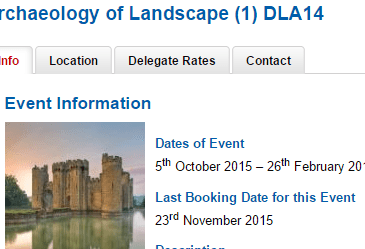
I am unbelievably excited about this new course – The Archaeology of Landscape I, offered through the University of Exeter Distance Learning program. Unlike the two I took last fall and winter, this one wasn’t free, so I had to really think about whether or not I wanted to spend the money (and time) such a course requires. But it really wasn’t that hard a decision.
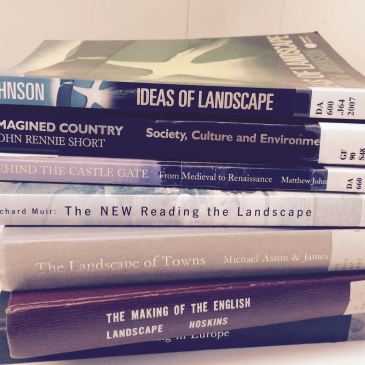
And now I’m looking at a pile of seven books to be read for the first three weeks of the course. They have titles like “Ideas of Landscape” and “Imagined Country: Society, Culture and Environment”. I can imagine what most of you are thinking! But for me, this is feeding a deep need.
And that’s what the best learning is about. Don’t turn your back on it, just because school and university were perhaps not quite what you hoped. I can remember being less than impressed with some aspects of my graduate program and quite a few of my undergraduate. High school was worse. Then I taught, and was less than impressed with some of what the curriculum required. I did my best to make it relevant and interesting, but it was a hard go sometimes.
But now I am (again, as I did last fall) learning for the love of it, learning things that will change forever the way I see my world. Someone (maybe George Bernard Shaw?) said once that education is wasted on the young. I don’t agree with that, but it is certainly not the sole province of the young. My father was telling me of new things he’d learned through reading and documentaries to within a few weeks of his death at 98. I hope, very much, to emulate him.
 Random Ramblings