Seven Things – no, Eight – I Love about Our New House


We’ve been here two months next week. Here’s what I love about the new house.

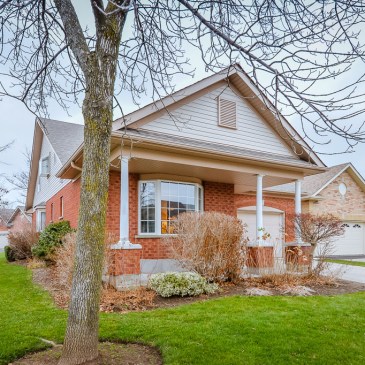
front3

  1. Its location. I’ve written about this before, so I’ll keep this short. I can walk or bike to the university’s arboretum, which alone gives me a 6 km walk if I do the perimeter paths alone, and a lot more if I wander the interior trails…and it’s an easy connect to the city’s multi-use trail system, which takes me downtown, or up to the big north-end park, or further out to the lake. Or along the river system, east, west, or north. I can also walk or bike easily to grocery stores, two butchers, a seasonal local-produce stand, and all the shops and services I could want.
  2. The recreation centre that’s about 250 metres away. Which includes a 25 metre pool, where I’m learning to swim again; a fitness centre, an excellent library, billiard rooms, bocci and tennis courts, concert and theatre venues, and lots of other activities to participate in, should I choose to.
  3. Air conditioning! It’s a hot and humid summer. The previous house didn’t have air conditioning; it kept cool with huge old shade trees and windows open at night, but it would have struggled this summer. We use it judiciously, but we appreciate having it here.
  4. The natural gas barbecue. No propane tanks to buy and change and take back. We’ve barbecued more here in the last month than I think we did in the last house in the past five years. (This is related to reason 6, too.)
  5. New construction. Our previous house was built in 1911. This one was built in 1998. Its windows fit, its doors fit. Floors are flat. It has good insulation. I dusted today for the first time in two months, whereas the old house – well, you dusted, and a few hours later you wondered why you’d bothered.
  6. No mosquitoes! OK, it’s a very dry summer. But it hasn’t stopped the mozzies at the other house, which is rural and in an area with a lot of maple swamps. Here, there’s the occasional one, but I can go outside to pick herbs and tomatoes without insect repellent, which wasn’t the case before.
  7. The city it’s in. I’m hugely biased: I lived here for sixteen years, between 1978 and 1994, before we moved a bit further south to make our commutes do-able. I always wanted to come back – but there was good reason for that. I’ve talked about the trail system, but to that I can add beautiful parks along the rivers, a good arts centre, one of the best bookstores in the world with welcoming writers’ community, some wonderful old architecture, the university’s library, music performances and theatre, the year-round farmer’s market, the best-behaved off-leash dogs I’ve met outside of Paris, and a strong local-food movement. All the things that make a city livable, for me.
  8. The community-within-the-city. Friendly, welcoming neighbours who balance that friendliness with respect for personal space and choices about lifestyle and involvement in community activities.

The biggest thing we’ve had to get used to (again) is paying for water. We’ve been on our own well for the last twenty-two years, and while we were always careful during other drought summers, the water was, essentially, free, although of course there was pump maintenance and replacement, as well as water-tank replacement in those years, and the electricity to run the pump. (Sometime I’ll do the arithmetic on that and see which one was, in the long run, more expensive!) Here, not only do we pay for water use, but we are bound by water restrictions – the city uses groundwater, and in a dry summer like this one we are limited to which days and which hours we can water flowerbeds; lawns are out of the question. I have no problem with that at all – essentially it’s no different than what we did with our own well. I’m not complaining about either paying for water (we should) or the restrictions (necessary and responsible): it’s just the one thing that wasn’t on our radar for the last twenty-two years.

So, when people ask me do I miss the old house, the honest answer is no. It was time to move. I’m glad we did.

Eating (semi)well on the road.

We’ve just returned from a two-week road trip through California and southern Arizona, a trip booked long before the idea of buying a new house entered our minds. Nothing was going to happen with the house purchase in those weeks anyway, so there was no reason not to go.

Since the days of our six-and-seven week road trips, where we mostly camped, took a cooler with us, and bought groceries, several things have changed. One, of course, is that we were flying and renting a car. Secondly – and most importantly – are the food allergies/sensitivities BD has developed. It’s really difficult to find food he can eat, and even more difficult to find restaurants he can eat at. His allergy is to a specific fatty acid – lauric acid – which is found in red meats, most fats, coconut and palm products, all dairy, and some spices. It makes him break out in hives, big nasty hives which even extra-strength Benadryl only somewhat controls. So we need to be very careful about what he eats.

We could have bought a cooler in California, shopped for groceries, and eaten at parks and picnic stops. But there were a couple of strikes against this: one is that, for the most part, it was too cold to do this comfortably – we had snow in the foothills in Arizona! – and the second strike was just that we wanted more ease. We’ve done our share – more than our share – of eating in wind, rain, cold, searing heat and annoying insects, or perched on the side of the bed in a hotel room. Frankly, I’ve had enough of that.

Subway is one chain we know is safe for BD, if he sticks to chicken or turkey, but a constant diet of Subway grows old quickly, plus the sodium content is pretty high. We decided to try Denny’s, the classic diner chain: their available nutrition information is good, and they have something extremely difficult to find in US restaurant chains: reasonably sized meals, if you order carefully.

For dinners, we mostly stuck to the 55+ meals, eating a salad (with no cheese or dressing for BD), fish or chicken with broccoli and another vegetable – corn for me, squash for BD – every night. With unsweetened iced tea, the calorie count was around 650, the sodium, fat, and sugar content low for restaurant food, and there was nothing in the spices or preparation that triggered BD’s allergies. Breakfasts were fairly easy too: ordering a la carte, BD ate poached eggs on dry toast, oatmeal, and fresh fruit every morning; I had the same, or sometimes yogurt instead of the oatmeal. Again, the meals ran in the 650 calorie range, and it was easy to avoid the dairy and oil that would have been a problem. And we both appreciated comfortable booths and table service, especially after a long day, and in the morning when I’m not human before that first coffee.

It was also quite a bit of food. Neither of us were terribly hungry at lunch time, even after hikes of several hours most days. We’d found an energy bar by KIND that BD could eat without problems, so lunches tended to be an energy bar and an apple. BD would add a handful or almonds or peanuts; I’d add a latte if there was one to be had. If we walked a lot, sometimes we had a second energy bar, or more nuts.

Not every meal was eaten at Denny’s or Subway. We ate a couple of breakfasts at little cafes at Morro Bay and Cayucas. We drove to Oxnard (twice) specifically for fish and chips at Sea Fresh, which fries in peanut oil (BD had a double order of chips, it was such a treat.) Only something at Olive Garden triggered any reaction in BD, and it was mild, so a trace of oil or spice, most likely.

I celebrated my 58th birthday while on this trip. We debated a special dinner, but I didn’t particularly want that: what I did want was ice cream, as it was an unseasonably hot day (the only one of the trip) at Point Reyes National Seashore north of San Francisco. I usually avoid eating ice cream in front of BD – it seems cruel, when he can’t eat it any more – but I made an exception for my birthday. And in the little general store in Inverness, California, not only did I find my favourite Haagen-Daas chocolate-coffee-almond bar, but a lime gelato bar with no dairy that BD could eat (and he loves lime). We sat at a picnic table overlooking the bay and ate our treats, enjoying every frozen bite.

We were pleased with the trip – not only did we find the two birds we went to see around San Francisco, ones that have been eluding us for thirty years (because they are found by call, and they only call during breeding season, and that was always while we were working) – but we ate fairly nutritious food and didn’t trigger BD’s allergies. We went for long walks, watched dolphins and sea otters and seals along Highway 1, heard coyotes singing in the dusk at Yuma and watched the sun rise over the mountains. A good holiday. Now back to the realities of packing up this house for the move. Stay tuned!

Changes

It’s been a while since I posted anything, and that’s because life has moved very quickly in the last three weeks.

One of the things our two months in England confirmed for us was that we want to live somewhere where we’re less dependent on the car to run errands.  The second thing was that we could quite happily live in a bungalow, and the third was that we really liked not being responsible for the lawn and garden.  We’d thought it was time to leave this old two-storey rural house, with its quarter-acre of lawn and garden, 10 miles from anywhere: what England told us is that we were right.

We always said we’d move before it was too late, when we could make the choice. We came home, spent some time wandering around neighbourhoods in the university town north of us that we know well and love.  We narrowed it down to two, and then to one.  And yesterday, we bought a house.

It’s not quite a bungalow, in that it has a bedroom and ensuite on a second floor, but we don’t need to use those except for guests, or, for the foreseeable future, as BD’s study.  It’s a 10 minute walk to the university’s arboretum, for walking and birding; a 15 minute walk (or 5  minutes on the bike) to the university library, where I like to work, a ten-minute walk to a grocery store, on quiet back roads. We can bike downtown, to movies, to lunch, to the arts centre, to the bookstore, to the summer outdoor concerts.

While we own the house, and can do what we like with it, indoors and out, we don’t own the land it sits on: the university does.  So we pay, effectively, condo fees – and for that we get the lawn and garden taken care of, the snow ploughed and shovelled to our front steps, and the use of a large and well-equipped recreation centre. Or, as BD put it yesterday, to be permanently on vacation.

It’s ours in just less than two months, assuming all goes well with the inspection and the bridge financing – we have to get the existing house on the market, but there’s a bit of work to be done yet.  The new house needs its interior walls painted and a few other cosmetic bits and pieces.  One thing for sure, this adventure over the next couple of months – as we try to do this as mindfully as possible, fitting what we already own into the new house, figuring out what we really need (like a new bed), disposing of what we don’t – will give me plenty to write about!


Belonging

Growing up as a child of immigrants, the stories you hear of ‘home’ are usually tinged with nostalgia, seen through the rose-coloured glasses of memory. I can’t say this was true of all my parents’ stories – they had lived through the depression and World War II in Engand- but the ones that stayed with me the most were their stories of long childhood walks through the countryside, roaming footpaths and hedgerows, free and unsupervised.

My own childhood in Canada was as free as most childhoods fifty years ago were, and living at the edge of a village there was freedom to roam the farm lanes close to us, the farmers turning a tolerant eye to our activities, and we certainly bicycled the quiet roads around us. But at the back of my mind, it just wasn’t the same. I had grown up on Enid Blyton and Arthur Ransome, and I wanted footpaths and moorland, quiet hedged lanes, little villages hidden in folds of the hills…and as I grew older, a welcoming pub to stop at.

So here I am, nearly fifty-eight, writing in the sitting room of our holiday cottage that we’ve taken for January and February, back from a walk that ticked just about every box on that list. We set out just after nine this morning, turning right up the lane at our front door. A few hundred meters up the hill a gate opens onto a field and footpath, climbing further up the hill, skirting field margins to bring us out onto a quiet lane. A barn owl is hunting in the field to our west. At the top of the lane, the wide Norfolk views open out; to our west is the broad expanse of the Wash, its flocks of waders and waterfowl visible even from here, the coast of Lincolnshire shimmering in the distance. To our east, fields: field peas and sugar beet, wheat stubble, autumn-ploughed fallow, cut with hedgerows and lanes.

We walk in a northerly direction, following paths and bridleways, along field margins and old drove roads through farms, coming out into villages. The sky is changeable, clouds scudding in the strong westerly winds, patches of blue winking in and out. Hedges, green with ivy, keep the worst of the wind off us except when we the route takes us due west. Grey partridge scatter in front of us, calling their distinctive rasping cry.

After about six kilometers the drove we’re on swings west, past a substantial farm, and then south again for a few kilometers, coming out by a magnificent medieval church perched high on the greensand ridge that runs up the coast here. On a bench outside the church wall we sit for a snack, looking down over the village. It doesn’t do to sit too long, though: we’ve another three or four k to go, and tired muscles ‘set’ all too easily. We walk through the village streets, past the old watermill, and on to the footpath that is the last leg home. In a field to the west about a hundred curlew are feeding, beside jackdaws and wood pigeons, and where the footpath enters a woodland long-tailed tits chatter their high-pitched greeting.

We’re home in time for lunch, just after one o’clock. All this walk was missing was the pub, and that’s just up the road: the well-deserved pint can wait until a bit later this afternoon. I have soup to make for dinner and bread to bake. In all my months of recovery from major surgery and post-surgery treatments in 2014 and 2015, it was the thought of walking under this quiet corner of Norfolk’s skies, along these footpaths and lanes, that kept me going. It was the first place we came when my doctors gave me the green light to travel last spring: in the month here then, I went from being able to walk for less than an hour to managing a couple of hours with sufficient breaks. Now I can walk for four, with a five minute break, and it’s only the arthritis in my hip and foot that keeps me from going further, not a lack of energy.

Spread out on the sitting room floor at my feet is the Ordnance Survey map for this area. In a couple of minutes I’ll sit down with it and start planning another walk. Out to the castle ruins towards the Wash? Due east, to the village with the working windmill? Across the fen to look for short-eared owls and woodlark?

This is not Blyton’s or Ransome’s England, if those ever really existed. It’s not the England of my parents’ childhoods, nearly a hundred years ago. It’s not even the England we started to return to thirty years ago, when my family’s pub still stood where the village’s grocery store does now. But it still offers me footpaths and heathland, quiet hedged lanes, little villages hidden in folds of the hills, skies and birdlife and wind and space, and long walks from my front door. My experiences and memories build on and continue from my childhood stories, the ones my grandparents told, and my father (this was his childhood village), and those of his one surviving cousin, who lives a dozen miles from us here, and whose ninety-fifth birthday we are celebrating later this month. I study and explore these villages and fields as part of my landscape archaeology courses, I write about it in my non-fiction work-in-progress, Reverse Migration, and there is a certain place in the fictional land from Empire’s Daughter that is, simply, here. I belong to this land, this little piece of west Norfolk, and it to me, unlike any other place I know or have lived.

Quiet

For the worst two months of Ontario’s winter we’ve escaped to a small English village in the still mostly rural county of Norfolk; it’s winter here too, but here that means the occasional overnight frost and daytime temperatures anywhere between 4 and 12 degrees C. There are flowers out, snowdrops and winter aconite and primula. It rains a bit, but we also have beautiful sunny days, and it rarely rains hard enough, or long enough, to mean we can’t get a good walk in every day.

This morning, in glorious 7 degree C sunshine, we were standing on a high point on Roydon Common, a large expanse of heathland a few miles from our village. It’s about 2 km square (a bit more than a square mile), inhabited by birds and roe deer, netted with walking paths, grazed by some Dartmoor ponies, and mostly empty of humans except a few dog walkers. We were looking north-east: to the west is the market town of King’s Lynn and the bay of the North Sea called The Wash; in all other directions, it’s farmland.

We have something here we didn’t realize we were missing even in our rural home in Ontario: quiet. The Ontario house is 4 km or so north of the major highway into Toronto (the equivalent of an interstate or a motorway) and it is never quiet: truck and car traffic is heaviest morning and evening but it is constant, all day, every day. Even 4 km away, with the prevailing winds bringing the sound to us, the highway is a background noise to all we do, in or out of the house. A railway runs through our home village: it’s a spur line, with trains two or three times a day, but it’s still noise. We’re on the flight path for take offs and landings at Pearson International Airport. All of this adds up.

But here…our rental cottage is as quiet as can be, even in its village location. During the day, walking the footpaths and lanes, there is farm equipment, the sounds of livestock, a few cars. The major road is a couple of kilometers a away, and has less traffic than my commuter route from when I was working. We sleep deeply here, undisturbed by background noise that we didn’t even realize was affecting our sleep. The first sound I hear most mornings is the call of the pink-footed geese as they fly over the cottage, moving from The Wash to the fields where they feed.

Quiet is a luxury in our world, and one I suspect many people don’t know they don’t have. I didn’t…compared to many places, our Ontario home is quiet…it’s just not this quiet. I’ve experienced quiet before, camping in remote places, travelling through the highlands of Scotland, but I’ve never lived in it for an extended time since childhood. It’s been an added blessing in our winter escape. Along with flowers in January, wide skies, and skylarks singing.

O! Water Hot is a noble thing!

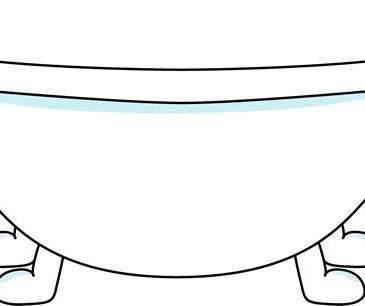
One of the habits I’ve kept from my working days (let’s rephrase that, my salaried working days, as I seem to be as busy as ever, except now I’m in control) is my late-afternoon or early evening Sunday soak in the bathtub.  I love baths, full of hot hot water and bubble bath. Along with my favourite magazine and a glass of wine, or scotch, they are my best way to relax, bar none.

I was banned from baths in 2014 for two months following major surgery.  I still remember how good that first one felt when I was allowed back in.  Baths ease my arthritis pain, keep me away from my electronics, and frustrate my cats.  Although I used to have one, an old, battered, rescued ex-tomcat who absolutely adored me, who would come to sit on my exposed tummy in the bath. Getting his paws wet was worth it to be able to sit on me. (Turned out he also liked to be bathed – as long as I did it – but that’s another story.)

It’s also private time.  We used to have a hot tub, until it began to irritate BD’s skin and the iron and manganese in our well water made the maintenance a pain.  But somehow we always soaked together.  My bath is only big enough for me.

And tonight my arthritic hip and leg are aching, the rash on my foot from the monkshood leaf that got inside my boot while gardening is irritating, and I’ve done enough writing, blogging, course work, and accounts for this week.  Hot water and a scotch are calling.  I’m going to say hello.

P.S: Here is JRR Tolkien’s take on baths:

Sing hey! for the bath at close of day
that washes the weary mud away!
A loon is he that will not sing:
O! Water Hot is a noble thing!

O! Sweet is the sound of falling rain,
and the brook that leaps from hill to plain;
but better than rain or rippling streams
is Water Hot that smokes and steams.

O! Water cold we may pour at need
down a thirsty throat and be glad indeed;
but better is Beer if drink we lack,
and Water Hot poured down the back.

O! Water is fair that leaps on high
in a fountain white beneath the sky;
but never did fountain sound so sweet
as splashing Hot Water with my feet!

A Very Special Apple Pie

As I’ve mentioned on and off in this blog, my husband BD has a specific and rare food allergy to lauric acid, one of the fatty acids found in a wide range of fats. It significantly limits his (and by extension our) diet. One of things off-limits has been pastry, because it’s generally made with either lard, butter, or ‘vegetable shortening’, which usually contains at least one of the fats that have high levels of lauric acid.

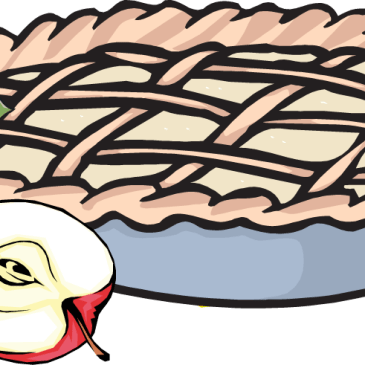
But yesterday I found a pastry pre-mix at a bulk food store that is made with only soybean oil. Soybean oil is on the ‘ok’ list. So I gave it a try. (I’ve tried making pastry with a safe oil before, to less than edible results.) But this one worked! And last night – serendipitously at his 60th birthday dinner – we had apple pie for dessert. Lovely, clove-y, gingery (cinnamon is off-limits), apple and cranberry pie.

BD had apple pie for breakfast, too, this morning. I can’t say I blame him – if I hadn’t had pie for 5 years I would too! Now, we’re not going to start having pie a lot. It’s still not healthy. But for special occasions, yes. And I went back out this morning and bought quite a lot of the pastry mix. It’s in the freezer. Christmas isn’t that far off!

First Frost

I had to scrape ice off my car windows yesterday morning, before I could go to town.  A mid-October frost is normal here; I wasn’t surprised by it.  The scraper was already in the car.

Other years this frost would have been one more source of stress in a too-busy life.  The advent of winter meant getting up fifteen minutes earlier, or changing my routine somehow to find the extra five to ten minutes needed to clean my car of ice or snow (or both) every morning.  Now, I’m not in any hurry, so there’s no stress.

Friends and family are already bemoaning the frost on Facebook.  Winter is coming. Yes, it is.  Yes, the days will shorten, snow will fall, life will get more difficult.  On the other hand, there are no mosquitoes, no grass to cut or weeds to pull, no pollen allergies or need for sunscreen, and people are friendlier and more helpful to one another in the winter, in the face of shared adversity.  Life moves from the patio to the fireside, but the beer, friendship, conversation and laughter are just as good in either place.

First frosts aren’t always about temperature.  First frosts can be the first gray hair, the first twinge of arthritis, the first child leaving home.  The first promotion of someone younger over you; the first time you can’t open a jar lid.  The first pair of readers.  The first death of someone you love, or someone you work with.  Some first frosts are light, and some are hard freezes.  But just as our attitude towards snow and ice and freezing temperatures affects how we see winter, our attitude towards aging affects how we age. There are some things we can’t change, but there are many we can.  When my father’s eyesight began to finally fail him in his late nineties, he could have mourned his inability to read his beloved history books; instead, he asked for an iPAD and learned to use iBooks, increasing the font size until he could read the words.

It will snow soon.  The first falls will be light, and will need no shovelling, and maybe not even a scattering of salt.  But at some point it will really snow.  Snow shovelling is my job, mostly, due to BD’s back problems. Last year, I was less than six months post-major-abdominal-surgery and still on lifting restrictions.  But with an ergonomically-designed snow shovel, and moving only small amounts in each scoop, the pathways got done, and I did myself no damage, and probably some good.  It took me longer.  Other things didn’t get done.  But it was a priority.  Winter is good at sorting out what really has to be done, and what doesn’t; what is worth the time and energy, and what can wait, or go by the wayside altogether.

Winter, aging or serious illness teach many of the same lessons.  Both summer and winter are beautiful, but they both ask and give different demands and different gifts. Like everything else in this world and this life, both demands and gifts are transient.  We do best when we appreciate that simple fact.

On Being a Tortoise

I have become somewhat sloppy in some of my practices of mindful living this past month. Somehow, I got out of my habit of shopping only twice a week, and have been running in to town to pick up a few items almost every day. (We live twelve miles outside of town, in a tiny village with no shop.) This needs to stop, not just because it’s wasteful of gas and time, but because it’s just not how I want to live my life.

I shopped Monday this week, but Tuesday and Wednesday, except for picking up fresh corn and tomatoes, I didn’t (and that doesn’t involve going in to town). Instead, I went walking, good two-hour hikes both mornings through woods and fields. Today I need to go into town again; but I have a plan. I’m going to put my bike on its carrier, park at the store I buy the most at, and then bike to the other places I need to go. I have both a basket and panniers for my bike, and the university town has both bike lanes and an extensive network of off-road multi-use trails, making it easy to get around.

To be fair to myself, I haven’t just been being lazy by not using them. I didn’t have the core strength to ride my bike with the added weight, especially the panniers, which I find also affect the balance of the bike. Following major abdominal surgery thirteen months ago, I was forbidden to do anything except walk or swim for six months, to allow complete healing. (And I can’t swim.) That took me to January, and the middle of the coldest winter on record for many years here. I kept active, but mostly inside, and mall walking, painting woodwork, and using the treadmill or exercise bike wasn’t enough to strengthen the core. (A lot of the regular abdominal exercises are also contraindicated after the type of surgery I had, so I couldn’t just do crunches, either.)

But then spring finally arrived, and I started walking seriously again, and biking, My balance was bad for a while.  I kept at it, and finally this last ten days I have been walking without my Nordic poles; first for half an hour, then for an hour, and for the last two days for two hours each day, on hiking trails with all their ruts, roots, and rocks.  I think I can safely say I don’t need the poles any more, at least on fairly level ground.  This means my core is stronger.  A small but significant victory.

So I’ll put the basket and panniers on my bike, and park in town at the grocery store, and after shopping there plan a circular route that will take me to the specialty poultry store, and the library, and back to the car.  I could walk it, and carry the chicken and the books, but biking works different muscles and I like to do both. If it goes well, then this will be how I run errands in town, at least until snow makes it too dangerous.

There have been times in this past year when I have felt like a tortoise:  slow, ungainly, and dependent on an external support system.  But ‘slow and steady’ did the trick.  I didn’t rush anything; I built on small gains in small increments. Sometimes I did push myself too hard, thinking I was ready for a distance or a difficulty of terrain I wasn’t, but I backed off immediately once I realized I’d misjudged.  I didn’t let either pride or the desire for a quick fix to result in injury, which in turn could have meant more surgery.  (That was quite the incentive to not overdo it, by the way.)

My healthier body means I will drive less, which benefits the environment as well as our gas budget.  I can do my share of the heavier chores, which BD’s bad back will definitely like!  I’m less likely to use (more) health-care resources, more likely to stay creative, happy, and useful in the community, and I’ll be living my life in a manner closer to my ideal.

*****

A later-in-the-day update….the plan worked.  I learned the following:  I have to make sure I have my balance completely right before I take a hand off the handlebars to signal a turn, or I wobble, especially after I had made my purchases and was carrying some weight.  I also learned that choosing to try this out on the hottest and most humid day of the entire summer wasn’t the best choice; normally I bike on rail trails and bike paths, and the additional heat radiating off the paved road surface was more than I had expected…and it was ten-thirty in the morning.  But I did it!

In Praise of Chickadees

It’s a hot, sunny August morning, and there is probably something else I could be doing, but instead I’m sitting in the sun-room, watching the ruby-throated hummingbirds at the feeder.  There are at least two:  a male, and then one or more juvenile/female-plumaged ones, which could be his offspring or mate.  I think offspring, because he keeps driving them away. There is another feeder, around the corner, situated to be seen from the kitchen window, and occasionally the male flies off to patrol it, letting the juvenile beeline in to feed.

In mid-August, other birds are beginning to appear, landing on the feeder pole and investigating all the arms, looking for the seed feeders they know were there last winter.  Chickadees and goldfinches, mostly, and the occasional blue jay.  We’ll put the seed feeders back up October first; there is plenty of wild food around for these birds, including the sunflowers planted along our fence.

I’ve walked on every continent on Earth to see birds, and I’ve seen literally thousands of species. Some stand out over others:  the Adele penguins on the Antarctic peninsula; Siberian cranes on the Yangtze wetlands in winter; the California Condors over Big Sur; the huge, shy, Great Argus of the Malay peninsula.  I’ve birded in places you wouldn’t think there would be birds:  in the heart of Paris, on the hills above Hong Kong, in downtown Buenos Aires.  I’ve seen the wonder of the sandhill and snow goose migration on the Platte in March; the dance of prairie chicken on the hills at dawn, the mating flight of woodcock in the wet fields at the edge of our village.  But while these have been wondrous, and I am filled with nothing but gratitude and awe that I have been able to see them and so much more, nothing quite makes me smile like a chickadee.

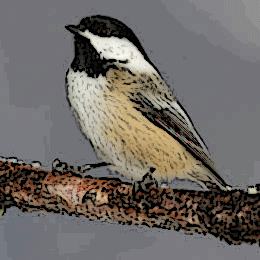
They are such cheerful, curious optimists.  Yes, I know this is anthropomorphism.  Yet there they are in August, landing on the feeder poles, buzzing their questioning chick-a-dee-dee-dee.  If I go out, they won’t fly away; I’ve had them land on me in the garden as if I were a moving tree.  On a minus twenty February morning, as soon as the light begins to filter through the darkness, they’ll be there.  If the feeders are empty, believe me, they tell us, and they’ll fly around my head while I fill them, landing on the hanging feeders before I’ve even put them up again.  The cats – who are strictly indoor cats – sit at the windows and chatter, tails lashing.  When the chickadees come to sit in the bushes under the sun-room windows, Pye and Pyxel are balls of pent-up, frustrated energy.  (But can these two catch the odd white-footed mouse that finds its way into the house?  Of course not.  They are the cat equivalent of armchair quarterbacks.)

Last fall, after major abdominal surgery, and through the weeks of recovery, further treatment and more recovery, the bird feeders – or more precisely the birds at them – were one of my joys.  Prior to my weeks off work, I’d only been able to watch the feeders on weekends once daylight savings time ended, since I left for work in the dark and got home in the dark, and weekends were inevitably filled with chores and errands, so we got brief glimpses here and there of what we were feeding. Sunday brunches were the only times we’d really get to watch.

To focus my watching, I signed up for Project Feederwatch, through Cornell University.  A huge, on-going citizen science project, my part in it was to watch the feeder for at least part of two consecutive days a week, and record the species and numbers I’d seen.  It was great fun, as well as being informative and producing a few surprises, like the flock of nineteen wild turkeys who appeared mid-morning every day to pick up the seeds scattered by the small birds.  More than that, though, for the weeks before my surgeon permitted me to drive, and the weeks before BD felt comfortable letting me go for a walk on my own, it was my daily connection to nature, to the change of the seasons and the living, breathing, wild world.

It was also two other things: community and intellectual stimulation.  One of the things I worked on during my weeks ‘home alone’ was about creating, or rather recreating, both of these, in a different form than they had taken before. My friends were hugely supportive, driving me to doctor’s appointments before I could drive myself, taking me out for lunch, just visiting.  BD, of course, was there evenings and weekends. But I was used to a work environment, where there was always someone who needed to talk to me, or I needed to talk to, in person, by phone, by e-mail, and there was always a problem to be solved, a situation to be mediated, new hardware or software to be reviewed, tested, analyzed.  And so I set out to recreate a smaller version of that – I didn’t want the constant interactions; even at work I had long ago learned to close my door, or drive out to the furthest site I was responsible for, to find some solitude and thinking time. Nor did I want to pursue anything that looked like the work I had been doing – it was a vocation, not an avocation, and I knew I was retiring.  But I did need to use my mind, and to talk to people. All the edits on Empire’s Daughter were done, so the frequent e-mails to and from my editors had ended.  The new book was just an outline, and on my best day I can only write for about three hours.  I was determined to find other ways to use my mind and be connected to people, and I was, temporarily, housebound.

By finding a place in on-line communities – not just through Project Feederwatch but through other means (which perhaps I’ll write about another time) – I satisfied both the need for interaction and the need for intellectual stimulation.  Everything I worked on last winter was time-limited; I knew that once I’d recovered, I’d likely want to spend less time on these projects; I can sign up for Project Feederwatch again this winter, or not, depending on how we decide to spend the winter.  But the project gave me more than either community or intellectual stimulation, and perhaps this last thing is the most important.

I’ve been watching birds for about forty-five years, but this was the first chance -or at least the first opportunity I’d taken – to watch in a different way; to watch the details of how the birds interacted with each other; to sort out the apparent pecking orders within and among species; to note the fine differences between how a chickadee and a goldfinch picks up seed.  I learned to identify specific birds through minor variations in plumage, and I studied the gradations and differences that sorted out the species of redpolls, before the boffins decided, on the basis of DNA, that they’re all one species, regardless. Just when I’d got good at it, of course.

Learning to watch the birds differently, paying attention differently, is a distillation of much of what I have been working towards – to be more mindful of what is important to me, to slow down and see, to live here, now, understanding the landscape and ecosystem and community in which I live and am part of.  T.S. Eliot said it far better than I ever could, in his magnificent poem Little Gidding:

We shall not cease from exploration
And the end of all our exploring
Will be to arrive where we started
And know the place for the first time.

Perhaps I have just begun to know chickadees.