Honouring Labour, Honouring Food

I’m emerging from the intense process of bringing a book to life: the detailed proofing, the minor cover changes, the precise production values.  It’s done, and published, and starting to make its (so far) well-received way in the world.  Which means I can raise my head, and look around, and think about some other things.

One thing I’ve been thinking about recently (again) is food.  Not the cooking of it, or not only, but the ways we value it, or don’t value it, and more precisely how we don’t, in general, value the labour and resources that go into producing it.  Food waste has got a lot of press recently, and it should.  But there is more than one devaluing going on when food is thrown out: we are, when we waste edible food, dismissing it – whether it’s an extra zucchini or soft carrots – but we are also ignoring the human and resource cost of producing that food.

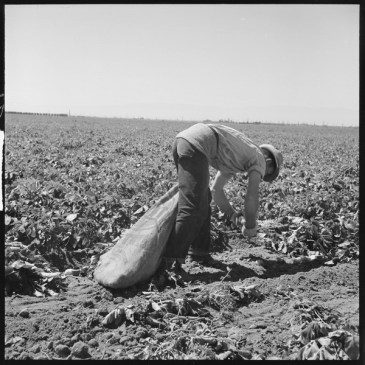
I have a couple of degrees in agricultural science.  I have also worked, in my teen years,stoop labour in what is called ‘stoop labour’: picking tomatoes and green beans, riding a potato digger, harvesting sweet corn, cutting grapes. Long, hot, sweaty days, often with no access to a washroom or running water; lunch eaten with dirty hands, sometimes between the rows. Sometimes the pay was hourly, sometimes it was piece work. It was never good. I’ve worked alongside immigrant women with advanced degrees, whose English wasn’t good enough to let them work in their area of expertise, women from Portugal and Hungary. I’ve worked alongside men from St. Kitts and Jamaica, who come to Canada yearly to support their families back in the islands. I did this work for a few weeks every summer, and only for a few years.  These people did it, do it, year after year after year.
I find myself remembering this more these days, maybe because I am in my 60th year, and my knees creak and my back hurts, and arthritis plagues me occasionally.  I buy a head of broccoli at the farm stand, or a bunch or radishes, and I look at it, and think about the work. Which raises, in my mind, an ethical issue: this head of broccoli or bunch of radishes is in my hands because of the labour of those who planted it, those who weeded and watered and fertilized, and those who harvested it.  Can I, with a quiet mind, throw out half of it: the stems of the broccoli, the leaves of the radishes?  What would that say about how I value their work?

So I have set about to find ways not to waste the products of that labour. (Not to mention the other resources – the fuel and fertilizer to grow the crop; the topsoil itself, disappearing or degrading in much of the world; the water, rapidly becoming a limiting factor.) As each vegetable crop comes into season, I’m being creative with what I do with it.  (But if anyone’s found something useful to do with corn husks, other than compost them to produce soil amendment, let me know!)  This is what I’ve been doing, so far this summer:

Broccoli stems:  I slice off the tough outer part of the stems, tossing those parts into the large container in my freezer where all soup stock ingredients go.  Then I slice the inner portion into matchsticks, which go either into salads, or into an Asian-inspired soup I make.

Radish greens:  add to salads or soups, or, cook until soft, and puree them. (Pour off most of the liquid and reserve as stock.)  I use pureed greens, whether from radishes or salad greens past their best – in place of zucchini in zucchini bread or muffin recipes, and it works just fine.  I sometime use other pureed veggies too – I’ve previously published this recipe here.

The stock container in the freezer gets just about everything else: broccoli leaves, radish trimmings, bits of pepper, anything that’s sat too long in the fridge and has gone soft; overripe tomatoes, extra herbs. Every couple of weeks I scoop out about two cups worth of bits, put them in the slow cooker with some garlic and onion, salt and pepper, and few chicken bones from the other freezer container, cover with water, and let it simmer all day.  The bones and vegetable matter go into the municipal compost system (from where it goes to farmers’ fields as soil amendment); to the broth, I add match-sticked broccoli and carrots, thin slices of red pepper, left-over corn, slices of radish – really whatever is around.  I toss in a few herbs – Thai basil, lemongrass, parsley – from our community herb garden, more garlic, cayenne pepper. I cook the broth and veggies together for ten minutes, add tiny egg noodles, and four minutes later, pour into wide bowls.  Sometimes I add tiny pieces of meat – again, whatever is around: little bits of chicken from a roasted bird; one sausage, cut into fine rounds and browned –  but no more than an ounce for each person. I serve it with good bread, and maybe a salad, and that’s supper.

What do you do to reduce food waste?  I’d really love to know. Has anyone tried making pesto from greens other than basil?  Are there other creative soup recipes out there?Please share!


Photo:  Kern County, California. Migrant youth in potato field. Stoop labor by a migratory youth: by Partridge, Rondal, 1917-, Photographer (NARA record: 8464464) (U.S. National Archives and Records Administration) [Public domain], via Wikimedia Commons

A New Kitchen Tool

I bought a mortar and pestle today, a kitchen tool I’ve done without for thirty-five years.tools-mortar-and-pestle-800px  As I have a general policy of not buying things, why did I make an exception for this?
The answer lies, and hangs, in my basement: a rack and two elevated screens of drying herbs, the last harvest before winter.  Rosemary and sage, oregano, parsley and chives: some hang in bunches from the rack that used to, in my working days, dry my panty-hose; more are spread on window screens elevated on paint cans.  (None of them are catnip, to Pye’s total disgust – she loves it. Pyxel, on the other hand, watches Pye go ecstatic over a catnip toy the way a teetotaler watches someone enjoying a glass of wine.)

I could have chopped the herbs and stored them frozen in oil; or just frozen, in small bags, but I prefer dried herbs for the simple reason I don’t have to remember to thaw them prior to cooking. (I do freeze pesto.) I could have microwaved or oven-dried them, but why use energy when the basement is dry and warm?  In another few days, I’ll bring them up to the kitchen, and strip the leaves off the stems prior to storing in glass jars.  Some of them – the rosemary in particular – I will later grind.

Ground rosemary used to be easy to find in grocery stores, but for a long time now all I can find are whole leaves – which are fine, and I use them, but sometimes I want ground rosemary, when the texture of what I’m making will not benefit from the whole leaf.  There are a few other herbs that can benefit from grinding, sometimes: dill for use in sauces or on fish comes to mind.  And spices – well, Indian spices like mustard seeds need grinding just before they are added to a curry; powdered mustard seed lacks the fragrance and bite of freshly-ground.  These were all good reasons to buy a mortar and pestle years ago, but for some reason I never got around to it.  (You can bash mustard seed with a rolling pin, in a pinch.)

But I am also thinking ahead.  The community in which I live has a communal herb garden, and I’ve volunteered to be one of the people who takes care of it. It satisfies my wish to garden without committing me to something too big or too demanding of my time. Next year we’ll have quite a wide variety of herbs, edible flowers, and perhaps a few other plants like jalapeno peppers.  With a larger variety of herbs to cook with and to dry, I will (I hope) need the mortar and pestle more than ever before.

But I’m curious…those of you who use a mortar and pestle regularly, what other kitchen uses does it have?

Slow-but-quick Soup

I have written before about how two of my favourite kitchen tools are my slow cooker and my stick blender, but the two together are proving to be indispensable.

Last winter in England, we bought a small slower cooker – about 2 litres (2 quarts, more or less) in size. It was perfect for the two of us, and could stretch to a meal for three on occasion. When we left to come back to Canada, we gave it to a charity shop. (Not only was it too awkward to bring home, the UK uses 220V power, so I couldn’t use it here if I’d wanted to.) I often wished during those weeks that I had one of the same size here, but I’d never been able to find one.

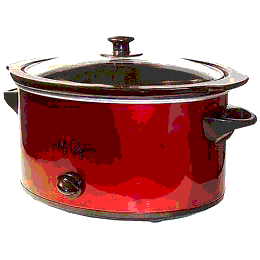
But this September, in the university town where I live, suddenly 2 litre slow cookers appeared, marketed to the student population. Hooray, I said, and bought two – one for me, one for my sister. And it’s a rare day I don’t use it. Now the heat of the summer is gone, I like to have soup for lunch. Ingredients thrown in the pot when I get up are ready by noon, but not over-cooked as such a small amount might be in a larger slow cooker. A quick pureeing with the stick blender, and with some good bread and a bit of olive oil for dipping, lunch is ready.

Today it was a couple of cups of frozen diced butternut squash (raw), and a few pieces of left-over roast parsnip. As I was out of chicken broth, usually a pantry staple, I just used water, about a cup. These simmered away on the high setting till noon; I added salt and pepper and a bit of cumin, gave it a whirl with the stick blender – and the soup was ready. Those proportions make enough for one generous serving.

Another day it will be minestrone: 2 cups of low-sodium diced tomatoes, 1/3 tin tomato paste (I freeze it in small plastic containers) 1/4 cup red lentils (or any other cooked legume), some frozen spinach, and whatever other frozen or left-over vegetables I choose to throw in, along with a cup of liquid. This gets some red pepper flakes and garlic added, sometimes a tablespoon of pesto.

Almost any left-overs can be turned into soup. I frequently make just a bit too much when I’m making meals like chili or dhal or even chicken stew, but that less-than-one-serving that’s left doesn’t get thrown out, it goes into the little slow cooker the next day with chicken broth and veggies, and tomato paste and spices if needed, to become my lunch-time soup. Sometimes I blend it to an even consistency, sometimes I don’t. I eat it with bread and olive oil, or bread and cheese, or cheese and crackers….whatever is available. I finish the meal with a cup of coffee and one square of dark Swiss chocolate and am thoroughly satisfied.

And if it’s a soup-for-supper day, then I just double everything so there’s enough for us both. Soup-for-supper is served with an amazingly easy focaccia bread. I’ll post that recipe another day!

Chickpeas and Couscous

It’s hot today, and humid: a good day for a quick, vegan salad supper. My deck garden is starting to supply some of the ingredients, and the others are pretty much pantry staples for us. Here’s how I throw together a Chickpea-Couscous salad for two:

2/3 c couscous

1/2 c cooked (canned) chickpeas

1 c cherry tomatoes, halved

1 c broccoli florets, divided into very small pieces

1 small red pepper, diced into 1/4” squares

a handful of chives, finely chopped

a handful of mint leaves, finely chopped

a handful of oregano leaves, finely chopped

1/4 c olive oil

1/4 c lemon juice

salt and pepper to taste

Put the couscous in a 2 cup measuring cup and add 2/3 c boiling water. Cover and let sit for 5 minutes.

Drain the chickpeas and rinse well: I use half a standard tin, so I freeze the other half for next time.

Mix the olive oil and lemon juice together.

Mix the chickpeas, cooked couscous, all the veggies and the herbs, pour in the dressing, mix some more, add salt and pepper to taste, and refrigerate for an hour or more.

That’s it. You can serve it over lettuce, or not. You can add garlic, or not. Or harissa spice. Or raisins. It has veggies, protein, carbohydrates, and a bit of good oil. And it takes less than ten minutes to make. What could be better on a hot and humid day?

Art, Tools, and Ice Cream

On Saturday, I biked the 4.5 km downtown to do three things:  go to the farmers’ market, enjoy ‘Art on the Street’, and drop a few small things off at the new tool library.

Our market is a year-round market, rare in Ontario, but it’s been a fixture of this city for over 180 years, and it has its own building.  In the summer it expands to the outdoors; in the winter, it shrinks.  Fair enough; there’s very little food grown here in the winter, outside of the greenhouse industry, but the baked goods and meats and cheeses remain.  I dropped in only to buy kamut wraps and toss coins into the guitar cases of the buskers, who never fail to make me hum along on a Saturday morning.

Then it was off to the tool library, a few streets over.  While not a new concept, this is a new initiative for our city. If you’re not familiar with the concept, it’s pretty simple:  if you need a tool, from rice cookers to cement chisels, from stock pots to a screwdriver, you can borrow it from the tool library. I’d first discovered them when I was looking for a place to donate my garden tools from the old house.  A volunteer had come to pick up that load – there were quite a few tools – but now I had a few more things to give them, things that fit in the panniers of my bike.

The space was functional but effective, and all the tools are being catalogued and bar-coded for inventory control.  In a city with a lot of students, its share of low income families, and a strong community ethic towards sustainable and cooperative living, the tool library is a logical addition.  I’m eyeing the tile-cutter in my basement now: I kept it as we consider what to do with the backsplash in the kitchen…but I could always borrow it back.

I left my bike and helmet locked to the rack outside the tool library, and walked over to Art on the Street.  One street had been closed off to house this annual, tented art display and sale, and the place was crowded, cheerful and noisy.  I wandered among the art for the best part of an hour, coveting but not buying a set of glass coasters from one artist,  a mug and vase from another.  Both ‘covets’ had a raven theme, which calls to me strongly.  I’m always torn at art shows:  I am trying not to buy things, to add to the items we own because we really don’t need anything.  I have a dozen coasters and more than a dozen mugs.  But on the other hand, as an independent artist myself…we need people to buy things.  Even when there isn’t financial need, there’s the need for people to appreciate and value the art we make, whether visual or written or aural.  I’m regretting the coasters, just a bit.

I finished off with a small cone of what might be the best chocolate ice cream I’ve ever had, from a small creamery that makes ‘small-batch’ ice cream from mostly-local, in-season product, before biking the longer-but-flatter river path route home.  In retrospect, I should have had the raspberry-rhubarb ice cream….but it’s Wednesday today, the summer Wednesday market will be on downtown; we’re biking down for an afternoon showing at the little rep cinema…and the creamery will be at the market, steps from the cinema.  What better way to fuel up before the ride home?


Eating (semi)well on the road.

We’ve just returned from a two-week road trip through California and southern Arizona, a trip booked long before the idea of buying a new house entered our minds. Nothing was going to happen with the house purchase in those weeks anyway, so there was no reason not to go.

Since the days of our six-and-seven week road trips, where we mostly camped, took a cooler with us, and bought groceries, several things have changed. One, of course, is that we were flying and renting a car. Secondly – and most importantly – are the food allergies/sensitivities BD has developed. It’s really difficult to find food he can eat, and even more difficult to find restaurants he can eat at. His allergy is to a specific fatty acid – lauric acid – which is found in red meats, most fats, coconut and palm products, all dairy, and some spices. It makes him break out in hives, big nasty hives which even extra-strength Benadryl only somewhat controls. So we need to be very careful about what he eats.

We could have bought a cooler in California, shopped for groceries, and eaten at parks and picnic stops. But there were a couple of strikes against this: one is that, for the most part, it was too cold to do this comfortably – we had snow in the foothills in Arizona! – and the second strike was just that we wanted more ease. We’ve done our share – more than our share – of eating in wind, rain, cold, searing heat and annoying insects, or perched on the side of the bed in a hotel room. Frankly, I’ve had enough of that.

Subway is one chain we know is safe for BD, if he sticks to chicken or turkey, but a constant diet of Subway grows old quickly, plus the sodium content is pretty high. We decided to try Denny’s, the classic diner chain: their available nutrition information is good, and they have something extremely difficult to find in US restaurant chains: reasonably sized meals, if you order carefully.

For dinners, we mostly stuck to the 55+ meals, eating a salad (with no cheese or dressing for BD), fish or chicken with broccoli and another vegetable – corn for me, squash for BD – every night. With unsweetened iced tea, the calorie count was around 650, the sodium, fat, and sugar content low for restaurant food, and there was nothing in the spices or preparation that triggered BD’s allergies. Breakfasts were fairly easy too: ordering a la carte, BD ate poached eggs on dry toast, oatmeal, and fresh fruit every morning; I had the same, or sometimes yogurt instead of the oatmeal. Again, the meals ran in the 650 calorie range, and it was easy to avoid the dairy and oil that would have been a problem. And we both appreciated comfortable booths and table service, especially after a long day, and in the morning when I’m not human before that first coffee.

It was also quite a bit of food. Neither of us were terribly hungry at lunch time, even after hikes of several hours most days. We’d found an energy bar by KIND that BD could eat without problems, so lunches tended to be an energy bar and an apple. BD would add a handful or almonds or peanuts; I’d add a latte if there was one to be had. If we walked a lot, sometimes we had a second energy bar, or more nuts.

Not every meal was eaten at Denny’s or Subway. We ate a couple of breakfasts at little cafes at Morro Bay and Cayucas. We drove to Oxnard (twice) specifically for fish and chips at Sea Fresh, which fries in peanut oil (BD had a double order of chips, it was such a treat.) Only something at Olive Garden triggered any reaction in BD, and it was mild, so a trace of oil or spice, most likely.

I celebrated my 58th birthday while on this trip. We debated a special dinner, but I didn’t particularly want that: what I did want was ice cream, as it was an unseasonably hot day (the only one of the trip) at Point Reyes National Seashore north of San Francisco. I usually avoid eating ice cream in front of BD – it seems cruel, when he can’t eat it any more – but I made an exception for my birthday. And in the little general store in Inverness, California, not only did I find my favourite Haagen-Daas chocolate-coffee-almond bar, but a lime gelato bar with no dairy that BD could eat (and he loves lime). We sat at a picnic table overlooking the bay and ate our treats, enjoying every frozen bite.

We were pleased with the trip – not only did we find the two birds we went to see around San Francisco, ones that have been eluding us for thirty years (because they are found by call, and they only call during breeding season, and that was always while we were working) – but we ate fairly nutritious food and didn’t trigger BD’s allergies. We went for long walks, watched dolphins and sea otters and seals along Highway 1, heard coyotes singing in the dusk at Yuma and watched the sun rise over the mountains. A good holiday. Now back to the realities of packing up this house for the move. Stay tuned!

New Year’s Day Lunch

We’re in the lull between holiday celebrations. Our two-part Christmas – Christmas Day dinner with BD’s brother and family, and my family get-together a couple of days later – are done. I’ve baked a lot, eaten far too much, and played a marathon men-against-women game of Trivial Pursuit (we women won, finally.)

On New Year’s Day we’ll host a lunch. This used to be an annual occurrence, until we started travelling over the two-week Christmas holiday to places like India and China (and Antarctica, once) and so were no longer at home on New Year’s Day. Now we’re retired, the winter travel will take place in January and February, so we’re having the lunch again.

It’s a pretty simple affair. Jeans and sweaters meet the suggested dress code. After the excesses of the last couple of weeks, we try to keep both food and drink to some basics: hot spiced cider, soft drinks, a glass of wine for a toast. I’m making little tart-sized quiches and sausage rolls; there will be smoked salmon, hummus, cheeses and paté, along with crostini and crackers and fresh baguettes. Crudités, olives, pickles, and roasted red pepper and eggplant will round it out. Served buffet style, the twenty or so people attending will eat in small groups scattered around the house: we’ve chairs a-plenty. Dessert will be raspberry-ginger cake served with coffee or tea. Nor am I cooking all this: friends and family are bringing parts of it.

Yesterday BD and I got the wine glasses down and ran them through the gentle cycle of the dishwasher: this set hasn’t been used in a few years, and were very dusty. Some of the plates got the same treatment. It shocks me slightly that I gave away our ‘banquet set’ for twenty-four last year, and yet we still have enough plates – dinner, lunch, and dessert – , as well as glassware, mugs and cutlery to accommodate twenty people. Not that they match, but who cares? But if we want to keep doing these annual lunches, I guess I’ll have to keep them. I abhor the idea of disposables. The other alternative, which we used to do for pot-lucks at work, is to ask everyone to bring their own. I’ll have to give that serious consideration another year.

Guests will start to arrive about 12:30 p.m. With luck, the first man through the door will be dark-haired – an old Scottish tradition called ‘first-footing’ gives good luck to the house and its inhabitants if the first man who enters on New Year’s Day is dark. We’ll serve drinks, talk, exchange Christmas stories, laugh, until about 2, when we’ll eat; by five at the latest, folks will have left, leaving us plenty of time to run the dishwasher, nibble on left-overs, and tidy up.

We used to do evening parties: for years I hosted our work Christmas dinner: roast turkey and all the trimmings for nearly thirty people. Then we did the New Year’s lunch as a sit-down meal, which involved renting tables and chairs and big white tablecloths and rearranging the furniture a bit. As I get older, the parties get simpler, and I’m happy for people to bring food or drink. Everyone enjoys it just as much…or perhaps more.

The One-Stop Holiday Shop

We don’t, as an extended family-and-friends group, give anything but small, consumable holiday presents. We’re all adults, all well-enough off and we all own too much stuff. The money we would have spent goes to a cause of the donor’s choice, and we celebrate with food, wine, winter walks and conversation.

But there is still that small consumable present to buy. In keeping with our belief in shopping locally, I consider my options. There is a lavender farm just north of us that has lots of lovely little products. There is a bee-keeper who makes beautiful candles with the beeswax. There is local maple syrup. Or there is Rose’s, our bakery-preserves shop right here in the village. Rose’s jams and chutneys and pickles and salsa are scrumptious, made mostly from locally-grown produce, providing employment and revenue right in our village. Rose’s wins.

I stop on my way to town: I can walk there, but not with nearly two dozen jars of preserves in my bag. I’ve chosen late morning on a mid-week day, when she isn’t so busy. The shelves are lined with jars, their contents gleaming red and purple and green. I buy blueberry jam and hot salsa, crabapple jelly and cranberry-apple chutney, spicy red pepper jelly and bread-and-butter pickles, while inhaling the scent of bread baking. Probably I buy more than I need, but we’ll eat anything that’s left over.

I could, in theory, preserve my own jams and pickles now; retirement should give me the time. But my days are too full already, and with such a supply just down the road, I’m happy to buy them from Rose. A little bit of our local food will make its way around the province in the next few weeks, our local farm and rural economy will benefit, and my holiday shopping stress is nil. Now I can start the holiday baking!

The New Coffee Maker

Buying anything new in our house is not just a question of going shopping. All purchases of any substance need discussion. If it’s a replacement item, what is wrong with the old one – can it be fixed? Do we actually need it? Can one be found second-hand? If it’s something new to the house, why? What purpose does it serve, and what need does it fill that currently isn’t met? We don’t need more things, and we’re trying to reduce what we have.

I drink coffee. I love coffee. BD hates the stuff. I’ve had a little 4-cup drip coffee maker for years and years…and it was slowly dying, not heating the water to a sufficient temperature. I tried cleaning it. No better. Reluctantly, I decided it really had to be replaced. I need my coffee. Equally reluctantly, BD agreed. ‘Can you get something that doesn’t make the whole house smell like coffee?’ he asked (after the initial ‘Why don’t you give the stuff up?’ followed by ‘Can’t you just drink instant?’ )

Hmmmm. I used to have a French press, many years ago, but cleaning it was a pain, even though it made good coffee. I did some research, and found the AeroPress. Basically a modified French press, the AeroPress sits on top of a mug. You add a filter and coffee to the detachable filter basket, screw it onto the body, add water just a bit below boiling, and press down on the plunger. The on-line reviews were fabulous.

I was fairly sure that my local roast-their-own beans coffee shop would carry it, and I was right. The barrista there raved about it. It was about thirty dollars, twice what a replacement 4-cup drip maker would cost, but it won’t make the house smell like coffee from the pot sitting on the warmer, and will use less water -I almost always made more coffee than I drank, because I could never get small amounts to taste right. (Water use matters – we buy our drinking water, because our well, while safe from a bacterial count viewpoint, has a high manganese and iron content, and tastes unpleasant. So every couple of weeks, BD drives to town with the big reusable bottles and refills them and that’s what we and the cats drink.)

I’ve had it for four days. The verdict? It makes great coffee. It took me a day or two to work out exactly how much coffee and how much water I needed to make it taste just right, not too strong, not too weak. It’s a cinch to clean, the filter and used coffee pop out directly into the compost bin, and it doesn’t take up counter space.

It also means I’m not drinking coffee mindlessly, because it’s in the pot. Already my coffee consumption has dropped because I have to think about whether or not I want to take the three or four minutes it takes to make a cup. I always meant to only drink two cups a day, one in the morning, one after lunch – but it was there on the counter, calling to me. I’m sleeping better, and my stomach is happier. What’s not to like?

The Monthly Menu

In the first months of retirement, it felt good to be able to shop every day or so, especially with the farmer’s markets in full swing. It was a luxury I hadn’t had in my working days.

But over this autumn, as my days of leisure become fuller with the work of my third, chosen, career, it’s becoming a nuisance. The markets are closed, except for the Saturday ones, and the roads are becoming icy, so last month we went back to the monthly menu.

Once a month, we sit down and plan meals. I create a four-column chart: Date, Meal, Prep on Day, Need to Buy. This goes on the fridge, and can be modified as needed – if I only use half a tin of chopped tomatoes in the curry, then a note is made on the next meal that needs them that they’re in the freezer. I use this chart to determine monthly and weekly shopping lists; I tend to buy meat monthly and freeze it, and everything else weekly, with a quick top-up shop half-way to buy milk or yoghurt or eggs, as our fridge isn’t big enough to keep large supplies of these on hand. It also reminds me what to thaw and what other prep is needed on the day.

This works because there are only two of us, and our lives are fairly predictable. If we decide to go out to a movie and dinner with friends, that’s ok -that meal either doesn’t get made, or, it gets moved to the next day, and that meal cancelled, whichever is easier. Meals can be moved around without too much difficulty, and left-overs always have a meal to be included in.

The other advantage is that in six weeks, when we leave for an extended vacation, we’re not leaving behind a freezer and fridge half-full of food. We left once for a two-week holiday over Christmas, only to have our area hit by a vicious ice-storm that meant our house was without power for eight days. All the freezer foods, all the fridge perishables, had to be discarded (luckily our cat sitter is very flexible on what tasks she’ll take on – oh, and the cats went to live with a friend for that time) as we kept in touch by text from England. I’d like not to put her in that situation again, so both fridge and freezer will be empty of anything that could go bad.

Will I keep this up in the summer, when the markets are open again and fresh local food abounds? Probably not….or I’ll modify it a bit…but for the winter months, it works for us.