Honouring Labour, Honouring Food

I’m emerging from the intense process of bringing a book to life: the detailed proofing, the minor cover changes, the precise production values.  It’s done, and published, and starting to make its (so far) well-received way in the world.  Which means I can raise my head, and look around, and think about some other things.

One thing I’ve been thinking about recently (again) is food.  Not the cooking of it, or not only, but the ways we value it, or don’t value it, and more precisely how we don’t, in general, value the labour and resources that go into producing it.  Food waste has got a lot of press recently, and it should.  But there is more than one devaluing going on when food is thrown out: we are, when we waste edible food, dismissing it – whether it’s an extra zucchini or soft carrots – but we are also ignoring the human and resource cost of producing that food.

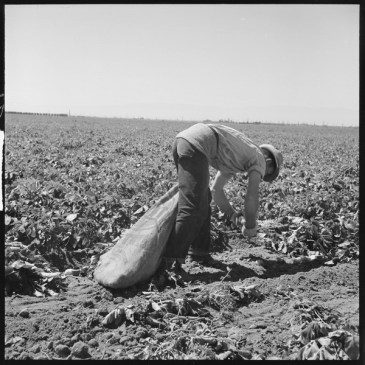
I have a couple of degrees in agricultural science.  I have also worked, in my teen years,stoop labour in what is called ‘stoop labour’: picking tomatoes and green beans, riding a potato digger, harvesting sweet corn, cutting grapes. Long, hot, sweaty days, often with no access to a washroom or running water; lunch eaten with dirty hands, sometimes between the rows. Sometimes the pay was hourly, sometimes it was piece work. It was never good. I’ve worked alongside immigrant women with advanced degrees, whose English wasn’t good enough to let them work in their area of expertise, women from Portugal and Hungary. I’ve worked alongside men from St. Kitts and Jamaica, who come to Canada yearly to support their families back in the islands. I did this work for a few weeks every summer, and only for a few years.  These people did it, do it, year after year after year.

I find myself remembering this more these days, maybe because I am in my 60th year, and my knees creak and my back hurts, and arthritis plagues me occasionally.  I buy a head of broccoli at the farm stand, or a bunch or radishes, and I look at it, and think about the work. Which raises, in my mind, an ethical issue: this head of broccoli or bunch of radishes is in my hands because of the labour of those who planted it, those who weeded and watered and fertilized, and those who harvested it.  Can I, with a quiet mind, throw out half of it: the stems of the broccoli, the leaves of the radishes?  What would that say about how I value their work?

So I have set about to find ways not to waste the products of that labour. (Not to mention the other resources – the fuel and fertilizer to grow the crop; the topsoil itself, disappearing or degrading in much of the world; the water, rapidly becoming a limiting factor.) As each vegetable crop comes into season, I’m being creative with what I do with it.  (But if anyone’s found something useful to do with corn husks, other than compost them to produce soil amendment, let me know!)  This is what I’ve been doing, so far this summer:

Broccoli stems:  I slice off the tough outer part of the stems, tossing those parts into the large container in my freezer where all soup stock ingredients go.  Then I slice the inner portion into matchsticks, which go either into salads, or into an Asian-inspired soup I make.

Radish greens:  add to salads or soups, or, cook until soft, and puree them. (Pour off most of the liquid and reserve as stock.)  I use pureed greens, whether from radishes or salad greens past their best – in place of zucchini in zucchini bread or muffin recipes, and it works just fine.  I sometime use other pureed veggies too – I’ve previously published this recipe here.

The stock container in the freezer gets just about everything else: broccoli leaves, radish trimmings, bits of pepper, anything that’s sat too long in the fridge and has gone soft; overripe tomatoes, extra herbs. Every couple of weeks I scoop out about two cups worth of bits, put them in the slow cooker with some garlic and onion, salt and pepper, and few chicken bones from the other freezer container, cover with water, and let it simmer all day.  The bones and vegetable matter go into the municipal compost system (from where it goes to farmers’ fields as soil amendment); to the broth, I add match-sticked broccoli and carrots, thin slices of red pepper, left-over corn, slices of radish – really whatever is around.  I toss in a few herbs – Thai basil, lemongrass, parsley – from our community herb garden, more garlic, cayenne pepper. I cook the broth and veggies together for ten minutes, add tiny egg noodles, and four minutes later, pour into wide bowls.  Sometimes I add tiny pieces of meat – again, whatever is around: little bits of chicken from a roasted bird; one sausage, cut into fine rounds and browned –  but no more than an ounce for each person. I serve it with good bread, and maybe a salad, and that’s supper.

What do you do to reduce food waste?  I’d really love to know. Has anyone tried making pesto from greens other than basil?  Are there other creative soup recipes out there?Please share!


Photo:  Kern County, California. Migrant youth in potato field. Stoop labor by a migratory youth: by Partridge, Rondal, 1917-, Photographer (NARA record: 8464464) (U.S. National Archives and Records Administration) [Public domain], via Wikimedia Commons
Slow-but-quick Soup

I have written before about how two of my favourite kitchen tools are my slow cooker and my stick blender, but the two together are proving to be indispensable.

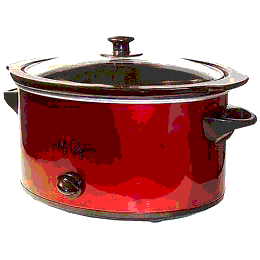
Last winter in England, we bought a small slower cooker – about 2 litres (2 quarts, more or less) in size. It was perfect for the two of us, and could stretch to a meal for three on occasion. When we left to come back to Canada, we gave it to a charity shop. (Not only was it too awkward to bring home, the UK uses 220V power, so I couldn’t use it here if I’d wanted to.) I often wished during those weeks that I had one of the same size here, but I’d never been able to find one.

But this September, in the university town where I live, suddenly 2 litre slow cookers appeared, marketed to the student population. Hooray, I said, and bought two – one for me, one for my sister. And it’s a rare day I don’t use it. Now the heat of the summer is gone, I like to have soup for lunch. Ingredients thrown in the pot when I get up are ready by noon, but not over-cooked as such a small amount might be in a larger slow cooker. A quick pureeing with the stick blender, and with some good bread and a bit of olive oil for dipping, lunch is ready.

Today it was a couple of cups of frozen diced butternut squash (raw), and a few pieces of left-over roast parsnip. As I was out of chicken broth, usually a pantry staple, I just used water, about a cup. These simmered away on the high setting till noon; I added salt and pepper and a bit of cumin, gave it a whirl with the stick blender – and the soup was ready. Those proportions make enough for one generous serving.

Another day it will be minestrone: 2 cups of low-sodium diced tomatoes, 1/3 tin tomato paste (I freeze it in small plastic containers) 1/4 cup red lentils (or any other cooked legume), some frozen spinach, and whatever other frozen or left-over vegetables I choose to throw in, along with a cup of liquid. This gets some red pepper flakes and garlic added, sometimes a tablespoon of pesto.

Almost any left-overs can be turned into soup. I frequently make just a bit too much when I’m making meals like chili or dhal or even chicken stew, but that less-than-one-serving that’s left doesn’t get thrown out, it goes into the little slow cooker the next day with chicken broth and veggies, and tomato paste and spices if needed, to become my lunch-time soup. Sometimes I blend it to an even consistency, sometimes I don’t. I eat it with bread and olive oil, or bread and cheese, or cheese and crackers….whatever is available. I finish the meal with a cup of coffee and one square of dark Swiss chocolate and am thoroughly satisfied.

And if it’s a soup-for-supper day, then I just double everything so there’s enough for us both. Soup-for-supper is served with an amazingly easy focaccia bread. I’ll post that recipe another day!

Chickpeas and Couscous

It’s hot today, and humid: a good day for a quick, vegan salad supper. My deck garden is starting to supply some of the ingredients, and the others are pretty much pantry staples for us. Here’s how I throw together a Chickpea-Couscous salad for two:

2/3 c couscous

1/2 c cooked (canned) chickpeas

1 c cherry tomatoes, halved

1 c broccoli florets, divided into very small pieces

1 small red pepper, diced into 1/4” squares

a handful of chives, finely chopped

a handful of mint leaves, finely chopped

a handful of oregano leaves, finely chopped

1/4 c olive oil

1/4 c lemon juice

salt and pepper to taste

Put the couscous in a 2 cup measuring cup and add 2/3 c boiling water. Cover and let sit for 5 minutes.

Drain the chickpeas and rinse well: I use half a standard tin, so I freeze the other half for next time.

Mix the olive oil and lemon juice together.

Mix the chickpeas, cooked couscous, all the veggies and the herbs, pour in the dressing, mix some more, add salt and pepper to taste, and refrigerate for an hour or more.

That’s it. You can serve it over lettuce, or not. You can add garlic, or not. Or harissa spice. Or raisins. It has veggies, protein, carbohydrates, and a bit of good oil. And it takes less than ten minutes to make. What could be better on a hot and humid day?

A Day to Spoil Myself

Yesterday was a day for relaxation. After six weeks of packing, culling, moving and cleaning, I was truly tired, physically and mentally. We’d officially moved in on Wednesday, spent Thursday and Friday cleaning the old house from attic to basement, readying it for sale. Saturday I ran errands – the market and groceries, and unpacked some boxes; in between we watched the cats adjusting to their new house and thought about where pictures should hang.

Sunday morning I went for a long walk, eight kilometres from the house, around and through the Arboretum, and then made a strawberry-rhubarb pie when I got home. I think I misjudged how tired I was from the house cleaning, because by the time a friend and I had done a garden tour in the afternoon, and I’d cooked supper for us all, I was frankly exhausted. Luckily there was nothing scheduled for Monday except the natural gas barbecue installation, and overseeing that was BD’s responsibility. I could spoil myself.

So off I went, first for a haircut, which includes a head massage (lovely) and then for a pedicure – which includes a leg massage, as well as the back massage from the chair. By the time those were done, I was feeling much more relaxed. Along with the pampering had come some good conversation with another customer at the pedicure salon, a man a bit older than I getting his feet seen to. He was erudite and thoughtful, and it was just one of those wide ranging conversations – from life in the depression to music – that happen with strangers, a nice bonus on my ‘day off’.

After lunch I just puttered around, reading a bit, until four thirty, when our new neighbour across the street had invited us for tea and nibbles. Or rather, her idea of such, which was definitely a full meal, with delicious spreads (one, made with avocado, hard-boiled egg, mayo and lemon juice was outstanding, something BD can eat, and will definitely be added to our menus!), lots of fresh veggies and fruit, crackers and wraps, scones and loaf and cookies…and after more than two hours of another good conversation she sent us home with doggie bags. So I didn’t have to cook dinner, rounding out my day of relaxation perfectly. I ended it with a glass of wine and Game of Thrones. I slept like the proverbial log, and woke up completely refreshed and re-energized this morning.

It’s easy to forget to take care of ourselves when life is busy. I was certainly guilty of it when I was working, and I notice that in all the planning, organizing, and managing the move needed, I was falling back into work habits, not good for my health, mental or physical. But the move is done, all the important boxes are unpacked (and the rest can be done at leisure), the cats are no longer hiding, and we’re settling in to our new life…one designed to be relaxed, simple, and low-stress , after all!

Image credit: By Mozilla, CC BY 4.0, https://commons.wikimedia.org/w/index.php?curid=44547865


The Monthly Menu

In the first months of retirement, it felt good to be able to shop every day or so, especially with the farmer’s markets in full swing. It was a luxury I hadn’t had in my working days.

But over this autumn, as my days of leisure become fuller with the work of my third, chosen, career, it’s becoming a nuisance. The markets are closed, except for the Saturday ones, and the roads are becoming icy, so last month we went back to the monthly menu.

Once a month, we sit down and plan meals. I create a four-column chart: Date, Meal, Prep on Day, Need to Buy. This goes on the fridge, and can be modified as needed – if I only use half a tin of chopped tomatoes in the curry, then a note is made on the next meal that needs them that they’re in the freezer. I use this chart to determine monthly and weekly shopping lists; I tend to buy meat monthly and freeze it, and everything else weekly, with a quick top-up shop half-way to buy milk or yoghurt or eggs, as our fridge isn’t big enough to keep large supplies of these on hand. It also reminds me what to thaw and what other prep is needed on the day.

This works because there are only two of us, and our lives are fairly predictable. If we decide to go out to a movie and dinner with friends, that’s ok -that meal either doesn’t get made, or, it gets moved to the next day, and that meal cancelled, whichever is easier. Meals can be moved around without too much difficulty, and left-overs always have a meal to be included in.

The other advantage is that in six weeks, when we leave for an extended vacation, we’re not leaving behind a freezer and fridge half-full of food. We left once for a two-week holiday over Christmas, only to have our area hit by a vicious ice-storm that meant our house was without power for eight days. All the freezer foods, all the fridge perishables, had to be discarded (luckily our cat sitter is very flexible on what tasks she’ll take on – oh, and the cats went to live with a friend for that time) as we kept in touch by text from England. I’d like not to put her in that situation again, so both fridge and freezer will be empty of anything that could go bad.

Will I keep this up in the summer, when the markets are open again and fresh local food abounds? Probably not….or I’ll modify it a bit…but for the winter months, it works for us.

Savoury Oat Cakes

BD is of Scottish stock, and oatcakes are a good Scottish biscuit.  Commercial ones contain oils he can’t eat, so out came the recipes and the baking paraphernalia for another kitchen experiment.

Now, true Scottish oatcakes aren’t to everyone’s taste. Made without sugar, they can resemble cardboard, I agree…but we all know (even if we’re not admitting it) that sugar isn’t good for us, so I was determined to make these traditionally, without sugar.  I prefer to save my recommended daily allowance of sugar for my tea and for my four squares of dark chocolate. But add spices  – pepper, chili peppers, rosemary – and they become something special.

I went recipe hunting on the internet, focusing on British sources because, after all, they are a British biscuit. Between two of my favourite cooks, Hugh Fearnley-Whittingstall of River Cottage fame, and Nigella Lawson, I found two slightly different recipes, combined them, and here’s the result.  You can play with this recipe a lot, as far as the spices go.

Savoury Oatcakes

1 cup scots oats/porridge oats.  (These are not rolled oats.  They are more finely ground, but not oat flour either – somewhere in between.  I found them at my local bulk food store, but you could make them in a good blender or food processor from rolled oats.)

1 tsp salt

1 Tbsp olive oil

1/8 – 3/4 c  just-stopped-boiling water (explanation below)

Any or all of these spices: (or others).

1 tsp coarsely ground black pepper

1 tsp hot pepper flakes

1 -2 tsp rosemary

Pre-heat the oven to 375 F.  Combine the oats and salt and spices in a bowl and make a well in the middle. Add the olive oil – and now is the tricky part – the very hot water.  You want just enough to mix the oats into a cohesive but not sticky ball, and you need to do this quickly.  The amount of water you use will vary with the texture of your oats. (I found with commercial Scots oats I needed about 1/3 c or just a bit more. You can always add a few more oats or oat flour if the mix is too wet, so err in that direction).

Roll out your oat mixture between two strips of parchment paper until it is very thin – about 1/8 inch if you can – and cut out rounds with a cookie cutter or a glass.  Place on silicon baking sheets or parchment and bake for 10 minutes; flip them over, and bake for another 10.

Cool them completely before transferring to an air-tight tin.  Personally, I freeze them: since they have almost no moisture in them, they thaw really quickly.  Serve as a base for cheese, or just butter them, or – as I do – top with blueberries and (unsweetened) yogurt for a healthy snack or breakfast. (Reputedly Queen Elizabeth eats them for breakfast, too.) Of course, BD, for whom I made them in the first place, can’t eat any dairy products, so he eats them as is. He may be a braver man than I…then again, he is a Scot.

Kitchen Gadgets I Wouldn’t Want to be Without #2: The Stick Blender

The simple stick blender is a gadget I use almost every day. In the last two days, it’s been used to make smoothies, blend a roux into chicken broth to thicken a stew, and transform left-over roast vegetable salsa into pasta sauce.

I often don’t use electric appliances – I own a hand-held mixer, but usually I mix cake or cookie or muffin doughs by hand, with a solid dinner fork. I might as well use a few more calories up before I eat what I’ve baked! But blending is a different thing.

My sister gave us a traditional blender as a house-warming present the year BD and I moved in together – 1979 – and we still have it. BD uses it to make hummus weekly, and I use it occasionally, but the stick blender has replaced it for most uses. It’s just simpler, and easier to clean.

I’m on my second one. The first one I bought was bottom-of-the-line, inexpensive, since I wasn’t sure how much use it would get. Eventually it burned out – but not immediately – so I bought a better one. Two in fifteen years isn’t too bad!

Here’s how I transformed the salsa to pasta sauce – I’ll start with the salsa recipe, full of local, seasonal vegetables bought at the farmers’ market on its last day for this year.

Roasted Vegetable Salsa

2 red peppers

2 small eggplants (about 3 inches each)

1 medium zucchini

6-12 garlic cloves, depending on how much you like garlic

1 small onion

10-12 grape/cherry tomatoes, preferably roma type

1 cup finely diced butternut squash

1/2 c olive oil

2 Tbsp balsamic vinegar

rosemary

basil

oregano

sea salt

black pepper

1/2 c feta cheese

Preparation

Peppers: seed and dice finely

Eggplant: peel and dice finely

Zucchini: dice finely

Garlic: peel and dice finely

Onion: peel and dice finely

Tomatoes: dice finely

Squash: peel and dice finely

Toss diced vegetables with olive oil and spices and spread on parchment paper on two cookie sheets. Roast at 360 degrees F for 30 minutes. (A higher temperature than this destroys much of the goodness of olive oil.)

Add 1 Tbsp each of dried rosemary, basil, oregano, and 1 Tbsp sea salt, and 1 tsp coarsely ground black pepper, plus the 2 Tbsp balsamic vinegar. Mix well. Adjust seasonings to taste and add more olive oil if desired. Let sit at room temperature to blend flavours.

Just before serving, add 1/2 c feta cheese. Serve with crostini.

This makes about 3 cups. I had just over a cup left over.

To make pasta sauce:

Add 1 c chicken or vegetable broth, preferably low sodium as there is a fair bit of salt in the salsa. Bring to a boil gently. Cool somewhat, and blend in the saucepan with a stick blender.

This gives you a creamy, tangy pasta sauce. Use as a vegetarian sauce with more cheese if desired, or, add ground chicken, turkey or whatever you like.

Now, those of you who follow this blog know that BD is allergic to all dairy. So I actually made two versions of this, one with feta and one without, and did this sauce twice: both worked well, but I would definitely add ground turkey or spicy turkey sausage to the dairy-free version for protein.

Slow-Cooker Cassoulet: A Portable Feast

I do love my slow cooker.

A new cinema opened in our general area a few months ago. It plays first-run and art-house movies, and it does matinées every weekday afternoon. It has become our primary place to go to a movie with friends, also retired, who, like us, prefer the matinées. But here’s the rub: our friends live 22 km (13 miles) south of us, and the theatre is another 20 km (12 miles) south of their house. Realistically, this means that the post-movie dinner is always at our friends’ house, which means they are always doing the cooking. We could go out, but its difficult and frustrating for BD with his allergies.

This week (the movie was Bridge of Spies, by the way, which was excellent), I said ‘enough – I’ll cook.’ Then, of course, I had to come up with something that was easily portable and could be left over the afternoon. And as I know my friends’ fridge is always full to overflowing, that really only left me with the option of a slow cooker meal.  So I wandered around on the internet for a while, found a few similar recipes, modified them for BD’s allergies – and here is what we had. It was really good and very easy. You may need to adjust the spicing to suit yourself; this is fairly mild to suit our friends’ palates. It cooked on a low setting from about nine in the morning to about seven at night, except for the half-hour we were driving.

Slow Cooker Cajun Chicken and Sausage Cassoulet

(Serves 6)

Ingredients

3 spicy turkey sausages cut into 1/2-inch slices

6 skinned and boned chicken thighs (about 2 1/4 lb.), sliced into 2-inch pieces

1 teaspoon salt

1 /2 medium onion, chopped

1 medium-size bell pepper, chopped

4 garlic cloves, chopped

1 c frozen lima beans

1 14 1/2-oz.) can diced tomatoes

1 1/2 cups chicken broth

1 8oz package frozen chopped spinach

1 Tbsp celery seed

1 1/2 teaspoons Cajun seasoning

1/2 c safflower oil

2 Tbsp flour

Preparation

Cook sausage in a large cast-iron frying pan over medium heat, stirring occasionally, 4 to 5 minutes or until browned. Remove sausage with a slotted spoon, and drain on paper towels, reserving drippngs.

Sprinkle chicken with celery seed. Cook chicken in hot drippings over medium-high heat 2 to 3 minutes on each side or until browned. Remove chicken. Add onion, pepper and garlic to pan, and cook, stirring often, 5 minutes or until onion is tender.

Add tomatoes, lima beans, spinach, salt and cooked ingredients to slow cooker. Using the oil and flour, make a roux to thicken the chicken broth. Add the thickened chicken broth to the other ingredients; add the Cajun seasoning. Cook in a slow cooker on low all day. Serve with good crusty bread and a salad.

Cajun Spice Mix

Ingredients

  • 2 teaspoons salt
  • 2 teaspoons garlic powder
  • 1 teaspoon ground black pepper
  • 1 teaspoon onion powder
  • 1 teaspoon cayenne pepper
  • 1 1/4 teaspoons dried oregano
  • 1 1/4 teaspoons dried thyme
  • 1/2 teaspoon red pepper flakes (optional)

Canadian Thanksgiving

There are few things more lovely than an early October morning in Ontario.  The sky is a brilliant blue, the roadside and woodlot maples all shades of fire.  I’m going early to the farmer’s market, because this is Thanksgiving weekend in Canada, and the market will be extra-busy.

We’re having Thanksgiving dinner with my brother and his family, my adult niece and nephew home for the weekend from jobs and university, along with the youngest niece, in the last year of high school.  Our contribution to dinner will be the wine, and dessert.  I’m making pear crumble and raspberry cake.  If it’s a nice day – and it’s supposed to be, warm and sunny – we’ll arrive, chat, go out for a walk with Ginger, their labradoodle, come back to the house, open the wine, get in each other’s way in the kitchen, and sooner or later eat turkey and stuffing, mashed potatoes, salad and squash.  Then we’ll all be too full for dessert, so we’ll talk some more, and have coffee and dessert an hour or so later, after the dishes are done.

The market this morning was indeed busy.  I bought pears, and the vegetables for this week’s meals, and two beeswax tapers for our dining room table.  (It’s dark now when we eat dinner, or nearly so, and we like the smell of beeswax rather than artificial waxes.)  Every stall at the market was heaped with local produce – an overabundance of choice, in deep, jewel-like colours:  the purples of plums and cabbage and beets; the reds of peppers and apples and tomatoes; the oranges and yellows of carrots and pears and golden beets, and all the shades of green of brassicas and lettuces and string beans.

Canadian Thanksgiving has its origin in the Harvest Festival of the Anglican and other churches, and there couldn’t be a better time of year for it.  It’s not the huge holiday of Thanksgiving in the USA.  But it’s still a time for many families to get together, celebrate the harvest, enjoy the autumn weather and each other.

I’ve got the pears ripening in paper bags with an apple in each, and tomorrow I’ll make the crumble and the cake.  Here’s the cake recipe: it’s never failed me.

Raspberry Cake With Lemon Drizzle

1-1/2 cups (375 mL) all-purpose flour

1/2 cup (125 mL) whole wheat flour

1 tsp (5 mL) each: baking soda, baking powder

1/2 tsp (2 mL) each: table salt,,ground ginger

2 large eggs

3/4 cup (185 mL) sunflower or safflower oil

1-1/2 cups (375 mL) granulated sugar

2 tsp (10 mL) pure vanilla extract

2-1/2 cups (625 mL) fresh raspberries

1 c semi-sweet chocolate chips, if desired

1/2 tsp (2 mL) finely grated lemon zest

Lemon Drizzle (optional):

1 cup (250 mL) icing sugar, sifted

Finely grated zest of 1 lemon

Juice of 1/2 to 1 lemon, as needed

In large mixing bowl, whisk or stir together all-purpose and whole wheat flours, baking soda, baking powder, salt, and ginger.

In separate large bowl using wooden spoon or whisk, beat eggs, oil, sugar and vanilla until well blended. Stir in raspberries and zest (and chocolate chips if used). Add to flour mixture. Mix well.

Pour batter into greased bundt pan. Bake in centre of preheated 350F (180C) oven until tester inserted in centre comes out clean, about 50 minutes.

Let cool 15 minutes in pan, then turn out on to wire rack.

If making lemon drizzle, in small bowl stir together sugar, lemon peel and enough lemon juice to make an icing of drizzling consistency.

Drizzle icing over warm or room temperature cake.

Makes about 12 servings.

Hint-of-Chocolate Pancakes: an Improvisation

Today BD and I had an appointment in the city forty minutes to the west of us at twelve noon. So we decided to have brunch before we went – pancakes and sausages. A good idea, until I went to the freezer and the pantry this morning.

Problem #1? No small containers of soymilk, which I have to use in place of cow’s milk in the pancakes because of BD’s allergies.

Problem #2: No breakfast sausage. Just spicy turkey dinner sausages.

We live 10 miles from town, so it isn’t just a matter of running out to pick things up. But, ok, it’s brunch, spicy dinner sausages will do. But the pancakes? I had two choices: water, or the chocolate soymilk BD drinks. Chocolate pancakes? Why not!

Actually, they were quite good. Just a hint of chocolate, along with the blueberries I always add and the maple syrup on top. Here’s the recipe, in case you want to try it yourself. (I would add walnuts as well, if BD wasn’t allergic to them too!)

Hint-of-chocolate Blueberry Pancakes (recipe makes 6 pancakes)

¾ cup all-purpose whole wheat flour
¾ tsp baking powder
½ cup blueberries (or any other fruit you like – raspberries would be good!)
1 c or a little less chocolate soymilk or milk
1 egg
2 Tbsp light oil – I use safflower.
Mix together the whole wheat flour and baking powder. In a separate cup, mix the egg, soymilk, and oil. Blend the two together, adding more soymilk if necessary to create a fluid batter. Add the blueberries.

Cook on a hot griddle or lightly oiled frying pan until bubbles show throughout the pancake and the top surface looks slightly shiny and set. Flip and cook for another minute or two.

Serve with your preferred toppings – ours is warm maple syrup!

What improv pancakes have you made?