Spring, Week IV

I wish I had the tiniest bit of musical intelligence, but I am as tin-eared as they come. I listen and listen: is that a pine warbler?  I’m in the right place, the remnant stand of white pines at the north end of Victoria woods. The bird is high in the tree’s dense foliage, and I can’t find it.

I lower the binoculars to plug my earbuds into my iphone and ears, and compare: pine warbler and chipping sparrow. I play the two buzzy songs over and over, trying to discern the difference.  Maybe the pine warbler ‘purrs’ a little more than the chippy. I free the earbuds, turn off the birding app, listen again. I think it’s the warbler.

As I walk around the Arboretum, there are lots of chipping sparrows singing, and I grow more convinced of my warbler identification. I’m not the only one noting the chipping sparrows preparing to mate and lay eggs: high in another tree, brown-headed cowbirds are mating. Brood parasites, they’ll lay eggs in a number of smaller birds’s nests, but here the chipping sparrows are probably their most frequent victim, a self-fulfilling cycle. The female cowbirds not only return to the area they were hatched, but will tend to lay eggs in the nests of the species that raised them.

It’s quiet, this early on a Sunday morning. This week’s unseasonable heatwave is pushing trees and shrubs into leaf quickly; the lattice of branches against the sky shading to gold and red with catkins and maple buds. Snakes are out, rustling the leaf litter as they glide away from the vibrations of my footsteps.
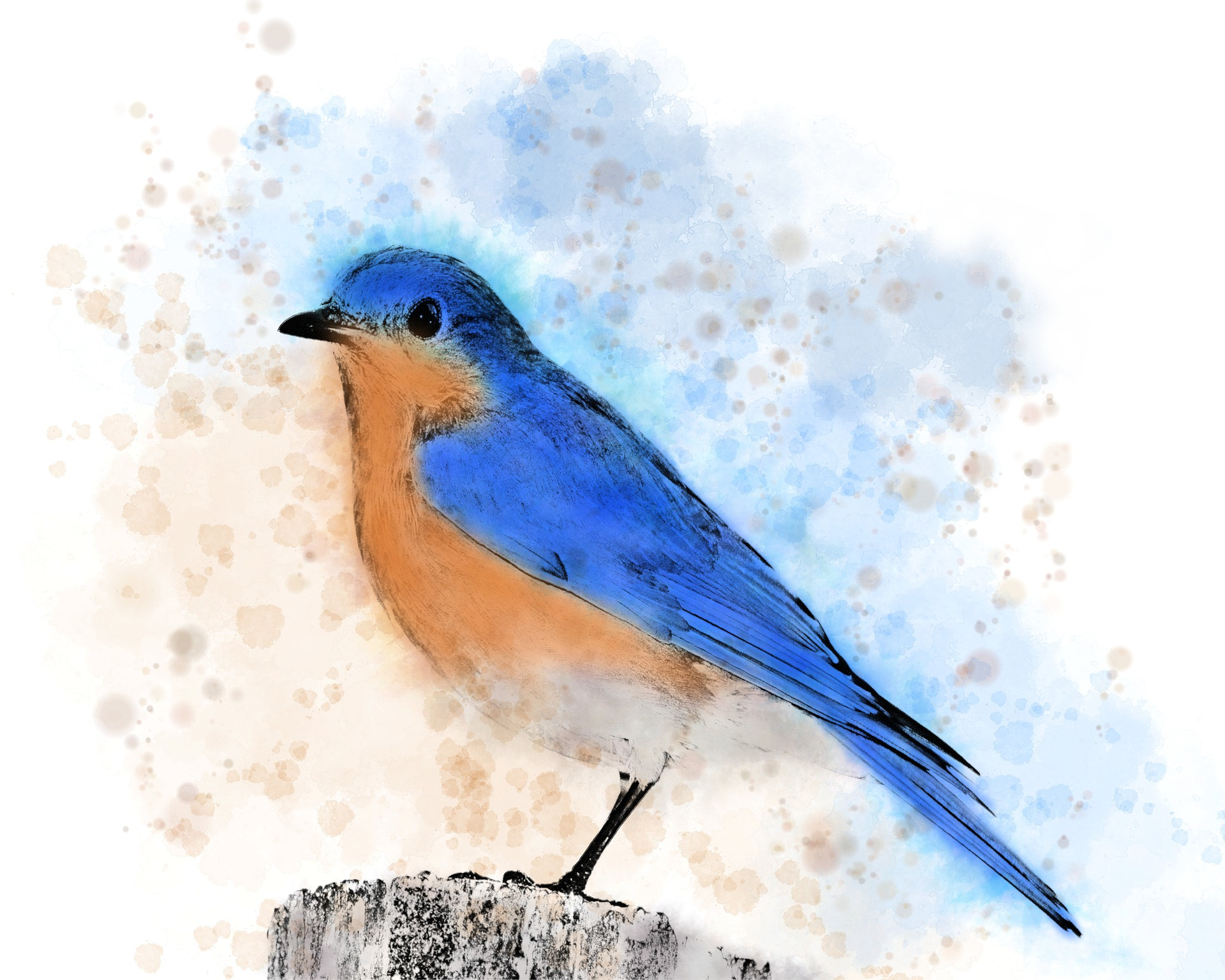
Image by Johnny Gunn from Pixabay 

The tree swallows are back, chattering and swooping over the old field where the nestboxes are. They take most of these boxes, with house wrens nesting in a couple on the periphery of the cluster, and a bluebird pair or two mixed in with the swallows. There’s always a frisson of pleasure on seeing the bluebirds, even though they raise broods every year; not just for their inherent beauty, but because they’re a rare success story of a threatened bird brought back to a healthy population by a combination of intelligent human intervention and their own nesting strategy. Birds that cavity-nest will, for the most part, adapt to nest boxes. Grassland ground nesters—meadowlarks and bobolinks, to name just two—cannot, and so continue their steady decline.

The maple swamp is full of phoebes and tree creepers and resounding with the drumming and calls  of several species of woodpeckers: downy, red-bellied, pileated. A pair of Canada geese are nesting on a hummock of soil pushed up by a fallen tree. A pair nest here every year; every year, the mink takes the eggs. The wood ducks who nest in hollow trees above the swamp may do better, although I suspect the mink likes ducklings too.

In the drier woods, the bloodroot blossoms are still tightly furled, waiting for the sun to reach the forest floor. Marsh marigold’s round leaves are emerging in the marsh, but no buds yet. The stand of beeches ahead of me hosts a convention of conversational crows. I stop to listen, but it’s just chatter, perhaps about my presence, or the dog walkers out on the wide central path. I can’t distinguish a chipping sparrow from a pine warbler, but I’m pretty good at crow!

Spring, Week III

Image by Brigitte Werner from Pixabay 

Winter birds are still here; spring ones are arriving. Somewhere between thirty and a hundred Bohemian waxwings can be found on the university campus most days, along the laneways between the research glasshouses and the cattle barn and stables, gorging themselves on winter-sweet crab apples. There are cedar waxwings mixed in, and always a few starlings and robins taking advantage of the bounty too. Disturbed, they fly up into the line of Norway spruce that wind-shelter the glasshouses, looking, in their dun and rufous and yellow shades, like a memory of autumn in bird form, but the fruit is too tempting: they’re back down in a minute.

On the ponds east and west of the city, at the old provincial jail and redhead and goldeneye, bufflehead, ring-necked duck and hooded merganser are resting and feeding, and if you’re there early enough in the morning, there’s usually a loon that came in for the night. Here it’s all about contrast, at least in the males: dark shades of green and blue-purple and auburn against white, sharp and bright. See how strong I am, and what good genes I have, is the message: beauty to human eyes is a coincidence. But beauty there is.

Victoria Woods this week is still all duns and greys: tree trunks and dark water, winter-bleached leaf litter and rock. Only the bright green of moss patches brightens the forest floor. But at the pond, I flushed two pairs of wood ducks, a glimpse of colour. They’ll stay, nesting in hollows in the trees that overhang the water. At the edge of the wood, phoebes are calling, always the first of the flycatchers to return. Their high fee-beee, fee-beee is a sharp, welcome sound in the cold air.

Image by Oberholster Venita from Pixabay

Snowmelt and rain mean the rivers are high and the ground is saturated, ephemeral ponds covering paths. There are few ducks at the river confluence: why use energy fighting the currents when there are plenty of still ponds to be found? The water bubbles and splashes over the rocks and weirs by the mill ruins: a good dipper stream, my mind says, even though I’m on the wrong side of the Atlantic. A flash of blue streaks across the stream: a kingfisher.

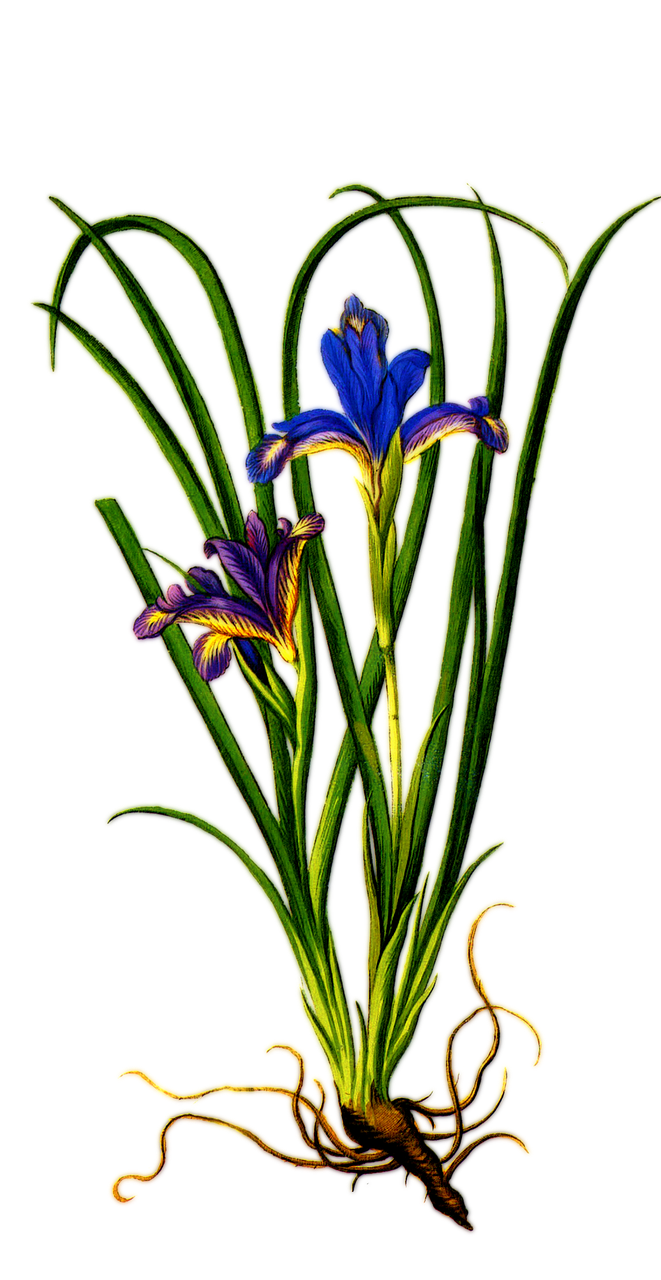
There’s still frost in the mornings: -5C today at 7 am. But there is real warmth in the sun now, and so the ice melts quickly. The first of the species iris is in flower in the front garden, narrow deep purple petals with yellow at the heart. We’re promised temperatures in the high double-digits next week, and if so, spring will pop. Buds will swell, coltsfoot will bloom, and more birds will move north. But cold, fast moving water also means blackfly, the bane of my springs. Perhaps I’ll have a few more days without them.

Spring, Week II

The world this morning was freshly washed, yesterday’s rain blown away by strong winds, leaving a brilliantly blue sky and air with the clarity of the oceanside. Where yesterday was freezing rain followed by dismal drizzle, temperatures hovering near freezing, everything the grey of concrete, today was birdsong and 8C, and by the time I’d walked the 4 km downtown I was too hot.

The rivers are high and fast, higher than I’ve seen them for some years, and other than Canada geese and mallards there were no birds at the confluence. I grew tired waiting for spring this week: growing up as far south as you can get in Canada, my internal seasonal clock still expects it to be well on its way by the end of March. This year, too, returning from England mid-March, having already experienced the first flush of spring, I was doubly confused. So I cheated, and drove the two-and-a-bit hours down to Long Point, on Lake Erie, with two goals in mind: sandhill cranes, and tundra swans. Anything else would be a bonus.

Cranes, as I’ve written before, are birds that always make me stop in wonder, from the first I saw in a Texas dawn, to the uncountable thousands on the Platte in March; the multiple, magnificent species on the Yangtze in winter, the birds coming in at dusk to an Australian pond, or the breeding pairs foraging in the English fens. Sandhills, so long gone from southern Ontario and now returning in greater numbers every year, are one of the (sadly) few success stories of conservation. They give me hope.

I found the sandhills by sound: the field they’d been in last year wasn’t corn stubble this year. But I pulled over, turned off the car, and opened the windows. The haunting, warbling calls came from a bit further west. It only took a few minutes to find them.

I sat and watched and listened for about half an hour, watching the cranes feeding in small groups, almost always three close together—parents and last year’s chick. Every so often one would raise its red-capped head and bugle, and then another, the sound uncanny in the light fog hanging over the fields.

A single pair of tundra swans flew low over the fields, just at the limit of my vision in the fog. Time to see if there were more. I drove down the Long Point causeway; the fog thickened as I got further out on the sandspit with open water on one side and marsh on the other. No swans that I could see, but I couldn’t see, except a few meters out into the bay. I’d have to go inland.

I was a couple of weeks late for the huge flocks, but I found enough to make me happy, to reset my internal clock to say, yes, it’s late March, yes, it’s spring. I know what to expect now; my brain is firmly back in Ontario.

And now it’s April, and the sun is shining and the first of my daffodils in the front garden is budding.

The First Week of Spring

Spring may be here, but it’s dancing with us: one of those dances where it’s one step forward and one back. We’ve had days of sun and relative warmth, and days of sleet and snow flurries and a temperature hovering around freezing. Blue skies and grey, and on the ponds the ice melts a little, then freezes again, then melts a little.

A line of crabapples near one of the village ponds has been discovered by the robins. The winter-cured fruit is a deep purple-red, its sugars concentrated in the desiccated flesh. The robins love it. So do the starlings, whose starred plumage of winter is just beginning to show the iridescence of summer. On the nearby feeders, male goldfinches too are moulting, black and yellow replacing dun.

Where the snow has melted back from the field edges killdeer forage; I hear them before seeing them, their high, onomatopoeic call audible even from inside the car. At the confluence of the two rivers that shape my city, a lone male common merganser is grooming itself, twisting and splashing, ignoring the mallards and Canada geese and ring billed gulls surrounding it.  Later a single male bufflehead arrows in.

At the Arboretum there are bluebirds, always an early migrant, one song sparrow—and overhead, three tundra swans, brilliantly white against the blue sky. We’re not on their main flyway here, but every year a few come through; tundras, and more and more trumpeters every year, a reintroduction success.

Outside the city, blue piping festoons stands of maple, and even on urban lawns trees have been tapped. The light lengthens, and in xylem and blood and earth, sap and hormones and the green spears of the first bulbs rise.

The Moving Diaries: Clearing the Attic

This was the weekend of the attic. Fairly typical of American Foursquare houses, our attic is large, a big square space with two dormers front and back. With a total floor space of about 400 square feet, and a ten-foot ceiling, it’s a space with promise. We always thought we might turn it into a studio for me…but it never happened. So it became a place to store things, as attics do.

Friday I spent a couple of hours sorting: garbage, thrift store, keep. Three piles. Then I lugged boxes and bins and bags up the steep stairs and consigned the piles to containers. And that was enough, for one day.

Saturday, I brought the containers holding the ‘keep’ items down one floor to the spare bedroom, which is becoming the box repository. Then I left BD watching soccer and went to a friend’s open barn day,

kid
Adorable Angora Kid

where she shows off her spring crop of angora goat babies, and gives tours of her woolen mill and shop. Angora kids are adorable, and the colours she dyes the wool are enough to make me want to start knitting again. After we move.


Sunday – today – I started the day with a good two hour walk, birding the woodlands and open spaces of the university arboretum. Spring migration is just starting, resident birds are defending territory and building nests, and the air was loud with song and the drumming of woodpeckers. I needed scarf and gloves for most of the walk, but by ten it was warm enough to shed both – but it was also time to head for home and finish the attic.

I surveyed the spare room, and realized my first step was to move the ‘keep’ items – or most of them – from the blue plastic bins to boxes. The plastic bins are meant for taking items to the new house that we’ll unpack immediately, the bins returning to the car for another trip. So I packed boxes, carefully labelling them: “Board game, desk lamp, miscellaneous” one box says. “Various winter things,” another says. Sometimes what goes into a box is determined by the size of the items and the box, not the relatedness of the items. But since this was all in the attic, none of it is needed immediately we move, and these boxes will be relegated to the basement shelves.

Then I took the boxes back up to the attic, and packed up the items for the thrift store, carrying them all to the attic stairs landing. Now, the stairs are narrow, steep, and have a bend part way down, and I’m not what you might call agile. BD was out birding. So I carefully stepped backward down the stairs, bumping a box from one step to the next, until I was on the bedroom floor landing and could stand up with the box in my arms. Eight times. Then down the next flight of stairs, and out to the car, where I put the boxes in the back seat.

That left about eight largish pictures in frames, and two large mirrors that were in the attic when we moved in twenty-two years ago. Plus two portable baseboard heaters. These were beyond me. When BD came home, he, much more agile, carried them down the stairs and stowed them in the trunk of my car. The thrift store has a nice young man of about twenty who will take them (and the boxes) out of my car tomorrow.

What is left up there? Six garbage bags, which we’ll bring down in stages for curbside pickup – we’re limited to three bags every second week. A desk and a bookshelf which will wait for the professional movers. The painting equipment that is still in use. I think that’s it. BD will finish painting the space in the next week or two….and then the people that view the house, and the eventual buyer(s), can dream about what they will do with it: a studio? A nanny flat? A playroom? The wide pine boards under the carpet could be sanded and finished. A skylight or two could be installed, along with a spiral staircase to replace the awkward existing stairs. All things I thought about. But I went to Antarctica and Tibet and the Himalayas, to the Amazon and the Serengeti and the jungles of Borneo instead, leaving the promise of the attic space to someone else, in the end.

The Moving Diary: the preface.

I’ve started to plan the packing. We’ll have both houses for a while, so we’re not pressed for time – yet I know that if I don’t have a plan, chaos will take over.

This is what I’m planning. I want to go through each room in this house to do two things: cull unwanted items, for donation or for landfill, and pack up things not needed immediately: winter clothes, books, rarely-used kitchen equipment, ornaments. That should take about three weeks of intermittent work, the time ranging from a couple of hours at the most for the bathroom to six-to-eight hours for the kitchen. We can get most of that done before the possession date of April 29th. In much of May, when the new house is having its gas fireplace installed, and the interior painted, I’ll need to be there to let the workers in and out and answer questions. I can take a carload of boxed items over every day; they can sit in the garage if nowhere else, while I ensure cupboards are clean and determine what goes where in the kitchen.

After that, we’ll spend a day packing the last of the fragile items, move the cats to the new house – they can have the run of the basement – and let the professionals take over. We have detailed floor plans of the new house and have spent the last couple of weeks playing with furniture placements. We may move things a few inches here and there, but basically we know what is going where, which will be easier for the movers. We’ll have those plans with us, printed and on our ipads, the day of the move.

I’m making lists: we need boxes, bubble wrap, packing tape, scotch tape. I’ll need to contact the charity that will come to pick up the boxes of donated items, saving me endless trips to their drop-off location. I have to book a mover, arrange another viewing of the house to measure windows for blinds, look at kitchen cupboard size and arrangements, and think about paint colours. Then arrange to meet with the gas-fireplace installers and the painters. And all the hundred other little things – the utilities, the change-of-addresses, the insurance – at least we’ll be keeping our cell phone numbers.

You’ll note I haven’t even begun to think about prepping this current house for sale. We decided we wouldn’t do that yet. We can afford, thank goodness, to carry both for a while. It will cost us a bit in the bridge financing, but it will be worth it in reduced stress. When this one is empty, it too can be cleaned and patched-painted-and-polished. I’m not going to try to do both at the same time. Because, among other things, this is all happening in May. Migration month. The best birding of the entire year. We bought a house expressly because it adjoins excellent birding habitat: we can walk out the front door into an area with an impressive migration bird list. We don’t plan to miss May birding, moving or no – it’s just a compromise: birding in the early mornings, moving chores later in the day.

We figure we can just about handle birding, new-house-prep, and old-house-cull-and-pack (although we’re going to try to do most of that in April)  in that time but we can’t add any more. Meals may be a bit ad hoc, laundry will get done at odd hours, and I certainly won’t get much writing done. Organized chaos is the best I can hope for.

Tell me about your moving experiences…what lessons can you pass on? Am I completely crazy?

Fall Migration

Late yesterday afternoon I walked at Point Pelee National Park in southern Ontario. Known world-wide as a birding mecca in the spring, it’s quieter in the fall, although migrants still pass through. Yesterday it was blue jays, in the thousands, and in two – or perhaps three – layers. The highest birds were flying south, towards the tip of the sandspit that is Point Pelee, jutting out into Lake Erie. From here – or to here, in the spring – birds can fly over the the lake, never too far from land, following the point and then the islands – Pelee, Middle, – to the other shore. It’s why it’s such a hotspot for birding, the first landfall for tired birds making the long trek across the lake.

But jays don’t like to fly over water, so the waves of birds fly south, see the water, and turn back, to follow the shoreline around to the west and cross the Detroit River.So the second layer of jays, lower than the southbound birds, is flying north. There are so many birds the skies look like Toronto highways in rush hour, except the birds are moving faster.

The third layer of birds are those that have dropped down to tree height to feed. Migration needs energy, and the woods are full of jays seeking any source of energy they can find. Like all corvids (the crow family) blue jays are omnivores, and dragonflies, migrating monarchs, other insects, berries, – just about anything edible – will provide fuel for this long flight.

Other than the jays, the park is quiet. A few cyclists on the empty roads, a few other walkers, no other birders late in the afternoon. I don’t think I have ever been here on a weekday afternoon in September, although I have been walking these trails since I could toddle. I grew up close by, and the park was a frequent Sunday afternoon destination for our family.

Here, too, I brought BD when he first started to make the long trek from Toronto to my childhood home to see me the first summers we were going out, and, perhaps most importantly of all, it was here I introduced him to birding.  I’d been a casual birder since earliest childhood, identifying the birds of woodland and fields from a children’s bird-book, part of learning my world, along with trees and wildflowers and insects and rocks. One May afternoon  – probably Mother’s Day weekend – as we walked along the west beach trail, BD said “What are all those people looking at?” “Birds,” I answered, and pointed out in quick succession a yellow warbler and a Baltimore Oriole.  One casual question, an equally casual response – and our lives changed forever.

We learned to bird properly in the early 80s, taught in the field by the companionship, generosity, and good nature of some of the top Ontario birders. It’s been a passion ever since, although what that looks like changes with time. We no longer come to Pelee in the spring: the long drive, crowds, and the too-competitive nature of some birders (and the disregard for the fragility of the ecosystem by some bird photographers) has kept us away. We’ve evolved now into patch-watchers, birding our own local area and watching and recording the seasonal and yearly changes – the return of ravens and sandhill cranes, the increase in red-bellied woodpeckers, the disappearance of house sparrows. It’s a way of birding I prefer: not a competition, but a study, deepening our understanding of where we live, of our world. And as much of it is done on foot, or after a very short drive, it’s more sustainable.

But it’s good to come back to a place that nurtured and nourished us as beginner birders all those years ago. At every turn of the trail memories of what we saw there – a screech owl in that clump of cedars,the red-headed woodpeckers on that snag, the northern waterthrush in this swamp – come back to me.  A passion born on these trails has taken us to seven continents, to places in China and India and Tibet that most Westerners never see, and given us friends and contacts around the world.

Like these north-flying jays, we’re looking now for easier ways to do things.  Long trips over water are no longer as appealing as they once were, and moving to warmer climates for the winter holds great attraction.  But as long as there are trails to walk, birds to watch, and a place to hang a feeder or two, we’ll be fine.