Butter Curlers and Junk Drawers.

Our new house passed its inspection with flying colours, so now we’re just waiting for the results of the appraisal on our current house. The actual appraisal occurred yesterday; when the credit union will get back to us with the approval for the bridge-financing I’m not sure, but somewhere in the next few days. We’re 99.9% sure the house is worth more than the amount we need, so we’re pretty safe to go ahead with the planning.

This is, of course, a wonderful opportunity to cull yet again. We’re not significantly (ok, not at all) downsizing, so we could take everything. But I don’t want to: I may not have yet disposed of a dozen flower vases and the same number of cookie tins from simple inertia, but that doesn’t mean I’m going to pack them up and move them, because then I’d have to unpack them and put them away again. I have four major areas to cull: kitchen stuff, clothes, books, and knick-knacks.

Clothes, I think, will be the simplest. I did dispose of quite a lot when I stopped working almost a year ago, but now I have a much better idea of what I actually wear: jeans or khakis, cotton shirts, and sweatshirts, depending on the time of year. I’m going to choose from the rest a few mix-and-match pieces that will take me to a wedding, a funeral, or a nice dinner, and donate the rest. I can always buy it back (or something similar) from the thrift store if I make a mistake.

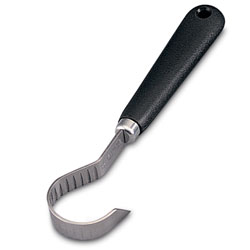
Kitchen stuff should also be fairly easy: if I haven’t used it in the past year, why do I have it? I bake frequently, and cook for dinner parties often, so I should have a good idea of what I do and don’t use. In fact, I know I own things like a butter curler (to slice off little curls of butter for a fancy butter arrangement for a fancy dinner party, in case you’re wondering). I have never, ever, used it. BD is allergic to butter. We dip bread in olive oil. It’s not moving with us. I’m guessing I’ll need to label it for the thrift store, though.

Books. Hmmm. Actually not as bad as it might be: we’ve become pretty good in the last years about culling the books, because otherwise they would take over the house. We’re likely down to fewer than two hundred, and we rarely buy new ones. So not too bad. Except every so often I do give a book away, and then want to read it again a year later. But we both have library cards.

Knick-knacks. I have to say I am NOT a collector of things that gather dust, but inevitably we have a lot we were given. I have trouble giving away something someone gave me, unless they live on the other side of the world and will never know. They chose it for me and gave it to me thinking I’d like it. This will be my biggest problem. Although we did get away with ‘oh, it’s still unpacked in the attic, we’re waiting to put up more shelves’ for a very long time in the current house, so perhaps I can try that? It worked very well, now I think of it.

And then there are things like the filing cabinet with twenty-four years worth of records of everything from oil bills to credit card purchases to the warranties on the well pump and the inspection records for the septic system that have to be sorted through. And a cupboard full of gift bags, and a garage full of wood scraps BD thought might be useful some day. And the junk drawer. The junk drawer is scary.

I’ll report on how this all goes over the next few weeks. If I maintain my sanity, that is. Any hints on how to do that will be gladly received. Anyone want a butter curler, by the way?

Changes

It’s been a while since I posted anything, and that’s because life has moved very quickly in the last three weeks.

One of the things our two months in England confirmed for us was that we want to live somewhere where we’re less dependent on the car to run errands.  The second thing was that we could quite happily live in a bungalow, and the third was that we really liked not being responsible for the lawn and garden.  We’d thought it was time to leave this old two-storey rural house, with its quarter-acre of lawn and garden, 10 miles from anywhere: what England told us is that we were right.

We always said we’d move before it was too late, when we could make the choice. We came home, spent some time wandering around neighbourhoods in the university town north of us that we know well and love.  We narrowed it down to two, and then to one.  And yesterday, we bought a house.

It’s not quite a bungalow, in that it has a bedroom and ensuite on a second floor, but we don’t need to use those except for guests, or, for the foreseeable future, as BD’s study.  It’s a 10 minute walk to the university’s arboretum, for walking and birding; a 15 minute walk (or 5  minutes on the bike) to the university library, where I like to work, a ten-minute walk to a grocery store, on quiet back roads. We can bike downtown, to movies, to lunch, to the arts centre, to the bookstore, to the summer outdoor concerts.

While we own the house, and can do what we like with it, indoors and out, we don’t own the land it sits on: the university does.  So we pay, effectively, condo fees – and for that we get the lawn and garden taken care of, the snow ploughed and shovelled to our front steps, and the use of a large and well-equipped recreation centre. Or, as BD put it yesterday, to be permanently on vacation.

It’s ours in just less than two months, assuming all goes well with the inspection and the bridge financing – we have to get the existing house on the market, but there’s a bit of work to be done yet.  The new house needs its interior walls painted and a few other cosmetic bits and pieces.  One thing for sure, this adventure over the next couple of months – as we try to do this as mindfully as possible, fitting what we already own into the new house, figuring out what we really need (like a new bed), disposing of what we don’t – will give me plenty to write about!


If I Had 100 Dollars

Re-blogged from my writer’s blog: marianlthorpe.com

I’ve written a fair bit on my other blog, Two Simple Lives, about how books and stories shaped my view of the world. As with most children, I was drawn to those books that mirrored my own family, solidifying my sense of cultural heritage, helping me understand and relate to my grandparents and parents who would always be a little out of place in the land to which they’d emigrated…and finally allowing me, as an adult, the cultural fluidity to move easily between two countries.

I did not grow up in a wealthy family. There was no extra money at all when I was a child. I wore hand-me-downs from my sister and from family friends, my bike had been second-hand about twenty owners before…but there were always books. Books passed on from friends whose children had outgrown them. Books as birthday and Christmas presents. Books from the library…

View original post 386 more words

A free book!

I’ve been neglecting this blog, but sometimes there just aren’t enough hours in the day. Spinnings ARC coverWhat I have been doing is preparing my next book for publication, although to call it a ‘book’ might be misleading: it’s actually two short stories and one related poem.  It’s a quick read, and right now I’m offering an e-book version to anyone who is willing to add a rating or a review to Goodreads.

So, if you’d like an advanced review copy, send me an e-mail at marianlthorpe at gmail.com, or reply to this post here, or on Facebook or Twitter.  I’ll need your email, and whether you want an e-pub (for iBooks) or a Kindle file. Indie authors depend on reviews and ratings on Amazon and Goodreads, and every one helps.

I’ll post the real cover soon…it should be available to me in a few days.

Thanks for considering!


Belonging

Growing up as a child of immigrants, the stories you hear of ‘home’ are usually tinged with nostalgia, seen through the rose-coloured glasses of memory. I can’t say this was true of all my parents’ stories – they had lived through the depression and World War II in Engand- but the ones that stayed with me the most were their stories of long childhood walks through the countryside, roaming footpaths and hedgerows, free and unsupervised.

My own childhood in Canada was as free as most childhoods fifty years ago were, and living at the edge of a village there was freedom to roam the farm lanes close to us, the farmers turning a tolerant eye to our activities, and we certainly bicycled the quiet roads around us. But at the back of my mind, it just wasn’t the same. I had grown up on Enid Blyton and Arthur Ransome, and I wanted footpaths and moorland, quiet hedged lanes, little villages hidden in folds of the hills…and as I grew older, a welcoming pub to stop at.

So here I am, nearly fifty-eight, writing in the sitting room of our holiday cottage that we’ve taken for January and February, back from a walk that ticked just about every box on that list. We set out just after nine this morning, turning right up the lane at our front door. A few hundred meters up the hill a gate opens onto a field and footpath, climbing further up the hill, skirting field margins to bring us out onto a quiet lane. A barn owl is hunting in the field to our west. At the top of the lane, the wide Norfolk views open out; to our west is the broad expanse of the Wash, its flocks of waders and waterfowl visible even from here, the coast of Lincolnshire shimmering in the distance. To our east, fields: field peas and sugar beet, wheat stubble, autumn-ploughed fallow, cut with hedgerows and lanes.

We walk in a northerly direction, following paths and bridleways, along field margins and old drove roads through farms, coming out into villages. The sky is changeable, clouds scudding in the strong westerly winds, patches of blue winking in and out. Hedges, green with ivy, keep the worst of the wind off us except when we the route takes us due west. Grey partridge scatter in front of us, calling their distinctive rasping cry.

After about six kilometers the drove we’re on swings west, past a substantial farm, and then south again for a few kilometers, coming out by a magnificent medieval church perched high on the greensand ridge that runs up the coast here. On a bench outside the church wall we sit for a snack, looking down over the village. It doesn’t do to sit too long, though: we’ve another three or four k to go, and tired muscles ‘set’ all too easily. We walk through the village streets, past the old watermill, and on to the footpath that is the last leg home. In a field to the west about a hundred curlew are feeding, beside jackdaws and wood pigeons, and where the footpath enters a woodland long-tailed tits chatter their high-pitched greeting.

We’re home in time for lunch, just after one o’clock. All this walk was missing was the pub, and that’s just up the road: the well-deserved pint can wait until a bit later this afternoon. I have soup to make for dinner and bread to bake. In all my months of recovery from major surgery and post-surgery treatments in 2014 and 2015, it was the thought of walking under this quiet corner of Norfolk’s skies, along these footpaths and lanes, that kept me going. It was the first place we came when my doctors gave me the green light to travel last spring: in the month here then, I went from being able to walk for less than an hour to managing a couple of hours with sufficient breaks. Now I can walk for four, with a five minute break, and it’s only the arthritis in my hip and foot that keeps me from going further, not a lack of energy.

Spread out on the sitting room floor at my feet is the Ordnance Survey map for this area. In a couple of minutes I’ll sit down with it and start planning another walk. Out to the castle ruins towards the Wash? Due east, to the village with the working windmill? Across the fen to look for short-eared owls and woodlark?

This is not Blyton’s or Ransome’s England, if those ever really existed. It’s not the England of my parents’ childhoods, nearly a hundred years ago. It’s not even the England we started to return to thirty years ago, when my family’s pub still stood where the village’s grocery store does now. But it still offers me footpaths and heathland, quiet hedged lanes, little villages hidden in folds of the hills, skies and birdlife and wind and space, and long walks from my front door. My experiences and memories build on and continue from my childhood stories, the ones my grandparents told, and my father (this was his childhood village), and those of his one surviving cousin, who lives a dozen miles from us here, and whose ninety-fifth birthday we are celebrating later this month. I study and explore these villages and fields as part of my landscape archaeology courses, I write about it in my non-fiction work-in-progress, Reverse Migration, and there is a certain place in the fictional land from Empire’s Daughter that is, simply, here. I belong to this land, this little piece of west Norfolk, and it to me, unlike any other place I know or have lived.

Quiet

For the worst two months of Ontario’s winter we’ve escaped to a small English village in the still mostly rural county of Norfolk; it’s winter here too, but here that means the occasional overnight frost and daytime temperatures anywhere between 4 and 12 degrees C. There are flowers out, snowdrops and winter aconite and primula. It rains a bit, but we also have beautiful sunny days, and it rarely rains hard enough, or long enough, to mean we can’t get a good walk in every day.

This morning, in glorious 7 degree C sunshine, we were standing on a high point on Roydon Common, a large expanse of heathland a few miles from our village. It’s about 2 km square (a bit more than a square mile), inhabited by birds and roe deer, netted with walking paths, grazed by some Dartmoor ponies, and mostly empty of humans except a few dog walkers. We were looking north-east: to the west is the market town of King’s Lynn and the bay of the North Sea called The Wash; in all other directions, it’s farmland.

We have something here we didn’t realize we were missing even in our rural home in Ontario: quiet. The Ontario house is 4 km or so north of the major highway into Toronto (the equivalent of an interstate or a motorway) and it is never quiet: truck and car traffic is heaviest morning and evening but it is constant, all day, every day. Even 4 km away, with the prevailing winds bringing the sound to us, the highway is a background noise to all we do, in or out of the house. A railway runs through our home village: it’s a spur line, with trains two or three times a day, but it’s still noise. We’re on the flight path for take offs and landings at Pearson International Airport. All of this adds up.

But here…our rental cottage is as quiet as can be, even in its village location. During the day, walking the footpaths and lanes, there is farm equipment, the sounds of livestock, a few cars. The major road is a couple of kilometers a away, and has less traffic than my commuter route from when I was working. We sleep deeply here, undisturbed by background noise that we didn’t even realize was affecting our sleep. The first sound I hear most mornings is the call of the pink-footed geese as they fly over the cottage, moving from The Wash to the fields where they feed.

Quiet is a luxury in our world, and one I suspect many people don’t know they don’t have. I didn’t…compared to many places, our Ontario home is quiet…it’s just not this quiet. I’ve experienced quiet before, camping in remote places, travelling through the highlands of Scotland, but I’ve never lived in it for an extended time since childhood. It’s been an added blessing in our winter escape. Along with flowers in January, wide skies, and skylarks singing.

String and Paper

Well, we’ve been here almost a week, long enough to know what I miss from the Canadian house; what I should have brought or need to buy here.

This is a very well equipped holiday cottage, and as we’ve lived here many times before I was fairly sure I knew what to bring (an apron, my Aeropress coffee-maker, a thermos for coffee to take on our day trips) and what I would choose to buy here (a slow-cooker, bread pans, a small birdfeeder for the garden.) I was right about all that, except this time there was an apron hanging in the kitchen. The bread pans are heavy-duty disposables: they’ll go into the recycling when we leave at the end of February; the inexpensive slow-cooker will go to a charity shop, as will the bird feeder. Here’s what I didn’t foresee.

Twist-ties or bag clips, for the bags of lentils and peas, pasta and rice. There are a few bag clips here, some of which I bought in the spring, but not enough. String or skewers, for holding together stuffed chicken thighs. Or perhaps I can just buy a ball of food-quality string, and use it for both purposes…that would be the simplest solution. So far, that’s it. Except, perhaps, paper.

At home we both have printers, and printers generate paper that’s usually good on one side. We use it for printing again, anything that doesn’t need to be pristine, or for writing lists and notes. Here there is no printer (that in itself will be an interesting experiment, for someone whose work revolves around the written word) and therefore no paper generated. So paper – for grocery lists, freezer inventories, schedules and menus – is in short supply. I could, of course, go out and buy an inexpensive pad of paper. But we’re going to try to manage with what we have, just to see if we can.

There is no comparison between our two months here and the six-to-eight week camping road trips we made in the past, where everything had to fit in the back of a compact car. But it’s still an opportunity to see what we really use, versus what we use because we have it – or even more importantly, what we have and don’t use.

So what do I miss from the Canadian house? (Other than the cats?) Nothing. So far, nothing at all. My guess is the lack of a printer will eventually be an issue…but we’ll see.

Adjustments

We landed at Heathrow about 8:45 on Wednesday morning. Thanks to e-passport readers, we were through immigration in about five minutes, picked up the bags with a two-minute wait, and waited perhaps ten minutes for the bus to the car rental location. Another fifteen minutes and some paperwork, and we were on the road.

We’ve done this so many times. Forty minutes or so north-and-and east on the M25, the London Orbital, and off the motorway at South Mimms for coffee and breakfast at the services there. Back to the motorway for a short time, and then swing north on the M11, then the A11, then the A1065 and the B1112 to Lakenheath RSPB Reserve by late morning.

Here we’ll walk for a couple of hours, shoving North American birds to the back of our brains and retrieving the British ones. So many adjustments these first few days: the birds, the money, the side of the road to drive on (BD is expert at this, whereas it takes me a few days); names of things, behaviours. We finish our walk, eat our lunch, and make the last leg of the journey, an hour or so into the village and our little rented bungalow, home for the next two months. We retrieve the keys from the lockbox, open the front door, say hello to the house. Back out for quick shop for enough food for dinner and breakfast; tomorrow we’ll do a proper shop. Jet lag is kicking in, but the house is familiar; there are no surprises here. We know where everything is in the kitchen and how the stove works.

Am I home? Or am I home in Canada? We’ve lived with this duality all our lives: two citizenships, two passports, two countries to call home. I’ve stopped trying to answer that question, because both places feel like home, in different ways. Our families’ roots are deep here, shallow in Canada; our personal roots are deeper in Canada, shallower but getting deeper every year here. Unlike for some people with dual citizenship, there isn’t a deep moral choice to be made: both countries are democracies, both have universal human rights, universal health care and reasonable social support. Canada has better state-funded schools, probably. Britain has better public access to land for walking. Small differences, those last two, but huge for us. We preferred our teaching careers to be in Canadian schools; we prefer the access to the countryside here. And that no-one thinks birders are odd. And the weather: it was -18 C the morning of the day we left Canada. It’s 8 degrees C here.

Our life is smaller here. The bungalow is much smaller than our house. We have only one car. We shop more often, because the fridge is half the size of the one in Canada. All of this is ok. There’s a good library, a good butcher with local meats and game, a good little grocery store. The market town ten minutes away has everything else we need.

So, yes, I’m home. (Except I miss the cats, but they are being well taken care of by our long-term house/cat sitter.) I can love two countries: I loved both my parents, after all. It’s pretty much the same thing.

New Year Thoughts

Our New Year’s Day lunch is over, and we’re switching gears to preparing for our imminent departure for two months in the UK. I’m not a resolution-maker (at least, not just because it’s January 1st), but a couple of things together have made me think.

First was the meal planning for these last few days. Inevitably we had food left over from our lunch. Some of it went home with guests, with me doing quick calculations about what we needed to feed ourselves until Tuesday afternoon. Once everyone had gone, I did some planning.

A handful of raw veggies and some roasted red peppers, plus the half-box of chicken broth in the fridge? Those became roasted red pepper soup, which, along with the last of the baguette, became Friday’s light supper.

Lunch today and tomorrow will be the rest of the cheese, crackers and fruit for me, and the left-over hummus for BD. Tonight’s dinner will be the rest of the mini-quiches, with some frozen veggies. Sunday I’ll use the chicken pieces and jar of broth in the freezer, both the last remnants of a roast chicken from a few weeks ago. Monday we’re out with friends, and Tuesday brunch will be the last of the eggs, scrambled, with a small package of smoked salmon brought as a hostess gift. I have enough milk for cereal and coffee to last to Tuesday. The apple cider will be drunk. Nothing opened will be wasted; the unopened- beer, wine, a box of crackers, a box of chocolates – will wait for our return.

At the same time, I’m doing the last loads of laundry and planning the packing. We’re simply moving houses, to our little rental cottage in Norfolk, our second home by virtue of us returning to the same cottage time after time. But we don’t own it, which means we can’t leave clothes behind. (It comes with everything else you could possibly need, except for personal electronics and toiletries.) How many clothes do I need, for two months? How many can I take (along with my binoculars and scope, my laptop, my art supplies, my maps for my course…) without paying for more luggage?

What do I need? We’ll be spending our time walking and birding, and I’ll be continuing to work with my writing, reviewing and editorial work. So. Half-a-dozen pairs of socks and underwear, two bras. Four t-shirts, four long-sleeved t-shirts, to cover the possible range of temperatures – which will be roughly 0 C to 12 C over the two months. Two sweatshirts, two corduroy shirts. Two pairs of jeans. My hiking boots, my canvas Tom’s that double as slippers. A nightdress, and a pair or two of yoga pants to lounge around in. One set of decent clothes for dinner out. A quilted vest, a rain jacket and rain pants, gloves, hat, scarf. That’s it. (So, nags the little voice at the back of my mind….why do I need more than this at home?)

And it is a good question. OK, I need grubbies to paint the attic in, and to garden in. I need another, warmer coat because it isn’t going to be -20 C in Norfolk, and it is here; same with winter boots. But even given that, and the need for a summer wardrobe as well, why do I own so many more clothes than this?

I’m satisfied with my approach to food: I plan meals, including potential left overs, and very little gets thrown away. I can find ways to incorporate almost any left-over into a soup or a casserole or a curry, or as a scheduled lunch. But even after my major clothing purge in the spring, it will be time, when we get home, to do another. I’ll keep my favourites, figure out what I might have actually missed having while I’m away, and take the rest of the fall and winter clothes to the charity shop. Because I no longer live a life that needs a closet full of clothes. My work lives in electronic form in the cloud and is completely and totally portable: I talk to all but one of my clients only by email or by editing notes in the manuscript, and I talk to those who edit or review my writing, or interview me, in the same way. They don’t know what I’m wearing, nor do they care. Other than the odd dinner out to celebrate something significant, and the rites of passage of weddings and funerals, there is nothing in my life that needs more than comfortable jeans and shirts.

I’m going to watch myself, in these next two months. The cottage, as I said, is fully, even extensively, equipped. What do I use? What toiletries do I really need? What do I buy? I have a local library card. The cottage has excellent WiFi: that’s a must, now, for me. My goal is to buy nothing except food, toiletries if I run out, and the occasional cup of coffee to warm up after cold hours birding on the North Sea coast. Oh, and a movie or two…because there is immense value to me in seeing a film at the Majestic Cinema in King’s Lynn: after the first time we went there, several years ago, and I was telling my father about it, back in Canada, he said “Oh, yes, I remember that cinema: I saw Ben Hur there in 1929.” Some things are, truly, priceless.

New Year’s Day Lunch

We’re in the lull between holiday celebrations. Our two-part Christmas – Christmas Day dinner with BD’s brother and family, and my family get-together a couple of days later – are done. I’ve baked a lot, eaten far too much, and played a marathon men-against-women game of Trivial Pursuit (we women won, finally.)

On New Year’s Day we’ll host a lunch. This used to be an annual occurrence, until we started travelling over the two-week Christmas holiday to places like India and China (and Antarctica, once) and so were no longer at home on New Year’s Day. Now we’re retired, the winter travel will take place in January and February, so we’re having the lunch again.

It’s a pretty simple affair. Jeans and sweaters meet the suggested dress code. After the excesses of the last couple of weeks, we try to keep both food and drink to some basics: hot spiced cider, soft drinks, a glass of wine for a toast. I’m making little tart-sized quiches and sausage rolls; there will be smoked salmon, hummus, cheeses and paté, along with crostini and crackers and fresh baguettes. Crudités, olives, pickles, and roasted red pepper and eggplant will round it out. Served buffet style, the twenty or so people attending will eat in small groups scattered around the house: we’ve chairs a-plenty. Dessert will be raspberry-ginger cake served with coffee or tea. Nor am I cooking all this: friends and family are bringing parts of it.

Yesterday BD and I got the wine glasses down and ran them through the gentle cycle of the dishwasher: this set hasn’t been used in a few years, and were very dusty. Some of the plates got the same treatment. It shocks me slightly that I gave away our ‘banquet set’ for twenty-four last year, and yet we still have enough plates – dinner, lunch, and dessert – , as well as glassware, mugs and cutlery to accommodate twenty people. Not that they match, but who cares? But if we want to keep doing these annual lunches, I guess I’ll have to keep them. I abhor the idea of disposables. The other alternative, which we used to do for pot-lucks at work, is to ask everyone to bring their own. I’ll have to give that serious consideration another year.

Guests will start to arrive about 12:30 p.m. With luck, the first man through the door will be dark-haired – an old Scottish tradition called ‘first-footing’ gives good luck to the house and its inhabitants if the first man who enters on New Year’s Day is dark. We’ll serve drinks, talk, exchange Christmas stories, laugh, until about 2, when we’ll eat; by five at the latest, folks will have left, leaving us plenty of time to run the dishwasher, nibble on left-overs, and tidy up.

We used to do evening parties: for years I hosted our work Christmas dinner: roast turkey and all the trimmings for nearly thirty people. Then we did the New Year’s lunch as a sit-down meal, which involved renting tables and chairs and big white tablecloths and rearranging the furniture a bit. As I get older, the parties get simpler, and I’m happy for people to bring food or drink. Everyone enjoys it just as much…or perhaps more.