Slow-but-quick Soup

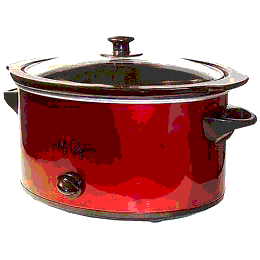
I have written before about how two of my favourite kitchen tools are my slow cooker and my stick blender, but the two together are proving to be indispensable.

Last winter in England, we bought a small slower cooker – about 2 litres (2 quarts, more or less) in size. It was perfect for the two of us, and could stretch to a meal for three on occasion. When we left to come back to Canada, we gave it to a charity shop. (Not only was it too awkward to bring home, the UK uses 220V power, so I couldn’t use it here if I’d wanted to.) I often wished during those weeks that I had one of the same size here, but I’d never been able to find one.

But this September, in the university town where I live, suddenly 2 litre slow cookers appeared, marketed to the student population. Hooray, I said, and bought two – one for me, one for my sister. And it’s a rare day I don’t use it. Now the heat of the summer is gone, I like to have soup for lunch. Ingredients thrown in the pot when I get up are ready by noon, but not over-cooked as such a small amount might be in a larger slow cooker. A quick pureeing with the stick blender, and with some good bread and a bit of olive oil for dipping, lunch is ready.

Today it was a couple of cups of frozen diced butternut squash (raw), and a few pieces of left-over roast parsnip. As I was out of chicken broth, usually a pantry staple, I just used water, about a cup. These simmered away on the high setting till noon; I added salt and pepper and a bit of cumin, gave it a whirl with the stick blender – and the soup was ready. Those proportions make enough for one generous serving.

Another day it will be minestrone: 2 cups of low-sodium diced tomatoes, 1/3 tin tomato paste (I freeze it in small plastic containers) 1/4 cup red lentils (or any other cooked legume), some frozen spinach, and whatever other frozen or left-over vegetables I choose to throw in, along with a cup of liquid. This gets some red pepper flakes and garlic added, sometimes a tablespoon of pesto.

Almost any left-overs can be turned into soup. I frequently make just a bit too much when I’m making meals like chili or dhal or even chicken stew, but that less-than-one-serving that’s left doesn’t get thrown out, it goes into the little slow cooker the next day with chicken broth and veggies, and tomato paste and spices if needed, to become my lunch-time soup. Sometimes I blend it to an even consistency, sometimes I don’t. I eat it with bread and olive oil, or bread and cheese, or cheese and crackers….whatever is available. I finish the meal with a cup of coffee and one square of dark Swiss chocolate and am thoroughly satisfied.

And if it’s a soup-for-supper day, then I just double everything so there’s enough for us both. Soup-for-supper is served with an amazingly easy focaccia bread. I’ll post that recipe another day!


Walking Downtown

The past two Sundays I’ve had writer-group meetings downtown in the early afternoon, and on both days I’ve chosen to walk. It’s about 4.5 km (2-3/4 miles) by the most direct route; it takes me about an hour, and it’s a walk I’m growing to love again: we used to do it all the time, back in our university days, but those were thirty-five years ago.

The first part of the walk takes me through the university campus, on its bricked walkways, walking between buildings that range in age and architectural style from the limestone houses of the 1870s to the concrete, wood and glass of the twenty-first century. Only a few students are out and about so the wide walkways aren’t crowded, unlike Monday to Friday. I cross College Avenue and follow a minor path behind MacDonald Hall, in all its red-brick and terra-cotta glory, to University Avenue – and then down a footpath that joins two dead-end streets that more-or-less parallel the main road to downtown. The footpath follows the road allowance, it’s unmarked but partially stabilized with pavers, and I have never known if it’s an official city path or not, but I’ve been walking it for over thirty years and there are no signs to tell me not to.

This brings me out onto Gordon Street, the main road, a steep-ish downhill and busy, but the sidewalk is wide and I only have to use it for 600 m or so. At the bridge over the Speed River I stop to look at the waterfowl: Canada Geese and mallards at the confluence with the Eramosa, and a few ring-billed gulls. Just beyond the bridge is the Boathouse, home to ice-cream and canoe rentals in the summer months, afternoon tea well into December, and the point at which I turn and walk along the gravel driveway to the covered footbridge over the river.

I remember the bridge being built: in 1992, the Timber Framers Guild held a conference in Guelph, and 400 volunteers built this bridge to an 1880’s design, raising it by hand. It was an impressive project, and an important one, because it meant the river trails on either side of the Speed were now continuous. We lived for a decade or so at the far east end of the river trail, and I would walk home from work at the university down Gordon Street and across the bridge, along the trail and home. And vice versa, in the morning.

But now I cross the bridge and turn left, away from the river and towards downtown. I walk up past the Armoury and into downtown proper, find the cafe where the meeting is, buy a coffee and start talking.

Two hours later and it’s time to come home, after a short detour to buy a loaf of bread from one of the downtown bakeries. I have two choices: I can re-trace my steps from earlier, or, at the covered bridge, I can turn east and walk along the river trail to Victoria Road, watching the river for bird life, greeting the dogs out for walks, and avoiding tiny children learning to walk or ride bikes along this safe trail. At Victoria, I turn south, up the hill, walking here on a wide road shoulder for a few hundred meters until a trail turns west into the University’s Arboretum. From here I can follow the trails and gravel roads back to the University gates on Stone Road, and cross the road to home. It’s longer: it takes me about ninety minutes to walk that way, but it’s a lovely walk.

Last Sunday I came home through the longer way; today I chose to retrace my steps. Another day I may go downtown by the long route and come back up Gordon Street hill. There is always something to see: I can stop to look at architectural detail on campus, or watch a soccer practice; on the walk down Gordon the spires of the Basilica dominate the skyline. The downtown itself I never tire of. And if I choose the river-and-arboretum walk, I’m guaranteed some birds, even if it’s just a flock of friendly chickadees. Yes, it takes me two hours at a minimum. But I plan to walk for at least two hours every day, and if some days that walk is in the city rather than the fields and woods of the Arboretum and the river, well, it fills a different need. And not just because I can stop at the Boathouse for a pastry!

The Studio Tour

Intricate glass hangings made with found objects. Portraits capturing the essence of the sitter. A vibrant representation of a desert sunset. Prints using the textures and colours of paper to create mood. These were all part of the studio tour I went on today, marvellous, beautiful, striking art in a dozen places downtown. And while the art was what I went to see, the places were, in some cases, as much a revelation as the art.

studio-tour

You think you know the city you’ve lived in or near for thirty-eight years. I’ve walked every street in the old city, even the little ones, and the ones that end in only pedestrian access up or down a flight of steps or across a footbridge. But even with all this exploration, what is seen is the outside of buildings, not the insides: I’ve glanced into courtyards and up at windows and wondered, certainly, but interior spaces are private, unless you are invited in. As you are, in a studio tour.

Old buildings, for the most part, because those are where artists can afford space. An outbuilding in a courtyard behind stores, down what looks like a driveway. The door opens into a low, rectangular space, old windows at ceiling heights, plank walls painted white, holding the paintings. What was this building, originally? A carriage house? A stable? I didn’t ask if the artists knew; I wish I had. Across the street, an old office building backing onto the river houses multiple studios, a climb up to the third floor, into high-ceilinged space, large windows, good light: looking west across the river in one studio, a magnificent view of fall-bright trees and the roofs of houses; looking east, across the buildings and streets and spires of downtown in another. Both beautiful, both interesting, in different ways. And then down another alleyway, to another building once, perhaps, a warehouse, now transformed to both studios and living space, compact, efficient, creative, hidden.

Tiny board-and-batten worker’s cottages with basement studios; third-floor space in old redbrick houses accessed by narrow outside stairs. A glimpse into the interiors of the artists – cleaned up and organized, no doubt – but still a glimpse. What would a writer’s studio tour look like? All my office would show you is my laptop, a few reference books, and a plot outline taped to the wall.

Writers can write almost anywhere. If there isn’t space or quiet at home, we write in coffee shops and libraries; I’ve written on planes, in campsites, in hotel rooms. Visual artists need space to be messy, to leave unfinished work out to dry or to be contemplated, places where spilled paint or clay or the detritus of metalwork doesn’t matter. And so old and odd spaces downtown don’t sit empty, aren’t storage for boxes and junk; instead, they are places of vision and synergy and creation, adding another dimension to the city I thought I knew.

Grumpy Thoughts

I am annoyed by things that prevent me from writing, that keep me from my 750 words per day schedule. None of these are bad things, really: the errands of everyday life, some book deliveries, mundane things. And yet they’ve messed up my schedule this week, and so I’m grumpy.

There are other things making me tetchy, to be fair. I’m still aching a bit from a car accident twelve days ago, one that left me with massive external bruises (from the seatbelt) and internal bruising of my sternum, and it’s this latter that still hurts sometimes. Ibuprofen takes care of the pain, but it upsets my stomach a bit, meaning less coffee and no spicy food for a while. Grrr. (Yes, I know. I walked away with only bruises and the insurance company payout on my write-off car was more than fair. Stop griping, self.)

Next whine….after three months, we still haven’t sold our house. In itself that isn’t a big problem, it’s more that unless we do, our winter plans can’t be finalized. And we want to go back to the same cottage in the same village in England that we always do. And it’s getting close to needing to book it. I counsel patience, but it’s starting to worry me. Plus this house still seems unfinished…our pictures and some furniture remain at the old house, for staging; I miss them. Another grrr, another reminder to my better self: this isn’t a financial burden, so what are you bitching about?

And as usual, I’ve written my way out of my bad mood. What it really comes down to is this: you can be living the life you always wanted to, as I am: my life pretty much revolves around working with the written word, and birding, and not much else, but the ‘not much else’ isn’t ever going to go away: I still have to clean up hairballs, buy groceries, get my hair cut, put the garbage out, clean the toilet. Get over it, self. And get to work!

Seven Things – no, Eight – I Love about Our New House


We’ve been here two months next week. Here’s what I love about the new house.

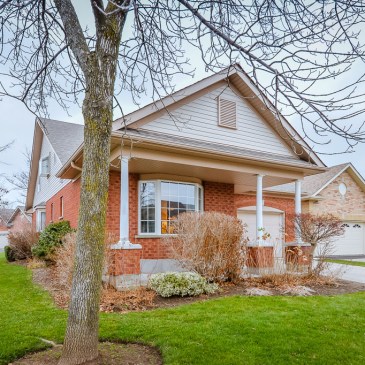
front3

  1. Its location. I’ve written about this before, so I’ll keep this short. I can walk or bike to the university’s arboretum, which alone gives me a 6 km walk if I do the perimeter paths alone, and a lot more if I wander the interior trails…and it’s an easy connect to the city’s multi-use trail system, which takes me downtown, or up to the big north-end park, or further out to the lake. Or along the river system, east, west, or north. I can also walk or bike easily to grocery stores, two butchers, a seasonal local-produce stand, and all the shops and services I could want.
  2. The recreation centre that’s about 250 metres away. Which includes a 25 metre pool, where I’m learning to swim again; a fitness centre, an excellent library, billiard rooms, bocci and tennis courts, concert and theatre venues, and lots of other activities to participate in, should I choose to.
  3. Air conditioning! It’s a hot and humid summer. The previous house didn’t have air conditioning; it kept cool with huge old shade trees and windows open at night, but it would have struggled this summer. We use it judiciously, but we appreciate having it here.
  4. The natural gas barbecue. No propane tanks to buy and change and take back. We’ve barbecued more here in the last month than I think we did in the last house in the past five years. (This is related to reason 6, too.)
  5. New construction. Our previous house was built in 1911. This one was built in 1998. Its windows fit, its doors fit. Floors are flat. It has good insulation. I dusted today for the first time in two months, whereas the old house – well, you dusted, and a few hours later you wondered why you’d bothered.
  6. No mosquitoes! OK, it’s a very dry summer. But it hasn’t stopped the mozzies at the other house, which is rural and in an area with a lot of maple swamps. Here, there’s the occasional one, but I can go outside to pick herbs and tomatoes without insect repellent, which wasn’t the case before.
  7. The city it’s in. I’m hugely biased: I lived here for sixteen years, between 1978 and 1994, before we moved a bit further south to make our commutes do-able. I always wanted to come back – but there was good reason for that. I’ve talked about the trail system, but to that I can add beautiful parks along the rivers, a good arts centre, one of the best bookstores in the world with welcoming writers’ community, some wonderful old architecture, the university’s library, music performances and theatre, the year-round farmer’s market, the best-behaved off-leash dogs I’ve met outside of Paris, and a strong local-food movement. All the things that make a city livable, for me.
  8. The community-within-the-city. Friendly, welcoming neighbours who balance that friendliness with respect for personal space and choices about lifestyle and involvement in community activities.

The biggest thing we’ve had to get used to (again) is paying for water. We’ve been on our own well for the last twenty-two years, and while we were always careful during other drought summers, the water was, essentially, free, although of course there was pump maintenance and replacement, as well as water-tank replacement in those years, and the electricity to run the pump. (Sometime I’ll do the arithmetic on that and see which one was, in the long run, more expensive!) Here, not only do we pay for water use, but we are bound by water restrictions – the city uses groundwater, and in a dry summer like this one we are limited to which days and which hours we can water flowerbeds; lawns are out of the question. I have no problem with that at all – essentially it’s no different than what we did with our own well. I’m not complaining about either paying for water (we should) or the restrictions (necessary and responsible): it’s just the one thing that wasn’t on our radar for the last twenty-two years.

So, when people ask me do I miss the old house, the honest answer is no. It was time to move. I’m glad we did.

Can Cats be Trained?

Apparently, it is possible to train a cat, according an article in The Guardian. And of course, I know it’s possible, having seen enough movies and tv shows with cats who do what they’re supposed to (or is it all ad libbed, once the cat is in front of the camera?). So I read the article. And spotted several problems, at least in the application of the techniques to our two moggies.

Use food – especially pure protein – as a reward, the article suggests. Problem #1. Our two cats haven’t the slightest interest in pure protein. I can leave salmon thawing on the kitchen counter, and they won’t even glance at it. Cooked chicken? Noses turned. How do humans eat that? you can almost hear them thinking. We have seen Cat # 1 – Pye – eat perhaps half-a-dozen times in the six years she’s lived with us. And then it’s one or two pieces of kibble, and she’s done. Obviously she eats….she’s healthy and the proper weight – but she does it in secret. Cat with an eating disorder.

Except for….wait for it….raw vegetables. Pye loves raw vegetables. Lettuce. Red pepper. Green beans. Zucchini. It’s not for the water content – they have a good supply of fresh water – but she’s loved these things since kittenhood. The last ‘living lettuce’ I bought gave me lettuce for one sandwich and then the cat ate the rest of it. Should I carry around chopped up veggies in my pocket as a training reward for Pye?

Cat # 2, Pyxel, doesn’t have an eating disorder…she’ll eat publicly, at least, but again she has no interest in anything except Purina Cat Chow and Greenies cat treats. So she’s a bit more promising. So what could I train her to do? Number one on the wish list would be to let us clip her claws. The last time anyone tried this, it was at the vets, and Pyxel was wearing a Hannibel-Lecter like leather and wire bite mask, and had two adults holding her, not including the vet. She bit the vet anyway. I’m not convinced all the paw-handling in the world, even with Greenies as a reward, is going to change this behaviour.

The second reward the article suggest is stroking. Now this is Pye’s idea of heaven. And to be fair, it is what we basically used to get her to learn to stay on a box on the kitchen counter, instead of wandering all over it while we were preparing meals. Until BD took it one step further, and started to pick her up instead (truly heaven, to be picked up by BD, and get to lick his beard)…and then the cat learned that all she had to do was fuss around in the kitchen, and bingo, she was picked up by her beloved. Cat trained human, in this case.

Pyxel, on the other hand, hates to be picked up. Or fussed, really, unless it’s her idea. I’ve trained her nicely to come to sit with me on the couch – all I have to do is pick up a book or my iPAD. No, wait…that isn’t what I wanted her to do, it’s what she wants to do. I want to read. She wants my attention to be on her, not that thing I’m looking at. Another training failure, from the human’s viewpoint, at least.

She does respond to aural cues. She gets her Greenies treat (for her teeth and gums) every night when we sit down to watch tv before bed. Usually this is about 8 p.m., but the other night we were watching a game a bit earlier in the evening. All the cues were there for her: we were sitting in the living room, the tv was on – so it had to be treat time. I agreed with her logic, and gave her her treat. Later on, after the game, we watched a recorded Jeopardy, the usual first show of the evening – and as soon as the Jeopardy theme song came on, there Pyxel was, at my side, asking for her treat. Jeopardy theme music = treat. She got two more pieces.

But really, they’re good cats. They don’t walk on keyboards too often, and in the new house the kitchen counters – actually the kitchen entirely – isn’t a place they gravitate to. The wall-to-wall carpet is taking a beating: it’s a lot more rewarding than the scratching post, at least for Pyxel, but they leave the walls alone. And the greenhouse window in BD’s study was just meant for cats. So I don’t think I’m really going to try out the techniques from the article. Maybe down the road, with the next kitten.

Chickpeas and Couscous

It’s hot today, and humid: a good day for a quick, vegan salad supper. My deck garden is starting to supply some of the ingredients, and the others are pretty much pantry staples for us. Here’s how I throw together a Chickpea-Couscous salad for two:

2/3 c couscous

1/2 c cooked (canned) chickpeas

1 c cherry tomatoes, halved

1 c broccoli florets, divided into very small pieces

1 small red pepper, diced into 1/4” squares

a handful of chives, finely chopped

a handful of mint leaves, finely chopped

a handful of oregano leaves, finely chopped

1/4 c olive oil

1/4 c lemon juice

salt and pepper to taste

Put the couscous in a 2 cup measuring cup and add 2/3 c boiling water. Cover and let sit for 5 minutes.

Drain the chickpeas and rinse well: I use half a standard tin, so I freeze the other half for next time.

Mix the olive oil and lemon juice together.

Mix the chickpeas, cooked couscous, all the veggies and the herbs, pour in the dressing, mix some more, add salt and pepper to taste, and refrigerate for an hour or more.

That’s it. You can serve it over lettuce, or not. You can add garlic, or not. Or harissa spice. Or raisins. It has veggies, protein, carbohydrates, and a bit of good oil. And it takes less than ten minutes to make. What could be better on a hot and humid day?

Art, Tools, and Ice Cream

On Saturday, I biked the 4.5 km downtown to do three things:  go to the farmers’ market, enjoy ‘Art on the Street’, and drop a few small things off at the new tool library.

Our market is a year-round market, rare in Ontario, but it’s been a fixture of this city for over 180 years, and it has its own building.  In the summer it expands to the outdoors; in the winter, it shrinks.  Fair enough; there’s very little food grown here in the winter, outside of the greenhouse industry, but the baked goods and meats and cheeses remain.  I dropped in only to buy kamut wraps and toss coins into the guitar cases of the buskers, who never fail to make me hum along on a Saturday morning.

Then it was off to the tool library, a few streets over.  While not a new concept, this is a new initiative for our city. If you’re not familiar with the concept, it’s pretty simple:  if you need a tool, from rice cookers to cement chisels, from stock pots to a screwdriver, you can borrow it from the tool library. I’d first discovered them when I was looking for a place to donate my garden tools from the old house.  A volunteer had come to pick up that load – there were quite a few tools – but now I had a few more things to give them, things that fit in the panniers of my bike.

The space was functional but effective, and all the tools are being catalogued and bar-coded for inventory control.  In a city with a lot of students, its share of low income families, and a strong community ethic towards sustainable and cooperative living, the tool library is a logical addition.  I’m eyeing the tile-cutter in my basement now: I kept it as we consider what to do with the backsplash in the kitchen…but I could always borrow it back.

I left my bike and helmet locked to the rack outside the tool library, and walked over to Art on the Street.  One street had been closed off to house this annual, tented art display and sale, and the place was crowded, cheerful and noisy.  I wandered among the art for the best part of an hour, coveting but not buying a set of glass coasters from one artist,  a mug and vase from another.  Both ‘covets’ had a raven theme, which calls to me strongly.  I’m always torn at art shows:  I am trying not to buy things, to add to the items we own because we really don’t need anything.  I have a dozen coasters and more than a dozen mugs.  But on the other hand, as an independent artist myself…we need people to buy things.  Even when there isn’t financial need, there’s the need for people to appreciate and value the art we make, whether visual or written or aural.  I’m regretting the coasters, just a bit.

I finished off with a small cone of what might be the best chocolate ice cream I’ve ever had, from a small creamery that makes ‘small-batch’ ice cream from mostly-local, in-season product, before biking the longer-but-flatter river path route home.  In retrospect, I should have had the raspberry-rhubarb ice cream….but it’s Wednesday today, the summer Wednesday market will be on downtown; we’re biking down for an afternoon showing at the little rep cinema…and the creamery will be at the market, steps from the cinema.  What better way to fuel up before the ride home?


Biking

One of the many attractive features of moving back to town was the opportunity to bike everywhere: to the farmer’s market, to the grocery store, to the library. This city has a wonderful mixed-use trail network plus a lot of bike lanes, and, for the most part, drivers, used to hordes of university students on bikes, are watchful for and respectful of bikes.

It’s taken me a couple of weeks to get my biking muscles up to speed, but for the last week or so I’ve been biking frequently. (The good weather helps, too.) I have a set of panniers that fit over my rear wheel, in which I can stuff my straw hat, a book, my laptop, shopping bags, water bottle, or whatever else I need to take, depending on my destination. My bike is a 21-speed ‘hybrid’: not quite a mountain bike, but sturdier and wider-tired than a road bike, with front shocks, perfect for the gravel trails as well as the roads.

Saturday morning I biked to the farmers’ market downtown. I kept the panniers empty except for a shopping bag or two, and ventured off down what is a new route for me: the bike lane down the major thoroughfare that leads downtown. Before the bike lane, which is relatively new, this was far too dangerous, and I’m still not sure I’d want to do it at a busier time. But fairly early on a Saturday morning, I felt it was safe enough.

It’s downhill most of the way, and a fairly steep downhill. I kept my speed slow, and enjoyed not having to pedal while keeping a close eye on the traffic. But there were no issues, and I reached the market in about fifteen minutes. I locked the bike and my helmet up, took my bag, and did my regular shopping, potatoes and peppers, kamut wraps, asparagus and cherries, greens. Then I stowed them all neatly in the panniers, bought a glass of freshly-squeezed (extracted?) carrot/orange juice, and considered my ride home.

I wasn’t going to tackle riding up the hill, so going back the way I came was out of the question. Basically, my choices were ride either west or east along the river trail, and then head south. I chose to ride east, which brings me out to a short-but-steep hill (I walked my bike) and then takes me into the Arboretum, and a short ride through its trails to our residential development and home. The whole trip – about 12 km – took me less than an hour, including the time shopping.

Today I biked on quiet residential streets over to the butcher’s (with a small insulated bag and ice pack stowed in the panniers), and then on to Staples to get a document bound, a quick 10 km trip. Tomorrow it will be back downtown, to my Monday morning writer’s group, and then a  loop home along the river, westward this time, and up the trail, back to Staples to pick up the document I took in today, a ride of about 14 or 15 km. I’m still challenged by some of the city’s hills, but I’m also old enough not to be discouraged (or embarrassed) by having to get off and walk occasionally.

BD bought a new bike last week, replacing his road bike with one similar to mine: a couple of trips on the trail system convinced him this was necessary. Older bones need a softer ride! He’s out every day, riding downtown to the library, or around the trails to new birding spots. Our gasoline use, even with BD going to check on the other house every second day, has dropped by half, and likely to drop more as we both bike for errands rather than drive. I’m seriously wondering how long we’ll keep two cars, although we certainly won’t make that decision until we see how we manage in colder, wetter weather. There are times when driving is still preferable: I’ve got a couple of evening events coming up, and I don’t want to bike in the dark (or even in the dusk), but the reasons for having two cars are rapidly disappearing. And there is a good bus system here, if we needed a back-up.

I’m very glad that one of my theoretical reasons for moving has rapidly become a viable reality. It’s a strong reinforcer that this was the right move, and the right time to make it.

A Day to Spoil Myself

Yesterday was a day for relaxation. After six weeks of packing, culling, moving and cleaning, I was truly tired, physically and mentally. We’d officially moved in on Wednesday, spent Thursday and Friday cleaning the old house from attic to basement, readying it for sale. Saturday I ran errands – the market and groceries, and unpacked some boxes; in between we watched the cats adjusting to their new house and thought about where pictures should hang.

Sunday morning I went for a long walk, eight kilometres from the house, around and through the Arboretum, and then made a strawberry-rhubarb pie when I got home. I think I misjudged how tired I was from the house cleaning, because by the time a friend and I had done a garden tour in the afternoon, and I’d cooked supper for us all, I was frankly exhausted. Luckily there was nothing scheduled for Monday except the natural gas barbecue installation, and overseeing that was BD’s responsibility. I could spoil myself.

So off I went, first for a haircut, which includes a head massage (lovely) and then for a pedicure – which includes a leg massage, as well as the back massage from the chair. By the time those were done, I was feeling much more relaxed. Along with the pampering had come some good conversation with another customer at the pedicure salon, a man a bit older than I getting his feet seen to. He was erudite and thoughtful, and it was just one of those wide ranging conversations – from life in the depression to music – that happen with strangers, a nice bonus on my ‘day off’.

After lunch I just puttered around, reading a bit, until four thirty, when our new neighbour across the street had invited us for tea and nibbles. Or rather, her idea of such, which was definitely a full meal, with delicious spreads (one, made with avocado, hard-boiled egg, mayo and lemon juice was outstanding, something BD can eat, and will definitely be added to our menus!), lots of fresh veggies and fruit, crackers and wraps, scones and loaf and cookies…and after more than two hours of another good conversation she sent us home with doggie bags. So I didn’t have to cook dinner, rounding out my day of relaxation perfectly. I ended it with a glass of wine and Game of Thrones. I slept like the proverbial log, and woke up completely refreshed and re-energized this morning.

It’s easy to forget to take care of ourselves when life is busy. I was certainly guilty of it when I was working, and I notice that in all the planning, organizing, and managing the move needed, I was falling back into work habits, not good for my health, mental or physical. But the move is done, all the important boxes are unpacked (and the rest can be done at leisure), the cats are no longer hiding, and we’re settling in to our new life…one designed to be relaxed, simple, and low-stress , after all!

Image credit: By Mozilla, CC BY 4.0, https://commons.wikimedia.org/w/index.php?curid=44547865