Drawing a Squirrel

It’s been five years and more since I wrote anything here. Two Simple Lives started out as a blog about early retirement, about learning to live with a (little) less, about appreciating the small things in life after a life of extensive birding travel. When I started it, my first book had just been published. When I stopped writing it, my second had just come out. For the last five years, most of my life’s been taken up, one way or the other, with being an author.

The seventh book comes out in six weeks. I loved writing it, the challenge of a difficult voice, the interweaving of two very different stories. And during the height of the pandemic, writing kept me centred and purposeful. I’m not about to stop: there’s one more book in the current series to write, and the glimmers of an idea for at least one after that.

But this week I made a list of all the things I’d like to do. It’s an eclectic list:  draw squirrels and birds and leaves (why squirrels?); write poetry again; look at maps; read a lot more; cook creatively. All things I used to do. On top of that, there’s no denying we’re living in challenging, difficult, times: the climate crisis; the erosion of human rights in every country; increasing intolerance and division; soaring inflation.  I feel a need to respond to these, even if it will be in small and local ways. (And without preaching about it, don’t worry.)

I tend to get restless every five to six years, wanting a change. Most of this year’s been spent working out what that change needs to be. What it came down to (I think – only trying it out will tell) is that I don’t want to be a writer with a few snatched moments for other interests on the side: I want to be the birder/walker/biker/artist/landscape historian who also writes books. Which is who I was, before.

I make sense of my world through words (except when it’s maps, but that’s a different subject), so I must write – just less fiction for a while, and more observations and thought. For those of you who want that last book of Lena’s story – it’ll come. Just a bit more slowly, probably.

I hope some of you enjoy what ends up on this blog, although that’s not why I’m writing it. Book reviews and articles related to writing will remain over at marianlthorpe.com.  

And now, I’m going to go draw a squirrel.

Image by Peace,love,happiness from Pixabay 

Book Launch Night! and some freebies.

This evening is the official launch of Empire’s Hostage, Book II of the Empire’s Legacy spinesseries.  It’s being held in a bar downtown, one that is part of an independent bookstore/cinema/restaurant complex that hosts many cultural events, from book launches to indie bands to art shows to indie filmmakers. I’ve invited a couple of other writers to share the stage with me, a poet and a novelist. (I figured that way their friends would come too!)

So how do you spend the day prior to a book launch?  I practiced the excerpt I’m reading one more time. I packed bags with books and cash, raffle tickets, tape, pens, business cards, bookmarks, a receipt book.  That took maybe an hour.  Otherwise…

I went grocery shopping. I did laundry, and made beds. I cleaned bathrooms and bedrooms and the kitchen. I made cookies. Because I have family coming for the launch, and staying overnight, and needing…

View original post 64 more words

Honouring Labour, Honouring Food

I’m emerging from the intense process of bringing a book to life: the detailed proofing, the minor cover changes, the precise production values.  It’s done, and published, and starting to make its (so far) well-received way in the world.  Which means I can raise my head, and look around, and think about some other things.

One thing I’ve been thinking about recently (again) is food.  Not the cooking of it, or not only, but the ways we value it, or don’t value it, and more precisely how we don’t, in general, value the labour and resources that go into producing it.  Food waste has got a lot of press recently, and it should.  But there is more than one devaluing going on when food is thrown out: we are, when we waste edible food, dismissing it – whether it’s an extra zucchini or soft carrots – but we are also ignoring the human and resource cost of producing that food.

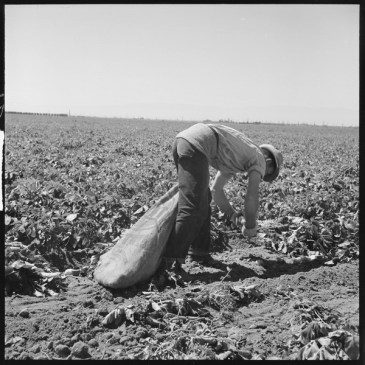
I have a couple of degrees in agricultural science.  I have also worked, in my teen years,stoop labour in what is called ‘stoop labour’: picking tomatoes and green beans, riding a potato digger, harvesting sweet corn, cutting grapes. Long, hot, sweaty days, often with no access to a washroom or running water; lunch eaten with dirty hands, sometimes between the rows. Sometimes the pay was hourly, sometimes it was piece work. It was never good. I’ve worked alongside immigrant women with advanced degrees, whose English wasn’t good enough to let them work in their area of expertise, women from Portugal and Hungary. I’ve worked alongside men from St. Kitts and Jamaica, who come to Canada yearly to support their families back in the islands. I did this work for a few weeks every summer, and only for a few years.  These people did it, do it, year after year after year.

I find myself remembering this more these days, maybe because I am in my 60th year, and my knees creak and my back hurts, and arthritis plagues me occasionally.  I buy a head of broccoli at the farm stand, or a bunch or radishes, and I look at it, and think about the work. Which raises, in my mind, an ethical issue: this head of broccoli or bunch of radishes is in my hands because of the labour of those who planted it, those who weeded and watered and fertilized, and those who harvested it.  Can I, with a quiet mind, throw out half of it: the stems of the broccoli, the leaves of the radishes?  What would that say about how I value their work?

So I have set about to find ways not to waste the products of that labour. (Not to mention the other resources – the fuel and fertilizer to grow the crop; the topsoil itself, disappearing or degrading in much of the world; the water, rapidly becoming a limiting factor.) As each vegetable crop comes into season, I’m being creative with what I do with it.  (But if anyone’s found something useful to do with corn husks, other than compost them to produce soil amendment, let me know!)  This is what I’ve been doing, so far this summer:

Broccoli stems:  I slice off the tough outer part of the stems, tossing those parts into the large container in my freezer where all soup stock ingredients go.  Then I slice the inner portion into matchsticks, which go either into salads, or into an Asian-inspired soup I make.

Radish greens:  add to salads or soups, or, cook until soft, and puree them. (Pour off most of the liquid and reserve as stock.)  I use pureed greens, whether from radishes or salad greens past their best – in place of zucchini in zucchini bread or muffin recipes, and it works just fine.  I sometime use other pureed veggies too – I’ve previously published this recipe here.

The stock container in the freezer gets just about everything else: broccoli leaves, radish trimmings, bits of pepper, anything that’s sat too long in the fridge and has gone soft; overripe tomatoes, extra herbs. Every couple of weeks I scoop out about two cups worth of bits, put them in the slow cooker with some garlic and onion, salt and pepper, and few chicken bones from the other freezer container, cover with water, and let it simmer all day.  The bones and vegetable matter go into the municipal compost system (from where it goes to farmers’ fields as soil amendment); to the broth, I add match-sticked broccoli and carrots, thin slices of red pepper, left-over corn, slices of radish – really whatever is around.  I toss in a few herbs – Thai basil, lemongrass, parsley – from our community herb garden, more garlic, cayenne pepper. I cook the broth and veggies together for ten minutes, add tiny egg noodles, and four minutes later, pour into wide bowls.  Sometimes I add tiny pieces of meat – again, whatever is around: little bits of chicken from a roasted bird; one sausage, cut into fine rounds and browned –  but no more than an ounce for each person. I serve it with good bread, and maybe a salad, and that’s supper.

What do you do to reduce food waste?  I’d really love to know. Has anyone tried making pesto from greens other than basil?  Are there other creative soup recipes out there?Please share!


Photo:  Kern County, California. Migrant youth in potato field. Stoop labor by a migratory youth: by Partridge, Rondal, 1917-, Photographer (NARA record: 8464464) (U.S. National Archives and Records Administration) [Public domain], via Wikimedia Commons

Second Books are like Second Children

I’m the third sibling of three…the baby.  My father was an amateur (and then professional, for a while) photographer.  There are hundreds of pictures of my sister, the oldest. (Remember this was 1948, when black & white film had to be hand-developed.) Hundreds. 

When my brother came along, six years later, there are fewer.  A couple of requisite baby shots, the christening, a few more.  But his presence clearly wasn’t as exciting, didn’t need to be recorded in the same way.

This is fairly typical, from what I’ve seen with the photos and video of my nieces and nephews, too.  The first baby gets a lot of attention; the rest…not as much. (There are even fewer photos of me.)

And that’s pretty much how I’ve been reacting to the publication of my second book, Empire’s Hostage. Yes, I’m pleased to see it in print. I’m doing my part to…

View original post 161 more words

Catching Up

Posts have been few and far between recently….my apologies.  Here’s why.  I’ve just finished printing and framing twelve new versions of graphic prints, to be included in atepsave1 cutout351display of eighteen of my works that I’m hanging next Wednesday.  I also completed Empire’s Hostage, Book II of the Empire’s Legacy Series, this week, prepped the files for printing, and sent them off – just waiting now to get the first proof edition. cover ebook under 2MB smaller This was also the last week of the on-line university course I’ve been taking, on the landscape archaeology of Britain…and then there’s been the community newsletter, the community herb garden, retirement parties to attend, books to edit, the kitchen cabinets to prep for painting (next week!), and all those little things – like grocery shopping and meal prep and time with friends – in-between.


“Retirement” still seems to involve twelve-hour days – I’m usually started on the…

View original post 307 more words

Roddons

This is the creative non-fiction piece I read at the Guelph Spoken Word evening, Grounded, on April 22nd.  The theme of the call for submission was ‘exploring our relationship with our landbase’ (in honour of Earth Day).

roddon, also written as rodham, is the dried raised bed of a watercourse such as a river or tidal-creek, especially in the Fen District of East Anglia in England. (Wikipedia)

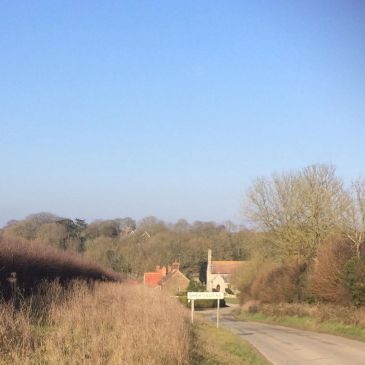
Beyond the village, west towards that great bay of the North Sea called The Wash, flat fields of barley and wheat, latticed with ditches, lie on either side of the right-of-way out to the water. Once, this was marsh, and from the satellite images on Google Earth, the patterns of waterflow can still be seen, like a ghost, or a memory, held in the soil. Roddons, they are called, these traceries remembered in the land.

I grew up with stories of this…

View original post 975 more words

What may still lie between the mountains and the sea….

“…will you face east with me, and bow to that memory, and to what may still lie between the mountains and the sea?” 

Those enigmatic words seal a truce called in the fifteen-month war between the Empire and Linrathe, the country north of the Wall, binding the Emperor Callan, the Teannasach Donnalch, and their people. But in additional surety of peace, the truce requires hostages, children of the leaders. 

Lena is a Guardswoman on the Wall when this peace is negotiated, one of many women who rode north to defend their land. When the General Casyn asks her to take the place of one of his daughters as a hostage, Lena agrees, to learn that she will be sent to a Ti’ach, a house of learning, for the duration of the truce. Here, perhaps, she can learn more about the east, and what its place is in the history of…

View original post 135 more words

Reclamation

Three months away from a house we’ve only lived in for seven months is disorienting.  Where do we keep the measuring cup?  How does the shower (newly installed only six weeks before we left) work? We’ve actually spent more time, in total, in the English cottage than we have in this house.

But the patterns of life return, although I still haven’t sorted the light switches out. We reclaim this life, just as we reclaim the English life in the first few days there: the familiar walks, the regular grocery store, the local butcher. Some things are easy, some are harder: bird song falls in the latter category. I’m not musically intelligent: I relearn most bird song every year, in both countries. Walking at the Arboretum yesterday, I had to drag goldfinch and a variant chickadee call out of the depths of memory, and confirm them with sightings of the birds.  (Red-winged blackbird was ok, though.) Same at the other end: which tit was that?  Was that explosive chatter from the reeds a Cetti’s warbler or just a wren?

I walked downtown this morning, for the exercise and the familiarity, to my writer’s group.  Reclaiming pathways, re-connecting with friends. Readjusting, to Canadian architecture, to cars on the other side of the road, to the relative newness of permanent human influence on the land. The Basilica is lovely, perched on its hill, but it was built in 1875: the church in the village in England dates from the 1300’s, and there was an earlier church on the same site. It changes the feel of the land, that embedded history, and the access that footpaths and bridleways, droves and byways, give to the countryside: big loops through farmland and heath, marsh and woodland, almost all off-road.

I miss various things about my Canadian life when I’m in England: friends, my cats, the cultural life of the downtown here; my own study, the university library.  Odd things: bulk food stores, for spices and bean and flour.  My favourite cafes, the art-house movie theatre, the bookstore.  But the reverse is true too: I miss the English countryside, I miss Mastermind and University Challenge, I miss the books I can buy there but not (easily) here: books of nature writing for which I’ve found no equivalent in North America (Trevor Heriot comes close); books of obscure, localized history.  I miss the easier acceptance of special interests and eccentricities: almost everyone connects with birds in some way, even if they’re the model airplane enthusiasts flying their machines in the field beside the nature reserve, or the metal detectorists out searching for Roman coins and Anglo-Saxon treasure.

Each trip changes me, in ways I often don’t realize at first. Simple things: I took one suitcase, holding both my clothes and my writing and research materials, and I still had too many clothes…so why are my closets so full in Canada? No films worth seeing at the market town’s cinema?  Use the library’s video collection. But it goes beyond that: at least in the villages and the countryside, life is slower, more patient: cars let others by, on tight village streets or single-track country lanes, there’s a turn-about policy, and always a wave of acknowledgment; transactions in shops and cafes are politer, friendlier, even when the queue is long.  I bring some of that home, too.

And there are fewer distractions: we walk, we watch birds, we cook. I write, and read, and do research for my next book and for my university course. It focuses me on what is truly important to me, and validates, too, that I need the occasional visit to Cambridge or Norwich, to go to museums and art galleries, browse in eclectic used bookstores, drink coffee and watch the world.  To find balance, between physical and mental demands, between stimulation and contemplation, between doing and being.

Three Months in Winter

all the birds of my life

Morning and evening, the pink-footed geese fly over the village, their haunting, yelping calls bracketing the day. They fly from the safety of the mudflats and shallow waters of the Wash, that great bay of the North Sea, out to the sugar beet fields, to feed on the shattered remnants of the harvested crop. On that twice-daily commute, they fly over saltmarsh and freshmarsh, woodland and fen, pasture, heath, rivers, hedgerows, village gardens.

I make the same journeys, much on foot, some on foot after driving. I can walk from the village to the sea; I can walk to fen and woodland, arable fields and hedgerows, pasture and fresh water. Open heath, saltmarsh, freshmarsh and larger rivers requires a car.  I am here for the birds and the walking, and the great open skies and long views, and the weather that is so much better than Ontario’s from January to…

View original post 933 more words

A New Kitchen Tool

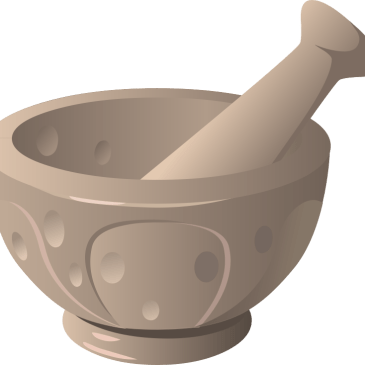
I bought a mortar and pestle today, a kitchen tool I’ve done without for thirty-five years.tools-mortar-and-pestle-800px  As I have a general policy of not buying things, why did I make an exception for this?

The answer lies, and hangs, in my basement: a rack and two elevated screens of drying herbs, the last harvest before winter.  Rosemary and sage, oregano, parsley and chives: some hang in bunches from the rack that used to, in my working days, dry my panty-hose; more are spread on window screens elevated on paint cans.  (None of them are catnip, to Pye’s total disgust – she loves it. Pyxel, on the other hand, watches Pye go ecstatic over a catnip toy the way a teetotaler watches someone enjoying a glass of wine.)

I could have chopped the herbs and stored them frozen in oil; or just frozen, in small bags, but I prefer dried herbs for the simple reason I don’t have to remember to thaw them prior to cooking. (I do freeze pesto.) I could have microwaved or oven-dried them, but why use energy when the basement is dry and warm?  In another few days, I’ll bring them up to the kitchen, and strip the leaves off the stems prior to storing in glass jars.  Some of them – the rosemary in particular – I will later grind.

Ground rosemary used to be easy to find in grocery stores, but for a long time now all I can find are whole leaves – which are fine, and I use them, but sometimes I want ground rosemary, when the texture of what I’m making will not benefit from the whole leaf.  There are a few other herbs that can benefit from grinding, sometimes: dill for use in sauces or on fish comes to mind.  And spices – well, Indian spices like mustard seeds need grinding just before they are added to a curry; powdered mustard seed lacks the fragrance and bite of freshly-ground.  These were all good reasons to buy a mortar and pestle years ago, but for some reason I never got around to it.  (You can bash mustard seed with a rolling pin, in a pinch.)

But I am also thinking ahead.  The community in which I live has a communal herb garden, and I’ve volunteered to be one of the people who takes care of it. It satisfies my wish to garden without committing me to something too big or too demanding of my time. Next year we’ll have quite a wide variety of herbs, edible flowers, and perhaps a few other plants like jalapeno peppers.  With a larger variety of herbs to cook with and to dry, I will (I hope) need the mortar and pestle more than ever before.

But I’m curious…those of you who use a mortar and pestle regularly, what other kitchen uses does it have?