A Very Special Apple Pie

As I’ve mentioned on and off in this blog, my husband BD has a specific and rare food allergy to lauric acid, one of the fatty acids found in a wide range of fats. It significantly limits his (and by extension our) diet. One of things off-limits has been pastry, because it’s generally made with either lard, butter, or ‘vegetable shortening’, which usually contains at least one of the fats that have high levels of lauric acid.

But yesterday I found a pastry pre-mix at a bulk food store that is made with only soybean oil. Soybean oil is on the ‘ok’ list. So I gave it a try. (I’ve tried making pastry with a safe oil before, to less than edible results.) But this one worked! And last night – serendipitously at his 60th birthday dinner – we had apple pie for dessert. Lovely, clove-y, gingery (cinnamon is off-limits), apple and cranberry pie.

BD had apple pie for breakfast, too, this morning. I can’t say I blame him – if I hadn’t had pie for 5 years I would too! Now, we’re not going to start having pie a lot. It’s still not healthy. But for special occasions, yes. And I went back out this morning and bought quite a lot of the pastry mix. It’s in the freezer. Christmas isn’t that far off!

Old, Cold Houses

Yesterday it rained all day, heavily, the last gasp of Hurricane Patricia reaching up into the edge of Canada. Today the winds blew hard, gusting to about 90 km/hr, bringing a cold front with them, and stripping most of the remaining leaves from the trees.

Parts of the house are cold tonight.  A four-square built in 1911, it’s grown a bit from the original; a summer kitchen renovated to a rec room in the sixties; the attic made into living space sometime earlier than that; our own addition of a sunroom.  Insulation didn’t exist originally and was minimal when added sometime later.  The windows aren’t quite sealed.  We’ve added pink fibreglas and vapour barriers in all the places we’ve stripped the walls down to the beams, and in the new sunroom.  The rest of the house had insulation blown into the walls a few years ago.  It helps.  It doesn’t make the house completely airtight, and on a day like this, bits of it are cold.

We’ve grown used to this, over the years.  We wear fleece-lined slippers, and layers of warm clothes. There are throws to snuggle into on the couch of an evening.  I have tea after dinner, reading or watching television.  The new high-efficiency oil furnace (no other choice except electricity, where we are) chugs away, doing its best.

All the heating to the bedroom floor is by convection, open grates in the floors and the wide staircase allowing heat to move upward.  Now we’re both home all day, the bedrooms are much warmer than when we were working, and had the thermostat turned down when we were out. We’re still adjusting to that, both of us liking cold bedrooms to sleep in.  I do wonder how the grandmother who slept in the attic survived, though – it’s just plain COLD up there – no heating at all, ice on the windows in the winter, damp in the spring and fall.  I suspect pneumonia carried her off.

We bought the house from a woman who had been born in it, about seventy-five years earlier.  She told us how the pipes use to freeze in the kitchen, unless the cupboard doors under the sink were left open in the winter. How the drains out to the dry well and the septic tank would freeze, too. The house wasn’t built with a bathroom; it came later.  I imagine going out to the privy on a cold winter’s night, or bathing in the kitchen in a tin tub.  We may only have the one bathroom, and when the winter wind is from the northwest prepare to shiver if you forget to turn the electric heater on – but luxury compared to that.

And that is what I am thinking about, this first windy, cold night of the fall.  What exactly do we need, and when does more become, in the words of a Monty Python skit, “bluddy luxury”? We could warm the house more – it would be simple:  turn the heat up, and turn more of the electric space heaters on. But not only would that cost us money, it would produce more greenhouse gases, more climate change, more pollution. Just because we can have something, should we? Doesn’t the attitude that says ‘sure, have more’ lead to obesity, metabolic disease, debt crises, foreclosures, addiction, and all the sins and symptoms of our material world?

Perhaps that’s an advantage of an old, cold, house.  It makes you think.

Kitchen Gadgets I Wouldn’t Want to be Without #2: The Stick Blender

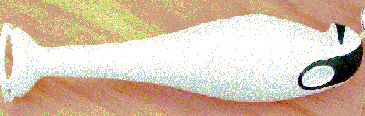
The simple stick blender is a gadget I use almost every day. In the last two days, it’s been used to make smoothies, blend a roux into chicken broth to thicken a stew, and transform left-over roast vegetable salsa into pasta sauce.

I often don’t use electric appliances – I own a hand-held mixer, but usually I mix cake or cookie or muffin doughs by hand, with a solid dinner fork. I might as well use a few more calories up before I eat what I’ve baked! But blending is a different thing.

My sister gave us a traditional blender as a house-warming present the year BD and I moved in together – 1979 – and we still have it. BD uses it to make hummus weekly, and I use it occasionally, but the stick blender has replaced it for most uses. It’s just simpler, and easier to clean.

I’m on my second one. The first one I bought was bottom-of-the-line, inexpensive, since I wasn’t sure how much use it would get. Eventually it burned out – but not immediately – so I bought a better one. Two in fifteen years isn’t too bad!

Here’s how I transformed the salsa to pasta sauce – I’ll start with the salsa recipe, full of local, seasonal vegetables bought at the farmers’ market on its last day for this year.

Roasted Vegetable Salsa

2 red peppers

2 small eggplants (about 3 inches each)

1 medium zucchini

6-12 garlic cloves, depending on how much you like garlic

1 small onion

10-12 grape/cherry tomatoes, preferably roma type

1 cup finely diced butternut squash

1/2 c olive oil

2 Tbsp balsamic vinegar

rosemary

basil

oregano

sea salt

black pepper

1/2 c feta cheese

Preparation

Peppers: seed and dice finely

Eggplant: peel and dice finely

Zucchini: dice finely

Garlic: peel and dice finely

Onion: peel and dice finely

Tomatoes: dice finely

Squash: peel and dice finely

Toss diced vegetables with olive oil and spices and spread on parchment paper on two cookie sheets. Roast at 360 degrees F for 30 minutes. (A higher temperature than this destroys much of the goodness of olive oil.)

Add 1 Tbsp each of dried rosemary, basil, oregano, and 1 Tbsp sea salt, and 1 tsp coarsely ground black pepper, plus the 2 Tbsp balsamic vinegar. Mix well. Adjust seasonings to taste and add more olive oil if desired. Let sit at room temperature to blend flavours.

Just before serving, add 1/2 c feta cheese. Serve with crostini.

This makes about 3 cups. I had just over a cup left over.

To make pasta sauce:

Add 1 c chicken or vegetable broth, preferably low sodium as there is a fair bit of salt in the salsa. Bring to a boil gently. Cool somewhat, and blend in the saucepan with a stick blender.

This gives you a creamy, tangy pasta sauce. Use as a vegetarian sauce with more cheese if desired, or, add ground chicken, turkey or whatever you like.

Now, those of you who follow this blog know that BD is allergic to all dairy. So I actually made two versions of this, one with feta and one without, and did this sauce twice: both worked well, but I would definitely add ground turkey or spicy turkey sausage to the dairy-free version for protein.
Slow-Cooker Cassoulet: A Portable Feast

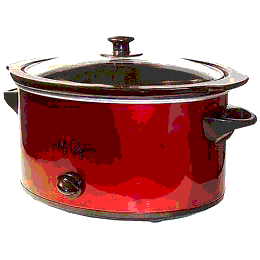
I do love my slow cooker.

A new cinema opened in our general area a few months ago. It plays first-run and art-house movies, and it does matinées every weekday afternoon. It has become our primary place to go to a movie with friends, also retired, who, like us, prefer the matinées. But here’s the rub: our friends live 22 km (13 miles) south of us, and the theatre is another 20 km (12 miles) south of their house. Realistically, this means that the post-movie dinner is always at our friends’ house, which means they are always doing the cooking. We could go out, but its difficult and frustrating for BD with his allergies.

This week (the movie was Bridge of Spies, by the way, which was excellent), I said ‘enough – I’ll cook.’ Then, of course, I had to come up with something that was easily portable and could be left over the afternoon. And as I know my friends’ fridge is always full to overflowing, that really only left me with the option of a slow cooker meal.  So I wandered around on the internet for a while, found a few similar recipes, modified them for BD’s allergies – and here is what we had. It was really good and very easy. You may need to adjust the spicing to suit yourself; this is fairly mild to suit our friends’ palates. It cooked on a low setting from about nine in the morning to about seven at night, except for the half-hour we were driving.

Slow Cooker Cajun Chicken and Sausage Cassoulet

(Serves 6)

Ingredients

3 spicy turkey sausages cut into 1/2-inch slices

6 skinned and boned chicken thighs (about 2 1/4 lb.), sliced into 2-inch pieces

1 teaspoon salt

1 /2 medium onion, chopped

1 medium-size bell pepper, chopped

4 garlic cloves, chopped

1 c frozen lima beans

1 14 1/2-oz.) can diced tomatoes

1 1/2 cups chicken broth

1 8oz package frozen chopped spinach

1 Tbsp celery seed

1 1/2 teaspoons Cajun seasoning

1/2 c safflower oil

2 Tbsp flour

Preparation

Cook sausage in a large cast-iron frying pan over medium heat, stirring occasionally, 4 to 5 minutes or until browned. Remove sausage with a slotted spoon, and drain on paper towels, reserving drippngs.

Sprinkle chicken with celery seed. Cook chicken in hot drippings over medium-high heat 2 to 3 minutes on each side or until browned. Remove chicken. Add onion, pepper and garlic to pan, and cook, stirring often, 5 minutes or until onion is tender.

Add tomatoes, lima beans, spinach, salt and cooked ingredients to slow cooker. Using the oil and flour, make a roux to thicken the chicken broth. Add the thickened chicken broth to the other ingredients; add the Cajun seasoning. Cook in a slow cooker on low all day. Serve with good crusty bread and a salad.

Cajun Spice Mix

Ingredients

  • 2 teaspoons salt
  • 2 teaspoons garlic powder
  • 1 teaspoon ground black pepper
  • 1 teaspoon onion powder
  • 1 teaspoon cayenne pepper
  • 1 1/4 teaspoons dried oregano
  • 1 1/4 teaspoons dried thyme
  • 1/2 teaspoon red pepper flakes (optional)

First Frost

I had to scrape ice off my car windows yesterday morning, before I could go to town.  A mid-October frost is normal here; I wasn’t surprised by it.  The scraper was already in the car.

Other years this frost would have been one more source of stress in a too-busy life.  The advent of winter meant getting up fifteen minutes earlier, or changing my routine somehow to find the extra five to ten minutes needed to clean my car of ice or snow (or both) every morning.  Now, I’m not in any hurry, so there’s no stress.

Friends and family are already bemoaning the frost on Facebook.  Winter is coming. Yes, it is.  Yes, the days will shorten, snow will fall, life will get more difficult.  On the other hand, there are no mosquitoes, no grass to cut or weeds to pull, no pollen allergies or need for sunscreen, and people are friendlier and more helpful to one another in the winter, in the face of shared adversity.  Life moves from the patio to the fireside, but the beer, friendship, conversation and laughter are just as good in either place.

First frosts aren’t always about temperature.  First frosts can be the first gray hair, the first twinge of arthritis, the first child leaving home.  The first promotion of someone younger over you; the first time you can’t open a jar lid.  The first pair of readers.  The first death of someone you love, or someone you work with.  Some first frosts are light, and some are hard freezes.  But just as our attitude towards snow and ice and freezing temperatures affects how we see winter, our attitude towards aging affects how we age. There are some things we can’t change, but there are many we can.  When my father’s eyesight began to finally fail him in his late nineties, he could have mourned his inability to read his beloved history books; instead, he asked for an iPAD and learned to use iBooks, increasing the font size until he could read the words.

It will snow soon.  The first falls will be light, and will need no shovelling, and maybe not even a scattering of salt.  But at some point it will really snow.  Snow shovelling is my job, mostly, due to BD’s back problems. Last year, I was less than six months post-major-abdominal-surgery and still on lifting restrictions.  But with an ergonomically-designed snow shovel, and moving only small amounts in each scoop, the pathways got done, and I did myself no damage, and probably some good.  It took me longer.  Other things didn’t get done.  But it was a priority.  Winter is good at sorting out what really has to be done, and what doesn’t; what is worth the time and energy, and what can wait, or go by the wayside altogether.

Winter, aging or serious illness teach many of the same lessons.  Both summer and winter are beautiful, but they both ask and give different demands and different gifts. Like everything else in this world and this life, both demands and gifts are transient.  We do best when we appreciate that simple fact.

Lifelong Learning

I am sitting in ‘my’ study carrel at the university, the one I’ve been using on and off for thirty-something years.  Today I noticed some new(ish) graffiti on one side: ‘Today is my last day in the library EVER’.

How sad I find this, because it implies to me that the person who wrote it finds learning, books, and study a chore, or worse than that, just something to be endured so that real life can begin.  I’ve come to the library today not to write, as I often do, but to check out books, something I’m allowed to do as an alumna, and these are books I need for my new course.  While learning and books aren’t my whole life by any means, they remain – even thirty years after graduation from university – a hugely important part of it.

I am unbelievably excited about this new course – The Archaeology of Landscape I, offered through the University of Exeter Distance Learning program.  Unlike the two I took last fall and winter, this one wasn’t free, so I had to really think about whether or not I wanted to spend the money (and time) such a course requires.  But it really wasn’t that hard a decision.

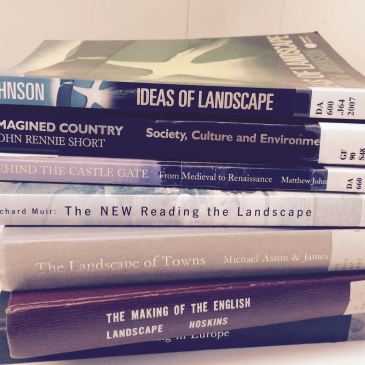
And now I’m looking at a pile of seven books to be read for the first three weeks of the course.  They have titles like “Ideas of Landscape” and “Imagined Country:  Society, Culture and Environment”. I can imagine what most of you are thinking!  But for me, this is feeding a deep need.

And that’s what the best learning is about.  Don’t turn your back on it, just because school and university were perhaps not quite what you hoped.  I can remember being less than impressed with some aspects of my graduate program and quite a few of my undergraduate.  High school was worse.  Then I taught, and was less than impressed with some of what the curriculum required.  I did my best to make it relevant and interesting, but it was a hard go sometimes.

But now I am (again, as I did last fall) learning for the love of it, learning things that will change forever the way I see my world.  Someone (maybe George Bernard Shaw?) said once that education is wasted on the young. I don’t agree with that, but it is certainly not the sole province of the young.  My father was telling me of new things he’d learned through reading and documentaries to within a few weeks of his death at 98.  I hope, very much, to emulate him.

In Another Life

How many times have you used that phrase?  I have, many times, and usually about the same thing:  my career choice. Had I known, forty years ago, there was such a profession as landscape archaeologist…well, my life might look very different now.

A landscape archaeologist interprets and translates human-built or human-transformed landscape features as part of a larger understanding of human settlement and history. On a simplistic level, it’s what I’m doing when I walk in the regrowth forests east of my village, and stumble over a limestone-boulder boundary wall hidden deep in the trees, and interpret that as evidence that these treed lands were once cleared and farmed. Or when I look at my local landscape on Google Earth, and see the roddens, the ‘ghosts’ of waterways that still show under ploughed soil, indicating that these croplands were once marsh.

For whatever reasons, landscape archaeology calls to me. I can study maps and Google Earth for hours on end. When I walk in a landscape, I’m looking for those hints of land use and habitation. But, until the great British TV series Time Team, I hadn’t a clue there was a profession that did this too. I imagine BD still remembers my reaction on discovering that Time Team member Stewart Ainsworth got paid to do exactly that.  And so for twenty years or so, I’ve been saying ‘In another life, I’d have been a landscape archaeologist’.

Except there isn’t another life. There is only this one. I’m nearly fifty-eight, and I have no reason to pursue a career as a landscape archaeologist. But why should I not pursue it as an amateur, in the true meaning of that word – one who does something for the love of it?

In this digital, connected, on-line world, I can take courses from anywhere. Including courses from the British universities of Exeter and/or Cambridge on various aspects of landscape archaeology. I could, in theory, even get a degree through on-line studies. I doubt I’ll go that far….but who knows? I’m going to start with an introductory course and see where it leads. In this life.

Editorial Services Giveaway

I am a lucky indie writer.  My young-adult adventure novel, Empire’s Daughter, was accepted for publication by a small press, which meant it received the entire professional editorial process, edited for story, continuity, copy-edited, etc., by two very talented editors.  Sadly the press went out of business – it’s a tough world – before Empire’s Daughter was published, but I benefited enormously and learned a LOT through the months of editing and re-writing. So when I published Empire’s Daughter through Smashwords and Amazon, it was polished to a high standard and has sold well.

This is not an opportunity many new writers get, and it’s one I’d like to pay forward.  So here’s my offer:  I will provide editorial services free of charge to one indie author in each of the following editorial capacities:

  1.  Story review – a read-through of the manuscript, suggestions for expansion/contraction of the story…

View original post 222 more words

Spaces in Togetherness

I haven’t been writing much recently – either in the blogs or on my novel, or in any other genre – and it’s taken me a while to work out why.  For a number of reasons – mostly to do with house renovation work – when I’ve gone walking, I’ve gone with BD.  And as much as I love my husband, and like walking with him, it’s a different experience than walking alone.

BD’s a talker.  I’m not.  So while walking with him is a good time to talk out issues, or brainstorm ideas, it’s not conducive to the half-daydreaming, let-the-thoughts-swirl workings of my creative mind. Sooner or later (sooner, I think) I’m going to get bitchy.  I need to write.  To write, I need alone time, preferably walking-alone time.

It seems so silly, to take two cars in different directions to walk separately.  (We may live in the country, but the roads are busy enough, and hilly, and there are no sidewalks and no real shoulders, so walking from the front door is unwise except early on weekend mornings.)  If I add a walk to my errand trips to town, all well and good; I’m there anyway.  But I am having trouble giving myself permission to not walk with BD, when it’s the more sustainable/less consumptive option on any given day.

But, of course, I must, or I won’t write.  And it’s not like this is new revelation.  The title of this post is a paraphrase of a quote from Kahil Gibran, and was part of the reading I did at our wedding, thirty-four years ago.  I knew then I needed that alone time.  We’ve had twenty-five years of summers off together to practice what retirement life would be like, and this issue has come up then too.  It’s not even really a ‘problem’: unless we haven’t seen each other for some days, BD is completely happy to walk without me – in fact, he mostly prefers it, as he acknowledges that my presence means he is less observant of his environment, and therefore he sees fewer birds.

So the real problem is my unconscious falling into patterns of behaviour because they are familiar, or appear superficially easier, or satisfy an immediate need rather than a long-term one.  Problems almost all of us confront, daily or weekly.  The problems that remind us that life isn’t to be lived on automatic pilot, but should be considered, contemplated, parsed.  That give us opportunities to outgrow habits and behaviours that are not healthy, and grow towards ones that are.