Today There Was Birdsong and Wind

My head was full of voices. The voices of the complex characters of the book I’ve been editing for the last month. The voices of the characters of my own work-in-progress, the four protagonists jostling to be heard. Real life voices from my volunteer work; voices from the books I’m reading or listening to, voices from the tv shows I’m watching. Family voices. Friends. I needed silence.

Today dawned windy and cool, a day stolen from fall. The foot pain that’s been plaguing me for the past two weeks has gone, rest, exercises and new orthotics doing their job. A day for walking, then. (Not too far, so I don’t aggravate the foot again.) It wasn’t until early afternoon I actually escaped my desk for the Arboretum, hoping the cool, occasionally showery day meant it would be fairly empty.

It was. I walked the internal trails, rather than the perimeter, which is always busier. A house wren chattered at me; indigo buntings and redstarts sang from cover. From the canopy, a red-eyed vireo repeated ‘see me see me see me please’ over and over. There were no voices, human or imagined or electronic.

I saw a couple of people, exchanged quick ‘hellos’. The only other mammals were squirrels. I took pictures of wildflowers: in this regenerating old-field ecosystem, they’re the immigrant flowers of southern Ontario: Queen Anne’s lace, birds’ foot trefoil, vetch, clover, ox-eye daisies.

When I reached my favourite bench, with its view over grassland and bushes, I sat. An eastern kingbird hunted insects in graceful swoops. Butterflies flitted from flower to flower. A crow called. Bees buzzed; a chipping sparrow echoed them with its tree-top trill. No one disturbed me.

I didn’t sit long, maybe fifteen minutes. My mind stayed quiet. Has stayed quiet, so far. Tomorrow there are characters to listen to again, and friends, and the ambient hum of the cafe where on Mondays we meet to write and then have lunch and talk. It’ll be fine. Because today, there was birdsong and wind.

Learning to Listen

Thoughts of an Aging Birder

I’m standing on a boardwalk through a wet woodland: deciduous trees, damp soil, emerging plants, ephemeral ponds. Superficially, it’s not so different from the boardwalk through wet woodland I was standing on less than two weeks ago. One on the eastern side of the Atlantic, a kilometer from the North Sea; one on the western side, 1500 km inland. Different ecosystems, certainly, but what I notice today is the difference in the soundscapes.

Boardwalk, Wild Goose Woods, University of Guelph Arboretum.
My photo.

Recognizing all but the most common bird songs is a skill that has eluded me for fifty and more years. But at sixty-six, my vision a little compromised both by vitreous detachment and its resultant floaters, and by incipient cataracts, I’ve been trying harder to sort out the songs, to identify by sound. (My aging and arthritic spine also appreciates not having to hold up even my light Swarovski 10 x 32s as much, too.)

My hearing remains good, thankfully. In On the Marsh, Simon Barnes writes of friends who can no longer hear the high contact calls of goldcrest; the screams of swifts overhead, he tells us, are inaudible now to Sir David Attenborough. That day will no doubt come for me, but it’s not here yet. I can still pick out goldcrest in England, and its almost-doppleganger cousin the golden-crowned kinglet, here in Canada.

In the first week of April, the soundscape at RSPB Titchwell was dominated by onomatopoeic chiff-chaff calls. European robins sang from low bushes; a blackcap added its melody from a higher perch. Wood pigeons, endlessly cooing, added a bass line, punctuated by the equally endless screaming of black-headed gulls and the occasional explosive chatter of a Cetti’s warbler.

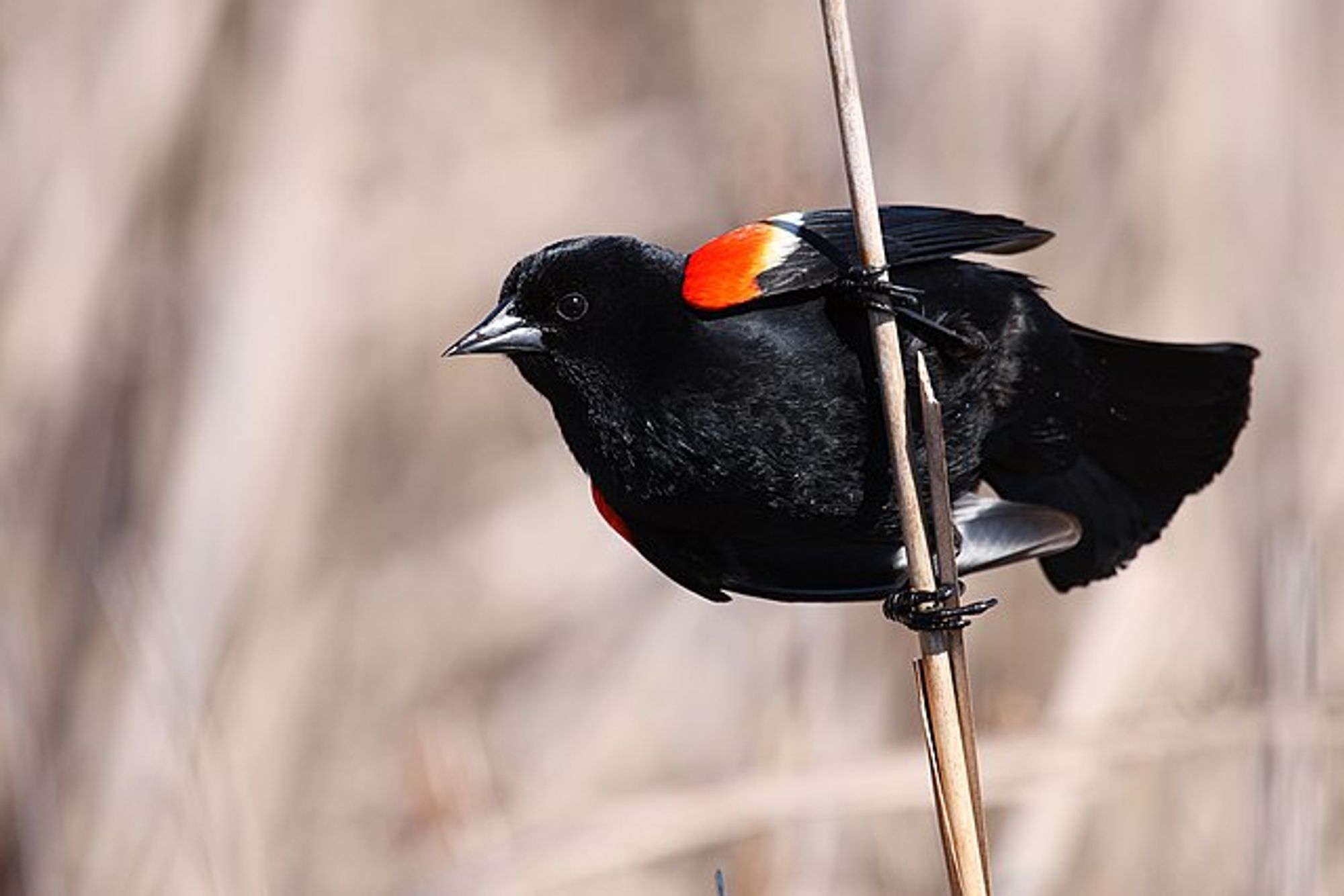
Red-winged Blackbird male, Point Pelee National Park, Ontario, Canada. Photo by Cephas, CC BY-SA 3.0 <https://creativecommons.org/licenses/by-sa/3.0&gt;, via Wikimedia Commons

Here in Guelph, on the boardwalk through Wild Goose Woods a few hours after dawn, the dominant sound is the chirr of red-winged blackbirds, the screeching laughter of northern flickers a close second. Another bird calls its own name: fee-bee, fee-bee. American robins sing cheerily from mid-level branches, and from the nest on the light standard over the playing fields I hear an osprey’s plaintive cry.

I’d know where I was—roughly—from either soundscape. While I’m focusing more on what I’m hearing through necessity and a wish to understand more of the landscape I’m moving through, looking at all the parts of the whole and not just on birds (I can identify a phoebe by song at the same time I’m looking at a bloodroot flower unfurling, for example), I’m also thinking about it in terms of my other life, that of the writer. Of the seminar on worldbuilding I’ve offered to give here in Guelph in the autumn, and all the things that are part of a convincing fictional world or will evoke a real one. Soundscapes are one of them: part of the whole which both characters and the reader, one hopes, inhabit.

Whether any writer can separate entirely the slice(s) of the world in which they live from their created worlds, I don’t know. I can’t. In this, I can only write what I know. There’s a circularity to this: writing has made me pay attention to aspects of the world I might have not noticed; a lifetime spent outdoors whenever I could informs what I write. The Titchwell soundscape?  It has a place in the story that’s beginning to unfold, and perhaps that book will be just a little richer because my aging eyes have made me listen more and look less. I’m fairly sure my life is richer, too.

What are the odds? ONE resolution for 2024.

As 2024 approaches, my ‘finish by the end of the year’ list is just about manageable. My ‘to do in January’ list is—umm—a little packed. More so than it should be, but it’s so I can take February off completely and go birding in Spain and Portugal.

Except…I have a book coming out in February: Empire’s Passing, the eighth and last of my Empire’s Legacy series. But it isn’t a standalone, and if people who’ve read the others don’t find out it’s out for a few weeks, frankly, so what?  Books don’t go bad. My nine-year-old first book, Empire’s Daughter, still sells steadily. There would have been I time I would have worried about not being present online for Passing’s release. That time is past.

I’m making one New Year’s resolution this year: to stop overachieving. This past year is a blur. I spent three months nearly 6000K away from home, dealing with the funeral and settling the estate of a cousin, learning to navigate a new legal and tax system, clearing the house, selling the house. And writing a book, because I had promised it would be out, and I was going to honour that promise.

 I also wrote five short stories, four for an on-line magazine (of which I am also the webmaster) and one for an anthology. And edited three other books. And chaired and edited our community newsletter, co-coordinated a writing group, read and reviewed a number of books for a book tour company, drove a van with my niece’s furniture to Nova Scotia, took a cousin on a ten-day driving holiday, developed and ran two full day planning sessions for a community group, gave a guest lecture in Philadelphia, kept up (well, sort of) with my two blogs and my newsletter, and tried to maintain some sort of social media presence. While attempting to learn Spanish, volunteering for another community writer’s group, and doing in-person book sales and open mic nights. Are you tired yet?  I am.  And not just from this year.

2014 – a decade ago, nearly– was a watershed year for me: a year in which I was diagnosed with Stage 3, high-grade cancer. It was also the year in which my publisher went out of business, the rights to Empire’s Daughter reverting back to me. In that year of surgery, radiation, and chemotherapy, I got Daughter ready for self-publication (I wasn’t going to spend another two years querying again – I didn’t know if I HAD another two years). While renovating the house, driving myself back and forth to radiation (an 80 k round trip, five days a week, for five weeks), and doing almost all the grocery shopping and cooking.  Are you rolling your eyes yet? But I was determined. Life went on as close to normal as it could, I learned to create an epub, and then format a paperback, and navigate KDP.

Two weeks after my chemo ended, we flew to Texas to go birding. Then I went back to work for a short time, and took official retirement, as did my husband, on the 15th of May. The next day, we flew to England for a month. Then we came home, bought a new house in town, and put the country one up for sale. My father had died (at almost 99) that winter of my treatments, and I helped (a bit) with clearing that house, as well as packing up our own,

We moved. I started volunteering with the community newsletter, and with a local writing group. I started the next book, and a blog, and then another one. I walked a lot, biked, and birded. I started editing and formatting books for others, and began a small imprint that has now published my own eight books and five for other people. We went to England in the winter to walk and bird. I took a lot of on-line university courses, on Roman and medieval history, and on landscape archaeology.  I read a lot of books, and wrote a few more. They were short-listed for and/or won a bunch of awards, which was nice.

We travelled, a lot: Australia, Fiji, New Caledonia. The Caribbean – ten islands in ten days, or close to it, for birds. Japan, Taiwan, Mongolia, for the snow leopard I thought I’d never see. Rome, for me, for research. And always England, for ten weeks or so each January to March.

One year I flew back from England for four days for my brother’s funeral, a too-quick, too-young death from cancer. Then I went back, and kept writing, and walking, and birding, because that’s what I do, and came home and kept on doing what it is I do here, too. You don’t waste second chances, and I got one. My brother didn’t.

And then came COVID, and the world changed. I wrote more books, of course. Social media became more important, just to talk to people and make connections. Zoom became part of my life: the community newsletter meetings, the writing group meetings, even family. Until this year.

Maybe a younger person, or a better organized one, could have juggled things better. Maybe I should have just admitted I’m 65 years old and I don’t have the physical or mental energy I once had. And it did all get done – the newsletter and writing group meetings done across time zones 5 hours apart; the newsletter layouts done and PDFs made and emailed for printing; the social media posts scheduled, the Amazon ads planned and monitored. Books were read and reviewed. Short stories were written. The English estate was settled, the house sold, the legacies distributed. Empire’s Passing was finished, and beta read, and edited (and edited and edited) and formatted. Maps got drawn. I even went birding, and wrote some blog posts, and did all the other things I listed in the fourth paragraph.

But I’m tired, as I said. It’s enough. It’s more than enough. I’ve proven, mostly to myself, that I could do what I always wanted to, and write good books, and the series is done. I’m not planning to stop, but I am going to slow down. (My husband is laughing, by the way. He doesn’t believe me.) More reading. More photography, maybe a return to some artwork and some poetry. Things I’ve neglected. Less productivity. Fewer social media posts, probably fewer blog posts. Some new learning, and some ‘getting to know you’ stories about new characters. Longer walks. A slower life.

Think I can do it?

Image by Gordon Johnson from Pixabay
Equinoctial Thoughts

I left spring behind in England, missing the reported return of chiff-chaffs to Norfolk by two days. I’d heard of other migrants arriving—stone curlew to a secret site, for one—at the same time the last of the winter redwings were leaving, heading north. The blackthorn was in full flower, the local woods were full of primroses between the stiff green stalks of bluebells poking through the leaf litter, and the wood pigeons were courting in the garden.


Outside my window there is freshly fallen snow, on top of the several centimeters already on the ground. Tomorrow is the first official day of spring, and the forecast is for warmer weather, but also for more snow, falling in the cold nights.


But I will have a year of two springs. Already the turkey vultures are back, and the hooded mergansers; red-winged blackbirds buzz in the swamps and flocks of tundra swans whiten corn stubble fields a little further south and west. Sap is rising; maple syrup is being made.


Over the nine weeks I was in England I watched the field across the road go from stubble to fresh-ploughed soil, gulls and rooks following the tractor, to the hazy green of an emerging cereal. The belt of trees up on the hill changed colour subtly, the dull grey of winter overlaid with the golds and pinks and greens of swelling buds. The blackbirds and robins began singing earlier every day, and continued later.


It’s harder here in my suburban bungalow to watch the gradual shift into spring than it was in my edge-of-village house in England. But I intend to return to paying attention this year. Almost fifty years ago, the first serious writing I did was a journal of the coming of spring to my southern Ontario home, a project sadly interrupted by mononucleosis and a month of exhaustion. That too was from an edge-of-village, mostly rural setting. But I have easy access to woods and fields, rivers and parkland, and little excuse not to observe and record. A.E. Houseman wrote:

Now, of my threescore years and ten,
Twenty will not come again,
And take from seventy springs a score,
It only leaves me fifty more.

And since to look at things in bloom
Fifty springs are little room,
About the woodlands I will go
To see the cherry hung with snow.

A Shropshire Lad

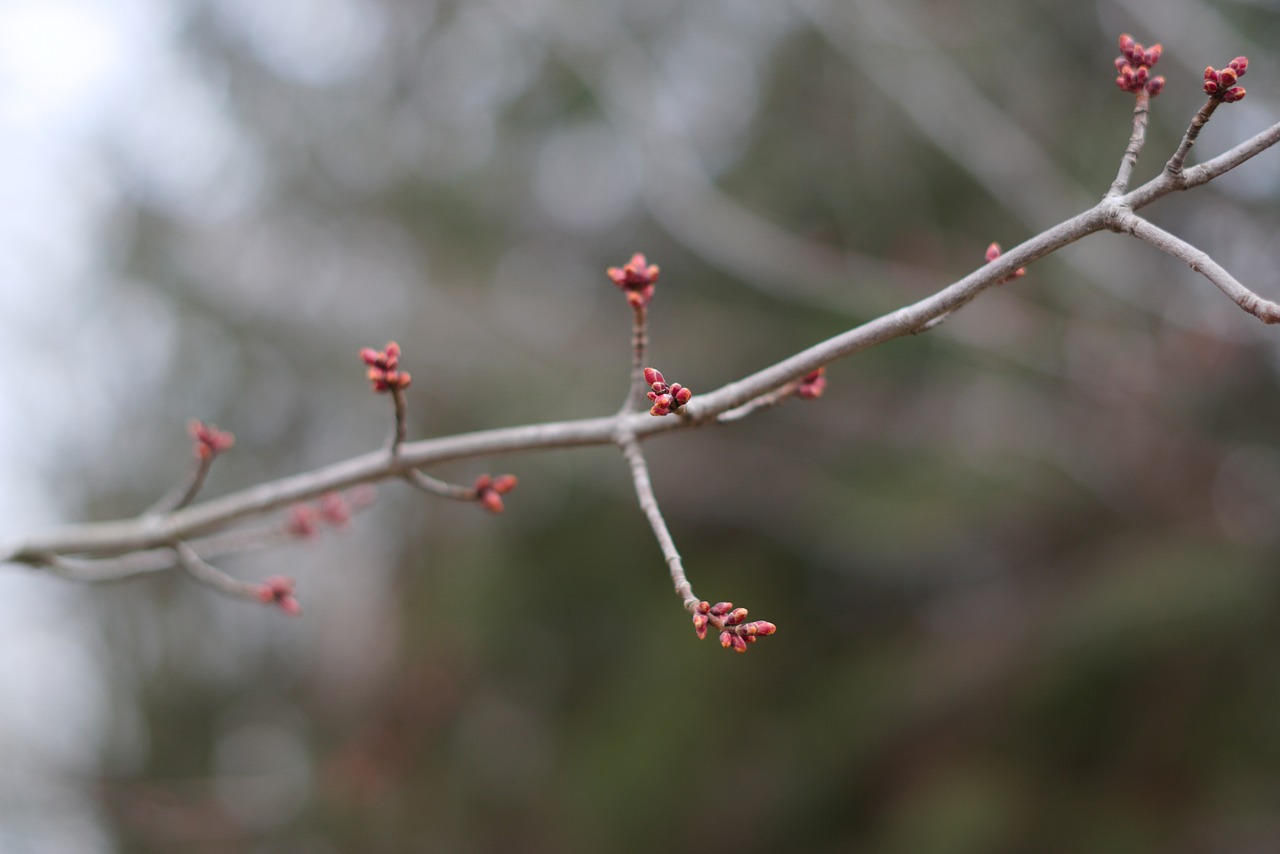
Of my threescore years and ten, sixty-five will not come again. So I shall go look at things in bloom, and listen to birdsong, and watch the gradual transformation of a winter world.

Image by Noma Lotern from Pixabay 

Elemental Norfolk

I wrote this poem a number of years ago, after we started spending a couple of weeks over the turn of the year in England. It was one of my first published works.

Earth

Lane and common, heath and ploughed ground

Lie frozen underfoot. The lands

Decline to the sea: downland and saltmarsh

Diked and ditched by countless hands

Against the sea and winter floods.

Beyond the marshes, the named sands

Will rise and fall with the tide.

Air

Skiff and windpump, sails of cloth and wood,

Are battened down and still. The gust

Strikes salt and icy; harness and rigging,

Tarred and treated for rot and rust,

Await the end of winter’s gales.

Above the marshes, the wind’s cold blast

Will rise and fall with the sun.

Fire

House and cottage, farm and village row

Sit tightly closed and warm. Fire

Kindles in the hearths; desire and habit

Pruned and piled the garden pyre

Against the night and winter’s end.

Beside the marshes, the year’s bonfire

Will rise and fall with the wind.

Water

Stream and river, pond and open broad,

Wait silently for spring. The snow

Bleaches all colour; hedgerow and reedbed,

Trimmed and tight in winter’s throe,

Withstand the wind and killing frost.

Within the marshes, the water’s flow

Will rise and fall with the moon.

© Marian L Thorpe

Image: John Crome, Moonlight on the Yare, Public domain, via Wikimedia Commons. Original in the National Gallery, London.

Writing Beowulf

A portion of the Beowulf manuscript. Public Domain, via Wikimedia Commons

“I need a challenge,” I told my husband the other day. I’ve not long finished my newest book, I’m not ready to start the next one, and I was rather at loose ends. Until I remembered a project I’d half-considered earlier: an adaptation of Beowulf.

In Empire’s Heir, my sixth book, the character Sorley hears a tale new to him, and, because he is a bard with all the responsibility that title carries: historian, poet, cultural custodian– he puts the tale into verse and music. The conceit is that the poem he writes is Beowulf – but as no one knows who wrote it, why not Sorley?

Half an hour later, Sorley had finished singing about Hrothgar and heroes and monsters, and I could stand without too much pain.

“That is not a danta* for children,” I commented, as Apulo slipped a fresh tunic over my head.

“Not unless nightmares are called for,” Sorley agreed. “It’s interesting; there are other danta about Hrothgar, and others with dragons, but nothing else I know with these monsters of the deep. I wonder what traditions are behind it?”

Empire’s Heir

In front of me I have three translations of Beowulf: Seamus Heaney’s, JRR Tolkien’s, and John Lesslie Hall’s, from the Gutenberg Project. The goal is to glean meaning from these – my Old English was never great, and is now so rusty I can only pick out a word here and there – and create my own, or rather Sorley’s – version. Not of the whole poem (I don’t think), but an excerpt or two. Unless, of course, the challenge spurs me on!

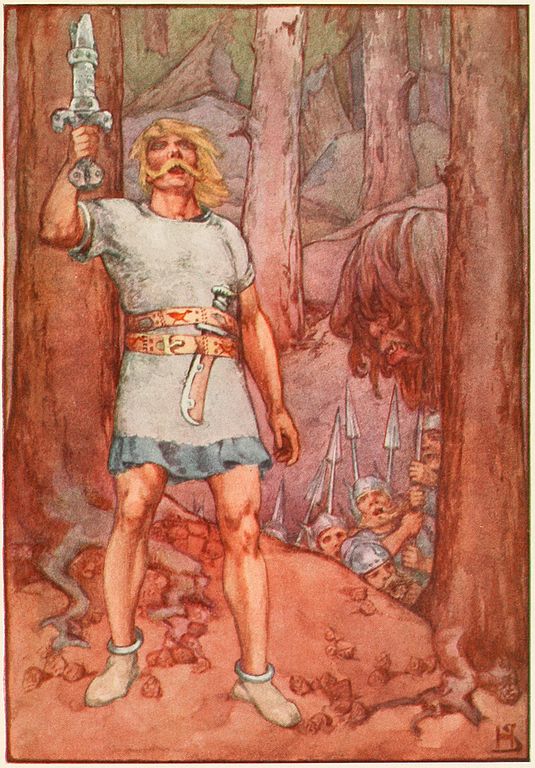
Helen Stratton, Public domain, via Wikimedia Commons

*A danta, in my parallel, not-quite-historical, world, is a story-song.

A Convergence of Deadlines

Image by Gerd Altmann from Pixabay 

There’s an old Gordon Lightfoot song that starts with “I’m on my second cup of coffee, and I still can’t face the day…” I know how he felt. Except, perhaps, it’s this week I still can’t face, although I must. Somehow, for all my good planning, a number of deadlines have converged: deadlines for my book, the community newsletter, another newsletter I’m part of, an upcoming promotion, a book review.

I shouldn’t be writing this: it’s procrastination, pure and simple. Or maybe not; maybe it’s a form of planning, of preparation. And a reminder to myself to take the breaks and small pleasures this week, too.

The book review and the promotion can be put off for a few days, but the work on my own book’s production and the two newsletters can’t be. So I will juggle those as best I can today and tomorrow, but I’m also going to go for a walk, and have lunch with writer friends today, even if I make it an hour rather than the usual two. I also need to plan tasks that get me out of my chair every 45 minutes or so. Yesterday, when I worked nearly non-stop from 6 to 6, it was the laundry. And the cat to feed, and breaks for coffee and breakfast and lunch, and muffins to make.  Today perhaps I’ll make cookies, and soup, and focaccia – tasks that get me on my feet for fifteen minutes or so. And the dishwasher always seems to need emptying or filling – I call it dishwasher yoga.

In between it’ll be chunks of focused work, door closed, social media blocked, no interruptions. Phone calls go to voice mail, to be dealt with later. Email gets checked and responded to at scheduled times, part of the work day.

And this week will pass, the work will get done, and at the end of it, there’s a bottle of Laphroaig Quarter Cask on the drinks tray that I am very much looking forward to opening. A drop or two of water, a fire, feet up, and the satisfaction of work done. If that’s not an incentive, I don’t know what is.

But first, I need another cup of coffee.

Image by Ralf from Pixabay

Drawing a Squirrel

It’s been five years and more since I wrote anything here. Two Simple Lives started out as a blog about early retirement, about learning to live with a (little) less, about appreciating the small things in life after a life of extensive birding travel. When I started it, my first book had just been published. When I stopped writing it, my second had just come out. For the last five years, most of my life’s been taken up, one way or the other, with being an author.

The seventh book comes out in six weeks. I loved writing it, the challenge of a difficult voice, the interweaving of two very different stories. And during the height of the pandemic, writing kept me centred and purposeful. I’m not about to stop: there’s one more book in the current series to write, and the glimmers of an idea for at least one after that.

But this week I made a list of all the things I’d like to do. It’s an eclectic list:  draw squirrels and birds and leaves (why squirrels?); write poetry again; look at maps; read a lot more; cook creatively. All things I used to do. On top of that, there’s no denying we’re living in challenging, difficult, times: the climate crisis; the erosion of human rights in every country; increasing intolerance and division; soaring inflation.  I feel a need to respond to these, even if it will be in small and local ways. (And without preaching about it, don’t worry.)

I tend to get restless every five to six years, wanting a change. Most of this year’s been spent working out what that change needs to be. What it came down to (I think – only trying it out will tell) is that I don’t want to be a writer with a few snatched moments for other interests on the side: I want to be the birder/walker/biker/artist/landscape historian who also writes books. Which is who I was, before.

I make sense of my world through words (except when it’s maps, but that’s a different subject), so I must write – just less fiction for a while, and more observations and thought. For those of you who want that last book of Lena’s story – it’ll come. Just a bit more slowly, probably.

I hope some of you enjoy what ends up on this blog, although that’s not why I’m writing it. Book reviews and articles related to writing will remain over at marianlthorpe.com.  

And now, I’m going to go draw a squirrel.

Image by Peace,love,happiness from Pixabay 

A free book!

I’ve been neglecting this blog, but sometimes there just aren’t enough hours in the day. Spinnings ARC coverWhat I have been doing is preparing my next book for publication, although to call it a ‘book’ might be misleading: it’s actually two short stories and one related poem.  It’s a quick read, and right now I’m offering an e-book version to anyone who is willing to add a rating or a review to Goodreads.

So, if you’d like an advanced review copy, send me an e-mail at marianlthorpe at gmail.com, or reply to this post here, or on Facebook or Twitter.  I’ll need your email, and whether you want an e-pub (for iBooks) or a Kindle file. Indie authors depend on reviews and ratings on Amazon and Goodreads, and every one helps.

I’ll post the real cover soon…it should be available to me in a few days.

Thanks for considering!


Just How Connected do I Need to Be?

We live 70 km (40 miles) from downtown Toronto, but there are times it feels like 700 km. Not only do we have a well, and a septic tank, and until not-very-long ago no garbage or recycling pickup, we are – shall we say – underserviced in the wireless communications department.

Until very recently the only place I could get a cell phone signal was outside. That’s improved, which is good, because the cell phone system is how we access the internet. It’s the only signal that reaches our house effectively, surrounded as we are by very tall trees. We have what is called a ‘turbo-hub’, basically a wireless router that uses the cell phone signal instead of other options. The problem is, it’s expensive.

We pay in usage increments, up to 15 GB of data, which maxes out at $105, and then per MB after that. Yep, per MB. This hadn’t actually been a problem until very recently, when a combination of three things brought us up short. The first was automatic updates to Windows and to our virus protection, which for our two laptops was suddenly eating up about 2GB every month….and that’s without the potential Windows 10 download. And then there are automatic app updates on our two iPADs and our two iPhones. The second was a period of rapid growth in my freelance writing & editing business, which suddenly took off – but as it’s all done electronically, it was using a lot of data, especially when there are pictures involved. And the third was my on-line university course, which suddenly had a lot of on-line interactive map manipulations in the assignments. When last month’s overage charges were one and half times our 15GB rate, we knew something had to change.

Now my business actually does something, the obvious solution is for me to get a separate turbo-hub for my laptop, so I can charge the costs back to the business. Which I will do, in the new year. But until then, we took a hard look at our internet use, and more importantly, our habits.

How often a day do I actually need to check Facebook, Twitter, Google+, my blog pages, and e-mail? Once? Twice? The business e-mail more often, yes, and I use social media to advertise and promote, but I still don’t need to be on them constantly. And why were all our devices constantly connected to the internet? How long does it actually take to make that connection? So things have been turned to airplane mode when not actively in use, the phones are off wi-fi completely (we have a decent amount of data in our plan) and I’m disciplining myself about social media. The personal e-mail gets checked once a day – if something’s really important, my siblings or friends will text me…or, heaven forfend, actually call me. But in our instantly connected world, this is taking conscious work to break these habits.

Almost equally hard to break was the immediate up-or-downloading of files. The next chapters have arrived from one of my editorial customers? Download them right now. Finished the edits? Send them back right now, regardless of the fact the customer is several time zones away. Until the business turbo-hub is in place, ‘right now’ has been replaced by ‘when I’m in town, and can access the secure network at the university’. Has anyone complained? Nope…..

The result of all this is not only will we not get hit with another bill of $250 for a month of internet, I actually get more work done, more efficiently. Does that surprise anyone? No? Not even me…so now I’m wondering how I let myself spend my time (and my money) so inefficiently, for the sake of the reassurance (or disappointment ) we get from those instant connections. But I have to say, playing with the maps in my landscape archaeology course may have used a lot of data, but it was a lot of fun.