Today There Was Birdsong and Wind

My head was full of voices. The voices of the complex characters of the book I’ve been editing for the last month. The voices of the characters of my own work-in-progress, the four protagonists jostling to be heard. Real life voices from my volunteer work; voices from the books I’m reading or listening to, voices from the tv shows I’m watching. Family voices. Friends. I needed silence.

Today dawned windy and cool, a day stolen from fall. The foot pain that’s been plaguing me for the past two weeks has gone, rest, exercises and new orthotics doing their job. A day for walking, then. (Not too far, so I don’t aggravate the foot again.) It wasn’t until early afternoon I actually escaped my desk for the Arboretum, hoping the cool, occasionally showery day meant it would be fairly empty.

It was. I walked the internal trails, rather than the perimeter, which is always busier. A house wren chattered at me; indigo buntings and redstarts sang from cover. From the canopy, a red-eyed vireo repeated ‘see me see me see me please’ over and over. There were no voices, human or imagined or electronic.

I saw a couple of people, exchanged quick ‘hellos’. The only other mammals were squirrels. I took pictures of wildflowers: in this regenerating old-field ecosystem, they’re the immigrant flowers of southern Ontario: Queen Anne’s lace, birds’ foot trefoil, vetch, clover, ox-eye daisies.

When I reached my favourite bench, with its view over grassland and bushes, I sat. An eastern kingbird hunted insects in graceful swoops. Butterflies flitted from flower to flower. A crow called. Bees buzzed; a chipping sparrow echoed them with its tree-top trill. No one disturbed me.

I didn’t sit long, maybe fifteen minutes. My mind stayed quiet. Has stayed quiet, so far. Tomorrow there are characters to listen to again, and friends, and the ambient hum of the cafe where on Mondays we meet to write and then have lunch and talk. It’ll be fine. Because today, there was birdsong and wind.

Learning to Listen

Thoughts of an Aging Birder

Iโ€™m standing on a boardwalk through a wet woodland: deciduous trees, damp soil, emerging plants, ephemeral ponds. Superficially, itโ€™s not so different from the boardwalk through wet woodland I was standing on less than two weeks ago. One on the eastern side of the Atlantic, a kilometer from the North Sea; one on the western side, 1500 km inland. Different ecosystems, certainly, but what I notice today is the difference in the soundscapes.

Boardwalk, Wild Goose Woods, University of Guelph Arboretum.
My photo.

Recognizing all but the most common bird songs is a skill that has eluded me for fifty and more years. But at sixty-six, my vision a little compromised both by vitreous detachment and its resultant floaters, and by incipient cataracts, Iโ€™ve been trying harder to sort out the songs, to identify by sound. (My aging and arthritic spine also appreciates not having to hold up even my light Swarovski 10 x 32s as much, too.)

My hearing remains good, thankfully. In On the Marsh, Simon Barnes writes of friends who can no longer hear the high contact calls of goldcrest; the screams of swifts overhead, he tells us, are inaudible now to Sir David Attenborough. That day will no doubt come for me, but itโ€™s not here yet. I can still pick out goldcrest in England, and its almost-doppleganger cousin the golden-crowned kinglet, here in Canada.

In the first week of April, the soundscape at RSPB Titchwell was dominated by onomatopoeic chiff-chaff calls. European robins sang from low bushes; a blackcap added its melody from a higher perch. Wood pigeons, endlessly cooing, added a bass line, punctuated by the equally endless screaming of black-headed gulls and the occasional explosive chatter of a Cettiโ€™s warbler.

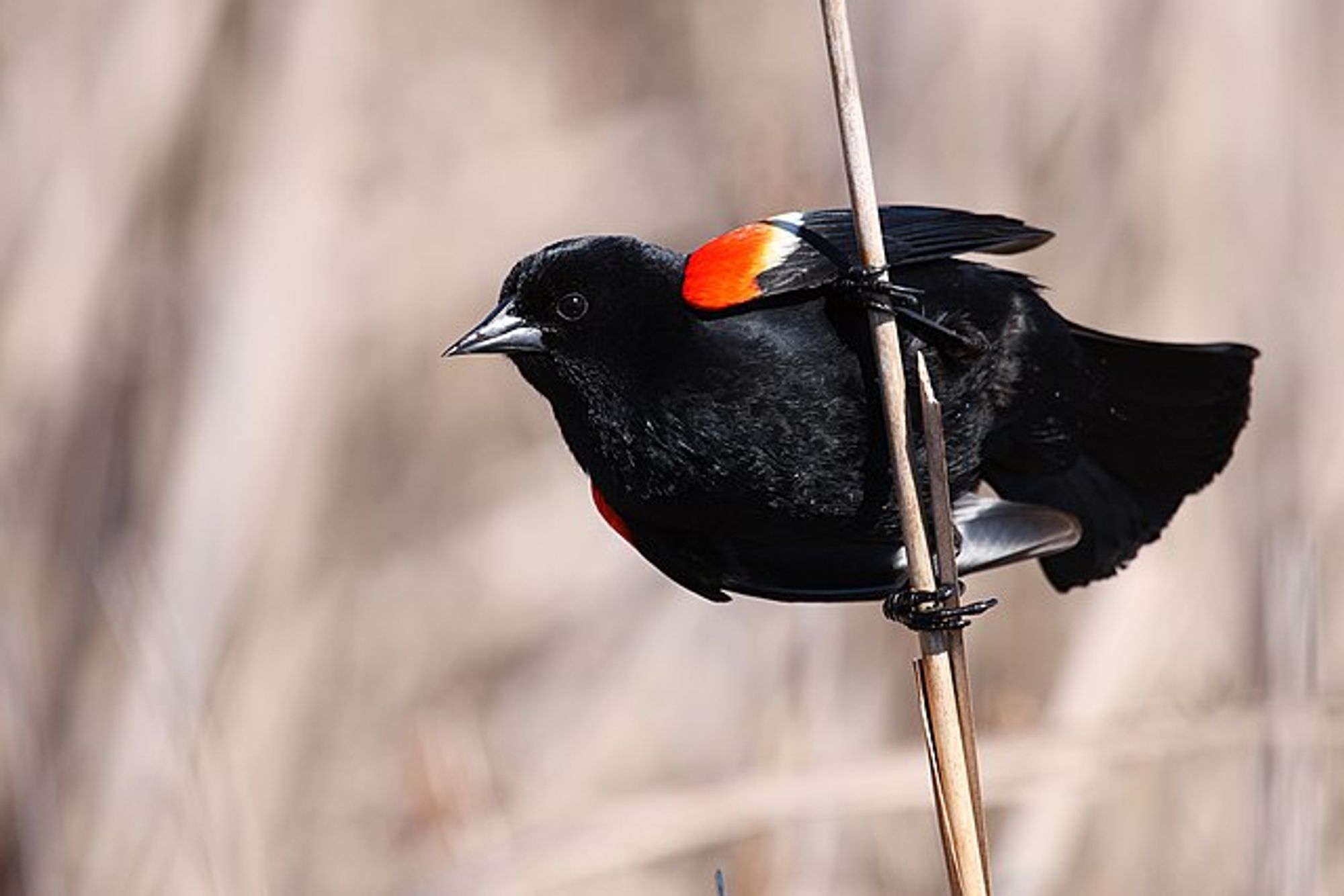
Red-winged Blackbird male, Point Pelee National Park, Ontario, Canada. Photo by Cephas, CC BY-SA 3.0 <https://creativecommons.org/licenses/by-sa/3.0&gt;, via Wikimedia Commons

Here in Guelph, on the boardwalk through Wild Goose Woods a few hours after dawn, the dominant sound is the chirr of red-winged blackbirds, the screeching laughter of northern flickers a close second. Another bird calls its own name: fee-bee, fee-bee. American robins sing cheerily from mid-level branches, and from the nest on the light standard over the playing fields I hear an ospreyโ€™s plaintive cry.

Iโ€™d know where I wasโ€”roughlyโ€”from either soundscape. While Iโ€™m focusing more on what Iโ€™m hearing through necessity and a wish to understand more of the landscape Iโ€™m moving through, looking at all the parts of the whole and not just on birds (I can identify a phoebe by song at the same time Iโ€™m looking at a bloodroot flower unfurling, for example), Iโ€™m also thinking about it in terms of my other life, that of the writer. Of the seminar on worldbuilding Iโ€™ve offered to give here in Guelph in the autumn, and all the things that are part of a convincing fictional world or will evoke a real one. Soundscapes are one of them: part of the whole which both characters and the reader, one hopes, inhabit.

Whether any writer can separate entirely the slice(s) of the world in which they live from their created worlds, I donโ€™t know. I canโ€™t. In this, I can only write what I know. Thereโ€™s a circularity to this: writing has made me pay attention to aspects of the world I might have not noticed; a lifetime spent outdoors whenever I could informs what I write. The Titchwell soundscape?  It has a place in the story thatโ€™s beginning to unfold, and perhaps that book will be just a little richer because my aging eyes have made me listen more and look less. Iโ€™m fairly sure my life is richer, too.

The Last of Norfolk: March 30 – April 3

The last of Norfolk birding for the spring of 2024, at least! We plan, as always, to return.


March 30: A nuthatch yelps from high in a bare oak; coal tits call, โ€˜itโ€™s me, itโ€™s me,โ€™ from low branches. In the meadow a jay forages among shelduck & Egyptian geese. A silver squirrel climbs a stump. The larches are bright green with new growth; new leaves unfurl on the brambles. We’re walking footpaths and lanes at Houghton, a sheltered walk on this windy day. In the sheep field a new statue stands: the figure of a man, or a cyberman, almost human. “Disconcerting, at dusk,” a woman walking her dog tells us. Later we learn it’s part of a new art installation by Anthony Gormley.

Photo by: Mmparedes, CC BY-SA 2.5 <https://creativecommons.org/licenses/by-sa/2.5>, via Wikimedia Commons

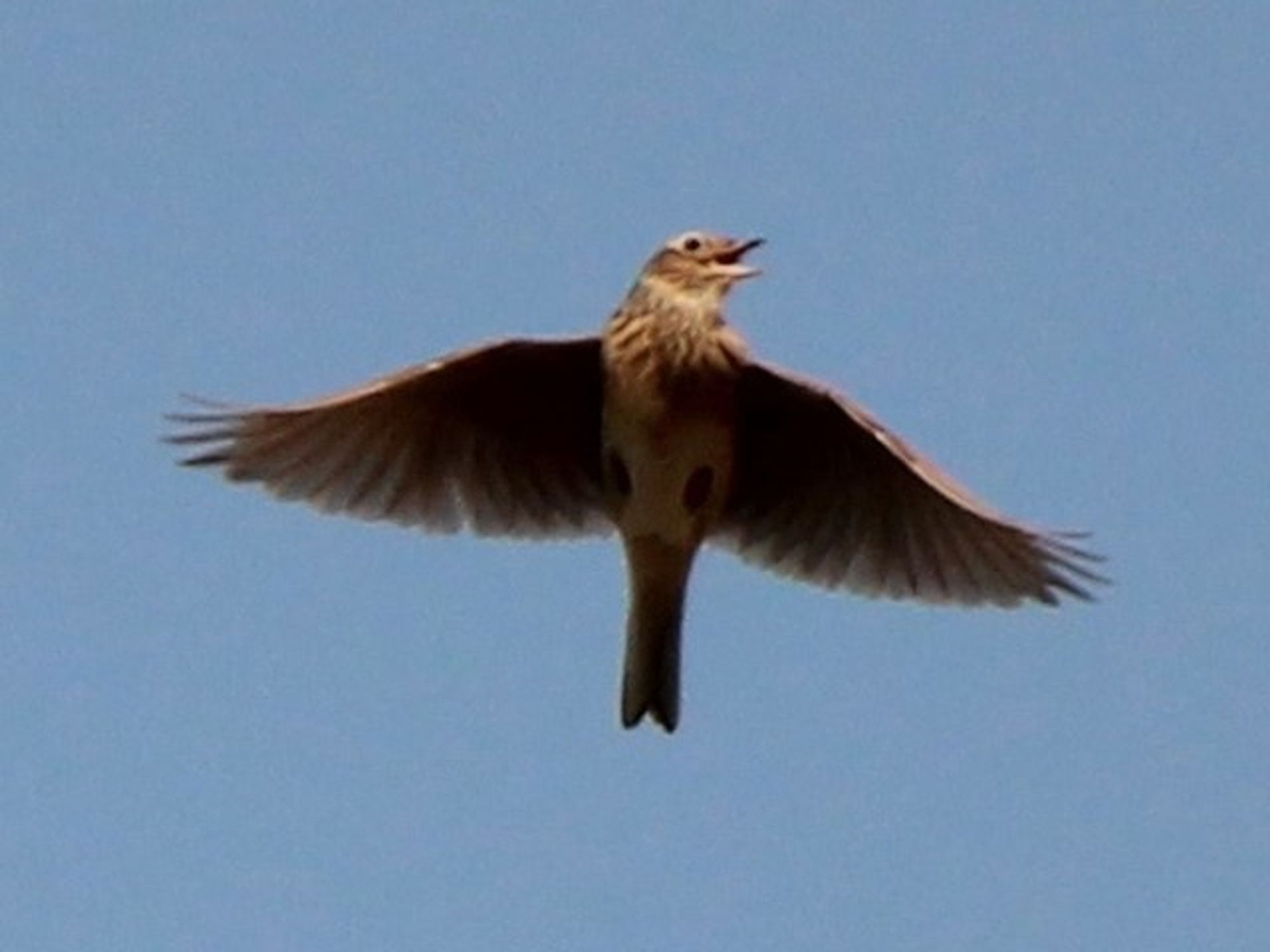
March 31: Drove to visit friends, through countryside and villages. Gulls, common and black-headed, followed ploughs. Pheasant and red-legged partridge, shoot survivors, scurried or flew across hedged lanes. The sound of tires and the barrier of glass & steel couldn’t block out the skylarks, singing, singing. A little owl lives in the barn down the road, our friends tell us; it’s driven out the barn owl.

Alpsdake, CC BY-SA 3.0 <https://creativecommons.org/licenses/by-sa/3.0>, via Wikimedia Commons

April 1: Footpath birding today, along the old railway line, now part of the Jubilee Trail. In Life Woods, the first mallard ducklings of the spring; on Snettisham common, a green woodpecker yaffles from a utility pole. We walk up into Ken Hill’s pine woodlands. A tree creeper circles the high branches of a still-bare oak. From the western height of land, we look out on the distant marsh and the Wash: it’s too wet still to walk out, without wellies. Shelduck are scattered across the wetland, gleaming white. I think about the torcs of the Snettisham hoard, found by a farmhand ploughing the field below us. I went to look at them (again) at the British Museum last week.

Dr W E Lee / Avenue of Beeches, Edge of Ken Hill Woods. CC BY-SA 2.0 <https://creativecommons.org/licenses/by-sa/2.0&gt;, via Wikimedia Commons

April 2: Walked out between farm fields to the mudflats of the Wash. Wrens sang from bramble or reeds every 50 paces; goldfinches twittered from greening willows. In the sunshine, both stonechats and reed buntings announced themselves, males proclaiming ‘this is my territory’.

rkl, CC BY 4.0 <https://creativecommons.org/licenses/by/4.0>, via Wikimedia Commons

Where Boathouse Creek joins the Wash avocets and ruddy turnstones fed on the mud; linnets flitted and fed along the shingle foreshore. On the gravel pits, among the black-headed gulls, pairs of Med gulls stood out, tall and proud. Sunshine, water, breeze.

Later, reading this in Simon Barnes’s On the Marsh, I recognized its inherent truth. I delighted today in red kites and marsh harriers, in singing skylarks and wrens, but mourned for the dead or dying oystercatchers on the mudflats, the lack of lapwings wheeling, the paucity of finches, all the losses.


April 3: Last visit to Titchwell today, under showery skies. Rain or no, the day gave us a bearded reedling in a rare fully open view. In the woods, a blackcap sang its bubbling, lilting song; a Cetti’s warbler exploded both into song and into view, briefly. Out on the freshmarsh, among black-tailed godwits turning chestnut and avocets up to their bellies in the water, a lone ruff, its back mottled chestnut & black, probed the mud.

Ken Billington, CC BY-SA 3.0 https://creativecommons.org/licenses/by-sa/3.0, via Wikimedia Commons

But the surprise of the day was a polecat, never before seen, feeding on roadkill at the side of the A149. We circled back at the next roundabout, took a second look. While our brains said ‘pine marten’; sensibility said ‘not a chance’. A little research revealed the identification. Norfolk, it seems, still holds secrets.

Nicolas Weghaupt, CC0, via Wikimedia Commons

What are the odds? ONE resolution for 2024.

As 2024 approaches, my โ€˜finish by the end of the yearโ€™ list is just about manageable. My โ€˜to do in Januaryโ€™ list isโ€”ummโ€”a little packed. More so than it should be, but itโ€™s so I can take February off completely and go birding in Spain and Portugal.

Exceptโ€ฆI have a book coming out in February: Empireโ€™s Passing, the eighth and last of my Empireโ€™s Legacy series. But it isnโ€™t a standalone, and if people whoโ€™ve read the others donโ€™t find out itโ€™s out for a few weeks, frankly, so what?  Books donโ€™t go bad. My nine-year-old first book, Empireโ€™s Daughter, still sells steadily. There would have been I time I would have worried about not being present online for Passingโ€™s release. That time is past.

Iโ€™m making one New Yearโ€™s resolution this year: to stop overachieving. This past year is a blur. I spent three months nearly 6000K away from home, dealing with the funeral and settling the estate of a cousin, learning to navigate a new legal and tax system, clearing the house, selling the house. And writing a book, because I had promised it would be out, and I was going to honour that promise.

 I also wrote five short stories, four for an on-line magazine (of which I am also the webmaster) and one for an anthology. And edited three other books. And chaired and edited our community newsletter, co-coordinated a writing group, read and reviewed a number of books for a book tour company, drove a van with my nieceโ€™s furniture to Nova Scotia, took a cousin on a ten-day driving holiday, developed and ran two full day planning sessions for a community group, gave a guest lecture in Philadelphia, kept up (well, sort of) with my two blogs and my newsletter, and tried to maintain some sort of social media presence. While attempting to learn Spanish, volunteering for another community writerโ€™s group, and doing in-person book sales and open mic nights. Are you tired yet?  I am.  And not just from this year.

2014 โ€“ a decade ago, nearlyโ€“ was a watershed year for me: a year in which I was diagnosed with Stage 3, high-grade cancer. It was also the year in which my publisher went out of business, the rights to Empireโ€™s Daughter reverting back to me. In that year of surgery, radiation, and chemotherapy, I got Daughter ready for self-publication (I wasnโ€™t going to spend another two years querying again โ€“ I didnโ€™t know if I HAD another two years). While renovating the house, driving myself back and forth to radiation (an 80 k round trip, five days a week, for five weeks), and doing almost all the grocery shopping and cooking.  Are you rolling your eyes yet? But I was determined. Life went on as close to normal as it could, I learned to create an epub, and then format a paperback, and navigate KDP.

Two weeks after my chemo ended, we flew to Texas to go birding. Then I went back to work for a short time, and took official retirement, as did my husband, on the 15th of May. The next day, we flew to England for a month. Then we came home, bought a new house in town, and put the country one up for sale. My father had died (at almost 99) that winter of my treatments, and I helped (a bit) with clearing that house, as well as packing up our own,

We moved. I started volunteering with the community newsletter, and with a local writing group. I started the next book, and a blog, and then another one. I walked a lot, biked, and birded. I started editing and formatting books for others, and began a small imprint that has now published my own eight books and five for other people. We went to England in the winter to walk and bird. I took a lot of on-line university courses, on Roman and medieval history, and on landscape archaeology.  I read a lot of books, and wrote a few more. They were short-listed for and/or won a bunch of awards, which was nice.

We travelled, a lot: Australia, Fiji, New Caledonia. The Caribbean โ€“ ten islands in ten days, or close to it, for birds. Japan, Taiwan, Mongolia, for the snow leopard I thought Iโ€™d never see. Rome, for me, for research. And always England, for ten weeks or so each January to March.

One year I flew back from England for four days for my brotherโ€™s funeral, a too-quick, too-young death from cancer. Then I went back, and kept writing, and walking, and birding, because thatโ€™s what I do, and came home and kept on doing what it is I do here, too. You donโ€™t waste second chances, and I got one. My brother didnโ€™t.

And then came COVID, and the world changed. I wrote more books, of course. Social media became more important, just to talk to people and make connections. Zoom became part of my life: the community newsletter meetings, the writing group meetings, even family. Until this year.

Maybe a younger person, or a better organized one, could have juggled things better. Maybe I should have just admitted Iโ€™m 65 years old and I donโ€™t have the physical or mental energy I once had. And it did all get done โ€“ the newsletter and writing group meetings done across time zones 5 hours apart; the newsletter layouts done and PDFs made and emailed for printing; the social media posts scheduled, the Amazon ads planned and monitored. Books were read and reviewed. Short stories were written. The English estate was settled, the house sold, the legacies distributed. Empireโ€™s Passing was finished, and beta read, and edited (and edited and edited) and formatted. Maps got drawn. I even went birding, and wrote some blog posts, and did all the other things I listed in the fourth paragraph.

But Iโ€™m tired, as I said. Itโ€™s enough. Itโ€™s more than enough. Iโ€™ve proven, mostly to myself, that I could do what I always wanted to, and write good books, and the series is done. Iโ€™m not planning to stop, but I am going to slow down. (My husband is laughing, by the way. He doesnโ€™t believe me.) More reading. More photography, maybe a return to some artwork and some poetry. Things Iโ€™ve neglected. Less productivity. Fewer social media posts, probably fewer blog posts. Some new learning, and some โ€˜getting to know youโ€™ stories about new characters. Longer walks. A slower life.

Think I can do it?

Image byย Gordon Johnsonย fromย Pixabay

December Diary II: At the Turning of the Year.

Six days past the solstice, and the daylight lasts a minute longer than it did on that shortest day. Weโ€™re still in the period when the change is barely perceptible. It wonโ€™t be until early January that the gain will rise to over a minute a day. It feels almost as if the world has paused.

Maybe itโ€™s this sense of stopped time, at the darkest time of the year, that drives so many people to be frantically social, an atavistic response. Safety in numbers, safety in the lights inside and out, presents given and feasts offered to strengthen social bonds.

In nature, itโ€™s a time to be wrapped up tight, if possible. Itโ€™s not been cold enough this year for mammals to be curled up asleep in dens or dreys; squirrels are still out foraging, the beavers are still cutting down trees. But most insects are dormant, and seeds wait for spring, on or under the soil, or wrapped in a protective layer of cells soft or hard: berries, cones, shells.

The last few days have been either raining or foggy. Red squirrels seemed annoyed by the weather, scolding at me with more vigour than usual. Smaller birds fed almost constantly: juncos among the grasses; starlings on the berry bushes; pine siskins at the cones. In Wild Goose Woods the drum of a pileated woodpecker searching for insects echoed against bare trunks. Only the crows were apparently unperturbed by the damp.

When I first saw the crows, I thought there were two, huddled together in the fog on the top of a glasshouse frame. Two became three, and three became four. They hopped around a bit, made a few conversational caws. And then they took off, all four of them, with purpose and wild, angry calls, to intercept a raven flying by.

They twisted. It dived. They followed. It ascended. They spiraled upward, still shouting. The spinning, sinusoidal dance repeated three times, until the raven had had enough. It arrowed away, the crows following for a few meters. Then they turned almost as one, and flew leisurely back to perch again, a gang of ruffians causing havoc just for fun.

The raven flew east. As I will be, in just over a week, east and 9 degrees of latitude further north. Where the daylight is an hour less than it is here…but for the three paradoxical months where, here, the hours of sun are longer but the air is colder and the world swathed beneath snow, it will be warmer. There are already snowdrops out, and on fields and in woodland and on mudflats and beaches, the northern birds that have come south to Norfolk from Scandinavia are feeding. Pink footed geese and redwings, shore larks and snow buntings. Godwits and redshanks, and, in numbers beyond counting, golden plover and red knots and oystercatchers on the bare mud of the Wash.

January 27, 2023

December Diary 1

University of Guelph Arboretum: first week of December.

Fifty-four years ago, this place where I walk and bird was officially designated as the Universityโ€™s arboretum. The land, home first to the Haudenosaunee, Anishinaabe and Attawandaron peoples, and later part of the three million acres ceded to the crown by the Mississauga of the New Creditโ€™s Between the Lakes Purchase Treaty, No. 3, had been farmed since the 1850s by the Hamilton family. In 1910, they sold the farm to the Ontario Agricultural College as a research farm.

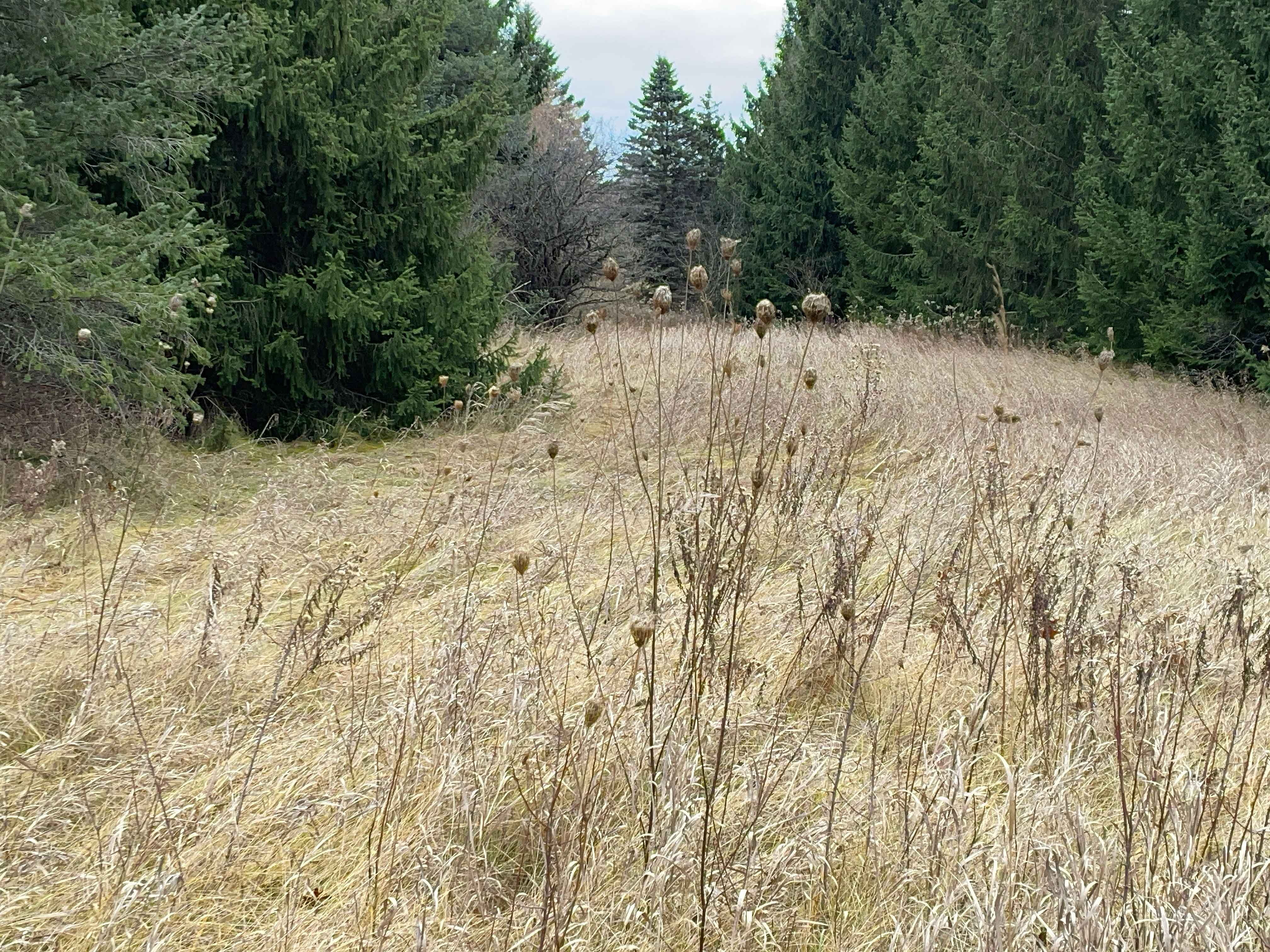
Traces of this use still remain: a collapsed stone wall โ€“ likely dating from the Hamiltonsโ€™ years, the old post-and-wire fence lines: these are the most obvious. But other relics are being claimed by the wild, hidden among the trees and shrubs: the gate on the path that used to be a farm road; a cart, left at the side of a field and forgotten; a roller. The metal rusting into the soil, the rubber breaking down, aided by sunlight and bacteria, slowly, slowly.

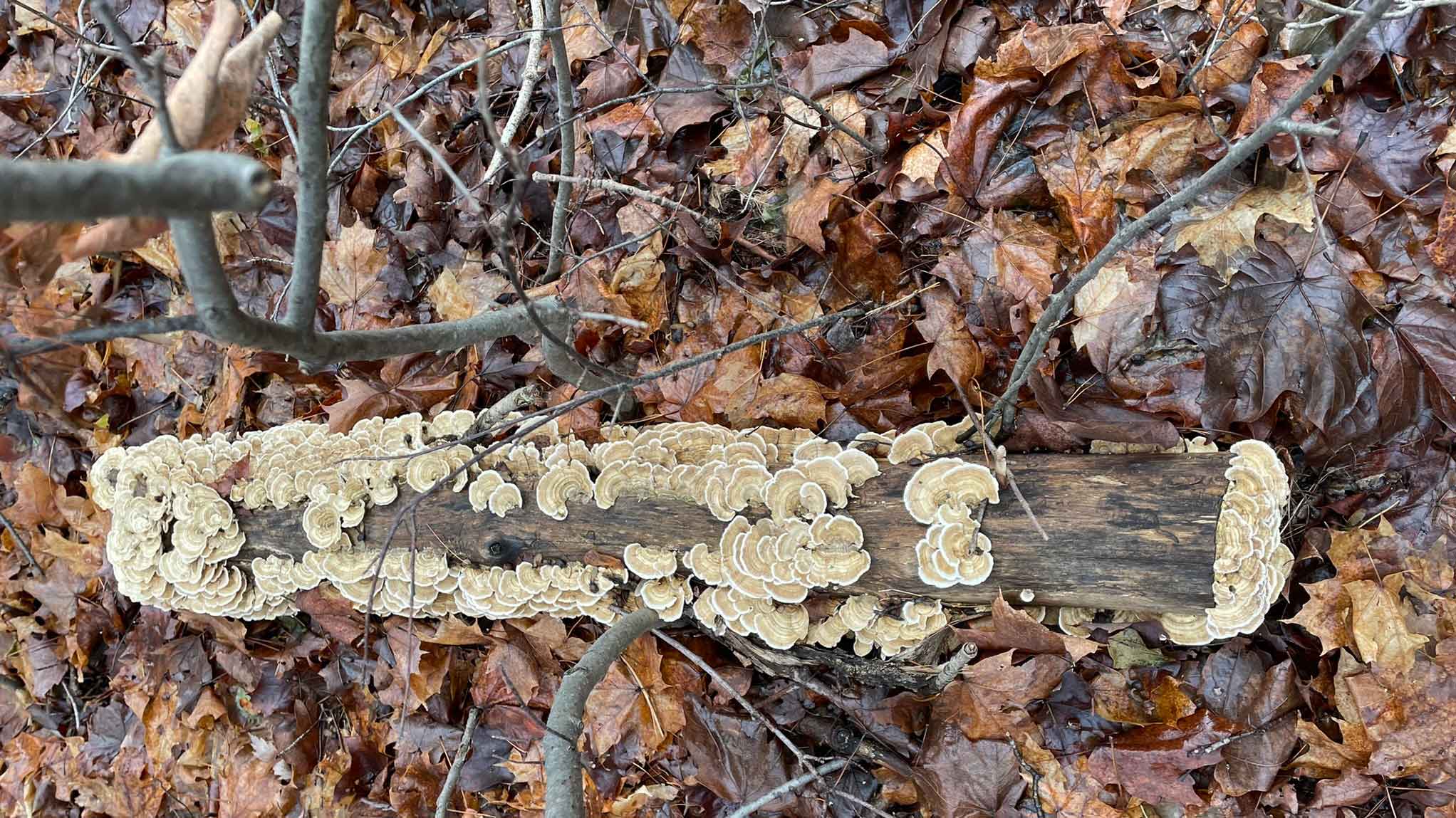
In these shortening days of December, the fecundity of summer gone and the world laid bare, the processes of decayโ€”a word loaded with negative meaningsโ€”are on display. Saprophytes are working their necessary transformation on wood both fallen and standing; unlike the brief fruiting bodies of mushrooms that appear in the autumn, these fungi arenโ€™t ephemeral. They spread along trunks and across fallen logs, lines and layers of living tesserae, rippled and curved.

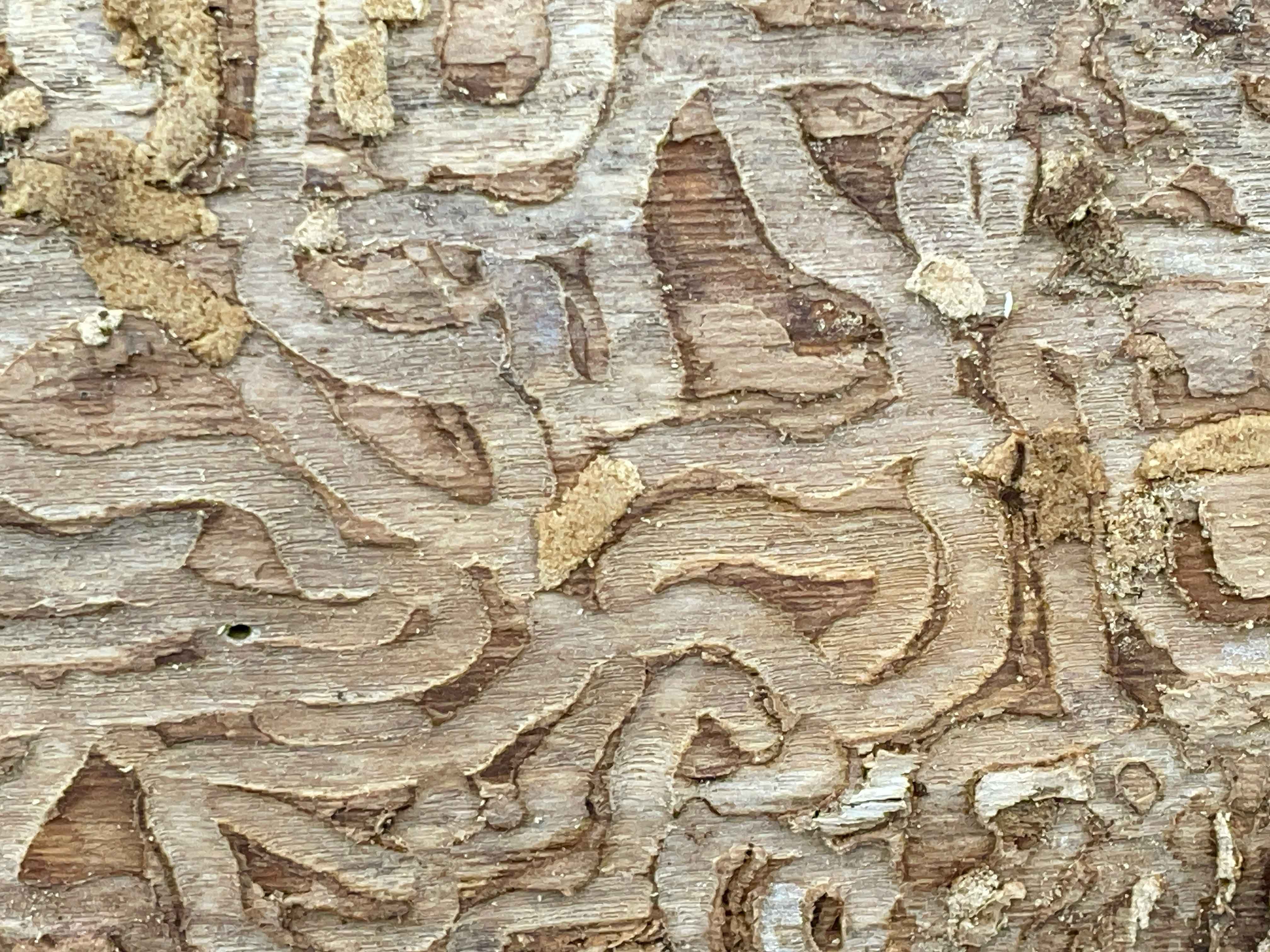
Hidden behind barkโ€”until it loosens and fallsโ€”bark beetles create mazes of intertwining paths on the phloem, a traced, random, undecipherable writing, telling a tale of slow death for the tree, life for the beetle. The Janus-faced interdependence of life and death.ย 

The next ten days will have less and less daylight, until the world turns again and midwinter’s darkness begins to oh-so-gradually give way. But longer days won’t ease the cold and snow for many weeks. Will the young red-tailed hawk who has learned to catch squirrels survive when they’re sleeping deep in their dreys? Blood will stain the snow; scattered feathers tell their tales; trees will be stripped of berries. Curled together in their lodge, surrounded by the ice of Wild Goose pond, the beavers will sleep.

November Diary – last day of the month.

November 30: University of Guelph Arboretum.
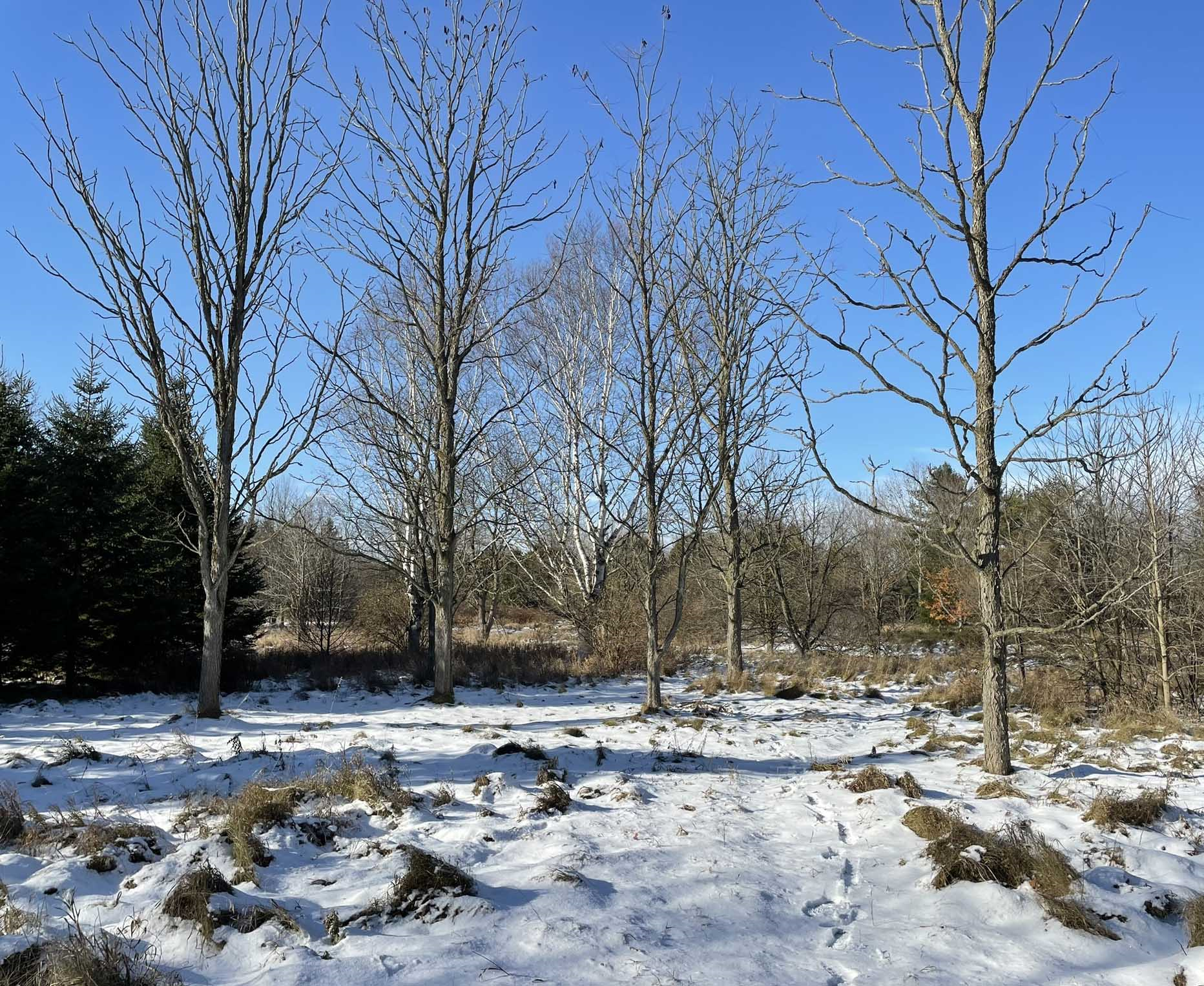
Snow squalls, or, rather, the high winds associated with snow squalls kept me close to home for a few days. But the last day of November dawned still and sunny, with morning temperatures just above freezing.

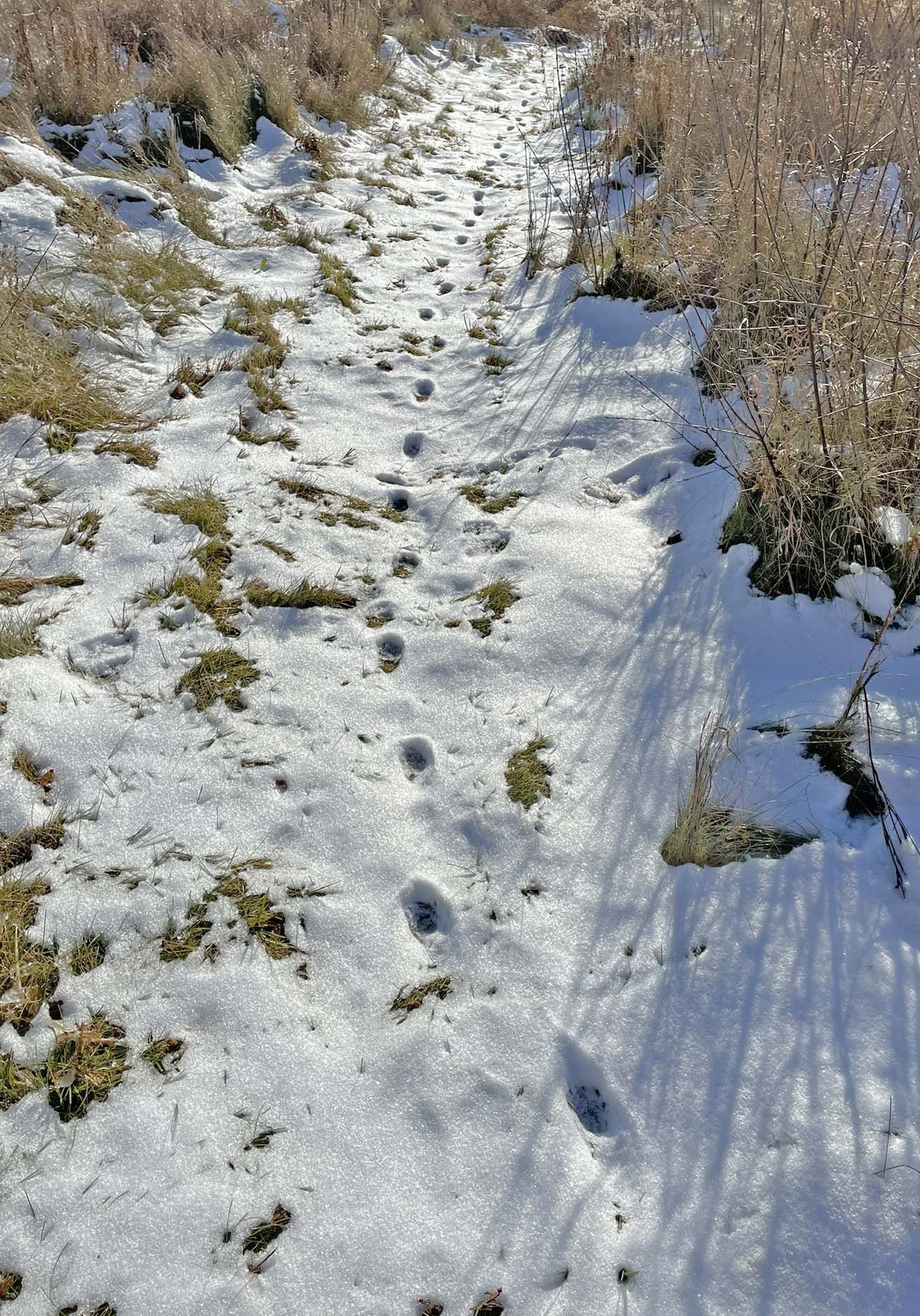
The Arboretum was quiet, but snow tells tales. Many bootprints, one set of ski tracks, lots of dogs. But there were also canid prints on paths where no human had walked :

Coyote on the left, the prints slightly offset; fox on the right, the prints a straight line. (I think.)

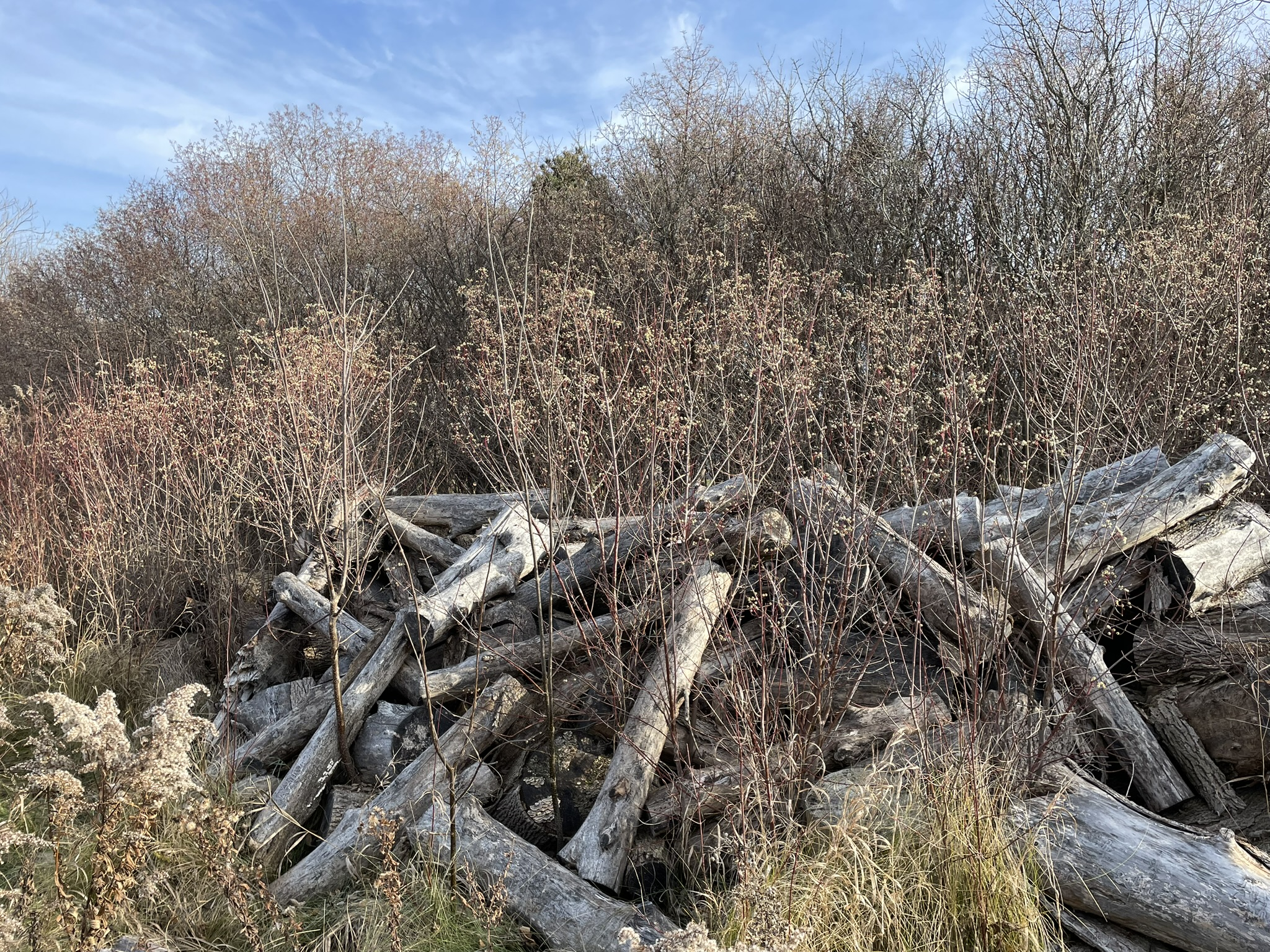
That woodpile I thought would have many creatures using it for shelter?

One set of squirrel tracks.

But the day had other compensations.

December tomorrow, and the beginning of meteorological winter. A month where I need the quiet and space of the Arboretum and other natural areas more than usual, to escape the world, which, in the weeks leading up to Christmas, is definitely ‘too much with us…getting and spending…’ I will, instead, go in search (in Annie Dillard’s words) of the ‘unwrapped gifts and free surprises’ waiting for me in the fields and woods.


November Diary 3

November 20: University of Guelph Arboretum

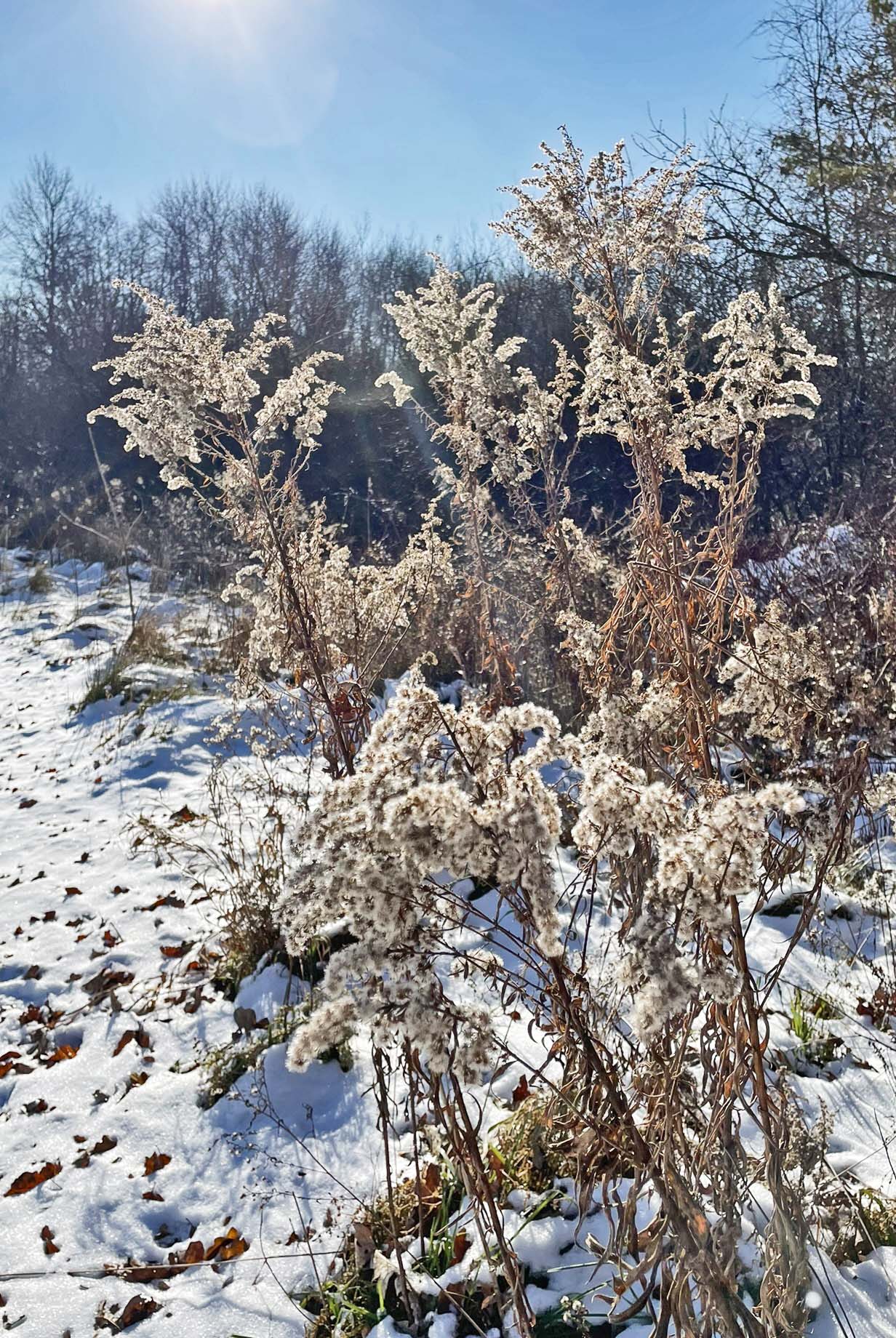
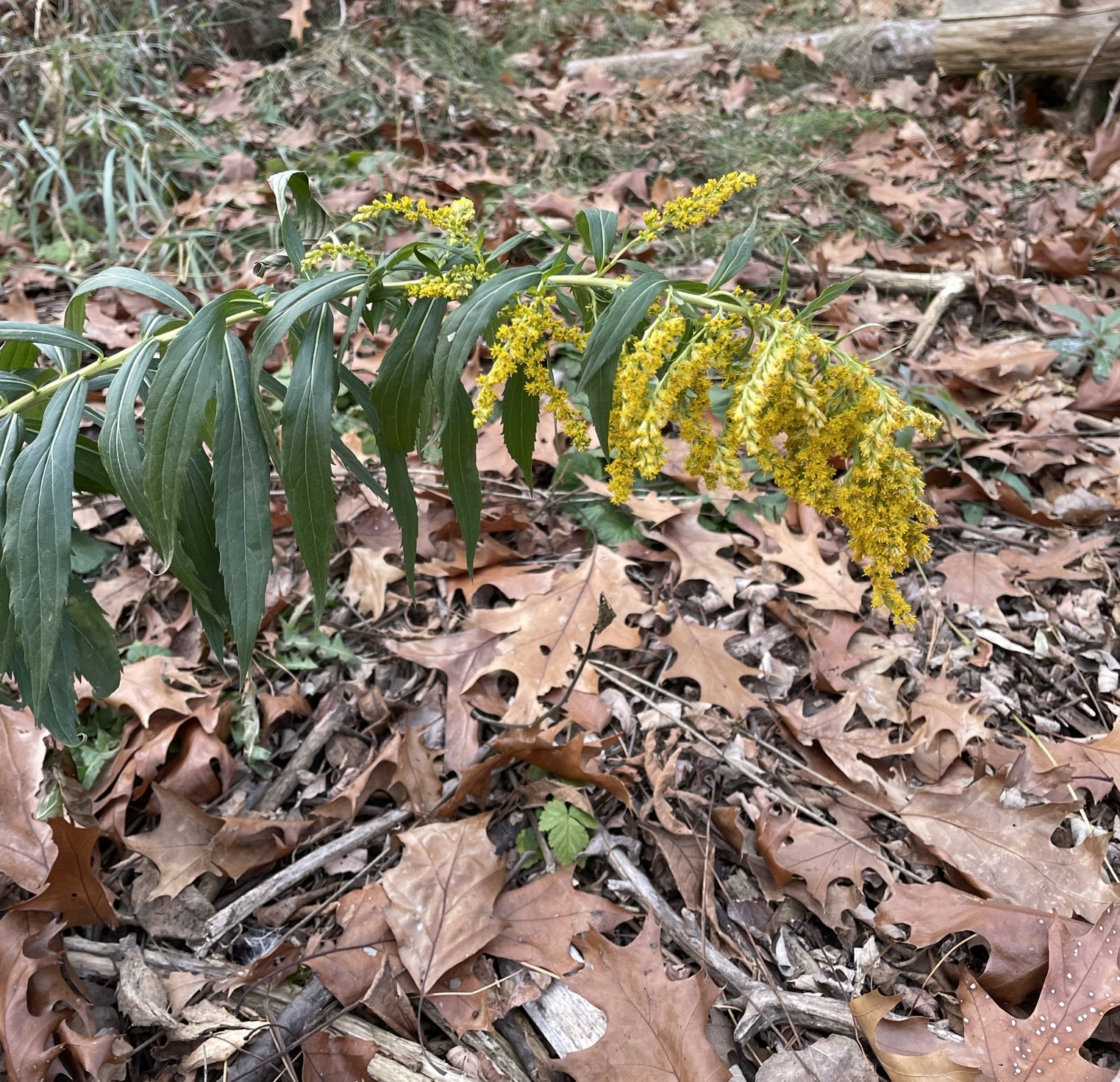
Regardless of the hard frost, a few goldenrod plants are still flowering, bright against the brown leaves. As are the bright red berries of a shrub I can’t identify. The goldenrod is wild, wind or bird seeded; the shrubs are planted. One is likely more appreciated than the others by humans, but I know which the chickadees prefer.

November 22: University of Guelph Arboretum

Neither flowers nor berries were needed to enhance this landscape: the diffuse light, the time of day, the copper and gold of goldenrod and grasses combined were enough. The field glowed.

Further along the path, the white-berried bushes – grey dogwood? – were full of birds. First a flock of starlings, sounding like rusty hinges and oblivious to my presence (or simply not caring); then a dozen robins arrived. Starlings and robins mixed without issue, but in a close bare tree, ten bluebirds (or greybirds, on this cloudy day) waited for the larger birds to leave.

The deciduous trees are bare now, except for the few beeches and oaks still hanging onto their brown leaves. November begins to show us the hidden things, nests in the forks of trees and shrubs, wasps’ nests hanging from branch tips, and high in a maple tree near the old quarry, a porcupine, too far away for my iphone camera to capture anything but a lump.

The last surprise of the day was the fruit of an Osage Orange (Maclura pomifera) at the edge of a hedgerow, their almost lemon-yellow colour standing out against the leaves. Three fruits, scattered across a small area. The closest (and only, I think) Osage Orange tree in the Arboretum is some distance away. I expect these were human-gathered and human-discarded. Will they be there the next time I walk this path?

November 24: University of Guelph Arboretum

First snow, a bare sprinkling arriving mid morning. The air is crisp still at 10 am. I round a curve on one of my favourite paths and freeze. On a waist-high stump not more than 6 or 8 meters from me, a young red-tailed hawk is devouring a squirrel. (The picture below is a terrible record shot, but it’s the best my phone could do.)

I watch the bird through my binoculars for several minutes, its head dipping, the strong yellow beak tearing at flesh, the head rising again, the beak red with blood and meat, the ripple of the throat as it swallows. The hawk is hungry after the cold night, and pays me no attention at all. Even when I move again, it just keeps feeding.

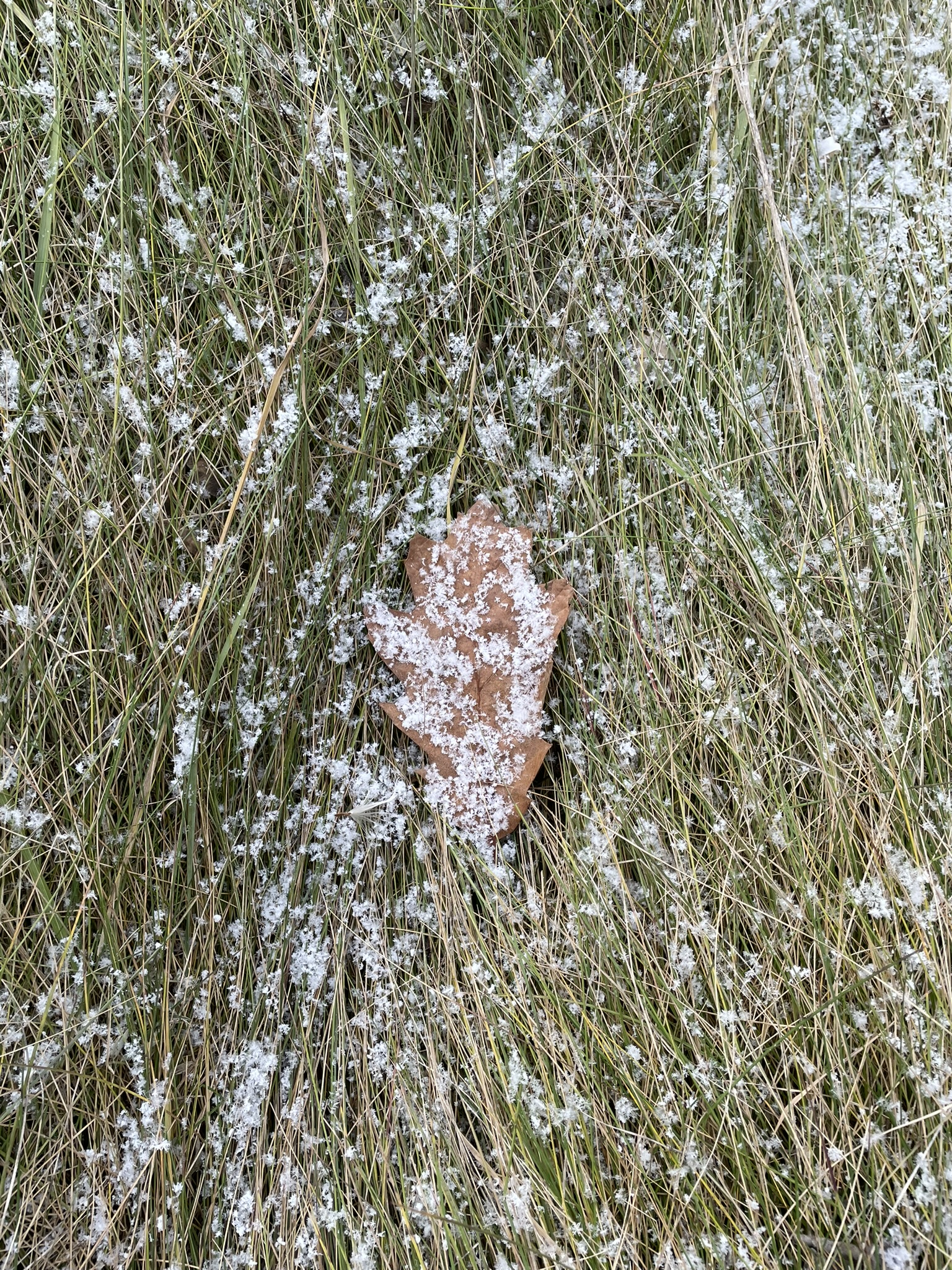
I walk my usual route, looking at the patterns of snowflakes on grass and leaves, hearing juncos and chickadees and crows. When I return to where the hawk was, forty minutes later, there is nothing but a few wisps of fur on the stump.

November 26: University of Guelph Arboretum

Still sluggish after my COVID shot, I walk slowly around my favourite paths. This location intrigues me: the pile of logs, the perennial plants, the white-berried shrubs (gray dogwood again?) behind them makes for excellent habitat. (The shrubs are full of cardinals this morning, feeding.) If there’s snow on the ground before we leave for England in early January, I’ll come back here to look at the tracks leading in and out of the logpile, to see what stories they tell.

When I’m almost back to the car, the many shades of brown of these red oak leaves catches my attention. On a cloudy day, they probably wouldn’t have, but in the morning sunshine they gleam, a patch of subtle beauty easily overlooked.

November Diary 2

November 14: Rural Roads

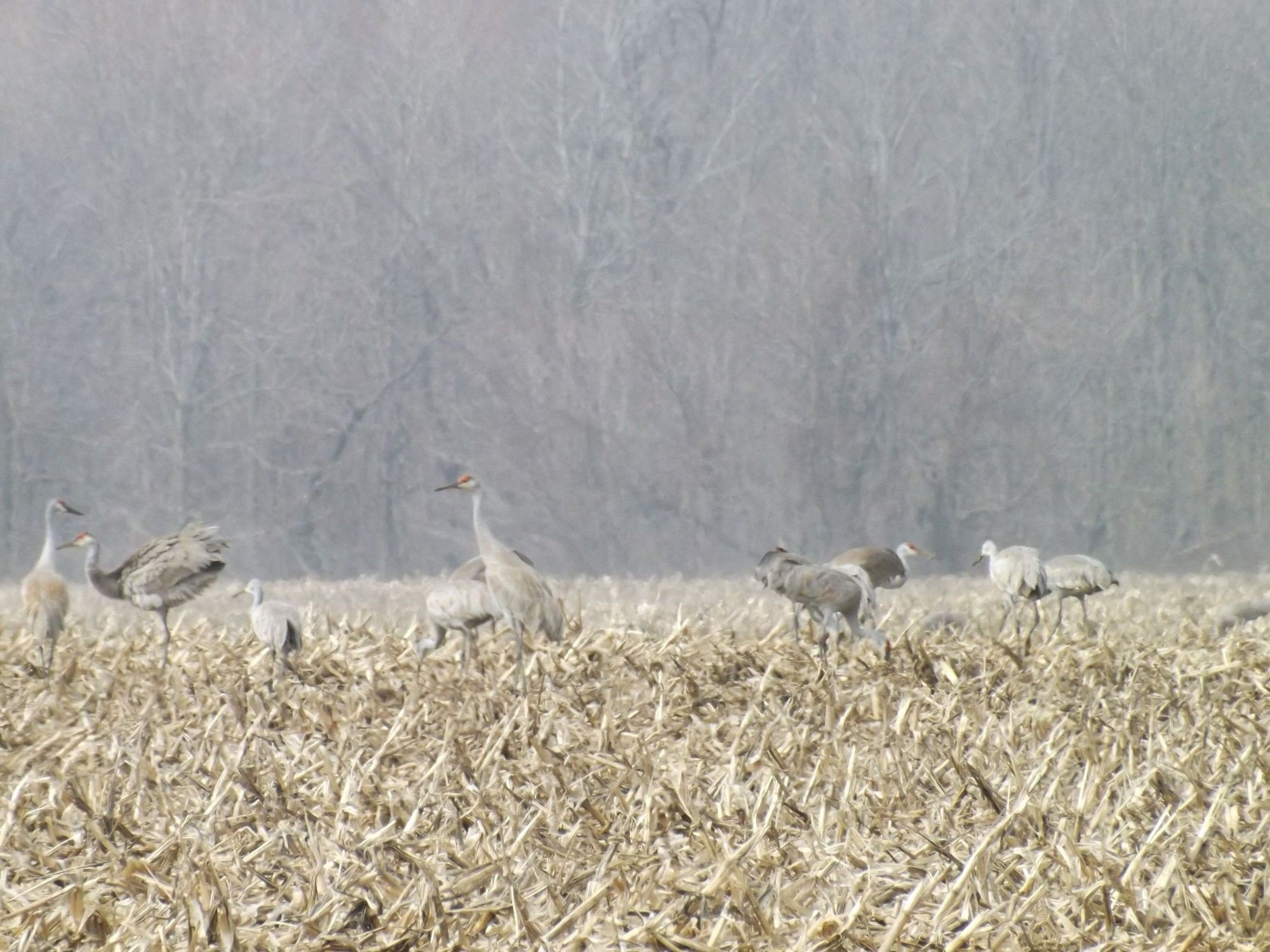
Five sandhill cranes flew low over Glen Morris road, arising from the corn stubble to my left. Not calling their haunting cry, but still a sight that makes me catch my breath, and reminds me, every time, of the beauty there is in the world.

November 16: University of Guelph Arboretum

The small pond is frozen, surprisingly, a thin skim of ice over its surface. Juncos chip from the reeds surrounding it, flying up, white tail feathers flashing, to the cedars at the side of the lane.

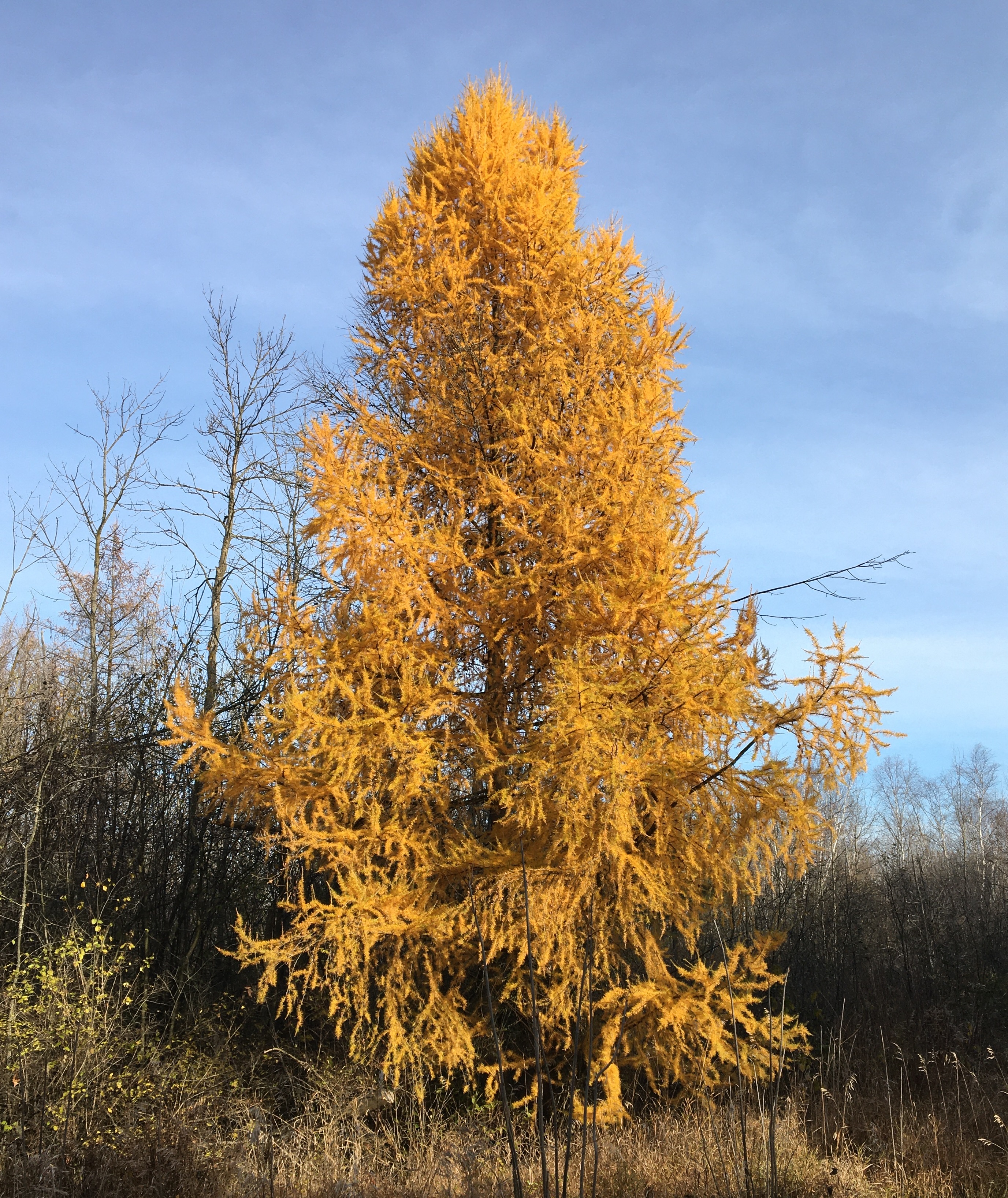
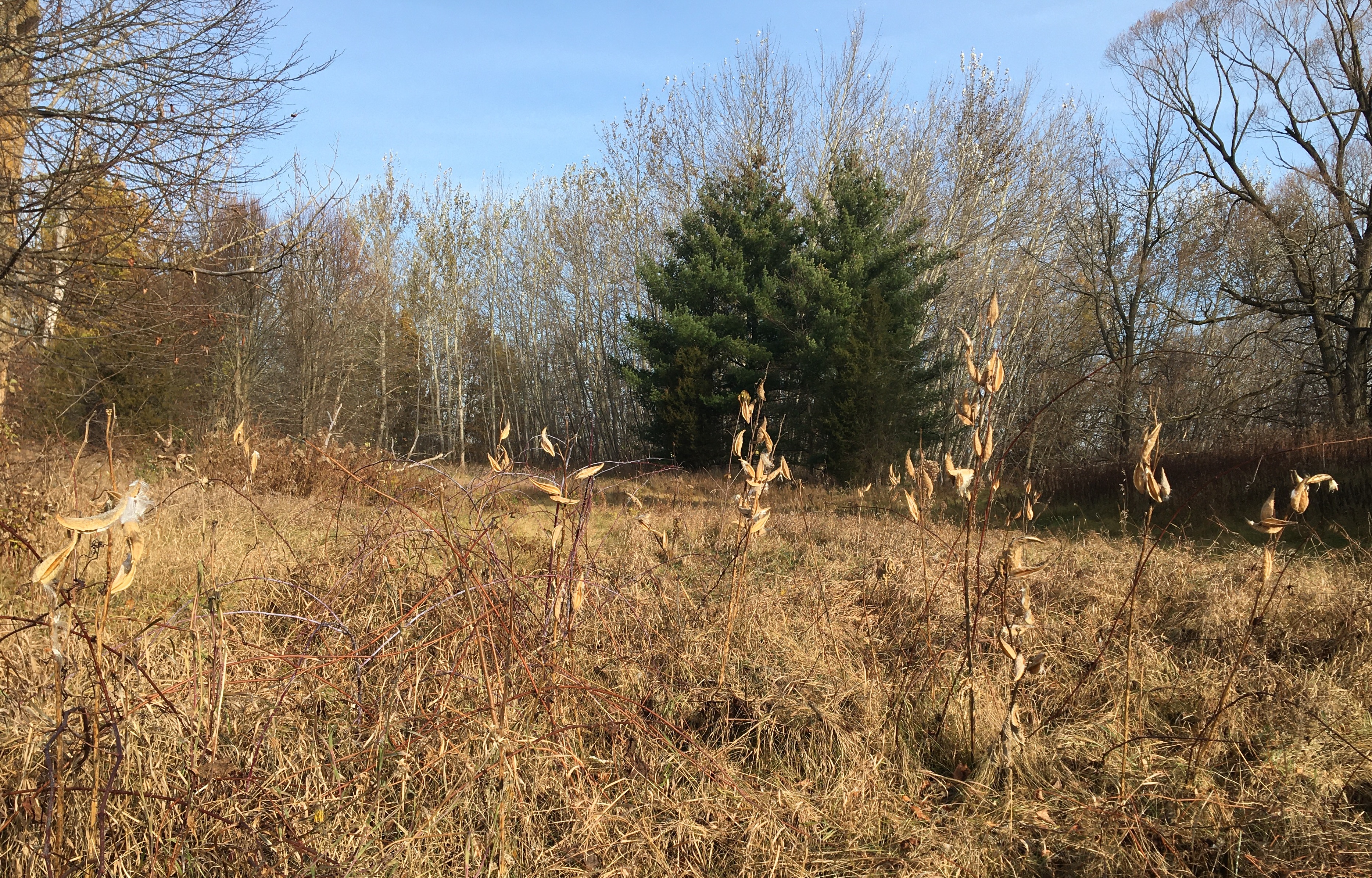
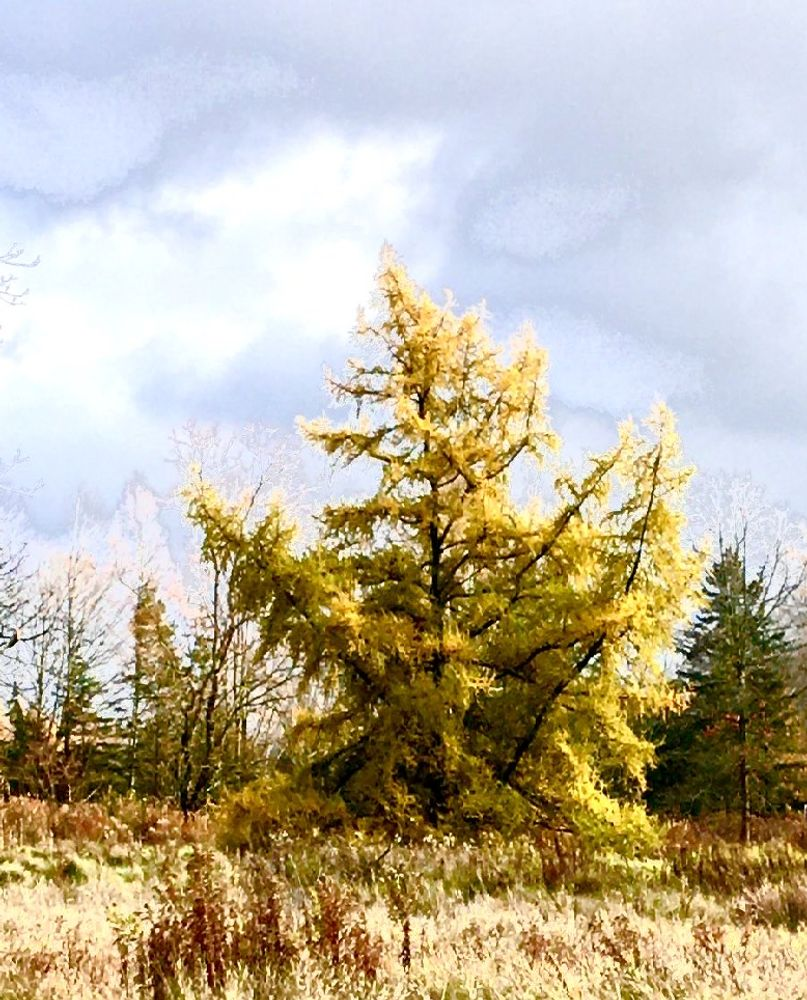
Further along the track a larch is brilliantly gold against the sky and the bare trunks of other trees. Goldfinches, drab in comparison in winter olive, flit among branches; chickadees feed low on the galls on goldenrod stems, the plantsโ€™ flowers, once as brilliantly yellow as the larch or as summer goldfinches, now turned to fawn fluff. Milkweed pods are stripped bare.

On the path through Wild Goose Woods, a wood frog hops clumsily away at my footfall, landing badly, struggling to right itself. The air temperature is perhaps 7 degrees C; the frog is cold.  I donโ€™t expect to see a wood frog in the middle of November. Iโ€™m too surprised to get a picture before it disappears into the underbrush.

Iโ€™m hoping for brown creeper at the maple swamp, but I neither hear nor see one. But a deep โ€˜gronkโ€™ breaks the silence, repeated three times, then another triplet call, then a third. I canโ€™t see the raven, but it’s thereโ€”and the crows know it too, their mobbing call gathering more of their kind to harass the raven. A single unkindness, and suddenly a murder.

November 18: Guelph Lake Conservation Area

Long shadows, even mid-morning. Thirty-two days to the winter solstice. The woods are quiet, not even a chickadee calling. Leaves crunch underfoot.

Scattered along the old fencelines are apple trees, chance-grown from apple cores tossed by a farm worker or buried by a squirrel. The apples still hanging glow yellow in the bare branches, like Christmas ornaments; more lie beneath the trees. Little seems to have eaten them: no foxes, no coyotes? On the paths where I usually walk, evidence of fruit consumption is clear wherever there is coyote scat (and it’s always in the middle of the trail); not here, further away from the city. Why?

I come out of the wood into old fields. It’s 2 or 3 degrees C, and the breeze strong. A raptor catches my attention, soaring above the fields: a buteo, but not a red-tail. Three or four wingbeats, a short glide. Repeat, and repeat. The tail is barred, I note. The bird turns, and the low sun illuminates the rufous breast: a red-shouldered hawk, hunting voles, perhaps.

The path enters old deciduous forest, bordering an arm of the lake. Still silence here, except for the harsh cry of a red-bellied woodpecker, and another. The trail turns, drops down into cedars, and at a stream crossing there are, finally, chickadees, and the chip of juncos. The slowly-flowing stream is surrounded by green, even on this mid-November day.

There should be a counting rhyme for bluebirds. One on the bluebird box, two in the sky… They are landing and leaving, one by one, from on top of nest box, CW64: the one in which they were raised? Or simply a convenient stop on the way to the trees by the little pond? I count seven there, before they flash away, cerulean and russet, and I lose track of them.

November 19: University of Guelph Arboretum

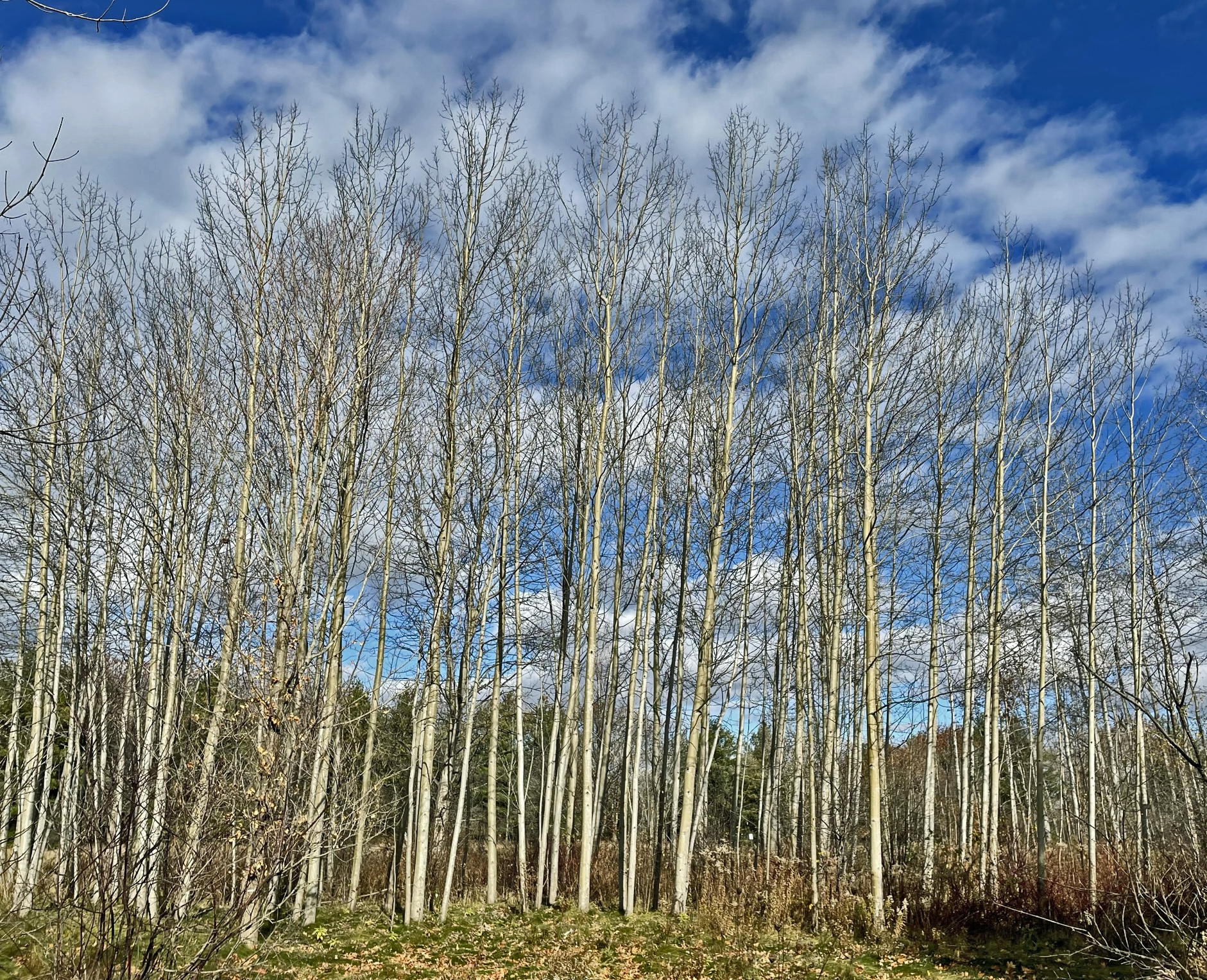
Cold and bright this morning, and quiet out in the fields and woods. The birches that look so white when viewed without comparison are creamier than the clouds. Birds that echo the birches’ colours — chickadees, juncos — are calling from the shelter of cedars.

Squirrels are everywhere, both the black and gray morphs of the gray squirrel (and almost every combination of gray and black and fawn and white you can think of — there are black squirrels here with white stripes in their tails; squirrels with fawn bellies and almost-red pelages, even one with a tail ringed like a raccoon’s), and the smaller, fiercer red squirrel, mortal enemy of the larger grays. Every bustle in the hedgerow is a squirrel, unless it’s a chipmunk. And every few meters along almost every path are the gnawed-off shells of black walnuts, autumn bounty fattening the squirrels for winter survival.

November Diary 1

November 3: Paths beckon in sere November, when the bones of things begin to show and the light slants and shortens.

November 5: Frost overnight, roofs and grass sparkling pink at sunrise: a few hours later, a garter snake on the path through Wild Goose Woods, unexpected.

November 8

A larch glowed in the fleeting November sun. Close to where I stood, eastern bluebirds flitted from tree to tree, their breasts the colour of autumn oak leaves, their backs and heads refracting the sky, as mercurial as the day.

November 10

Wild Goose pond was still, no ripple of beaver or muskrat or mink, no green heron stalking its edges or mallard leisurely gliding. Above me, the cacophony of a flock of starlings, like a hundred keys turning in rusty locks. Quiet water, loud air.

November 11

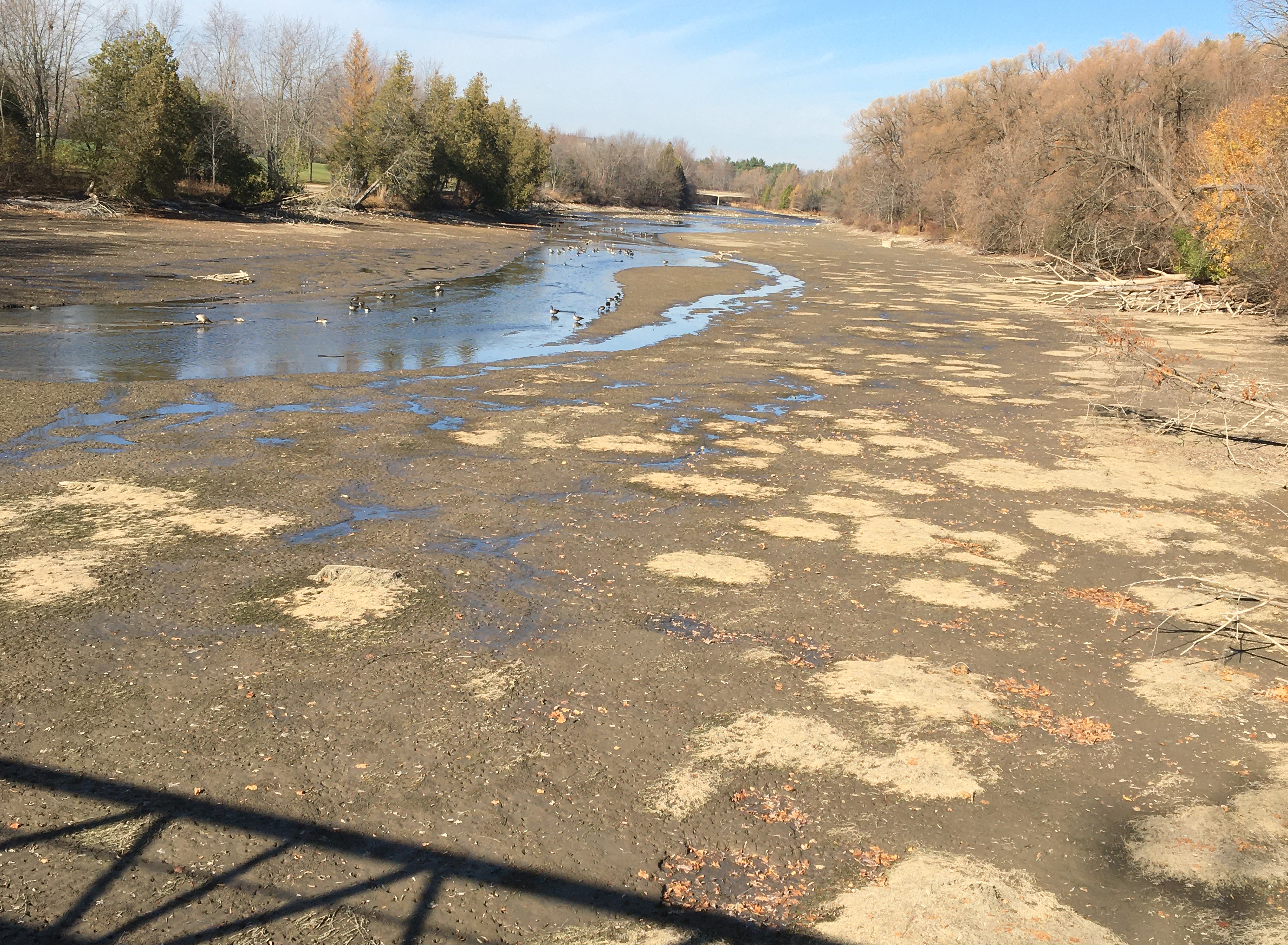
The dam on the Speed is out. Among the rocks and debris scattered in the mud of the river channel, mallards feed. One, in flight, drops diagonally to the water, its descending quacks mirroring its trajectory. By the footbridge, a blue heron stands on one leg, head tucked, motionless, prehistoric, more like a shaggy, shedding tree than a bird.

On the wooded east bank path, a red squirrel is a quivering embodiment of frustration, frantic, angry. It circles and chatters, whipping up and down a cedar’s trunk, returning to a hole to thrust its head in. My approach scares it off. I stand, watching. An eye appears, dark, ringed with pale fur. A nose. A head emerges: another red squirrel. It slides out, glances around, slips down the trunk and away. What disagreement, what trespass, did I disturb?