Reclamation

Three months away from a house we’ve only lived in for seven months is disorienting.  Where do we keep the measuring cup?  How does the shower (newly installed only six weeks before we left) work? We’ve actually spent more time, in total, in the English cottage than we have in this house.

But the patterns of life return, although I still haven’t sorted the light switches out. We reclaim this life, just as we reclaim the English life in the first few days there: the familiar walks, the regular grocery store, the local butcher. Some things are easy, some are harder: bird song falls in the latter category. I’m not musically intelligent: I relearn most bird song every year, in both countries. Walking at the Arboretum yesterday, I had to drag goldfinch and a variant chickadee call out of the depths of memory, and confirm them with sightings of the birds.  (Red-winged blackbird was ok, though.) Same at the other end: which tit was that?  Was that explosive chatter from the reeds a Cetti’s warbler or just a wren?

I walked downtown this morning, for the exercise and the familiarity, to my writer’s group.  Reclaiming pathways, re-connecting with friends. Readjusting, to Canadian architecture, to cars on the other side of the road, to the relative newness of permanent human influence on the land. The Basilica is lovely, perched on its hill, but it was built in 1875: the church in the village in England dates from the 1300’s, and there was an earlier church on the same site. It changes the feel of the land, that embedded history, and the access that footpaths and bridleways, droves and byways, give to the countryside: big loops through farmland and heath, marsh and woodland, almost all off-road.

I miss various things about my Canadian life when I’m in England: friends, my cats, the cultural life of the downtown here; my own study, the university library.  Odd things: bulk food stores, for spices and bean and flour.  My favourite cafes, the art-house movie theatre, the bookstore.  But the reverse is true too: I miss the English countryside, I miss Mastermind and University Challenge, I miss the books I can buy there but not (easily) here: books of nature writing for which I’ve found no equivalent in North America (Trevor Heriot comes close); books of obscure, localized history.  I miss the easier acceptance of special interests and eccentricities: almost everyone connects with birds in some way, even if they’re the model airplane enthusiasts flying their machines in the field beside the nature reserve, or the metal detectorists out searching for Roman coins and Anglo-Saxon treasure.

Each trip changes me, in ways I often don’t realize at first. Simple things: I took one suitcase, holding both my clothes and my writing and research materials, and I still had too many clothes…so why are my closets so full in Canada? No films worth seeing at the market town’s cinema?  Use the library’s video collection. But it goes beyond that: at least in the villages and the countryside, life is slower, more patient: cars let others by, on tight village streets or single-track country lanes, there’s a turn-about policy, and always a wave of acknowledgment; transactions in shops and cafes are politer, friendlier, even when the queue is long.  I bring some of that home, too.

And there are fewer distractions: we walk, we watch birds, we cook. I write, and read, and do research for my next book and for my university course. It focuses me on what is truly important to me, and validates, too, that I need the occasional visit to Cambridge or Norwich, to go to museums and art galleries, browse in eclectic used bookstores, drink coffee and watch the world.  To find balance, between physical and mental demands, between stimulation and contemplation, between doing and being.

Three Months in Winter

all the birds of my life

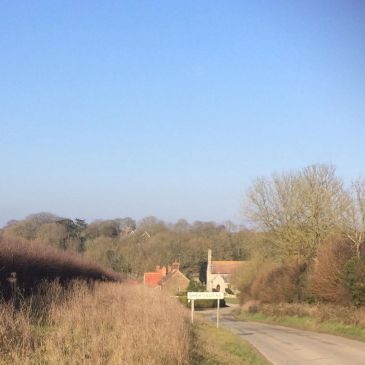
Morning and evening, the pink-footed geese fly over the village, their haunting, yelping calls bracketing the day. They fly from the safety of the mudflats and shallow waters of the Wash, that great bay of the North Sea, out to the sugar beet fields, to feed on the shattered remnants of the harvested crop. On that twice-daily commute, they fly over saltmarsh and freshmarsh, woodland and fen, pasture, heath, rivers, hedgerows, village gardens.

I make the same journeys, much on foot, some on foot after driving. I can walk from the village to the sea; I can walk to fen and woodland, arable fields and hedgerows, pasture and fresh water. Open heath, saltmarsh, freshmarsh and larger rivers requires a car.  I am here for the birds and the walking, and the great open skies and long views, and the weather that is so much better than Ontario’s from January to…

View original post 933 more words

A New Kitchen Tool

I bought a mortar and pestle today, a kitchen tool I’ve done without for thirty-five years.tools-mortar-and-pestle-800px  As I have a general policy of not buying things, why did I make an exception for this?
The answer lies, and hangs, in my basement: a rack and two elevated screens of drying herbs, the last harvest before winter.  Rosemary and sage, oregano, parsley and chives: some hang in bunches from the rack that used to, in my working days, dry my panty-hose; more are spread on window screens elevated on paint cans.  (None of them are catnip, to Pye’s total disgust – she loves it. Pyxel, on the other hand, watches Pye go ecstatic over a catnip toy the way a teetotaler watches someone enjoying a glass of wine.)

I could have chopped the herbs and stored them frozen in oil; or just frozen, in small bags, but I prefer dried herbs for the simple reason I don’t have to remember to thaw them prior to cooking. (I do freeze pesto.) I could have microwaved or oven-dried them, but why use energy when the basement is dry and warm?  In another few days, I’ll bring them up to the kitchen, and strip the leaves off the stems prior to storing in glass jars.  Some of them – the rosemary in particular – I will later grind.

Ground rosemary used to be easy to find in grocery stores, but for a long time now all I can find are whole leaves – which are fine, and I use them, but sometimes I want ground rosemary, when the texture of what I’m making will not benefit from the whole leaf.  There are a few other herbs that can benefit from grinding, sometimes: dill for use in sauces or on fish comes to mind.  And spices – well, Indian spices like mustard seeds need grinding just before they are added to a curry; powdered mustard seed lacks the fragrance and bite of freshly-ground.  These were all good reasons to buy a mortar and pestle years ago, but for some reason I never got around to it.  (You can bash mustard seed with a rolling pin, in a pinch.)

But I am also thinking ahead.  The community in which I live has a communal herb garden, and I’ve volunteered to be one of the people who takes care of it. It satisfies my wish to garden without committing me to something too big or too demanding of my time. Next year we’ll have quite a wide variety of herbs, edible flowers, and perhaps a few other plants like jalapeno peppers.  With a larger variety of herbs to cook with and to dry, I will (I hope) need the mortar and pestle more than ever before.

But I’m curious…those of you who use a mortar and pestle regularly, what other kitchen uses does it have?

Grumpy Thoughts

I am annoyed by things that prevent me from writing, that keep me from my 750 words per day schedule. None of these are bad things, really: the errands of everyday life, some book deliveries, mundane things. And yet they’ve messed up my schedule this week, and so I’m grumpy.

There are other things making me tetchy, to be fair. I’m still aching a bit from a car accident twelve days ago, one that left me with massive external bruises (from the seatbelt) and internal bruising of my sternum, and it’s this latter that still hurts sometimes. Ibuprofen takes care of the pain, but it upsets my stomach a bit, meaning less coffee and no spicy food for a while. Grrr. (Yes, I know. I walked away with only bruises and the insurance company payout on my write-off car was more than fair. Stop griping, self.)

Next whine….after three months, we still haven’t sold our house. In itself that isn’t a big problem, it’s more that unless we do, our winter plans can’t be finalized. And we want to go back to the same cottage in the same village in England that we always do. And it’s getting close to needing to book it. I counsel patience, but it’s starting to worry me. Plus this house still seems unfinished…our pictures and some furniture remain at the old house, for staging; I miss them. Another grrr, another reminder to my better self: this isn’t a financial burden, so what are you bitching about?

And as usual, I’ve written my way out of my bad mood. What it really comes down to is this: you can be living the life you always wanted to, as I am: my life pretty much revolves around working with the written word, and birding, and not much else, but the ‘not much else’ isn’t ever going to go away: I still have to clean up hairballs, buy groceries, get my hair cut, put the garbage out, clean the toilet. Get over it, self. And get to work!

Can Cats be Trained?

Apparently, it is possible to train a cat, according an article in The Guardian. And of course, I know it’s possible, having seen enough movies and tv shows with cats who do what they’re supposed to (or is it all ad libbed, once the cat is in front of the camera?). So I read the article. And spotted several problems, at least in the application of the techniques to our two moggies.

Use food – especially pure protein – as a reward, the article suggests. Problem #1. Our two cats haven’t the slightest interest in pure protein. I can leave salmon thawing on the kitchen counter, and they won’t even glance at it. Cooked chicken? Noses turned. How do humans eat that? you can almost hear them thinking. We have seen Cat # 1 – Pye – eat perhaps half-a-dozen times in the six years she’s lived with us. And then it’s one or two pieces of kibble, and she’s done. Obviously she eats….she’s healthy and the proper weight – but she does it in secret. Cat with an eating disorder.

Except for….wait for it….raw vegetables. Pye loves raw vegetables. Lettuce. Red pepper. Green beans. Zucchini. It’s not for the water content – they have a good supply of fresh water – but she’s loved these things since kittenhood. The last ‘living lettuce’ I bought gave me lettuce for one sandwich and then the cat ate the rest of it. Should I carry around chopped up veggies in my pocket as a training reward for Pye?

Cat # 2, Pyxel, doesn’t have an eating disorder…she’ll eat publicly, at least, but again she has no interest in anything except Purina Cat Chow and Greenies cat treats. So she’s a bit more promising. So what could I train her to do? Number one on the wish list would be to let us clip her claws. The last time anyone tried this, it was at the vets, and Pyxel was wearing a Hannibel-Lecter like leather and wire bite mask, and had two adults holding her, not including the vet. She bit the vet anyway. I’m not convinced all the paw-handling in the world, even with Greenies as a reward, is going to change this behaviour.

The second reward the article suggest is stroking. Now this is Pye’s idea of heaven. And to be fair, it is what we basically used to get her to learn to stay on a box on the kitchen counter, instead of wandering all over it while we were preparing meals. Until BD took it one step further, and started to pick her up instead (truly heaven, to be picked up by BD, and get to lick his beard)…and then the cat learned that all she had to do was fuss around in the kitchen, and bingo, she was picked up by her beloved. Cat trained human, in this case.

Pyxel, on the other hand, hates to be picked up. Or fussed, really, unless it’s her idea. I’ve trained her nicely to come to sit with me on the couch – all I have to do is pick up a book or my iPAD. No, wait…that isn’t what I wanted her to do, it’s what she wants to do. I want to read. She wants my attention to be on her, not that thing I’m looking at. Another training failure, from the human’s viewpoint, at least.

She does respond to aural cues. She gets her Greenies treat (for her teeth and gums) every night when we sit down to watch tv before bed. Usually this is about 8 p.m., but the other night we were watching a game a bit earlier in the evening. All the cues were there for her: we were sitting in the living room, the tv was on – so it had to be treat time. I agreed with her logic, and gave her her treat. Later on, after the game, we watched a recorded Jeopardy, the usual first show of the evening – and as soon as the Jeopardy theme song came on, there Pyxel was, at my side, asking for her treat. Jeopardy theme music = treat. She got two more pieces.

But really, they’re good cats. They don’t walk on keyboards too often, and in the new house the kitchen counters – actually the kitchen entirely – isn’t a place they gravitate to. The wall-to-wall carpet is taking a beating: it’s a lot more rewarding than the scratching post, at least for Pyxel, but they leave the walls alone. And the greenhouse window in BD’s study was just meant for cats. So I don’t think I’m really going to try out the techniques from the article. Maybe down the road, with the next kitten.

The Moving Diaries: Clearing the Attic

This was the weekend of the attic. Fairly typical of American Foursquare houses, our attic is large, a big square space with two dormers front and back. With a total floor space of about 400 square feet, and a ten-foot ceiling, it’s a space with promise. We always thought we might turn it into a studio for me…but it never happened. So it became a place to store things, as attics do.

Friday I spent a couple of hours sorting: garbage, thrift store, keep. Three piles. Then I lugged boxes and bins and bags up the steep stairs and consigned the piles to containers. And that was enough, for one day.

Saturday, I brought the containers holding the ‘keep’ items down one floor to the spare bedroom, which is becoming the box repository. Then I left BD watching soccer and went to a friend’s open barn day,

kid
Adorable Angora Kid

where she shows off her spring crop of angora goat babies, and gives tours of her woolen mill and shop. Angora kids are adorable, and the colours she dyes the wool are enough to make me want to start knitting again. After we move.


Sunday – today – I started the day with a good two hour walk, birding the woodlands and open spaces of the university arboretum. Spring migration is just starting, resident birds are defending territory and building nests, and the air was loud with song and the drumming of woodpeckers. I needed scarf and gloves for most of the walk, but by ten it was warm enough to shed both – but it was also time to head for home and finish the attic.

I surveyed the spare room, and realized my first step was to move the ‘keep’ items – or most of them – from the blue plastic bins to boxes. The plastic bins are meant for taking items to the new house that we’ll unpack immediately, the bins returning to the car for another trip. So I packed boxes, carefully labelling them: “Board game, desk lamp, miscellaneous” one box says. “Various winter things,” another says. Sometimes what goes into a box is determined by the size of the items and the box, not the relatedness of the items. But since this was all in the attic, none of it is needed immediately we move, and these boxes will be relegated to the basement shelves.

Then I took the boxes back up to the attic, and packed up the items for the thrift store, carrying them all to the attic stairs landing. Now, the stairs are narrow, steep, and have a bend part way down, and I’m not what you might call agile. BD was out birding. So I carefully stepped backward down the stairs, bumping a box from one step to the next, until I was on the bedroom floor landing and could stand up with the box in my arms. Eight times. Then down the next flight of stairs, and out to the car, where I put the boxes in the back seat.

That left about eight largish pictures in frames, and two large mirrors that were in the attic when we moved in twenty-two years ago. Plus two portable baseboard heaters. These were beyond me. When BD came home, he, much more agile, carried them down the stairs and stowed them in the trunk of my car. The thrift store has a nice young man of about twenty who will take them (and the boxes) out of my car tomorrow.

What is left up there? Six garbage bags, which we’ll bring down in stages for curbside pickup – we’re limited to three bags every second week. A desk and a bookshelf which will wait for the professional movers. The painting equipment that is still in use. I think that’s it. BD will finish painting the space in the next week or two….and then the people that view the house, and the eventual buyer(s), can dream about what they will do with it: a studio? A nanny flat? A playroom? The wide pine boards under the carpet could be sanded and finished. A skylight or two could be installed, along with a spiral staircase to replace the awkward existing stairs. All things I thought about. But I went to Antarctica and Tibet and the Himalayas, to the Amazon and the Serengeti and the jungles of Borneo instead, leaving the promise of the attic space to someone else, in the end.

The Moving Diaries, April 15th

I packed the first boxes this week. I started with the spare room, which holds my out-of-season clothes, a cupboard full of wrapping paper, gift bags, and related items, a couple of bookshelves, and not much else other than the futon-sofa-bed, the ironing board, and the wireless router. I thought this would be a fairly simple room to begin on.

I wasn’t far wrong. I ended up with one stuffed garbage bag, three boxes for donation, three for moving, two for paper recycling. The hardest part was sorting the books. I don’t buy a lot of books, and so what I have are ones I will tend to re-read. So, not surprisingly, I ended up keeping most of them, sending a dozen or so to the thrift store and another dozen or so (collapsing, yellowed paperbacks) to recycling.

What surprised me is how it made me feel. Two winters ago, not working due to health issues but with a fair bit of energy much of the time, I cleaned and culled almost every room in the house. That was actually fun: I was focused on de-cluttering my life, and it gave me something to think about that wasn’t my health. This process now isn’t depressing, but it does make me a little bit sad. As much as I like our new house and just about everything about it – the layout, the neighbourhood, the city it’s in – I’m still a little bit sad to be leaving this house and this village after twenty-two years. I suppose that’s normal.

We’re leaving because it’s time to, because the new house and its location is better for my health and BD’s, easier for me to walk and bike every day, less stress for both of us in driving back and forth to town for everything we need. It’s also only twenty years old, not a hundred and twenty, and won’t need the constant and sometimes exhausting maintenance this one does. But while the neighbourhood is nestled between the university’s arboretum and its nature reserve, and attached to the city’s multi-use trails – all good things, and the defining reason for buying there – we won’t be looking out on twenty acres of woodland, as we do now. (On the other hand, we’ll actually be able to sit on our new deck and not be eaten by mosquitoes between April and October.) We won’t have foxes running through the garden, and red squirrels beating up the larger black ones, and the wild turkeys coming to the feeders…but I also won’t be paying a small fortune to have a nest of raccoons removed from my fireplace chimney, as I am on this coming Monday. Compromises.

The three boxes have gone to the thrift store, the boxes to be moved are taped and labelled. Garbage and recycling waits till next Thursday. The spare room is basically done. Tomorrow I’ll start on the bathroom – just the cupboards there, really, to be done.

And while part of me is sad, part of me is excited. I mull over paint colours and window treatments as I drive. I think about light fixtures. But mostly I think about what my daily routine will look like, about being able to walk or bike into nature from my front door, but also bike to the grocery store and the public library. To attend plays or hear speakers or listen to concerts at the university and walk home in fifteen minutes. To access the university library seven days a week, instead of only weekends when the parking is free. All of that makes me smile. Sad and happy, an end and a beginning, goodbye and hello.

If I Had 100 Dollars

Re-blogged from my writer’s blog: marianlthorpe.com

I’ve written a fair bit on my other blog, Two Simple Lives, about how books and stories shaped my view of the world. As with most children, I was drawn to those books that mirrored my own family, solidifying my sense of cultural heritage, helping me understand and relate to my grandparents and parents who would always be a little out of place in the land to which they’d emigrated…and finally allowing me, as an adult, the cultural fluidity to move easily between two countries.

I did not grow up in a wealthy family. There was no extra money at all when I was a child. I wore hand-me-downs from my sister and from family friends, my bike had been second-hand about twenty owners before…but there were always books. Books passed on from friends whose children had outgrown them. Books as birthday and Christmas presents. Books from the library…

View original post 386 more words

Belonging

Growing up as a child of immigrants, the stories you hear of ‘home’ are usually tinged with nostalgia, seen through the rose-coloured glasses of memory. I can’t say this was true of all my parents’ stories – they had lived through the depression and World War II in Engand- but the ones that stayed with me the most were their stories of long childhood walks through the countryside, roaming footpaths and hedgerows, free and unsupervised.

My own childhood in Canada was as free as most childhoods fifty years ago were, and living at the edge of a village there was freedom to roam the farm lanes close to us, the farmers turning a tolerant eye to our activities, and we certainly bicycled the quiet roads around us. But at the back of my mind, it just wasn’t the same. I had grown up on Enid Blyton and Arthur Ransome, and I wanted footpaths and moorland, quiet hedged lanes, little villages hidden in folds of the hills…and as I grew older, a welcoming pub to stop at.

So here I am, nearly fifty-eight, writing in the sitting room of our holiday cottage that we’ve taken for January and February, back from a walk that ticked just about every box on that list. We set out just after nine this morning, turning right up the lane at our front door. A few hundred meters up the hill a gate opens onto a field and footpath, climbing further up the hill, skirting field margins to bring us out onto a quiet lane. A barn owl is hunting in the field to our west. At the top of the lane, the wide Norfolk views open out; to our west is the broad expanse of the Wash, its flocks of waders and waterfowl visible even from here, the coast of Lincolnshire shimmering in the distance. To our east, fields: field peas and sugar beet, wheat stubble, autumn-ploughed fallow, cut with hedgerows and lanes.

We walk in a northerly direction, following paths and bridleways, along field margins and old drove roads through farms, coming out into villages. The sky is changeable, clouds scudding in the strong westerly winds, patches of blue winking in and out. Hedges, green with ivy, keep the worst of the wind off us except when we the route takes us due west. Grey partridge scatter in front of us, calling their distinctive rasping cry.

After about six kilometers the drove we’re on swings west, past a substantial farm, and then south again for a few kilometers, coming out by a magnificent medieval church perched high on the greensand ridge that runs up the coast here. On a bench outside the church wall we sit for a snack, looking down over the village. It doesn’t do to sit too long, though: we’ve another three or four k to go, and tired muscles ‘set’ all too easily. We walk through the village streets, past the old watermill, and on to the footpath that is the last leg home. In a field to the west about a hundred curlew are feeding, beside jackdaws and wood pigeons, and where the footpath enters a woodland long-tailed tits chatter their high-pitched greeting.

We’re home in time for lunch, just after one o’clock. All this walk was missing was the pub, and that’s just up the road: the well-deserved pint can wait until a bit later this afternoon. I have soup to make for dinner and bread to bake. In all my months of recovery from major surgery and post-surgery treatments in 2014 and 2015, it was the thought of walking under this quiet corner of Norfolk’s skies, along these footpaths and lanes, that kept me going. It was the first place we came when my doctors gave me the green light to travel last spring: in the month here then, I went from being able to walk for less than an hour to managing a couple of hours with sufficient breaks. Now I can walk for four, with a five minute break, and it’s only the arthritis in my hip and foot that keeps me from going further, not a lack of energy.

Spread out on the sitting room floor at my feet is the Ordnance Survey map for this area. In a couple of minutes I’ll sit down with it and start planning another walk. Out to the castle ruins towards the Wash? Due east, to the village with the working windmill? Across the fen to look for short-eared owls and woodlark?

This is not Blyton’s or Ransome’s England, if those ever really existed. It’s not the England of my parents’ childhoods, nearly a hundred years ago. It’s not even the England we started to return to thirty years ago, when my family’s pub still stood where the village’s grocery store does now. But it still offers me footpaths and heathland, quiet hedged lanes, little villages hidden in folds of the hills, skies and birdlife and wind and space, and long walks from my front door. My experiences and memories build on and continue from my childhood stories, the ones my grandparents told, and my father (this was his childhood village), and those of his one surviving cousin, who lives a dozen miles from us here, and whose ninety-fifth birthday we are celebrating later this month. I study and explore these villages and fields as part of my landscape archaeology courses, I write about it in my non-fiction work-in-progress, Reverse Migration, and there is a certain place in the fictional land from Empire’s Daughter that is, simply, here. I belong to this land, this little piece of west Norfolk, and it to me, unlike any other place I know or have lived.

String and Paper

Well, we’ve been here almost a week, long enough to know what I miss from the Canadian house; what I should have brought or need to buy here.

This is a very well equipped holiday cottage, and as we’ve lived here many times before I was fairly sure I knew what to bring (an apron, my Aeropress coffee-maker, a thermos for coffee to take on our day trips) and what I would choose to buy here (a slow-cooker, bread pans, a small birdfeeder for the garden.) I was right about all that, except this time there was an apron hanging in the kitchen. The bread pans are heavy-duty disposables: they’ll go into the recycling when we leave at the end of February; the inexpensive slow-cooker will go to a charity shop, as will the bird feeder. Here’s what I didn’t foresee.

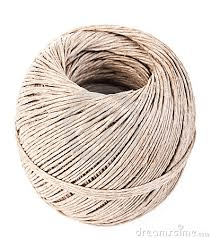
Twist-ties or bag clips, for the bags of lentils and peas, pasta and rice. There are a few bag clips here, some of which I bought in the spring, but not enough. String or skewers, for holding together stuffed chicken thighs. Or perhaps I can just buy a ball of food-quality string, and use it for both purposes…that would be the simplest solution. So far, that’s it. Except, perhaps, paper.

At home we both have printers, and printers generate paper that’s usually good on one side. We use it for printing again, anything that doesn’t need to be pristine, or for writing lists and notes. Here there is no printer (that in itself will be an interesting experiment, for someone whose work revolves around the written word) and therefore no paper generated. So paper – for grocery lists, freezer inventories, schedules and menus – is in short supply. I could, of course, go out and buy an inexpensive pad of paper. But we’re going to try to manage with what we have, just to see if we can.

There is no comparison between our two months here and the six-to-eight week camping road trips we made in the past, where everything had to fit in the back of a compact car. But it’s still an opportunity to see what we really use, versus what we use because we have it – or even more importantly, what we have and don’t use.

So what do I miss from the Canadian house? (Other than the cats?) Nothing. So far, nothing at all. My guess is the lack of a printer will eventually be an issue…but we’ll see.