Spring, Rewound

When we left the UK on April 11th spring, at least in Norfolk, was well underway. Birds were claiming territories, wrens and chiffchaffs singing and singing. Jackdaws carried nesting material; med gulls clustered in pairs at Snettisham, and the black-tailed godwits had turned their rich chestnut. Buff-tailed bumblebees foraged among blackthorn and Malus flowers, and the yellow flowers of early spring brightened the ground, coltsfoot and dandelions, primroses and cowslips, and in the wetlands, kingscup.

Eight hours on a plane, London to Toronto, and someone’s hit rewind. Not by a lot, this year: spring is early here. On the 21st, as I write this, the first of the ornamental cherries that line our streets are in flower. But the kingscup – or marsh marigold, as it’s called here – in Wild Goose Woods is still in bud, although I expect it to flower this week.
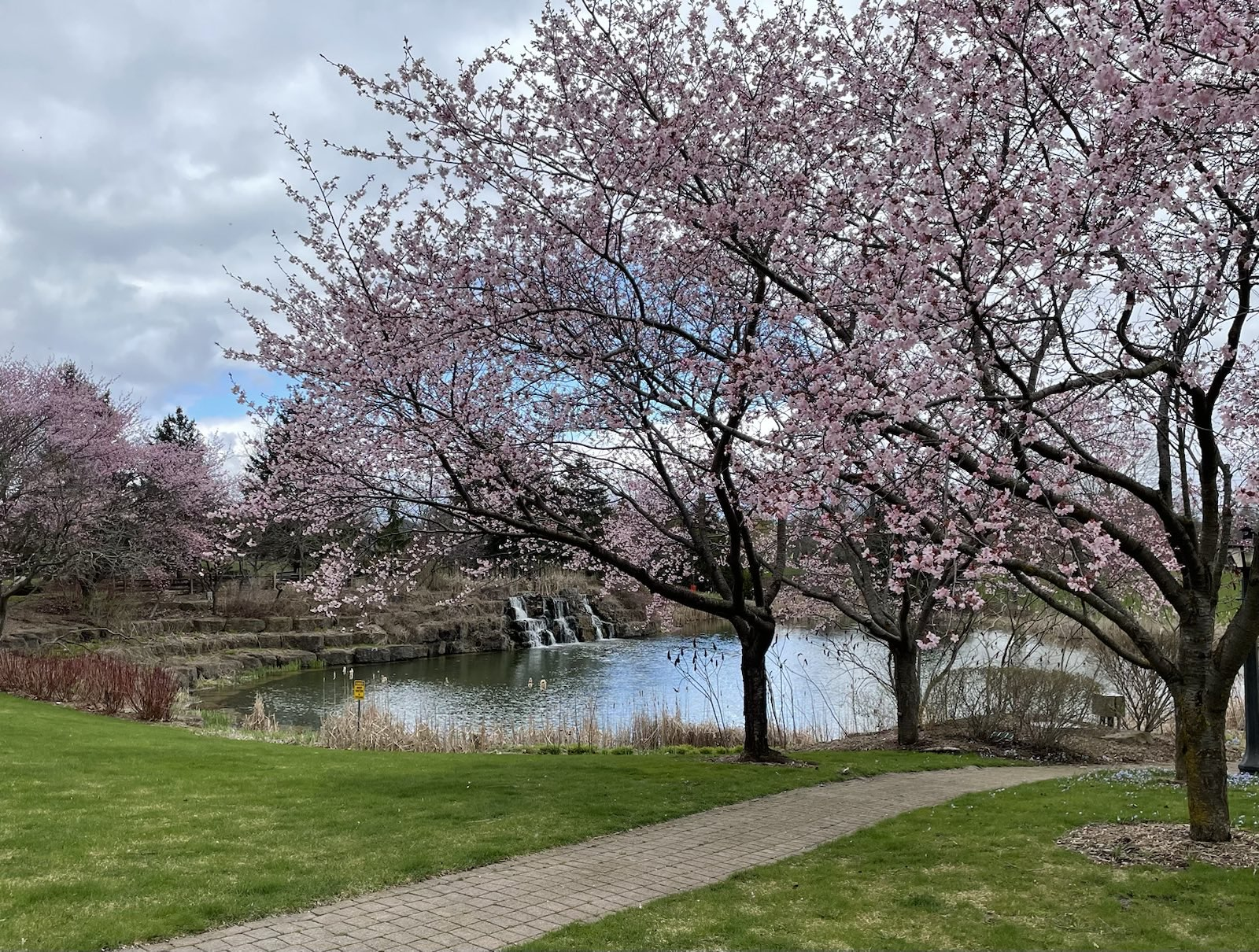
Ornamental cherries, Guelph, April 20. My photo.

I heard my first pine warbler this past week, and saw my first myrtle (yellow-rumped) warbler, watched tree and barn swallows dancing over the Grand River and phoebes flycatching from low branches in the maple swamp. Canada geese are hatching goslings, male goldfinches are moulting into summer plumage, and red admiral butterflies – maybe emerging from hibernation, maybe migratory – fluttered along the path we walked Friday, high above the Eramosa River. Bloodroot now stars the forest floor in Victoria Woods.

Red Admiral (Vanessa atalanta); my photo

Twenty years ago, or perhaps thirty, I used to get impatient for spring here; growing up in Essex County, by mid-April spring was much more advanced. Now, looking at e-Bird checklists for Point Pelee, I’m not seeing the same differences. With a couple of exceptions – blue grey gnatcatcher, common yellowthroat – the returning bird species look pretty much the same.  But a snapshot is misleading: a quick look back through e-Bird records finds a yellow-rumped warbler reported on the 7th of April.

Myrtle (Yellow-rumped) Warbler
(Dendroica coronata coronata), by Cephas, CC BY-SA 3.0 <https://creativecommons.org/licenses/by-sa/3.0&gt;, via Wikimedia Commons

The 7th of April. A yellow-rumped warbler. Some forty years ago or so, we had an Ontario record-early pine warbler – always the first to return – at Long Point on the 6th of April.

I won’t belabour the reasons; we all know them. But I wish I’d never been impatient for spring; I wish my first sight of a yellow-rumped warbler could be one of pure delight, not shadowed by ‘but it’s too early’.

 I wish a rewind was possible.

Learning to Listen

Thoughts of an Aging Birder

I’m standing on a boardwalk through a wet woodland: deciduous trees, damp soil, emerging plants, ephemeral ponds. Superficially, it’s not so different from the boardwalk through wet woodland I was standing on less than two weeks ago. One on the eastern side of the Atlantic, a kilometer from the North Sea; one on the western side, 1500 km inland. Different ecosystems, certainly, but what I notice today is the difference in the soundscapes.

Boardwalk, Wild Goose Woods, University of Guelph Arboretum.
My photo.

Recognizing all but the most common bird songs is a skill that has eluded me for fifty and more years. But at sixty-six, my vision a little compromised both by vitreous detachment and its resultant floaters, and by incipient cataracts, I’ve been trying harder to sort out the songs, to identify by sound. (My aging and arthritic spine also appreciates not having to hold up even my light Swarovski 10 x 32s as much, too.)

My hearing remains good, thankfully. In On the Marsh, Simon Barnes writes of friends who can no longer hear the high contact calls of goldcrest; the screams of swifts overhead, he tells us, are inaudible now to Sir David Attenborough. That day will no doubt come for me, but it’s not here yet. I can still pick out goldcrest in England, and its almost-doppleganger cousin the golden-crowned kinglet, here in Canada.

In the first week of April, the soundscape at RSPB Titchwell was dominated by onomatopoeic chiff-chaff calls. European robins sang from low bushes; a blackcap added its melody from a higher perch. Wood pigeons, endlessly cooing, added a bass line, punctuated by the equally endless screaming of black-headed gulls and the occasional explosive chatter of a Cetti’s warbler.

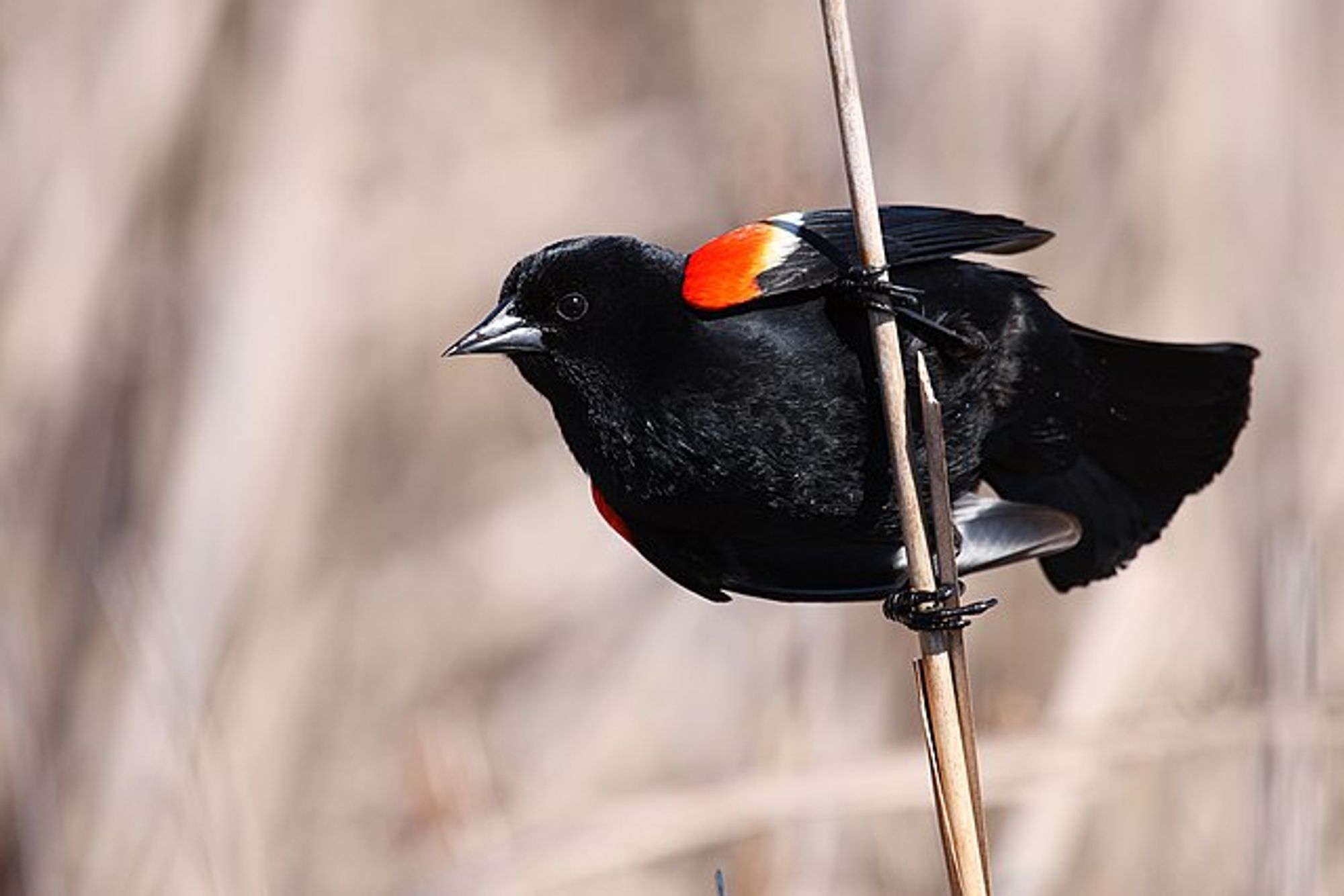
Red-winged Blackbird male, Point Pelee National Park, Ontario, Canada. Photo by Cephas, CC BY-SA 3.0 <https://creativecommons.org/licenses/by-sa/3.0&gt;, via Wikimedia Commons

Here in Guelph, on the boardwalk through Wild Goose Woods a few hours after dawn, the dominant sound is the chirr of red-winged blackbirds, the screeching laughter of northern flickers a close second. Another bird calls its own name: fee-bee, fee-bee. American robins sing cheerily from mid-level branches, and from the nest on the light standard over the playing fields I hear an osprey’s plaintive cry.

I’d know where I was—roughly—from either soundscape. While I’m focusing more on what I’m hearing through necessity and a wish to understand more of the landscape I’m moving through, looking at all the parts of the whole and not just on birds (I can identify a phoebe by song at the same time I’m looking at a bloodroot flower unfurling, for example), I’m also thinking about it in terms of my other life, that of the writer. Of the seminar on worldbuilding I’ve offered to give here in Guelph in the autumn, and all the things that are part of a convincing fictional world or will evoke a real one. Soundscapes are one of them: part of the whole which both characters and the reader, one hopes, inhabit.

Whether any writer can separate entirely the slice(s) of the world in which they live from their created worlds, I don’t know. I can’t. In this, I can only write what I know. There’s a circularity to this: writing has made me pay attention to aspects of the world I might have not noticed; a lifetime spent outdoors whenever I could informs what I write. The Titchwell soundscape?  It has a place in the story that’s beginning to unfold, and perhaps that book will be just a little richer because my aging eyes have made me listen more and look less. I’m fairly sure my life is richer, too.

The Last of Norfolk: March 30 – April 3

The last of Norfolk birding for the spring of 2024, at least! We plan, as always, to return.


March 30: A nuthatch yelps from high in a bare oak; coal tits call, ‘it’s me, it’s me,’ from low branches. In the meadow a jay forages among shelduck & Egyptian geese. A silver squirrel climbs a stump. The larches are bright green with new growth; new leaves unfurl on the brambles. We’re walking footpaths and lanes at Houghton, a sheltered walk on this windy day. In the sheep field a new statue stands: the figure of a man, or a cyberman, almost human. “Disconcerting, at dusk,” a woman walking her dog tells us. Later we learn it’s part of a new art installation by Anthony Gormley.

Photo by: Mmparedes, CC BY-SA 2.5 <https://creativecommons.org/licenses/by-sa/2.5>, via Wikimedia Commons

March 31: Drove to visit friends, through countryside and villages. Gulls, common and black-headed, followed ploughs. Pheasant and red-legged partridge, shoot survivors, scurried or flew across hedged lanes. The sound of tires and the barrier of glass & steel couldn’t block out the skylarks, singing, singing. A little owl lives in the barn down the road, our friends tell us; it’s driven out the barn owl.

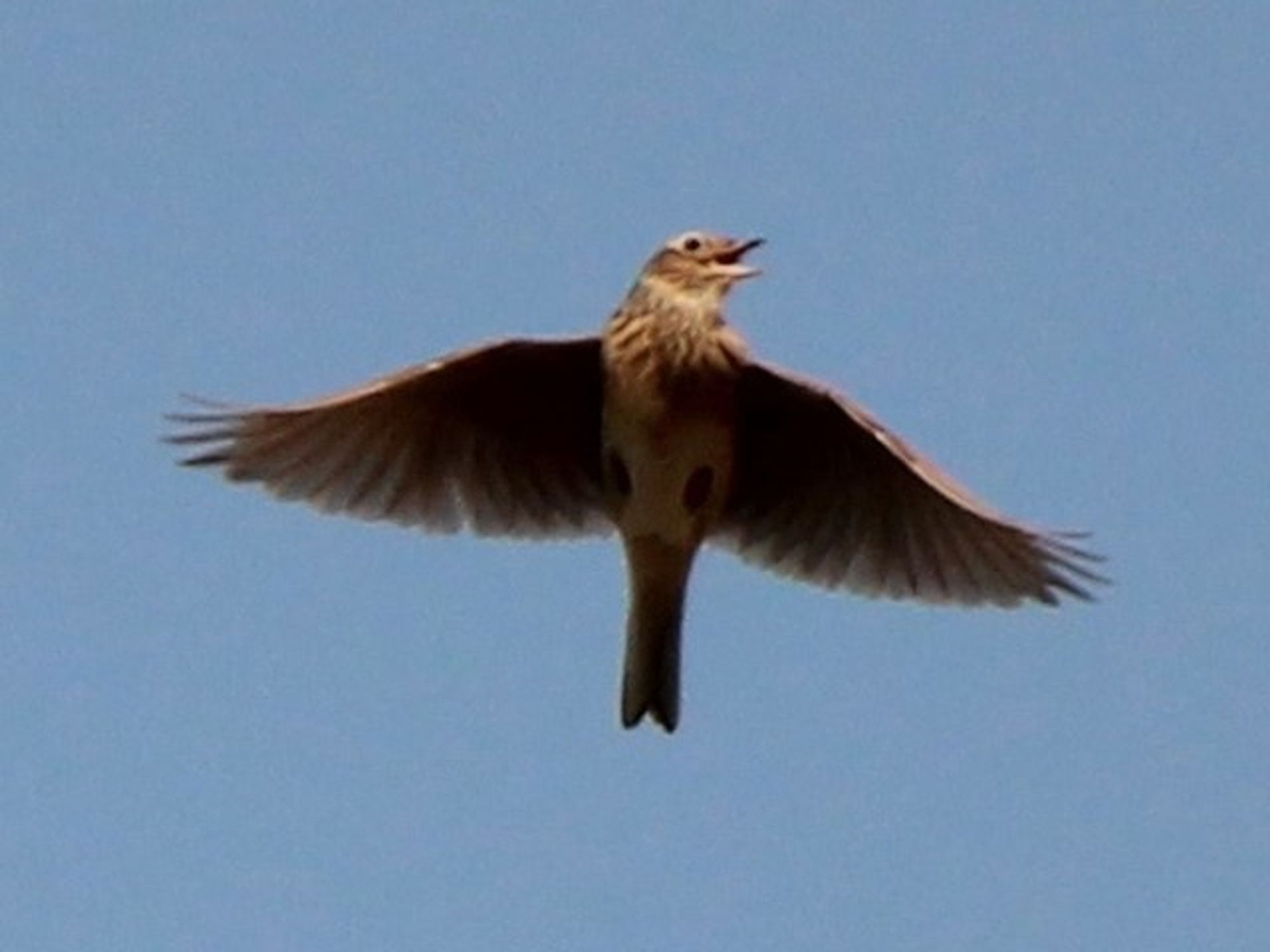
Alpsdake, CC BY-SA 3.0 <https://creativecommons.org/licenses/by-sa/3.0>, via Wikimedia Commons

April 1: Footpath birding today, along the old railway line, now part of the Jubilee Trail. In Life Woods, the first mallard ducklings of the spring; on Snettisham common, a green woodpecker yaffles from a utility pole. We walk up into Ken Hill’s pine woodlands. A tree creeper circles the high branches of a still-bare oak. From the western height of land, we look out on the distant marsh and the Wash: it’s too wet still to walk out, without wellies. Shelduck are scattered across the wetland, gleaming white. I think about the torcs of the Snettisham hoard, found by a farmhand ploughing the field below us. I went to look at them (again) at the British Museum last week.

Dr W E Lee / Avenue of Beeches, Edge of Ken Hill Woods. CC BY-SA 2.0 <https://creativecommons.org/licenses/by-sa/2.0&gt;, via Wikimedia Commons

April 2: Walked out between farm fields to the mudflats of the Wash. Wrens sang from bramble or reeds every 50 paces; goldfinches twittered from greening willows. In the sunshine, both stonechats and reed buntings announced themselves, males proclaiming ‘this is my territory’.

rkl, CC BY 4.0 <https://creativecommons.org/licenses/by/4.0>, via Wikimedia Commons

Where Boathouse Creek joins the Wash avocets and ruddy turnstones fed on the mud; linnets flitted and fed along the shingle foreshore. On the gravel pits, among the black-headed gulls, pairs of Med gulls stood out, tall and proud. Sunshine, water, breeze.

Later, reading this in Simon Barnes’s On the Marsh, I recognized its inherent truth. I delighted today in red kites and marsh harriers, in singing skylarks and wrens, but mourned for the dead or dying oystercatchers on the mudflats, the lack of lapwings wheeling, the paucity of finches, all the losses.


April 3: Last visit to Titchwell today, under showery skies. Rain or no, the day gave us a bearded reedling in a rare fully open view. In the woods, a blackcap sang its bubbling, lilting song; a Cetti’s warbler exploded both into song and into view, briefly. Out on the freshmarsh, among black-tailed godwits turning chestnut and avocets up to their bellies in the water, a lone ruff, its back mottled chestnut & black, probed the mud.

Ken Billington, CC BY-SA 3.0 https://creativecommons.org/licenses/by-sa/3.0, via Wikimedia Commons

But the surprise of the day was a polecat, never before seen, feeding on roadkill at the side of the A149. We circled back at the next roundabout, took a second look. While our brains said ‘pine marten’; sensibility said ‘not a chance’. A little research revealed the identification. Norfolk, it seems, still holds secrets.

Nicolas Weghaupt, CC0, via Wikimedia Commons

Spring, Week V

Rain, this morning, staccato against the skylight. Outside the water puddles in every low spot, overflowing to gurgle into drains. It’s been a week of contrasts and extremes. After the heatwave only a few days earlier, the week began with snow. Daffodils lay flat, and violets were edged with frost like sugar crystals. By Thursday, it was sunny and warm again, the snow long gone.

Over the river, one barn swallow hunted sparse insects alongside the tree swallows. The ospreys are all on their nests, and Canada geese hiss and snap at anyone who comes too close to their brooding partner.  Regardless of the vagaries of temperature and precipitation which my aging human sensibilities object to, the imperatives of spring continue. Reproduction is all, if enough food can be found to sustain life. If enough places remain to provide that food and nesting habitat.

Image by Brigitte Werner from Pixabay 

I sat at a picnic table on the university campus yesterday in 18C sunshine, listening to a cardinal sing from the Norway spruces.  Forty-five years ago, in my first year as an undergraduate at this particular university, I was doing the same.  The cardinal I was listening to then was a forefather of this one by at least fifteen generations, given the average length of a wild cardinal’s life. Little has changed in this spot, although slowly across the entire campus open ground—research plots and gardens and greens, old barns with open courtyards, old fields—has gradually been paved over, or built upon: more student housing, more parking lots, more teaching and research facilities, more sports fields. More land leased for private development, offices and retail. Even the Arboretum loses ground (literally) to research buildings and parking and managed plots. I doubt the cardinal notices, nor will the development affect it or its descendants much. Cardinals like gardens and shrubs and feeders.

But a huge swath of land once leased research ground will become housing in the next five years, and the woods and old fields and riverine habitat on either side of it will be under greater pressure, not just from a greater number of people (and dogs, and roaming cats) but from a desire for more sports fields and playgrounds rather than unkempt and wilder land. Already meadowlarks are sparse, and the sparrows and warblers that need scrubby grassland habitat.

My sense already this spring is that the birds are fewer; it’s my sense every spring now, and I think a valid one for most species. I can rejoice in ravens and sandhill cranes and bluebirds, and the ospreys and bald eagles—but the small birds of woodland and hedgerow and understory are largely disappearing. It’s not all recent; it’s not all climate change or pesticide use or avian viruses or fatal building collisions, but all contribute.

I’m noticing a reluctance to go walking some days, to be confronted by the sparsity of birds, and by woods and fields far too quiet—or disrupted by the sound of chainsaws and diggers. But—almost equally—I know I should, for a myriad of reasons that include bearing witness to what is being lost and appreciating what remains. The cardinal still sings.

Spring, Week IV

I wish I had the tiniest bit of musical intelligence, but I am as tin-eared as they come. I listen and listen: is that a pine warbler?  I’m in the right place, the remnant stand of white pines at the north end of Victoria woods. The bird is high in the tree’s dense foliage, and I can’t find it.

I lower the binoculars to plug my earbuds into my iphone and ears, and compare: pine warbler and chipping sparrow. I play the two buzzy songs over and over, trying to discern the difference.  Maybe the pine warbler ‘purrs’ a little more than the chippy. I free the earbuds, turn off the birding app, listen again. I think it’s the warbler.

As I walk around the Arboretum, there are lots of chipping sparrows singing, and I grow more convinced of my warbler identification. I’m not the only one noting the chipping sparrows preparing to mate and lay eggs: high in another tree, brown-headed cowbirds are mating. Brood parasites, they’ll lay eggs in a number of smaller birds’s nests, but here the chipping sparrows are probably their most frequent victim, a self-fulfilling cycle. The female cowbirds not only return to the area they were hatched, but will tend to lay eggs in the nests of the species that raised them.

It’s quiet, this early on a Sunday morning. This week’s unseasonable heatwave is pushing trees and shrubs into leaf quickly; the lattice of branches against the sky shading to gold and red with catkins and maple buds. Snakes are out, rustling the leaf litter as they glide away from the vibrations of my footsteps.

Image by Johnny Gunn from Pixabay 

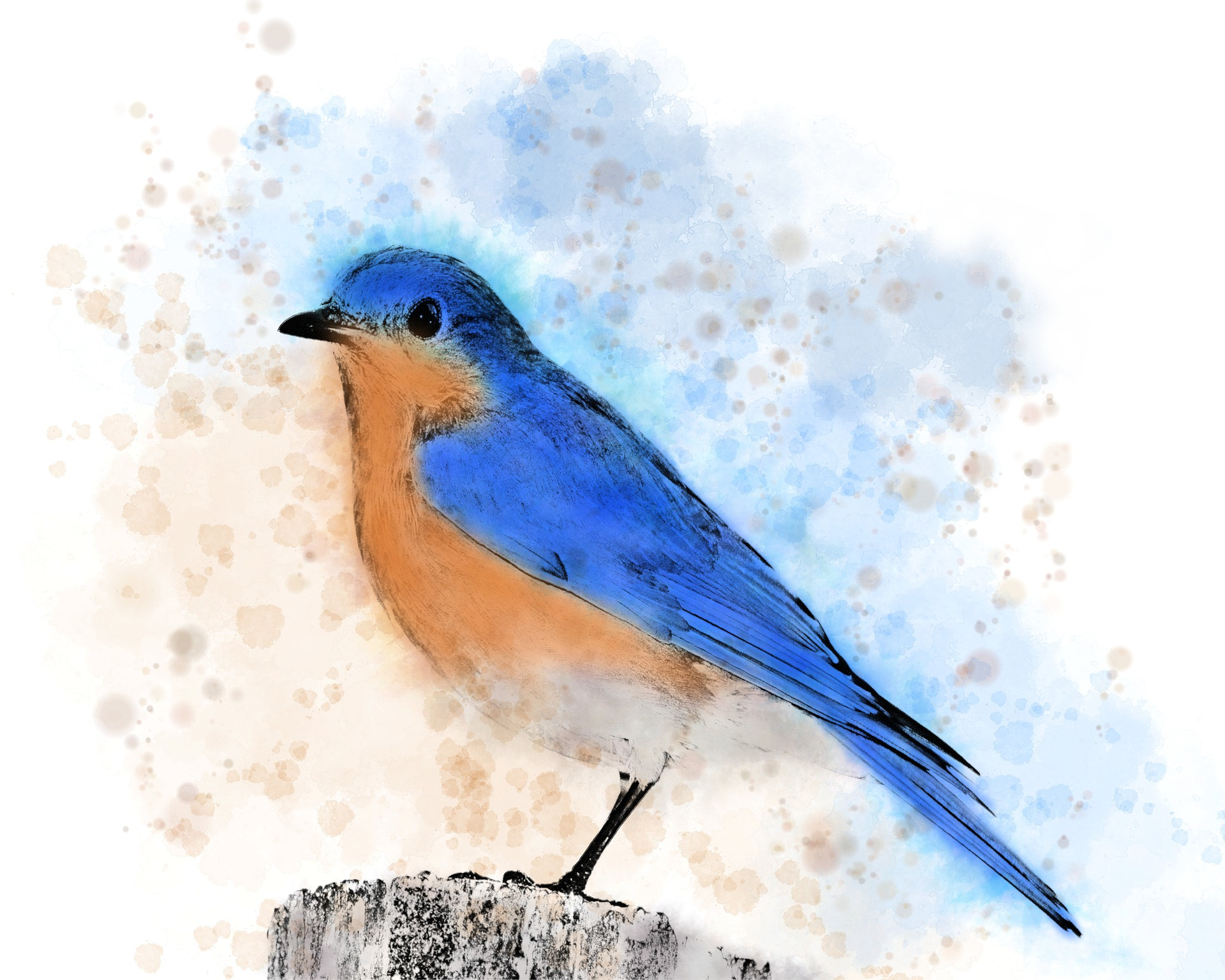
The tree swallows are back, chattering and swooping over the old field where the nestboxes are. They take most of these boxes, with house wrens nesting in a couple on the periphery of the cluster, and a bluebird pair or two mixed in with the swallows. There’s always a frisson of pleasure on seeing the bluebirds, even though they raise broods every year; not just for their inherent beauty, but because they’re a rare success story of a threatened bird brought back to a healthy population by a combination of intelligent human intervention and their own nesting strategy. Birds that cavity-nest will, for the most part, adapt to nest boxes. Grassland ground nesters—meadowlarks and bobolinks, to name just two—cannot, and so continue their steady decline.

The maple swamp is full of phoebes and tree creepers and resounding with the drumming and calls  of several species of woodpeckers: downy, red-bellied, pileated. A pair of Canada geese are nesting on a hummock of soil pushed up by a fallen tree. A pair nest here every year; every year, the mink takes the eggs. The wood ducks who nest in hollow trees above the swamp may do better, although I suspect the mink likes ducklings too.

In the drier woods, the bloodroot blossoms are still tightly furled, waiting for the sun to reach the forest floor. Marsh marigold’s round leaves are emerging in the marsh, but no buds yet. The stand of beeches ahead of me hosts a convention of conversational crows. I stop to listen, but it’s just chatter, perhaps about my presence, or the dog walkers out on the wide central path. I can’t distinguish a chipping sparrow from a pine warbler, but I’m pretty good at crow!

Spring, Week III

Image by Brigitte Werner from Pixabay 

Winter birds are still here; spring ones are arriving. Somewhere between thirty and a hundred Bohemian waxwings can be found on the university campus most days, along the laneways between the research glasshouses and the cattle barn and stables, gorging themselves on winter-sweet crab apples. There are cedar waxwings mixed in, and always a few starlings and robins taking advantage of the bounty too. Disturbed, they fly up into the line of Norway spruce that wind-shelter the glasshouses, looking, in their dun and rufous and yellow shades, like a memory of autumn in bird form, but the fruit is too tempting: they’re back down in a minute.

On the ponds east and west of the city, at the old provincial jail and redhead and goldeneye, bufflehead, ring-necked duck and hooded merganser are resting and feeding, and if you’re there early enough in the morning, there’s usually a loon that came in for the night. Here it’s all about contrast, at least in the males: dark shades of green and blue-purple and auburn against white, sharp and bright. See how strong I am, and what good genes I have, is the message: beauty to human eyes is a coincidence. But beauty there is.

Victoria Woods this week is still all duns and greys: tree trunks and dark water, winter-bleached leaf litter and rock. Only the bright green of moss patches brightens the forest floor. But at the pond, I flushed two pairs of wood ducks, a glimpse of colour. They’ll stay, nesting in hollows in the trees that overhang the water. At the edge of the wood, phoebes are calling, always the first of the flycatchers to return. Their high fee-beee, fee-beee is a sharp, welcome sound in the cold air.

Image by Oberholster Venita from Pixabay

Snowmelt and rain mean the rivers are high and the ground is saturated, ephemeral ponds covering paths. There are few ducks at the river confluence: why use energy fighting the currents when there are plenty of still ponds to be found? The water bubbles and splashes over the rocks and weirs by the mill ruins: a good dipper stream, my mind says, even though I’m on the wrong side of the Atlantic. A flash of blue streaks across the stream: a kingfisher.

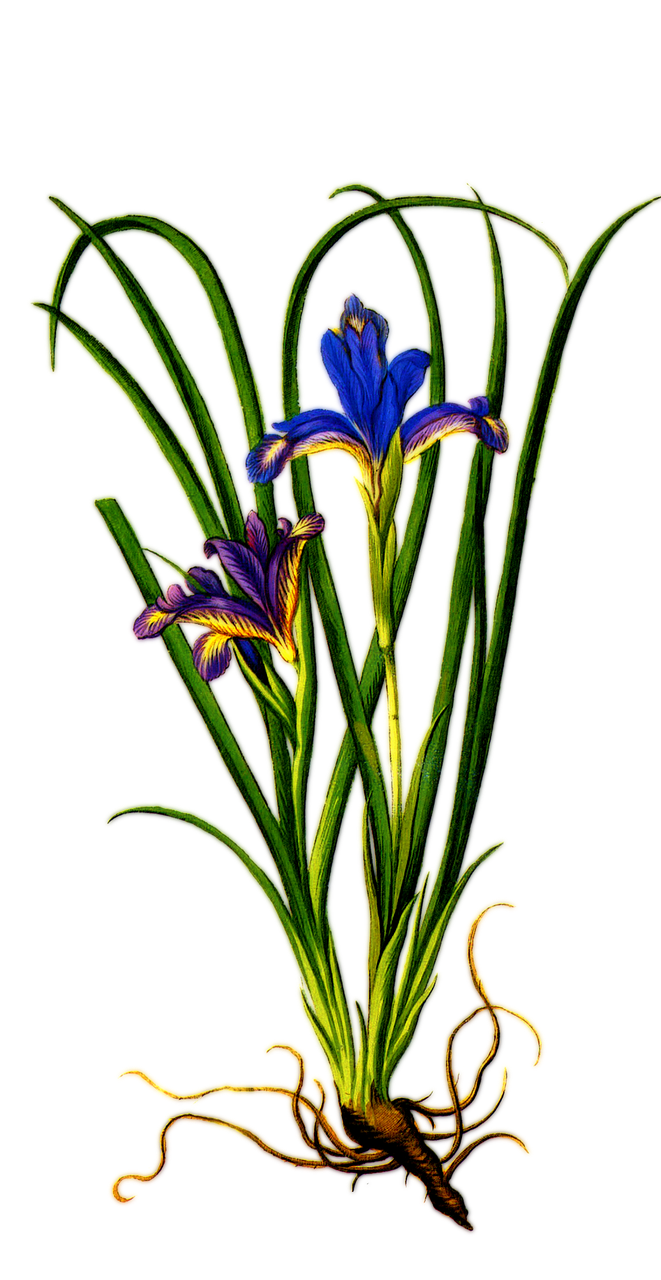
There’s still frost in the mornings: -5C today at 7 am. But there is real warmth in the sun now, and so the ice melts quickly. The first of the species iris is in flower in the front garden, narrow deep purple petals with yellow at the heart. We’re promised temperatures in the high double-digits next week, and if so, spring will pop. Buds will swell, coltsfoot will bloom, and more birds will move north. But cold, fast moving water also means blackfly, the bane of my springs. Perhaps I’ll have a few more days without them.