
The Last of Norfolk: March 30 – April 3
The last of Norfolk birding for the spring of 2024, at least! We plan, as always, to return.
March 30: A nuthatch yelps from high in a bare oak; coal tits call, ‘it’s me, it’s me,’ from low branches. In the meadow a jay forages among shelduck & Egyptian geese. A silver squirrel climbs a stump. The larches are bright green with new growth; new leaves unfurl on the brambles. We’re walking footpaths and lanes at Houghton, a sheltered walk on this windy day. In the sheep field a new statue stands: the figure of a man, or a cyberman, almost human. “Disconcerting, at dusk,” a woman walking her dog tells us. Later we learn it’s part of a new art installation by Anthony Gormley.

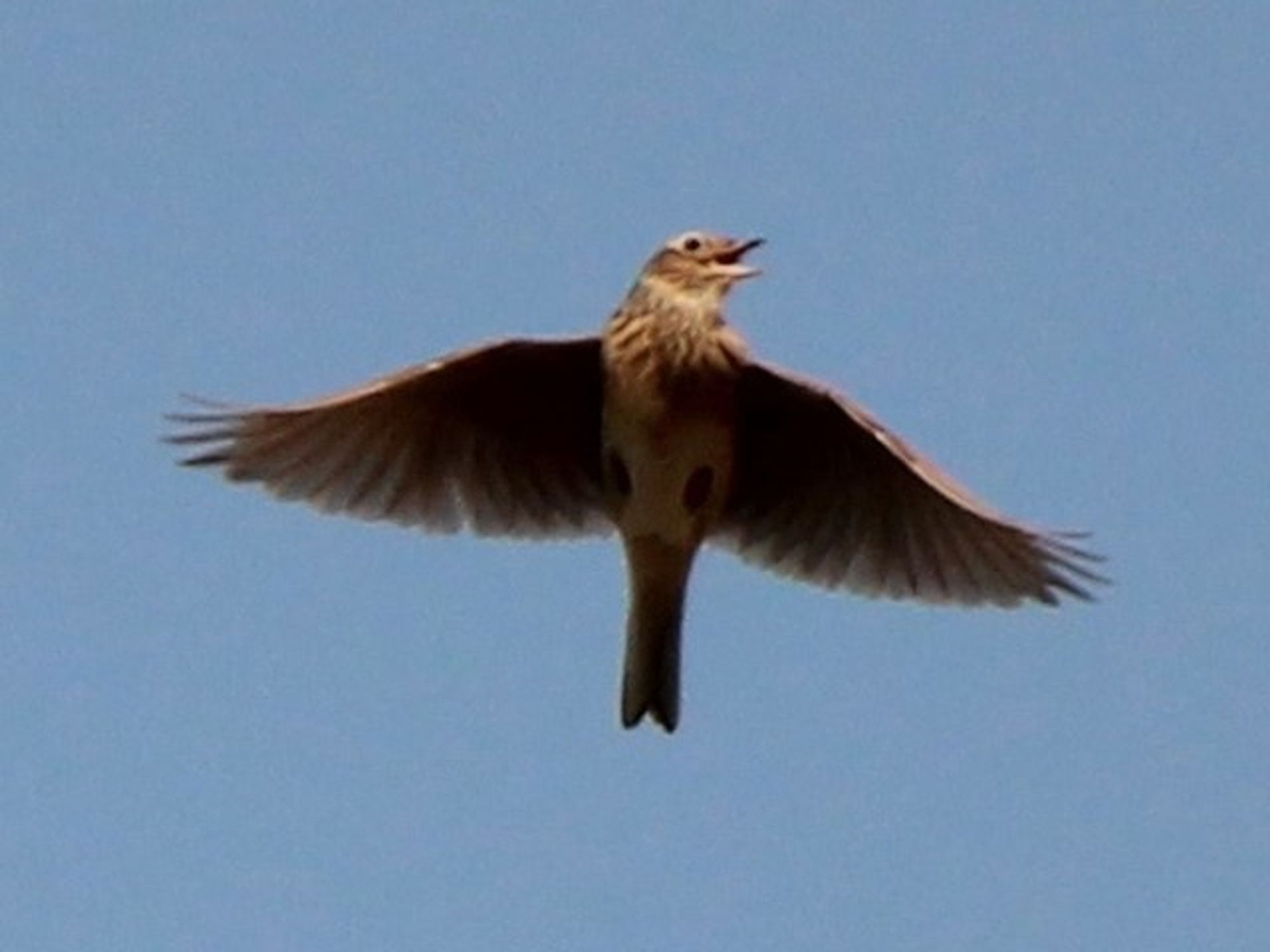
March 31: Drove to visit friends, through countryside and villages. Gulls, common and black-headed, followed ploughs. Pheasant and red-legged partridge, shoot survivors, scurried or flew across hedged lanes. The sound of tires and the barrier of glass & steel couldn’t block out the skylarks, singing, singing. A little owl lives in the barn down the road, our friends tell us; it’s driven out the barn owl.
April 1: Footpath birding today, along the old railway line, now part of the Jubilee Trail. In Life Woods, the first mallard ducklings of the spring; on Snettisham common, a green woodpecker yaffles from a utility pole. We walk up into Ken Hill’s pine woodlands. A tree creeper circles the high branches of a still-bare oak. From the western height of land, we look out on the distant marsh and the Wash: it’s too wet still to walk out, without wellies. Shelduck are scattered across the wetland, gleaming white. I think about the torcs of the Snettisham hoard, found by a farmhand ploughing the field below us. I went to look at them (again) at the British Museum last week.

April 2: Walked out between farm fields to the mudflats of the Wash. Wrens sang from bramble or reeds every 50 paces; goldfinches twittered from greening willows. In the sunshine, both stonechats and reed buntings announced themselves, males proclaiming ‘this is my territory’.

Where Boathouse Creek joins the Wash avocets and ruddy turnstones fed on the mud; linnets flitted and fed along the shingle foreshore. On the gravel pits, among the black-headed gulls, pairs of Med gulls stood out, tall and proud. Sunshine, water, breeze.

Later, reading this in Simon Barnes’s On the Marsh, I recognized its inherent truth. I delighted today in red kites and marsh harriers, in singing skylarks and wrens, but mourned for the dead or dying oystercatchers on the mudflats, the lack of lapwings wheeling, the paucity of finches, all the losses.
April 3: Last visit to Titchwell today, under showery skies. Rain or no, the day gave us a bearded reedling in a rare fully open view. In the woods, a blackcap sang its bubbling, lilting song; a Cetti’s warbler exploded both into song and into view, briefly. Out on the freshmarsh, among black-tailed godwits turning chestnut and avocets up to their bellies in the water, a lone ruff, its back mottled chestnut & black, probed the mud.

But the surprise of the day was a polecat, never before seen, feeding on roadkill at the side of the A149. We circled back at the next roundabout, took a second look. While our brains said ‘pine marten’; sensibility said ‘not a chance’. A little research revealed the identification. Norfolk, it seems, still holds secrets.










 Random Ramblings