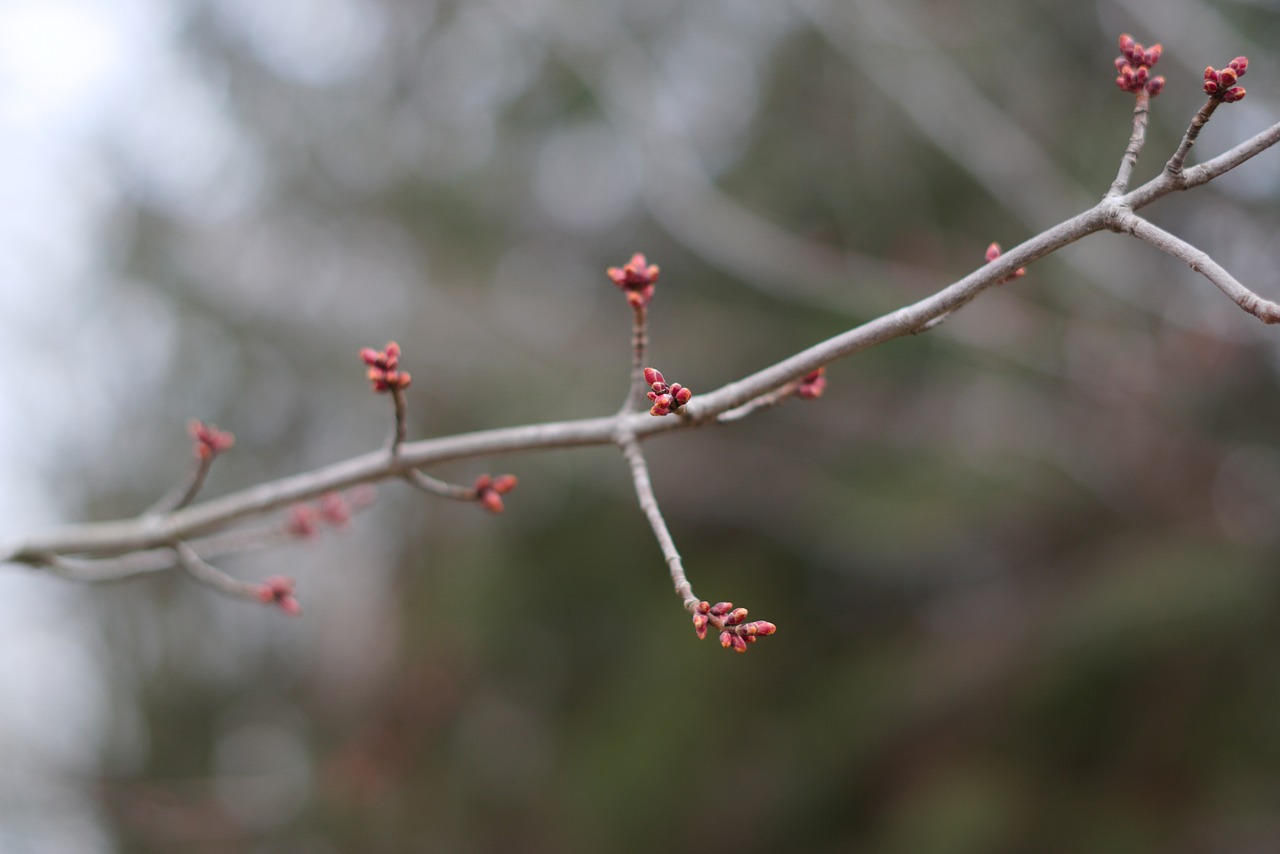
Spring, Rewound

When we left the UK on April 11th spring, at least in Norfolk, was well underway. Birds were claiming territories, wrens and chiffchaffs singing and singing. Jackdaws carried nesting material; med gulls clustered in pairs at Snettisham, and the black-tailed godwits had turned their rich chestnut. Buff-tailed bumblebees foraged among blackthorn and Malus flowers, and the yellow flowers of early spring brightened the ground, coltsfoot and dandelions, primroses and cowslips, and in the wetlands, kingscup.

Eight hours on a plane, London to Toronto, and someone’s hit rewind. Not by a lot, this year: spring is early here. On the 21st, as I write this, the first of the ornamental cherries that line our streets are in flower. But the kingscup – or marsh marigold, as it’s called here – in Wild Goose Woods is still in bud, although I expect it to flower this week.
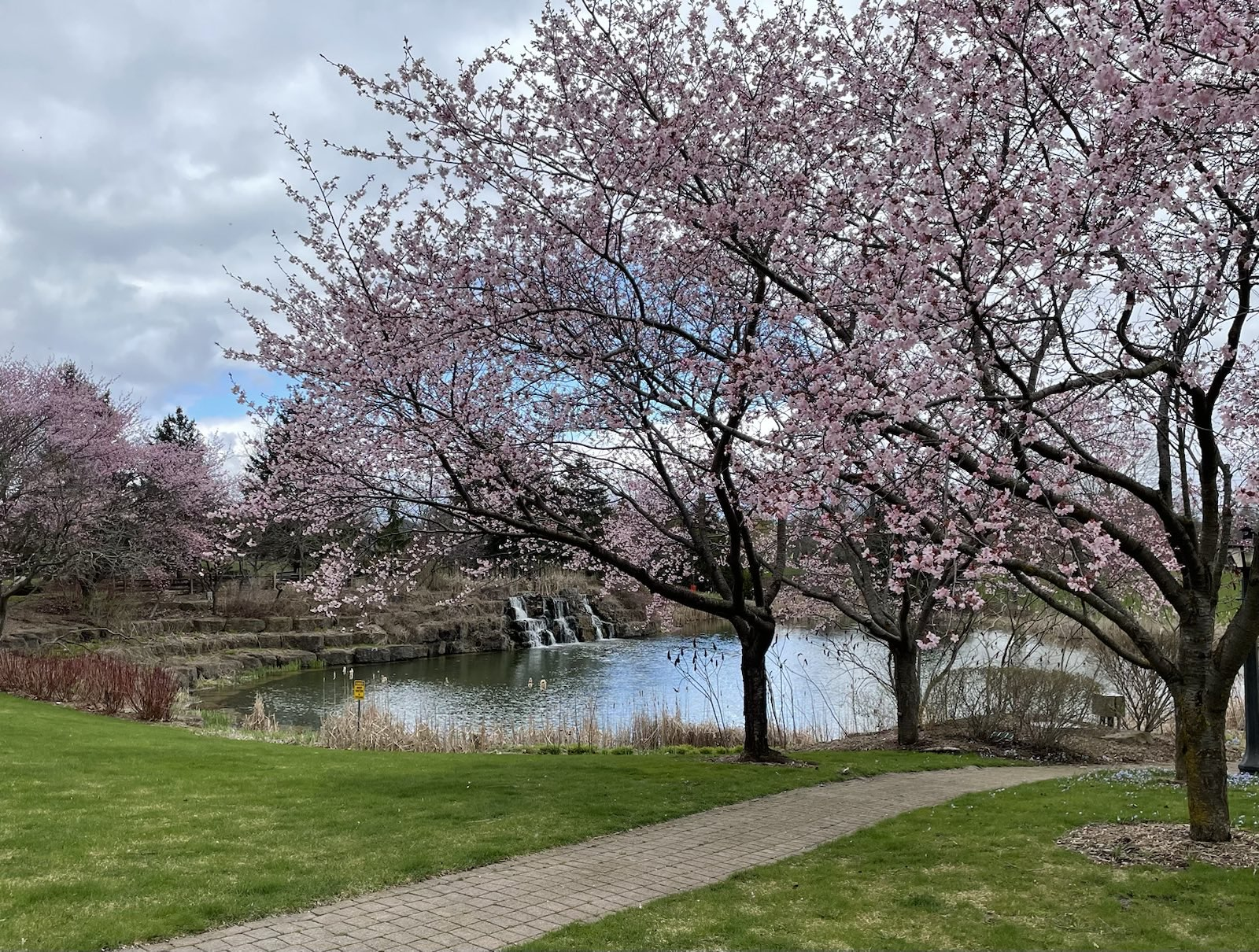
Ornamental cherries, Guelph, April 20. My photo.

I heard my first pine warbler this past week, and saw my first myrtle (yellow-rumped) warbler, watched tree and barn swallows dancing over the Grand River and phoebes flycatching from low branches in the maple swamp. Canada geese are hatching goslings, male goldfinches are moulting into summer plumage, and red admiral butterflies – maybe emerging from hibernation, maybe migratory – fluttered along the path we walked Friday, high above the Eramosa River. Bloodroot now stars the forest floor in Victoria Woods.

Red Admiral (Vanessa atalanta); my photo

Twenty years ago, or perhaps thirty, I used to get impatient for spring here; growing up in Essex County, by mid-April spring was much more advanced. Now, looking at e-Bird checklists for Point Pelee, I’m not seeing the same differences. With a couple of exceptions – blue grey gnatcatcher, common yellowthroat – the returning bird species look pretty much the same.  But a snapshot is misleading: a quick look back through e-Bird records finds a yellow-rumped warbler reported on the 7th of April.

Myrtle (Yellow-rumped) Warbler
(Dendroica coronata coronata), by Cephas, CC BY-SA 3.0 <https://creativecommons.org/licenses/by-sa/3.0&gt;, via Wikimedia Commons

The 7th of April. A yellow-rumped warbler. Some forty years ago or so, we had an Ontario record-early pine warbler – always the first to return – at Long Point on the 6th of April.

I won’t belabour the reasons; we all know them. But I wish I’d never been impatient for spring; I wish my first sight of a yellow-rumped warbler could be one of pure delight, not shadowed by ‘but it’s too early’.

 I wish a rewind was possible.

Learning to Listen

Thoughts of an Aging Birder

I’m standing on a boardwalk through a wet woodland: deciduous trees, damp soil, emerging plants, ephemeral ponds. Superficially, it’s not so different from the boardwalk through wet woodland I was standing on less than two weeks ago. One on the eastern side of the Atlantic, a kilometer from the North Sea; one on the western side, 1500 km inland. Different ecosystems, certainly, but what I notice today is the difference in the soundscapes.

Boardwalk, Wild Goose Woods, University of Guelph Arboretum.
My photo.

Recognizing all but the most common bird songs is a skill that has eluded me for fifty and more years. But at sixty-six, my vision a little compromised both by vitreous detachment and its resultant floaters, and by incipient cataracts, I’ve been trying harder to sort out the songs, to identify by sound. (My aging and arthritic spine also appreciates not having to hold up even my light Swarovski 10 x 32s as much, too.)

My hearing remains good, thankfully. In On the Marsh, Simon Barnes writes of friends who can no longer hear the high contact calls of goldcrest; the screams of swifts overhead, he tells us, are inaudible now to Sir David Attenborough. That day will no doubt come for me, but it’s not here yet. I can still pick out goldcrest in England, and its almost-doppleganger cousin the golden-crowned kinglet, here in Canada.

In the first week of April, the soundscape at RSPB Titchwell was dominated by onomatopoeic chiff-chaff calls. European robins sang from low bushes; a blackcap added its melody from a higher perch. Wood pigeons, endlessly cooing, added a bass line, punctuated by the equally endless screaming of black-headed gulls and the occasional explosive chatter of a Cetti’s warbler.

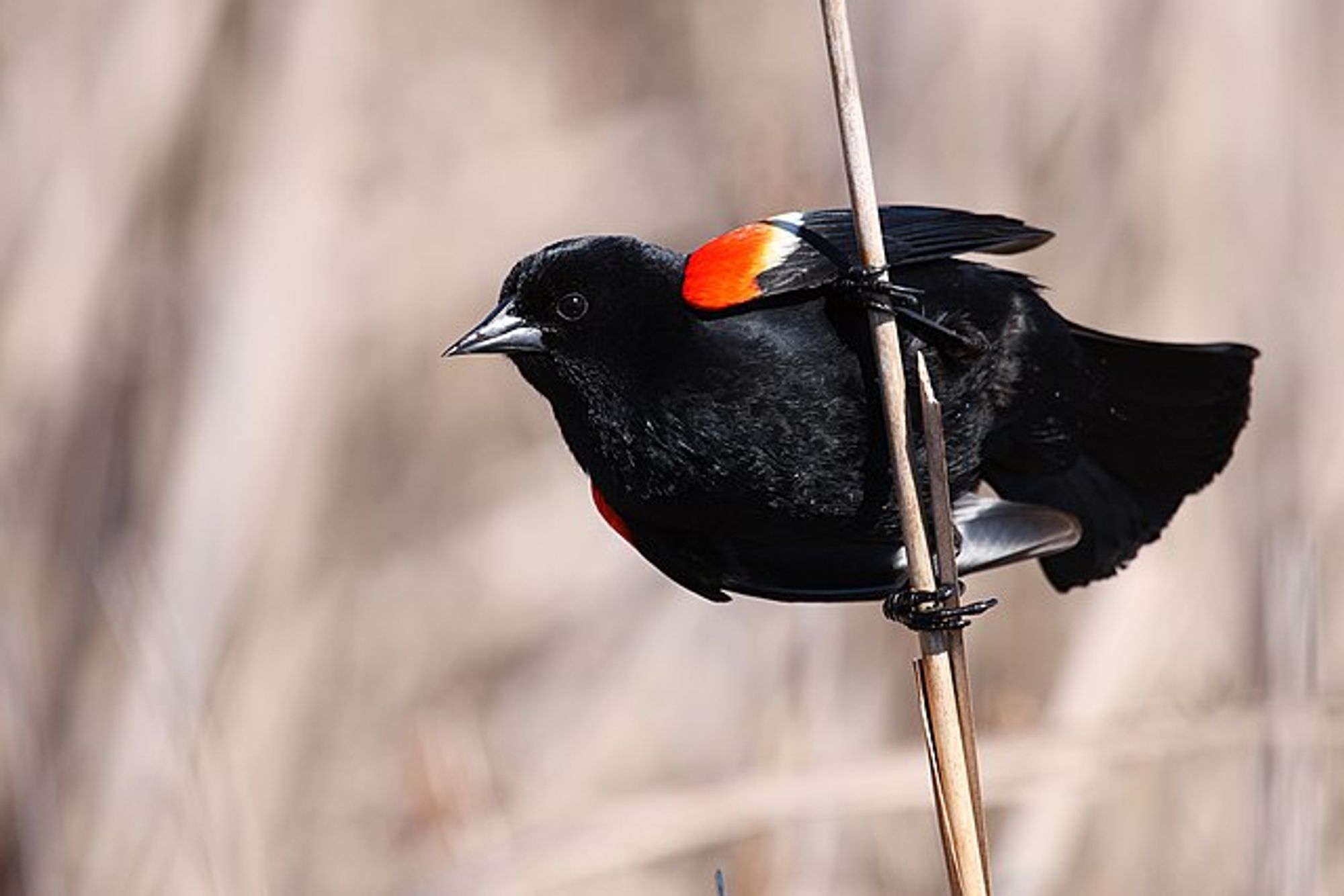
Red-winged Blackbird male, Point Pelee National Park, Ontario, Canada. Photo by Cephas, CC BY-SA 3.0 <https://creativecommons.org/licenses/by-sa/3.0&gt;, via Wikimedia Commons

Here in Guelph, on the boardwalk through Wild Goose Woods a few hours after dawn, the dominant sound is the chirr of red-winged blackbirds, the screeching laughter of northern flickers a close second. Another bird calls its own name: fee-bee, fee-bee. American robins sing cheerily from mid-level branches, and from the nest on the light standard over the playing fields I hear an osprey’s plaintive cry.

I’d know where I was—roughly—from either soundscape. While I’m focusing more on what I’m hearing through necessity and a wish to understand more of the landscape I’m moving through, looking at all the parts of the whole and not just on birds (I can identify a phoebe by song at the same time I’m looking at a bloodroot flower unfurling, for example), I’m also thinking about it in terms of my other life, that of the writer. Of the seminar on worldbuilding I’ve offered to give here in Guelph in the autumn, and all the things that are part of a convincing fictional world or will evoke a real one. Soundscapes are one of them: part of the whole which both characters and the reader, one hopes, inhabit.

Whether any writer can separate entirely the slice(s) of the world in which they live from their created worlds, I don’t know. I can’t. In this, I can only write what I know. There’s a circularity to this: writing has made me pay attention to aspects of the world I might have not noticed; a lifetime spent outdoors whenever I could informs what I write. The Titchwell soundscape?  It has a place in the story that’s beginning to unfold, and perhaps that book will be just a little richer because my aging eyes have made me listen more and look less. I’m fairly sure my life is richer, too.

The Last of Norfolk: March 30 – April 3

The last of Norfolk birding for the spring of 2024, at least! We plan, as always, to return.


March 30: A nuthatch yelps from high in a bare oak; coal tits call, ‘it’s me, it’s me,’ from low branches. In the meadow a jay forages among shelduck & Egyptian geese. A silver squirrel climbs a stump. The larches are bright green with new growth; new leaves unfurl on the brambles. We’re walking footpaths and lanes at Houghton, a sheltered walk on this windy day. In the sheep field a new statue stands: the figure of a man, or a cyberman, almost human. “Disconcerting, at dusk,” a woman walking her dog tells us. Later we learn it’s part of a new art installation by Anthony Gormley.

Photo by: Mmparedes, CC BY-SA 2.5 <https://creativecommons.org/licenses/by-sa/2.5>, via Wikimedia Commons

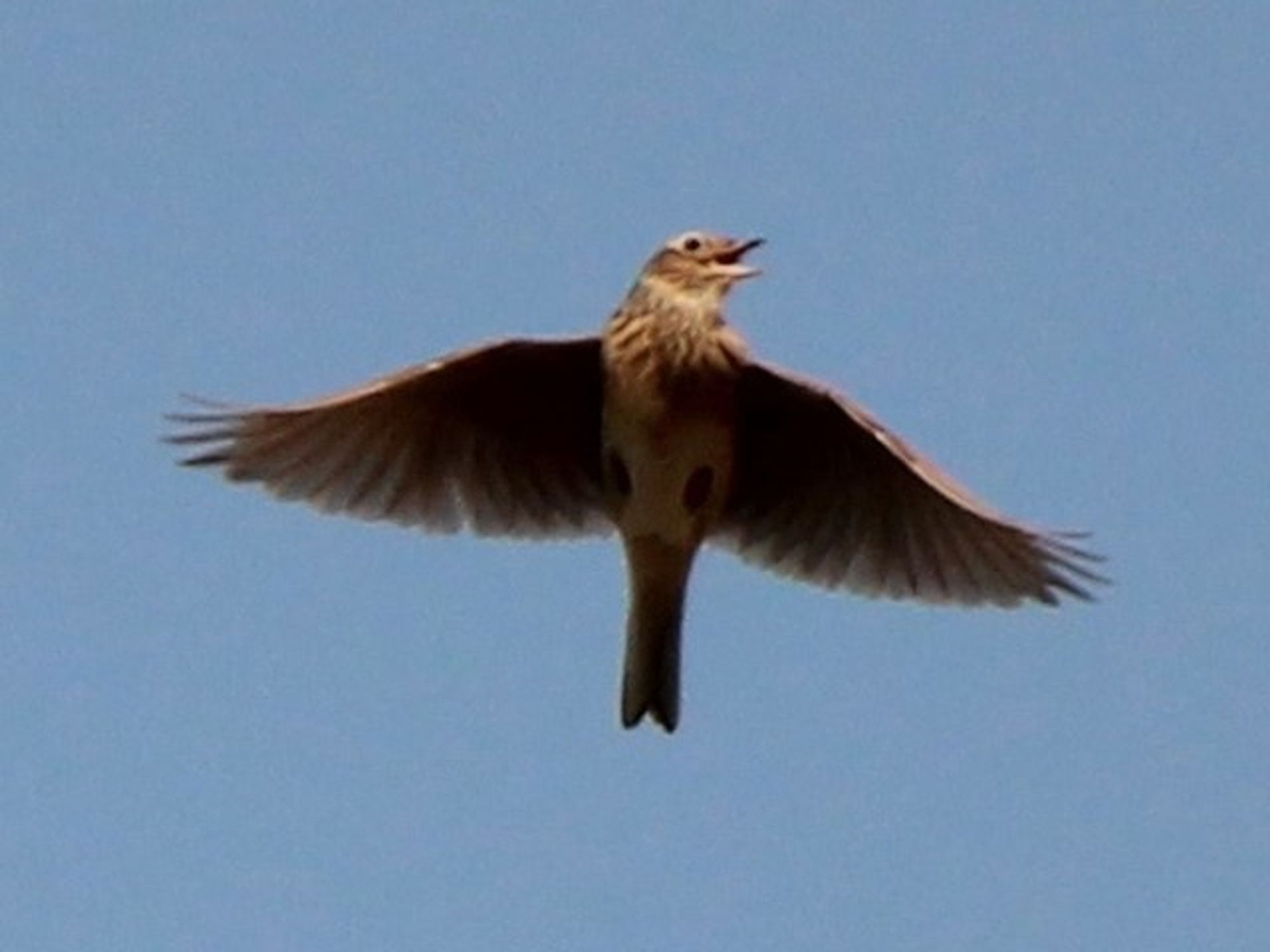
March 31: Drove to visit friends, through countryside and villages. Gulls, common and black-headed, followed ploughs. Pheasant and red-legged partridge, shoot survivors, scurried or flew across hedged lanes. The sound of tires and the barrier of glass & steel couldn’t block out the skylarks, singing, singing. A little owl lives in the barn down the road, our friends tell us; it’s driven out the barn owl.

Alpsdake, CC BY-SA 3.0 <https://creativecommons.org/licenses/by-sa/3.0>, via Wikimedia Commons

April 1: Footpath birding today, along the old railway line, now part of the Jubilee Trail. In Life Woods, the first mallard ducklings of the spring; on Snettisham common, a green woodpecker yaffles from a utility pole. We walk up into Ken Hill’s pine woodlands. A tree creeper circles the high branches of a still-bare oak. From the western height of land, we look out on the distant marsh and the Wash: it’s too wet still to walk out, without wellies. Shelduck are scattered across the wetland, gleaming white. I think about the torcs of the Snettisham hoard, found by a farmhand ploughing the field below us. I went to look at them (again) at the British Museum last week.

Dr W E Lee / Avenue of Beeches, Edge of Ken Hill Woods. CC BY-SA 2.0 <https://creativecommons.org/licenses/by-sa/2.0&gt;, via Wikimedia Commons

April 2: Walked out between farm fields to the mudflats of the Wash. Wrens sang from bramble or reeds every 50 paces; goldfinches twittered from greening willows. In the sunshine, both stonechats and reed buntings announced themselves, males proclaiming ‘this is my territory’.

rkl, CC BY 4.0 <https://creativecommons.org/licenses/by/4.0>, via Wikimedia Commons

Where Boathouse Creek joins the Wash avocets and ruddy turnstones fed on the mud; linnets flitted and fed along the shingle foreshore. On the gravel pits, among the black-headed gulls, pairs of Med gulls stood out, tall and proud. Sunshine, water, breeze.

Later, reading this in Simon Barnes’s On the Marsh, I recognized its inherent truth. I delighted today in red kites and marsh harriers, in singing skylarks and wrens, but mourned for the dead or dying oystercatchers on the mudflats, the lack of lapwings wheeling, the paucity of finches, all the losses.


April 3: Last visit to Titchwell today, under showery skies. Rain or no, the day gave us a bearded reedling in a rare fully open view. In the woods, a blackcap sang its bubbling, lilting song; a Cetti’s warbler exploded both into song and into view, briefly. Out on the freshmarsh, among black-tailed godwits turning chestnut and avocets up to their bellies in the water, a lone ruff, its back mottled chestnut & black, probed the mud.

Ken Billington, CC BY-SA 3.0 https://creativecommons.org/licenses/by-sa/3.0, via Wikimedia Commons

But the surprise of the day was a polecat, never before seen, feeding on roadkill at the side of the A149. We circled back at the next roundabout, took a second look. While our brains said ‘pine marten’; sensibility said ‘not a chance’. A little research revealed the identification. Norfolk, it seems, still holds secrets.

Nicolas Weghaupt, CC0, via Wikimedia Commons

December Diary II: At the Turning of the Year.

Six days past the solstice, and the daylight lasts a minute longer than it did on that shortest day. We’re still in the period when the change is barely perceptible. It won’t be until early January that the gain will rise to over a minute a day. It feels almost as if the world has paused.

Maybe it’s this sense of stopped time, at the darkest time of the year, that drives so many people to be frantically social, an atavistic response. Safety in numbers, safety in the lights inside and out, presents given and feasts offered to strengthen social bonds.

In nature, it’s a time to be wrapped up tight, if possible. It’s not been cold enough this year for mammals to be curled up asleep in dens or dreys; squirrels are still out foraging, the beavers are still cutting down trees. But most insects are dormant, and seeds wait for spring, on or under the soil, or wrapped in a protective layer of cells soft or hard: berries, cones, shells.

The last few days have been either raining or foggy. Red squirrels seemed annoyed by the weather, scolding at me with more vigour than usual. Smaller birds fed almost constantly: juncos among the grasses; starlings on the berry bushes; pine siskins at the cones. In Wild Goose Woods the drum of a pileated woodpecker searching for insects echoed against bare trunks. Only the crows were apparently unperturbed by the damp.

When I first saw the crows, I thought there were two, huddled together in the fog on the top of a glasshouse frame. Two became three, and three became four. They hopped around a bit, made a few conversational caws. And then they took off, all four of them, with purpose and wild, angry calls, to intercept a raven flying by.

They twisted. It dived. They followed. It ascended. They spiraled upward, still shouting. The spinning, sinusoidal dance repeated three times, until the raven had had enough. It arrowed away, the crows following for a few meters. Then they turned almost as one, and flew leisurely back to perch again, a gang of ruffians causing havoc just for fun.

The raven flew east. As I will be, in just over a week, east and 9 degrees of latitude further north. Where the daylight is an hour less than it is here…but for the three paradoxical months where, here, the hours of sun are longer but the air is colder and the world swathed beneath snow, it will be warmer. There are already snowdrops out, and on fields and in woodland and on mudflats and beaches, the northern birds that have come south to Norfolk from Scandinavia are feeding. Pink footed geese and redwings, shore larks and snow buntings. Godwits and redshanks, and, in numbers beyond counting, golden plover and red knots and oystercatchers on the bare mud of the Wash.

January 27, 2023

The Shepherd

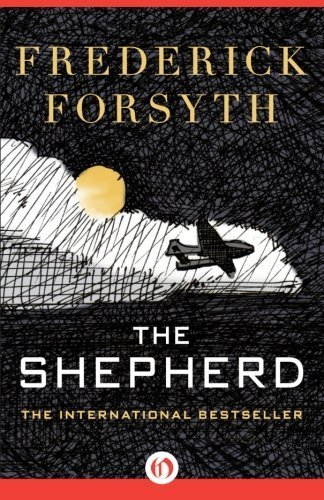
Lost Aviator Coffee was started a few years ago by two pandemic-grounded pilots. They occupy a small repurposed space in the Ward, an originally working-class, primarily Italian-immigrant, section of Guelph. I used to live in the Ward, in a tiny post WWI bungalow. It was the first place we looked for houses when we returned to Guelph. It’s not where we ended up, but I still bike through it almost every day of biking weather, and Lost Aviator is where I buy my ground coffee. Their holiday blend – ‘The Shepherd’ – is what took me there originally.

The seasonal blend isn’t named for the story of the shepherds who saw a star, but for a much newer story: Frederick Forsyth’s The Shepherd, a story that’s been part of my midwinter celebrations for most of my adult life. In the Victorian tradition, it’s a Christmas ghost story: a post WWII tale of a young pilot flying at night in fog across the North Sea, his fuel down to fumes, his instruments useless – and the impossible rescue that ensues.

It’s a classic story, its writing spare, perfectly paced, understated. Every Christmas Eve – its setting – we light the fire, turn off the lights, and listen to the audio version produced many years ago by the Canadian Broadcasting Corporation, read by the man who was, for many years, the co-host of As it Happens, the CBC’s national evening current affairs program: Alan Maitland. He was also my godfather.

Not that I really knew him; he’d been a friend of my parents, but had moved away to do greater things at CBC-Toronto than he could accomplish in the little CBC station in Windsor, I suppose. Nor did he do the ‘godfathery’ things some people in that role do. But I do remember meeting him at least once, and so that tenuous connection was there. But ‘Fireside Al’ read a lot of stories on the CBC over the years, and The Shepherd is the only one I listen to, for another, much less tenuous (now) connection. The Shepherd is set over the flat fields of Norfolk – and Norfolk is my second home, a place I know and love. (It was also home to more WWII airfields than any other county of the UK, due to both its proximity to Europe and its flatness.)

There’s not a central point to this little essay, really, except that it’s about connections. Were we playing the ‘six degrees of separation’ game, the folks at Lost Aviator could claim a three-point connection to Alan Maitland — and perhaps a four-point to Frederick Forsyth, if my godfather ever met him. (I wouldn’t be surprised if he had.) In naming their holiday blend after Forstyth’s story, they gained a regular customer. Little things that bring people together, make connections across time and space, from the power of words and imagination: from the power of stories. Which, as the 11th Doctor said, is all any of are, in the end. So make it a good one.

Equinoctial Thoughts

I left spring behind in England, missing the reported return of chiff-chaffs to Norfolk by two days. I’d heard of other migrants arriving—stone curlew to a secret site, for one—at the same time the last of the winter redwings were leaving, heading north. The blackthorn was in full flower, the local woods were full of primroses between the stiff green stalks of bluebells poking through the leaf litter, and the wood pigeons were courting in the garden.


Outside my window there is freshly fallen snow, on top of the several centimeters already on the ground. Tomorrow is the first official day of spring, and the forecast is for warmer weather, but also for more snow, falling in the cold nights.


But I will have a year of two springs. Already the turkey vultures are back, and the hooded mergansers; red-winged blackbirds buzz in the swamps and flocks of tundra swans whiten corn stubble fields a little further south and west. Sap is rising; maple syrup is being made.


Over the nine weeks I was in England I watched the field across the road go from stubble to fresh-ploughed soil, gulls and rooks following the tractor, to the hazy green of an emerging cereal. The belt of trees up on the hill changed colour subtly, the dull grey of winter overlaid with the golds and pinks and greens of swelling buds. The blackbirds and robins began singing earlier every day, and continued later.


It’s harder here in my suburban bungalow to watch the gradual shift into spring than it was in my edge-of-village house in England. But I intend to return to paying attention this year. Almost fifty years ago, the first serious writing I did was a journal of the coming of spring to my southern Ontario home, a project sadly interrupted by mononucleosis and a month of exhaustion. That too was from an edge-of-village, mostly rural setting. But I have easy access to woods and fields, rivers and parkland, and little excuse not to observe and record. A.E. Houseman wrote:

Now, of my threescore years and ten,
Twenty will not come again,
And take from seventy springs a score,
It only leaves me fifty more.

And since to look at things in bloom
Fifty springs are little room,
About the woodlands I will go
To see the cherry hung with snow.

A Shropshire Lad

Of my threescore years and ten, sixty-five will not come again. So I shall go look at things in bloom, and listen to birdsong, and watch the gradual transformation of a winter world.

Image by Noma Lotern from Pixabay 

Elemental Norfolk

I wrote this poem a number of years ago, after we started spending a couple of weeks over the turn of the year in England. It was one of my first published works.

Earth

Lane and common, heath and ploughed ground

Lie frozen underfoot. The lands

Decline to the sea: downland and saltmarsh

Diked and ditched by countless hands

Against the sea and winter floods.

Beyond the marshes, the named sands

Will rise and fall with the tide.

Air

Skiff and windpump, sails of cloth and wood,

Are battened down and still. The gust

Strikes salt and icy; harness and rigging,

Tarred and treated for rot and rust,

Await the end of winter’s gales.

Above the marshes, the wind’s cold blast

Will rise and fall with the sun.

Fire

House and cottage, farm and village row

Sit tightly closed and warm. Fire

Kindles in the hearths; desire and habit

Pruned and piled the garden pyre

Against the night and winter’s end.

Beside the marshes, the year’s bonfire

Will rise and fall with the wind.

Water

Stream and river, pond and open broad,

Wait silently for spring. The snow

Bleaches all colour; hedgerow and reedbed,

Trimmed and tight in winter’s throe,

Withstand the wind and killing frost.

Within the marshes, the water’s flow

Will rise and fall with the moon.

© Marian L Thorpe

Image: John Crome, Moonlight on the Yare, Public domain, via Wikimedia Commons. Original in the National Gallery, London.