Landscape and Story

A few minutes ago I clicked on a Twitter link on marketing (vs. selling) e-books.  I read through the strategies, and sighed.  I don’t want to do any of this…but should I be?  And then I realized: no.  I quite like what I do, where I am as an author, where I’m going.  I don’t actually want to be a ‘best-selling’ author if that entails hours of publicity, marketing, talks…..that’s not why I write.

All my life I have explained my world to myself in words.  As I get further into my coursework in landscape archaeology, I realize that much of Empire’s Daughter, and much of Empire’s Hostage, the in-progress sequel, is actually, at one level, a fictionalized interpretation of the landscape archaeology of Britain in the post-Roman world.  I ‘kind-of’ knew that, but two days ago I opened a textbook to a map almost identical to the one I drew in the planning of Empire’s Hostage – the northern European world seen upside down – with north to the bottom of the map. An epiphany. Two of my deep passions melding, and a realization, that in my own way, like J.R.R. Tolkien, I am creating, in my writing, a world to mirror and interpret the real landscape that holds my heart.

So I will keep writing with a fuller understanding of why I do.  I’ll keep connecting, through my reviews and blog posts and Twitter, with other indie writers; some of those connections are pure serendipity, like the review I’ll be doing of Ian Cumpstey’s Warrior Lore, English verse translations of Scandinavian warrior ballads – ballads that just happen to play a role in Empire’s Hostage. I hope my reviews help other indie writers sell books. Some of them will take a look at or give a shout out to Empire’s Daughter. Others won’t. Either is fine with me, now I know, viscerally, why I’m writing what I write.  It really is for me, and for the landscape that tells its stories to me. Only, and all, that.

Good Fences

Good fences make good neighbors, Robert Frost wrote, in Mending Wall.  Between our property and the neighbours on both sides, a split-rail fence delineates the property lines.  We built the fence ourselves, getting on for twenty years ago, pulling the cedar rails out of the brush of an old farm at the edge of the village, gladly given to us by the elderly farmer. When the fence was done, he walked down one day to see them in their new incarnation. “Good to see them used again,” he said, of the old swamp cedar rails, probably even then well over a hundred years old.

But in a massive thunderstorm earlier this year, with drenching rain and high winds from the east, unusual for here, the young butternut that grows just at the edge of our eastern neighbour’s property shifted just a little, leaning into the fence, and took down three rails. Oddly enough, it didn’t break them: the steady pressure on the fence snapped the wire that held them to the posts. But they couldn’t go back up – the trunk of the butternut was in the way now.

We debated taking the tree down, but I really didn’t want to. Another young butternut, at the edge of the maple swamp behind us, also listed in the storm, but it straightened itself up within a couple of weeks.  I decided to wait. Yesterday, mulching leaves, I took a good look at the tree, and realized it had grown straight again, but from about five feet off the ground, meaning its lower trunk still was an impediment to replacing the rails.

BD and I brainstormed, and decided the simplest thing to do was to add a post directly beside the one north of the tree. This would allow us to run the rails from the new post to the existing one south of the tree, creating a slight zig-zag (or, really, only a zig). We throw almost nothing out in term of wood, so hiding down with the compost bins was a huge old post that had once supported the far end of the washing line. Cut down and wired securely to the existing post, it was the perfect size.

It took us about half an hour to fix the fence, on a glorious November day, sunny, very warm, no wind. Overhead ravens swore at and chased migrating red-tail hawks. The chickadees went back and forth to the feeders, ignoring us, joined by two species of nuthatch and two of woodpeckers. The squirrels – black and red – are happy to have their highway contiguous again, and neighbouring dogs and grandchildren have their limits back. Good fences do, indeed, make good neighbours.

Raking Leaves

The winds that brought in a cold front a couple of days ago also brought down almost all the leaves hanging on to our two Norway maples. Norway maples – Acer platanoides – have, as their scientific name indicates – huge, plate-like leaves, and they don’t decompose easily. I have a couple of choices – I can rake them onto a tarp, and move them to the edge of the maple swamp behind us, in a (useless) attempt to smother the goutweed that someone planted there, long before our tenure in this house. Or I can mulch them into small fragments, and leave them to enrich the lawn. Burning isn’t an option – that requires a burn permit (if you’re at all law-abiding, anyhow) – and on our small property there is nowhere that meets the criteria.

I choose to mulch them into the lawn with the electric lawnmower. But first I have to rake them away from the porch, and the shrubs, and the garage doors where the wind has pushed them. It’s a cool last day of October, and this is just the right thing to be doing. Last year I was still on post-surgery restrictions, and the years before that I was working, gone from the house from dark to dark, and it seemed to rain every weekend. So for some years a landscape service has taken care of our leaves. But this year, it’s all mine, and I’m reveling in it.

I rake the leaves onto the front and side lawns into more-or-less even drifts, and plug in the mower. I start with the mower set at 3 1/2 inches, and go over the leaves, dropping the mower height down as the leaves are chopped. Across the road, a neighbour with a much larger property is burning hers: the smell takes me back to childhood, when we all burned leaves: the scent of fall.

It takes me about an hour and half to do the front and side lawns, clean the mower, sweep bits off the driveway and the walks. The leaves have been reduced to tiny fragments that will decompose easily, returning their nutrients to the soil, feeding earthworms and micro-flora, strengthening the grass and clover that make up our lawn.

There is something that just feels right about taking care of what we own ourselves, instead of paying a service to do it. I draw the line at the highly specialized or dangerous (BD and I are having a debate about our very tall chimney, which needs repointing. I think it’s too tall for him to do; he thinks otherwise. I point out we only re-shingled the one-storey additions and the garage ourselves, summer jobs, and left the high roof of our three-storey house to the professionals. And the chimney is higher than that roof. He’s ‘thinking about it’.) But raking leaves, cutting the grass, pruning…and inside, cleaning, painting, repairing….I like doing these, and they connect me to my house and my garden. I prefer to be a steward, with all the responsibility that implies, than a occupant, leaving the responsibility to others. Too often, in our working days, we felt more like occupants, renting services to keep the place going.

It rained heavily last night, so I can’t mulch more leaves today. I’ve still got twice as much to do – the other side lawn and the back, the the leaves from one Norway maple and a host of other, smaller-leaved trees – but that’s ok. The weather is promising to be warm all this coming week (unseasonably so, actually) and I have the time now. I’ll wave at neighbours, chat over the fence, watch the chickadees completely ignore me as they go back and forth to the feeders. What better way to spend a sunny, early November day?

Old, Cold Houses

Yesterday it rained all day, heavily, the last gasp of Hurricane Patricia reaching up into the edge of Canada. Today the winds blew hard, gusting to about 90 km/hr, bringing a cold front with them, and stripping most of the remaining leaves from the trees.

Parts of the house are cold tonight.  A four-square built in 1911, it’s grown a bit from the original; a summer kitchen renovated to a rec room in the sixties; the attic made into living space sometime earlier than that; our own addition of a sunroom.  Insulation didn’t exist originally and was minimal when added sometime later.  The windows aren’t quite sealed.  We’ve added pink fibreglas and vapour barriers in all the places we’ve stripped the walls down to the beams, and in the new sunroom.  The rest of the house had insulation blown into the walls a few years ago.  It helps.  It doesn’t make the house completely airtight, and on a day like this, bits of it are cold.

We’ve grown used to this, over the years.  We wear fleece-lined slippers, and layers of warm clothes. There are throws to snuggle into on the couch of an evening.  I have tea after dinner, reading or watching television.  The new high-efficiency oil furnace (no other choice except electricity, where we are) chugs away, doing its best.

All the heating to the bedroom floor is by convection, open grates in the floors and the wide staircase allowing heat to move upward.  Now we’re both home all day, the bedrooms are much warmer than when we were working, and had the thermostat turned down when we were out. We’re still adjusting to that, both of us liking cold bedrooms to sleep in.  I do wonder how the grandmother who slept in the attic survived, though – it’s just plain COLD up there – no heating at all, ice on the windows in the winter, damp in the spring and fall.  I suspect pneumonia carried her off.

We bought the house from a woman who had been born in it, about seventy-five years earlier.  She told us how the pipes use to freeze in the kitchen, unless the cupboard doors under the sink were left open in the winter. How the drains out to the dry well and the septic tank would freeze, too. The house wasn’t built with a bathroom; it came later.  I imagine going out to the privy on a cold winter’s night, or bathing in the kitchen in a tin tub.  We may only have the one bathroom, and when the winter wind is from the northwest prepare to shiver if you forget to turn the electric heater on – but luxury compared to that.

And that is what I am thinking about, this first windy, cold night of the fall.  What exactly do we need, and when does more become, in the words of a Monty Python skit, “bluddy luxury”? We could warm the house more – it would be simple:  turn the heat up, and turn more of the electric space heaters on. But not only would that cost us money, it would produce more greenhouse gases, more climate change, more pollution. Just because we can have something, should we? Doesn’t the attitude that says ‘sure, have more’ lead to obesity, metabolic disease, debt crises, foreclosures, addiction, and all the sins and symptoms of our material world?

Perhaps that’s an advantage of an old, cold, house.  It makes you think.

First Frost

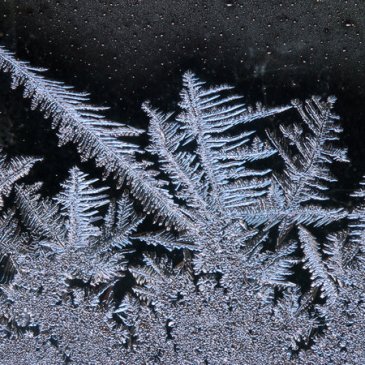
I had to scrape ice off my car windows yesterday morning, before I could go to town.  A mid-October frost is normal here; I wasn’t surprised by it.  The scraper was already in the car.

Other years this frost would have been one more source of stress in a too-busy life.  The advent of winter meant getting up fifteen minutes earlier, or changing my routine somehow to find the extra five to ten minutes needed to clean my car of ice or snow (or both) every morning.  Now, I’m not in any hurry, so there’s no stress.

Friends and family are already bemoaning the frost on Facebook.  Winter is coming. Yes, it is.  Yes, the days will shorten, snow will fall, life will get more difficult.  On the other hand, there are no mosquitoes, no grass to cut or weeds to pull, no pollen allergies or need for sunscreen, and people are friendlier and more helpful to one another in the winter, in the face of shared adversity.  Life moves from the patio to the fireside, but the beer, friendship, conversation and laughter are just as good in either place.

First frosts aren’t always about temperature.  First frosts can be the first gray hair, the first twinge of arthritis, the first child leaving home.  The first promotion of someone younger over you; the first time you can’t open a jar lid.  The first pair of readers.  The first death of someone you love, or someone you work with.  Some first frosts are light, and some are hard freezes.  But just as our attitude towards snow and ice and freezing temperatures affects how we see winter, our attitude towards aging affects how we age. There are some things we can’t change, but there are many we can.  When my father’s eyesight began to finally fail him in his late nineties, he could have mourned his inability to read his beloved history books; instead, he asked for an iPAD and learned to use iBooks, increasing the font size until he could read the words.

It will snow soon.  The first falls will be light, and will need no shovelling, and maybe not even a scattering of salt.  But at some point it will really snow.  Snow shovelling is my job, mostly, due to BD’s back problems. Last year, I was less than six months post-major-abdominal-surgery and still on lifting restrictions.  But with an ergonomically-designed snow shovel, and moving only small amounts in each scoop, the pathways got done, and I did myself no damage, and probably some good.  It took me longer.  Other things didn’t get done.  But it was a priority.  Winter is good at sorting out what really has to be done, and what doesn’t; what is worth the time and energy, and what can wait, or go by the wayside altogether.

Winter, aging or serious illness teach many of the same lessons.  Both summer and winter are beautiful, but they both ask and give different demands and different gifts. Like everything else in this world and this life, both demands and gifts are transient.  We do best when we appreciate that simple fact.

On William Morris

Recently I’ve read a number of posts, or comments on posts, where the writer states that the impetus for beginning a more minimalist life was the experience of clearing out a relative’s home after their death. I’ve shared that experience, more than once, and I too believe it was a major reason I try to live as simply as possible. Even so, I seem to have accumulated more possessions than I’d like.

Minimalism, for me, isn’t about bare counters and ‘everything in its place’. My credo is that of William Morris: Have nothing in your house that you do not know to be useful, or believe to be beautiful’.

In clearing out my parents’ house finally this spring, the two categories of things we found hardest to deal with were my mother’s watercolour paintings, and, the objects – mostly porcelain and china – that had made the journey from England, and in some cases had been in my mother’s or father’s family for several generations. Heirlooms. Not of any financial worth, but all had stories attached.

Even among three children and three grandchildren, we couldn’t keep all of my mother’s flower paintings. She was prolific, and, at the height of her talents, good. We all chose a couple we truly loved, gave a few away to friends, and gave the rest to the local horticultural society for their monthly draw table, knowing that way they’d go to people who loved flowers (and who chose the painting as their prize from the table, as that’s how those things tend to work.)

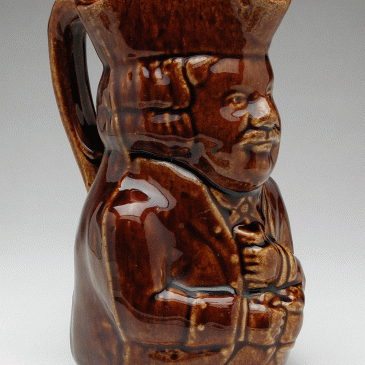
And the heirlooms, some of which are neither beautiful nor obviously useful? We kept those, even though they added to our possessions. How could we not? Our history as a family is reflected in them: the Toby jug from the pub my great-great-great grandmother kept; the vases my sea-captain great-great uncle brought back from China; the willow-pattern plates my father ate his Sunday dinners from at his grandfather’s house. We don’t own these things; we keep them in trust for the next generations, as repositories of the stories that go with them. They make the family history tangible, and, therefore, are both useful and meaningful.

So perhaps for me William Morris’s statement needs a slight revision: Have nothing in your house that you do not know to be useful, believe to be beautiful…or know to be meaningful‘.

Words to Live By

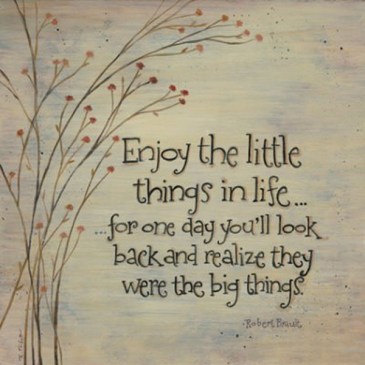
Not all of us can do great things. But we can do small things with great love.

This quote, apparently wrongly attributed to Mother Theresa, remains one of my favourites.  It doesn’t matter who actually said it – it remains a valid and validating statement.

I can’t, for example, paint a masterpiece.  But I can create art for handmade birthday cards, the image usually one I think will have some extra meaning for the person receiving it.

I will never write a best-seller.  But my first novel has been enjoyed by quite a few people, and has been well reviewed.

I will never be a master chef, but I can create meals from scratch that are enjoyed by friends and family.

I am no design guru or master renovator, but I have mudded and caulked and painted and wallpapered and laid tile with care to help create a home we love.

At the end of my career I received a provincial award for contributions in my field of education, completely unexpectedly.  I had never done anything huge, just a lot of small things over many years.

In a recent article in the New York Times, OpEd writer David Brooks asked readers how they found purpose in life.  He writes  “a surprising number of people found their purpose by… pursuing the small, happy life.”

Small things with great love.  Words to live by, at least for me.

Fall Migration

Late yesterday afternoon I walked at Point Pelee National Park in southern Ontario. Known world-wide as a birding mecca in the spring, it’s quieter in the fall, although migrants still pass through. Yesterday it was blue jays, in the thousands, and in two – or perhaps three – layers. The highest birds were flying south, towards the tip of the sandspit that is Point Pelee, jutting out into Lake Erie. From here – or to here, in the spring – birds can fly over the the lake, never too far from land, following the point and then the islands – Pelee, Middle, – to the other shore. It’s why it’s such a hotspot for birding, the first landfall for tired birds making the long trek across the lake.

But jays don’t like to fly over water, so the waves of birds fly south, see the water, and turn back, to follow the shoreline around to the west and cross the Detroit River.So the second layer of jays, lower than the southbound birds, is flying north. There are so many birds the skies look like Toronto highways in rush hour, except the birds are moving faster.

The third layer of birds are those that have dropped down to tree height to feed. Migration needs energy, and the woods are full of jays seeking any source of energy they can find. Like all corvids (the crow family) blue jays are omnivores, and dragonflies, migrating monarchs, other insects, berries, – just about anything edible – will provide fuel for this long flight.

Other than the jays, the park is quiet. A few cyclists on the empty roads, a few other walkers, no other birders late in the afternoon. I don’t think I have ever been here on a weekday afternoon in September, although I have been walking these trails since I could toddle. I grew up close by, and the park was a frequent Sunday afternoon destination for our family.

Here, too, I brought BD when he first started to make the long trek from Toronto to my childhood home to see me the first summers we were going out, and, perhaps most importantly of all, it was here I introduced him to birding.  I’d been a casual birder since earliest childhood, identifying the birds of woodland and fields from a children’s bird-book, part of learning my world, along with trees and wildflowers and insects and rocks. One May afternoon  – probably Mother’s Day weekend – as we walked along the west beach trail, BD said “What are all those people looking at?” “Birds,” I answered, and pointed out in quick succession a yellow warbler and a Baltimore Oriole.  One casual question, an equally casual response – and our lives changed forever.

We learned to bird properly in the early 80s, taught in the field by the companionship, generosity, and good nature of some of the top Ontario birders. It’s been a passion ever since, although what that looks like changes with time. We no longer come to Pelee in the spring: the long drive, crowds, and the too-competitive nature of some birders (and the disregard for the fragility of the ecosystem by some bird photographers) has kept us away. We’ve evolved now into patch-watchers, birding our own local area and watching and recording the seasonal and yearly changes – the return of ravens and sandhill cranes, the increase in red-bellied woodpeckers, the disappearance of house sparrows. It’s a way of birding I prefer: not a competition, but a study, deepening our understanding of where we live, of our world. And as much of it is done on foot, or after a very short drive, it’s more sustainable.

But it’s good to come back to a place that nurtured and nourished us as beginner birders all those years ago. At every turn of the trail memories of what we saw there – a screech owl in that clump of cedars,the red-headed woodpeckers on that snag, the northern waterthrush in this swamp – come back to me.  A passion born on these trails has taken us to seven continents, to places in China and India and Tibet that most Westerners never see, and given us friends and contacts around the world.

Like these north-flying jays, we’re looking now for easier ways to do things.  Long trips over water are no longer as appealing as they once were, and moving to warmer climates for the winter holds great attraction.  But as long as there are trails to walk, birds to watch, and a place to hang a feeder or two, we’ll be fine.

Not Too Much

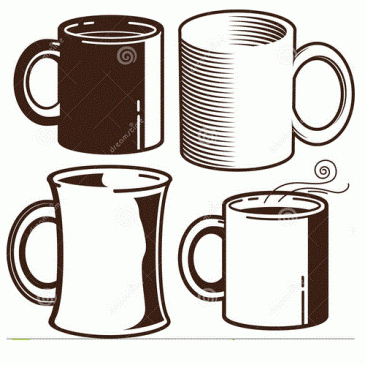
This morning, as always, just about the first thing I did when I got up was make coffee.  As it dripped through the filter, I did a few morning chores, putting out the recycling and putting away last night’s dishes from the dish rack.  Then I reached for my favourite mug, and stopped.

That mug holds about 325 mL of coffee (12 oz.). Not a bad size, but I tend to drink coffee either while I’m writing or while I’m reading…and I rarely finish the cup.  Usually the last quarter-mug or so goes down the sink, and I start again.  And I know this is the case – so why do I keep using that mug?

It’s not just at home.  I tend to order the medium size from take-out places – and I never finish those, either.  What an incredibly bad and wasteful habit!  And why am I just thinking about it now?  It’s not like BD hasn’t been bugging me about it for thirty-five years. (Actually, he has been bugging me about drinking coffee, period.  He hates the stuff – the taste and the smell.  He drinks it under protest at the end of overnight flights if he needs to drive, and that’s it.  And perhaps I’ve grown so inured to his complaints about coffee in general I didn’t listen to the specifics. A point I need to consider.)

So now I’m sitting here at my computer with a smaller cup of coffee…and I’ve finished it.  Too small a sample size to draw any conclusions, of course.  But it’s got me thinking about portion sizes in general.

Portion size creep and its effects on the health of populations has been well documented for restaurant meals and packaged foods.  I remain annoyed at one of my favourite bistros whose burger – and I love an occasional, well-made, burger – remains at half-a-pound.  It’s just too big.  A friend and I share it, occasionally, when we lunch there.  Large portions are either eaten, increasing calorie, fat, and sodium intake beyond what is reasonable for most people, or it’s wasted.  But restaurant portion creep has also affected what we see as a reasonable meal size in our homes.

I’ve been reviewing our meals in my mind as I write this.  BD needs more food than I do, and he is by no stretch of the imagination over-fed. I, on the other hand, could stand to lose some inches. But we tend to eat the same amount of food at dinner, and at brunch.  Otherwise, no.  But while three blueberry pancakes and three turkey breakfast sausages are appropriate for him at brunch, are they for me?  Or am I eating that much just because it looks ‘right’ on the plate?  Meals based around pasta, quinoa or couscous are simply split between two bowls; occasionally I keep some of mine back for lunch the next day, but not as often as I should.

As fall approaches, and we eat more slow-cooker meals, I can see this as even more of an issue – it’s just too easy to fill up two bowls with chili or stew without really thinking about it.  I’m not worried about what I eat – our vegetable-and-fruit rich diet, low in meat, fat, added sugar, and sodium, is pretty healthy.  But it’s still quite possible to eat too much of healthy foods.  So I think it’s time to introduce a new discipline into my life – that of being mindful of how much food I am taking.

Michael Pollan summed up what he believes our approach to food should be in seven words:  Eat food.  Not too much. Mostly plants.  It’s those middle three words I need to take more seriously, for my own health and that of the planet. I’ll let you know how it goes.

On Being a Tortoise

I have become somewhat sloppy in some of my practices of mindful living this past month. Somehow, I got out of my habit of shopping only twice a week, and have been running in to town to pick up a few items almost every day. (We live twelve miles outside of town, in a tiny village with no shop.) This needs to stop, not just because it’s wasteful of gas and time, but because it’s just not how I want to live my life.

I shopped Monday this week, but Tuesday and Wednesday, except for picking up fresh corn and tomatoes, I didn’t (and that doesn’t involve going in to town). Instead, I went walking, good two-hour hikes both mornings through woods and fields. Today I need to go into town again; but I have a plan. I’m going to put my bike on its carrier, park at the store I buy the most at, and then bike to the other places I need to go. I have both a basket and panniers for my bike, and the university town has both bike lanes and an extensive network of off-road multi-use trails, making it easy to get around.

To be fair to myself, I haven’t just been being lazy by not using them. I didn’t have the core strength to ride my bike with the added weight, especially the panniers, which I find also affect the balance of the bike. Following major abdominal surgery thirteen months ago, I was forbidden to do anything except walk or swim for six months, to allow complete healing. (And I can’t swim.) That took me to January, and the middle of the coldest winter on record for many years here. I kept active, but mostly inside, and mall walking, painting woodwork, and using the treadmill or exercise bike wasn’t enough to strengthen the core. (A lot of the regular abdominal exercises are also contraindicated after the type of surgery I had, so I couldn’t just do crunches, either.)

But then spring finally arrived, and I started walking seriously again, and biking, My balance was bad for a while.  I kept at it, and finally this last ten days I have been walking without my Nordic poles; first for half an hour, then for an hour, and for the last two days for two hours each day, on hiking trails with all their ruts, roots, and rocks.  I think I can safely say I don’t need the poles any more, at least on fairly level ground.  This means my core is stronger.  A small but significant victory.

So I’ll put the basket and panniers on my bike, and park in town at the grocery store, and after shopping there plan a circular route that will take me to the specialty poultry store, and the library, and back to the car.  I could walk it, and carry the chicken and the books, but biking works different muscles and I like to do both. If it goes well, then this will be how I run errands in town, at least until snow makes it too dangerous.

There have been times in this past year when I have felt like a tortoise:  slow, ungainly, and dependent on an external support system.  But ‘slow and steady’ did the trick.  I didn’t rush anything; I built on small gains in small increments. Sometimes I did push myself too hard, thinking I was ready for a distance or a difficulty of terrain I wasn’t, but I backed off immediately once I realized I’d misjudged.  I didn’t let either pride or the desire for a quick fix to result in injury, which in turn could have meant more surgery.  (That was quite the incentive to not overdo it, by the way.)

My healthier body means I will drive less, which benefits the environment as well as our gas budget.  I can do my share of the heavier chores, which BD’s bad back will definitely like!  I’m less likely to use (more) health-care resources, more likely to stay creative, happy, and useful in the community, and I’ll be living my life in a manner closer to my ideal.

*****

A later-in-the-day update….the plan worked.  I learned the following:  I have to make sure I have my balance completely right before I take a hand off the handlebars to signal a turn, or I wobble, especially after I had made my purchases and was carrying some weight.  I also learned that choosing to try this out on the hottest and most humid day of the entire summer wasn’t the best choice; normally I bike on rail trails and bike paths, and the additional heat radiating off the paved road surface was more than I had expected…and it was ten-thirty in the morning.  But I did it!