String and Paper

Well, we’ve been here almost a week, long enough to know what I miss from the Canadian house; what I should have brought or need to buy here.

This is a very well equipped holiday cottage, and as we’ve lived here many times before I was fairly sure I knew what to bring (an apron, my Aeropress coffee-maker, a thermos for coffee to take on our day trips) and what I would choose to buy here (a slow-cooker, bread pans, a small birdfeeder for the garden.) I was right about all that, except this time there was an apron hanging in the kitchen. The bread pans are heavy-duty disposables: they’ll go into the recycling when we leave at the end of February; the inexpensive slow-cooker will go to a charity shop, as will the bird feeder. Here’s what I didn’t foresee.

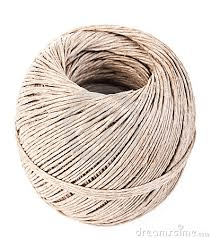
Twist-ties or bag clips, for the bags of lentils and peas, pasta and rice. There are a few bag clips here, some of which I bought in the spring, but not enough. String or skewers, for holding together stuffed chicken thighs. Or perhaps I can just buy a ball of food-quality string, and use it for both purposes…that would be the simplest solution. So far, that’s it. Except, perhaps, paper.

At home we both have printers, and printers generate paper that’s usually good on one side. We use it for printing again, anything that doesn’t need to be pristine, or for writing lists and notes. Here there is no printer (that in itself will be an interesting experiment, for someone whose work revolves around the written word) and therefore no paper generated. So paper – for grocery lists, freezer inventories, schedules and menus – is in short supply. I could, of course, go out and buy an inexpensive pad of paper. But we’re going to try to manage with what we have, just to see if we can.

There is no comparison between our two months here and the six-to-eight week camping road trips we made in the past, where everything had to fit in the back of a compact car. But it’s still an opportunity to see what we really use, versus what we use because we have it – or even more importantly, what we have and don’t use.

So what do I miss from the Canadian house? (Other than the cats?) Nothing. So far, nothing at all. My guess is the lack of a printer will eventually be an issue…but we’ll see.

Adjustments

We landed at Heathrow about 8:45 on Wednesday morning. Thanks to e-passport readers, we were through immigration in about five minutes, picked up the bags with a two-minute wait, and waited perhaps ten minutes for the bus to the car rental location. Another fifteen minutes and some paperwork, and we were on the road.

We’ve done this so many times. Forty minutes or so north-and-and east on the M25, the London Orbital, and off the motorway at South Mimms for coffee and breakfast at the services there. Back to the motorway for a short time, and then swing north on the M11, then the A11, then the A1065 and the B1112 to Lakenheath RSPB Reserve by late morning.

Here we’ll walk for a couple of hours, shoving North American birds to the back of our brains and retrieving the British ones. So many adjustments these first few days: the birds, the money, the side of the road to drive on (BD is expert at this, whereas it takes me a few days); names of things, behaviours. We finish our walk, eat our lunch, and make the last leg of the journey, an hour or so into the village and our little rented bungalow, home for the next two months. We retrieve the keys from the lockbox, open the front door, say hello to the house. Back out for quick shop for enough food for dinner and breakfast; tomorrow we’ll do a proper shop. Jet lag is kicking in, but the house is familiar; there are no surprises here. We know where everything is in the kitchen and how the stove works.

Am I home? Or am I home in Canada? We’ve lived with this duality all our lives: two citizenships, two passports, two countries to call home. I’ve stopped trying to answer that question, because both places feel like home, in different ways. Our families’ roots are deep here, shallow in Canada; our personal roots are deeper in Canada, shallower but getting deeper every year here. Unlike for some people with dual citizenship, there isn’t a deep moral choice to be made: both countries are democracies, both have universal human rights, universal health care and reasonable social support. Canada has better state-funded schools, probably. Britain has better public access to land for walking. Small differences, those last two, but huge for us. We preferred our teaching careers to be in Canadian schools; we prefer the access to the countryside here. And that no-one thinks birders are odd. And the weather: it was -18 C the morning of the day we left Canada. It’s 8 degrees C here.

Our life is smaller here. The bungalow is much smaller than our house. We have only one car. We shop more often, because the fridge is half the size of the one in Canada. All of this is ok. There’s a good library, a good butcher with local meats and game, a good little grocery store. The market town ten minutes away has everything else we need.

So, yes, I’m home. (Except I miss the cats, but they are being well taken care of by our long-term house/cat sitter.) I can love two countries: I loved both my parents, after all. It’s pretty much the same thing.

New Year Thoughts

Our New Year’s Day lunch is over, and we’re switching gears to preparing for our imminent departure for two months in the UK. I’m not a resolution-maker (at least, not just because it’s January 1st), but a couple of things together have made me think.

First was the meal planning for these last few days. Inevitably we had food left over from our lunch. Some of it went home with guests, with me doing quick calculations about what we needed to feed ourselves until Tuesday afternoon. Once everyone had gone, I did some planning.

A handful of raw veggies and some roasted red peppers, plus the half-box of chicken broth in the fridge? Those became roasted red pepper soup, which, along with the last of the baguette, became Friday’s light supper.

Lunch today and tomorrow will be the rest of the cheese, crackers and fruit for me, and the left-over hummus for BD. Tonight’s dinner will be the rest of the mini-quiches, with some frozen veggies. Sunday I’ll use the chicken pieces and jar of broth in the freezer, both the last remnants of a roast chicken from a few weeks ago. Monday we’re out with friends, and Tuesday brunch will be the last of the eggs, scrambled, with a small package of smoked salmon brought as a hostess gift. I have enough milk for cereal and coffee to last to Tuesday. The apple cider will be drunk. Nothing opened will be wasted; the unopened- beer, wine, a box of crackers, a box of chocolates – will wait for our return.

At the same time, I’m doing the last loads of laundry and planning the packing. We’re simply moving houses, to our little rental cottage in Norfolk, our second home by virtue of us returning to the same cottage time after time. But we don’t own it, which means we can’t leave clothes behind. (It comes with everything else you could possibly need, except for personal electronics and toiletries.) How many clothes do I need, for two months? How many can I take (along with my binoculars and scope, my laptop, my art supplies, my maps for my course…) without paying for more luggage?

What do I need? We’ll be spending our time walking and birding, and I’ll be continuing to work with my writing, reviewing and editorial work. So. Half-a-dozen pairs of socks and underwear, two bras. Four t-shirts, four long-sleeved t-shirts, to cover the possible range of temperatures – which will be roughly 0 C to 12 C over the two months. Two sweatshirts, two corduroy shirts. Two pairs of jeans. My hiking boots, my canvas Tom’s that double as slippers. A nightdress, and a pair or two of yoga pants to lounge around in. One set of decent clothes for dinner out. A quilted vest, a rain jacket and rain pants, gloves, hat, scarf. That’s it. (So, nags the little voice at the back of my mind….why do I need more than this at home?)

And it is a good question. OK, I need grubbies to paint the attic in, and to garden in. I need another, warmer coat because it isn’t going to be -20 C in Norfolk, and it is here; same with winter boots. But even given that, and the need for a summer wardrobe as well, why do I own so many more clothes than this?

I’m satisfied with my approach to food: I plan meals, including potential left overs, and very little gets thrown away. I can find ways to incorporate almost any left-over into a soup or a casserole or a curry, or as a scheduled lunch. But even after my major clothing purge in the spring, it will be time, when we get home, to do another. I’ll keep my favourites, figure out what I might have actually missed having while I’m away, and take the rest of the fall and winter clothes to the charity shop. Because I no longer live a life that needs a closet full of clothes. My work lives in electronic form in the cloud and is completely and totally portable: I talk to all but one of my clients only by email or by editing notes in the manuscript, and I talk to those who edit or review my writing, or interview me, in the same way. They don’t know what I’m wearing, nor do they care. Other than the odd dinner out to celebrate something significant, and the rites of passage of weddings and funerals, there is nothing in my life that needs more than comfortable jeans and shirts.

I’m going to watch myself, in these next two months. The cottage, as I said, is fully, even extensively, equipped. What do I use? What toiletries do I really need? What do I buy? I have a local library card. The cottage has excellent WiFi: that’s a must, now, for me. My goal is to buy nothing except food, toiletries if I run out, and the occasional cup of coffee to warm up after cold hours birding on the North Sea coast. Oh, and a movie or two…because there is immense value to me in seeing a film at the Majestic Cinema in King’s Lynn: after the first time we went there, several years ago, and I was telling my father about it, back in Canada, he said “Oh, yes, I remember that cinema: I saw Ben Hur there in 1929.” Some things are, truly, priceless.

New Year’s Day Lunch

We’re in the lull between holiday celebrations. Our two-part Christmas – Christmas Day dinner with BD’s brother and family, and my family get-together a couple of days later – are done. I’ve baked a lot, eaten far too much, and played a marathon men-against-women game of Trivial Pursuit (we women won, finally.)

On New Year’s Day we’ll host a lunch. This used to be an annual occurrence, until we started travelling over the two-week Christmas holiday to places like India and China (and Antarctica, once) and so were no longer at home on New Year’s Day. Now we’re retired, the winter travel will take place in January and February, so we’re having the lunch again.

It’s a pretty simple affair. Jeans and sweaters meet the suggested dress code. After the excesses of the last couple of weeks, we try to keep both food and drink to some basics: hot spiced cider, soft drinks, a glass of wine for a toast. I’m making little tart-sized quiches and sausage rolls; there will be smoked salmon, hummus, cheeses and paté, along with crostini and crackers and fresh baguettes. Crudités, olives, pickles, and roasted red pepper and eggplant will round it out. Served buffet style, the twenty or so people attending will eat in small groups scattered around the house: we’ve chairs a-plenty. Dessert will be raspberry-ginger cake served with coffee or tea. Nor am I cooking all this: friends and family are bringing parts of it.

Yesterday BD and I got the wine glasses down and ran them through the gentle cycle of the dishwasher: this set hasn’t been used in a few years, and were very dusty. Some of the plates got the same treatment. It shocks me slightly that I gave away our ‘banquet set’ for twenty-four last year, and yet we still have enough plates – dinner, lunch, and dessert – , as well as glassware, mugs and cutlery to accommodate twenty people. Not that they match, but who cares? But if we want to keep doing these annual lunches, I guess I’ll have to keep them. I abhor the idea of disposables. The other alternative, which we used to do for pot-lucks at work, is to ask everyone to bring their own. I’ll have to give that serious consideration another year.

Guests will start to arrive about 12:30 p.m. With luck, the first man through the door will be dark-haired – an old Scottish tradition called ‘first-footing’ gives good luck to the house and its inhabitants if the first man who enters on New Year’s Day is dark. We’ll serve drinks, talk, exchange Christmas stories, laugh, until about 2, when we’ll eat; by five at the latest, folks will have left, leaving us plenty of time to run the dishwasher, nibble on left-overs, and tidy up.

We used to do evening parties: for years I hosted our work Christmas dinner: roast turkey and all the trimmings for nearly thirty people. Then we did the New Year’s lunch as a sit-down meal, which involved renting tables and chairs and big white tablecloths and rearranging the furniture a bit. As I get older, the parties get simpler, and I’m happy for people to bring food or drink. Everyone enjoys it just as much…or perhaps more.

Just How Connected do I Need to Be?

We live 70 km (40 miles) from downtown Toronto, but there are times it feels like 700 km. Not only do we have a well, and a septic tank, and until not-very-long ago no garbage or recycling pickup, we are – shall we say – underserviced in the wireless communications department.

Until very recently the only place I could get a cell phone signal was outside. That’s improved, which is good, because the cell phone system is how we access the internet. It’s the only signal that reaches our house effectively, surrounded as we are by very tall trees. We have what is called a ‘turbo-hub’, basically a wireless router that uses the cell phone signal instead of other options. The problem is, it’s expensive.

We pay in usage increments, up to 15 GB of data, which maxes out at $105, and then per MB after that. Yep, per MB. This hadn’t actually been a problem until very recently, when a combination of three things brought us up short. The first was automatic updates to Windows and to our virus protection, which for our two laptops was suddenly eating up about 2GB every month….and that’s without the potential Windows 10 download. And then there are automatic app updates on our two iPADs and our two iPhones. The second was a period of rapid growth in my freelance writing & editing business, which suddenly took off – but as it’s all done electronically, it was using a lot of data, especially when there are pictures involved. And the third was my on-line university course, which suddenly had a lot of on-line interactive map manipulations in the assignments. When last month’s overage charges were one and half times our 15GB rate, we knew something had to change.

Now my business actually does something, the obvious solution is for me to get a separate turbo-hub for my laptop, so I can charge the costs back to the business. Which I will do, in the new year. But until then, we took a hard look at our internet use, and more importantly, our habits.

How often a day do I actually need to check Facebook, Twitter, Google+, my blog pages, and e-mail? Once? Twice? The business e-mail more often, yes, and I use social media to advertise and promote, but I still don’t need to be on them constantly. And why were all our devices constantly connected to the internet? How long does it actually take to make that connection? So things have been turned to airplane mode when not actively in use, the phones are off wi-fi completely (we have a decent amount of data in our plan) and I’m disciplining myself about social media. The personal e-mail gets checked once a day – if something’s really important, my siblings or friends will text me…or, heaven forfend, actually call me. But in our instantly connected world, this is taking conscious work to break these habits.

Almost equally hard to break was the immediate up-or-downloading of files. The next chapters have arrived from one of my editorial customers? Download them right now. Finished the edits? Send them back right now, regardless of the fact the customer is several time zones away. Until the business turbo-hub is in place, ‘right now’ has been replaced by ‘when I’m in town, and can access the secure network at the university’. Has anyone complained? Nope…..

The result of all this is not only will we not get hit with another bill of $250 for a month of internet, I actually get more work done, more efficiently. Does that surprise anyone? No? Not even me…so now I’m wondering how I let myself spend my time (and my money) so inefficiently, for the sake of the reassurance (or disappointment ) we get from those instant connections. But I have to say, playing with the maps in my landscape archaeology course may have used a lot of data, but it was a lot of fun.

The One-Stop Holiday Shop

We don’t, as an extended family-and-friends group, give anything but small, consumable holiday presents. We’re all adults, all well-enough off and we all own too much stuff. The money we would have spent goes to a cause of the donor’s choice, and we celebrate with food, wine, winter walks and conversation.

But there is still that small consumable present to buy. In keeping with our belief in shopping locally, I consider my options. There is a lavender farm just north of us that has lots of lovely little products. There is a bee-keeper who makes beautiful candles with the beeswax. There is local maple syrup. Or there is Rose’s, our bakery-preserves shop right here in the village. Rose’s jams and chutneys and pickles and salsa are scrumptious, made mostly from locally-grown produce, providing employment and revenue right in our village. Rose’s wins.

I stop on my way to town: I can walk there, but not with nearly two dozen jars of preserves in my bag. I’ve chosen late morning on a mid-week day, when she isn’t so busy. The shelves are lined with jars, their contents gleaming red and purple and green. I buy blueberry jam and hot salsa, crabapple jelly and cranberry-apple chutney, spicy red pepper jelly and bread-and-butter pickles, while inhaling the scent of bread baking. Probably I buy more than I need, but we’ll eat anything that’s left over.

I could, in theory, preserve my own jams and pickles now; retirement should give me the time. But my days are too full already, and with such a supply just down the road, I’m happy to buy them from Rose. A little bit of our local food will make its way around the province in the next few weeks, our local farm and rural economy will benefit, and my holiday shopping stress is nil. Now I can start the holiday baking!

The New Coffee Maker

Buying anything new in our house is not just a question of going shopping. All purchases of any substance need discussion. If it’s a replacement item, what is wrong with the old one – can it be fixed? Do we actually need it? Can one be found second-hand? If it’s something new to the house, why? What purpose does it serve, and what need does it fill that currently isn’t met? We don’t need more things, and we’re trying to reduce what we have.

I drink coffee. I love coffee. BD hates the stuff. I’ve had a little 4-cup drip coffee maker for years and years…and it was slowly dying, not heating the water to a sufficient temperature. I tried cleaning it. No better. Reluctantly, I decided it really had to be replaced. I need my coffee. Equally reluctantly, BD agreed. ‘Can you get something that doesn’t make the whole house smell like coffee?’ he asked (after the initial ‘Why don’t you give the stuff up?’ followed by ‘Can’t you just drink instant?’ )

Hmmmm. I used to have a French press, many years ago, but cleaning it was a pain, even though it made good coffee. I did some research, and found the AeroPress. Basically a modified French press, the AeroPress sits on top of a mug. You add a filter and coffee to the detachable filter basket, screw it onto the body, add water just a bit below boiling, and press down on the plunger. The on-line reviews were fabulous.

I was fairly sure that my local roast-their-own beans coffee shop would carry it, and I was right. The barrista there raved about it. It was about thirty dollars, twice what a replacement 4-cup drip maker would cost, but it won’t make the house smell like coffee from the pot sitting on the warmer, and will use less water -I almost always made more coffee than I drank, because I could never get small amounts to taste right. (Water use matters – we buy our drinking water, because our well, while safe from a bacterial count viewpoint, has a high manganese and iron content, and tastes unpleasant. So every couple of weeks, BD drives to town with the big reusable bottles and refills them and that’s what we and the cats drink.)

I’ve had it for four days. The verdict? It makes great coffee. It took me a day or two to work out exactly how much coffee and how much water I needed to make it taste just right, not too strong, not too weak. It’s a cinch to clean, the filter and used coffee pop out directly into the compost bin, and it doesn’t take up counter space.

It also means I’m not drinking coffee mindlessly, because it’s in the pot. Already my coffee consumption has dropped because I have to think about whether or not I want to take the three or four minutes it takes to make a cup. I always meant to only drink two cups a day, one in the morning, one after lunch – but it was there on the counter, calling to me. I’m sleeping better, and my stomach is happier. What’s not to like?

As Christmas Approaches

December, and time here in Canada to start thinking about the holidays. While we acknowledge the need for ritual and gathering in the shortest, darkest days of the year, Christmas is not a holiday BD and I usually celebrate, for a number of reasons. Neither of us are conventionally religious, and therefore the Christian reasons for the holiday are not relevant to us. The rampant consumerism that has taken it over in most of the western world also repels us, and, finally, BD – who has the two-sided gift called Asperger’s Syndrome – is overwhelmed by the lights, music, colours and crowds of the season. So, over the years, we’ve distanced ourselves from the mad rush of Christmas.

For many years we’ve travelled over the period, removing ourselves from it altogether. We’ve been, on December 25th, places as far-flung as Antarctica (it’s summer there, in mid December), India, China and England. But this year, since we are no longer bound by the two-week school holiday, we’re not travelling until January, and will be home.

We’re spending Christmas Day with BD’s brother’s family, his nephew home from Australia, where he’s in grad school; his niece home from a closer university. We haven’t yet decided who is contributing what to the meal, but it will be a shared effort. We’ll tell stories and learn what the kids have been up to, and be respectful of this family’s Christian beliefs, as they will be respectful of our agnosticism. Then we’ll head down to my sister’s house for the 27th, to spend some time with her and her husband, and my brother and his family. This is the first year without anyone from our parent’s generation: both my father, and my sister-in-law’s father, died this past year, and so we are gathering differently, to share food and wine and laughter in a different house than other years, a new chapter in the story.

When I look back on my childhood, what I remember of Christmas – what stands out – is never the presents. I remember the food, the turkey and stuffing, the cranberry sauce and the mince tarts. There were almost always extra people at that dinner: widowed friends, an elderly childless couple, my mother doing her best to alleviate loneliness for one day. I remember decorating the tree each year, bringing out the old, battered decorations, having their stories retold each year, maybe adding one or two new ones, often hand-made. I remember sitting one year with my older brother singing Silent Night in front of the tree. I remember the long games of Monopoly on Christmas afternoon. And the few presents I do remember were ones made with love and by hand: a new outfit for my favourite doll, when I was about 4 or 5; a purple corduroy housecoat when I was thirteen, a hand-carved plaque saying Sid (because my hair, in the mornings, looked like Sid Vicious’s,) that BD made me early on in our relationship.

Our families on both sides have long ago given up on exchanging anything more than token, consumable presents: none of us need anything, and so the money we would have spent goes to support a cause we believe in – anything from the local food bank to mosquito nets, wildlife habitat to refugee sponsorship. Some of those battered decorations will be on my sister’s Christmas tree this year, and the stuffing and mince tarts are still my mother’s recipes. Our extended celebrations will be spread over the days between the solstice – December 22nd this year – when we light a candle that will burn through the night, an acknowledgement of the shortest day, to New Year’s Day, when we’ll host friends and family for a late lunch.

Whatever you celebrate or acknowledge in late December, whether or not your family is close or not, there is a deep atavistic need for light and warmth and companionship in the darkest days in the northern hemisphere. I wish that for everyone, although I know it isn’t possible for many. As you plan your Christmas, think about what you remember. I am old enough that a tangerine in my stocking was a special treat of the season. Such a small thing…but given with great love. That is what I remember.

The Monthly Menu

In the first months of retirement, it felt good to be able to shop every day or so, especially with the farmer’s markets in full swing. It was a luxury I hadn’t had in my working days.

But over this autumn, as my days of leisure become fuller with the work of my third, chosen, career, it’s becoming a nuisance. The markets are closed, except for the Saturday ones, and the roads are becoming icy, so last month we went back to the monthly menu.

Once a month, we sit down and plan meals. I create a four-column chart: Date, Meal, Prep on Day, Need to Buy. This goes on the fridge, and can be modified as needed – if I only use half a tin of chopped tomatoes in the curry, then a note is made on the next meal that needs them that they’re in the freezer. I use this chart to determine monthly and weekly shopping lists; I tend to buy meat monthly and freeze it, and everything else weekly, with a quick top-up shop half-way to buy milk or yoghurt or eggs, as our fridge isn’t big enough to keep large supplies of these on hand. It also reminds me what to thaw and what other prep is needed on the day.

This works because there are only two of us, and our lives are fairly predictable. If we decide to go out to a movie and dinner with friends, that’s ok -that meal either doesn’t get made, or, it gets moved to the next day, and that meal cancelled, whichever is easier. Meals can be moved around without too much difficulty, and left-overs always have a meal to be included in.

The other advantage is that in six weeks, when we leave for an extended vacation, we’re not leaving behind a freezer and fridge half-full of food. We left once for a two-week holiday over Christmas, only to have our area hit by a vicious ice-storm that meant our house was without power for eight days. All the freezer foods, all the fridge perishables, had to be discarded (luckily our cat sitter is very flexible on what tasks she’ll take on – oh, and the cats went to live with a friend for that time) as we kept in touch by text from England. I’d like not to put her in that situation again, so both fridge and freezer will be empty of anything that could go bad.

Will I keep this up in the summer, when the markets are open again and fresh local food abounds? Probably not….or I’ll modify it a bit…but for the winter months, it works for us.

The Quiet Joy of Enough

Walking today on the snowy trails at our local conservation area, BD expressed once again his sense of disbelief that we are actually retired. Like many – if not most – of our generation, he’d expected to work to 65. ‘But,’ I gently pointed out, ‘many people just wouldn’t be prepared to take the pay cut we did, to retire early.’

‘Enough’ played its role in determining it was time to retire.  Both in it’s negative sense: ‘I’ve had enough of this job.’ and in its positive: ‘We have enough money to retire.’  The latter statement was true only if we kept the positive concept of ‘enough’ in our minds.  ‘What isn’t need is greed’: I don’t know who said that, and I’m not sure I entirely agree with it – but that depends on how you define need. If you acknowledge that the soul has needs as well as the body, then it’s not a bad quote.

‘Enough’ sometimes is difficult.  My health issues have meant I have had to learn what ‘enough’ is with regard to certain foods; that one glass of wine is plenty; that I have physical limitations that must be considered. BD has had similar lessons to learn.  But ‘enough’ is also marvelous: there is enough time now for me to write, to read and review books, to edit for others, to walk every day: all the things that the demands of the salaried job took away from me.  And even better, there is enough money that I can do these things as a true amateur, for the love of them, and not for profit, and so I have only myself to answer to. But this is true because I can say this of so many things: clothes, furnishings, possessions of all sorts –  ‘I have enough’.

I will honestly admit to greed in the past. I had too many clothes; I liked food and wine all too well, and no-one needs the travel experiences we have had, although how can you regret the sight of a tiger hunting along an Indian river, or an Adele penguin standing at your feet, peering up at you? I can’t.  But I can also say, even about that, ‘enough’.  We have the memories.

Our world is smaller now, but our time is…ours.  I wake every morning with quiet joy, knowing I have enough.