Honouring Labour, Honouring Food
I’m emerging from the intense process of bringing a book to life: the detailed proofing, the minor cover changes, the precise production values. It’s done, and published, and starting to make its (so far) well-received way in the world. Which means I can raise my head, and look around, and think about some other things.
One thing I’ve been thinking about recently (again) is food. Not the cooking of it, or not only, but the ways we value it, or don’t value it, and more precisely how we don’t, in general, value the labour and resources that go into producing it. Food waste has got a lot of press recently, and it should. But there is more than one devaluing going on when food is thrown out: we are, when we waste edible food, dismissing it – whether it’s an extra zucchini or soft carrots – but we are also ignoring the human and resource cost of producing that food.
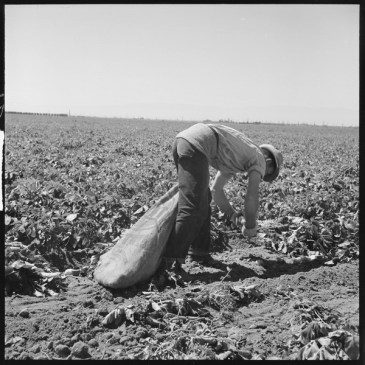
I have a couple of degrees in agricultural science. I have also worked, in my teen years, in what is called ‘stoop labour’: picking tomatoes and green beans, riding a potato digger, harvesting sweet corn, cutting grapes. Long, hot, sweaty days, often with no access to a washroom or running water; lunch eaten with dirty hands, sometimes between the rows. Sometimes the pay was hourly, sometimes it was piece work. It was never good. I’ve worked alongside immigrant women with advanced degrees, whose English wasn’t good enough to let them work in their area of expertise, women from Portugal and Hungary. I’ve worked alongside men from St. Kitts and Jamaica, who come to Canada yearly to support their families back in the islands. I did this work for a few weeks every summer, and only for a few years. These people did it, do it, year after year after year.
I find myself remembering this more these days, maybe because I am in my 60th year, and my knees creak and my back hurts, and arthritis plagues me occasionally. I buy a head of broccoli at the farm stand, or a bunch or radishes, and I look at it, and think about the work. Which raises, in my mind, an ethical issue: this head of broccoli or bunch of radishes is in my hands because of the labour of those who planted it, those who weeded and watered and fertilized, and those who harvested it. Can I, with a quiet mind, throw out half of it: the stems of the broccoli, the leaves of the radishes? What would that say about how I value their work?
So I have set about to find ways not to waste the products of that labour. (Not to mention the other resources – the fuel and fertilizer to grow the crop; the topsoil itself, disappearing or degrading in much of the world; the water, rapidly becoming a limiting factor.) As each vegetable crop comes into season, I’m being creative with what I do with it. (But if anyone’s found something useful to do with corn husks, other than compost them to produce soil amendment, let me know!) This is what I’ve been doing, so far this summer:
Broccoli stems: I slice off the tough outer part of the stems, tossing those parts into the large container in my freezer where all soup stock ingredients go. Then I slice the inner portion into matchsticks, which go either into salads, or into an Asian-inspired soup I make.
Radish greens: add to salads or soups, or, cook until soft, and puree them. (Pour off most of the liquid and reserve as stock.) I use pureed greens, whether from radishes or salad greens past their best – in place of zucchini in zucchini bread or muffin recipes, and it works just fine. I sometime use other pureed veggies too – I’ve previously published this recipe here.
The stock container in the freezer gets just about everything else: broccoli leaves, radish trimmings, bits of pepper, anything that’s sat too long in the fridge and has gone soft; overripe tomatoes, extra herbs. Every couple of weeks I scoop out about two cups worth of bits, put them in the slow cooker with some garlic and onion, salt and pepper, and few chicken bones from the other freezer container, cover with water, and let it simmer all day. The bones and vegetable matter go into the municipal compost system (from where it goes to farmers’ fields as soil amendment); to the broth, I add match-sticked broccoli and carrots, thin slices of red pepper, left-over corn, slices of radish – really whatever is around. I toss in a few herbs – Thai basil, lemongrass, parsley – from our community herb garden, more garlic, cayenne pepper. I cook the broth and veggies together for ten minutes, add tiny egg noodles, and four minutes later, pour into wide bowls. Sometimes I add tiny pieces of meat – again, whatever is around: little bits of chicken from a roasted bird; one sausage, cut into fine rounds and browned – but no more than an ounce for each person. I serve it with good bread, and maybe a salad, and that’s supper.
What do you do to reduce food waste? I’d really love to know. Has anyone tried making pesto from greens other than basil? Are there other creative soup recipes out there?Please share!
Photo: Kern County, California. Migrant youth in potato field. Stoop labor by a migratory youth: by Partridge, Rondal, 1917-, Photographer (NARA record: 8464464) (U.S. National Archives and Records Administration) [Public domain], via Wikimedia Commons

 As I have a general policy of not buying things, why did I make an exception for this?

 Random Ramblings