Savoury Oat Cakes

BD is of Scottish stock, and oatcakes are a good Scottish biscuit.  Commercial ones contain oils he can’t eat, so out came the recipes and the baking paraphernalia for another kitchen experiment.

Now, true Scottish oatcakes aren’t to everyone’s taste. Made without sugar, they can resemble cardboard, I agree…but we all know (even if we’re not admitting it) that sugar isn’t good for us, so I was determined to make these traditionally, without sugar.  I prefer to save my recommended daily allowance of sugar for my tea and for my four squares of dark chocolate. But add spices  – pepper, chili peppers, rosemary – and they become something special.

I went recipe hunting on the internet, focusing on British sources because, after all, they are a British biscuit. Between two of my favourite cooks, Hugh Fearnley-Whittingstall of River Cottage fame, and Nigella Lawson, I found two slightly different recipes, combined them, and here’s the result.  You can play with this recipe a lot, as far as the spices go.

Savoury Oatcakes

1 cup scots oats/porridge oats.  (These are not rolled oats.  They are more finely ground, but not oat flour either – somewhere in between.  I found them at my local bulk food store, but you could make them in a good blender or food processor from rolled oats.)

1 tsp salt

1 Tbsp olive oil

1/8 – 3/4 c  just-stopped-boiling water (explanation below)

Any or all of these spices: (or others).

1 tsp coarsely ground black pepper

1 tsp hot pepper flakes

1 -2 tsp rosemary

Pre-heat the oven to 375 F.  Combine the oats and salt and spices in a bowl and make a well in the middle. Add the olive oil – and now is the tricky part – the very hot water.  You want just enough to mix the oats into a cohesive but not sticky ball, and you need to do this quickly.  The amount of water you use will vary with the texture of your oats. (I found with commercial Scots oats I needed about 1/3 c or just a bit more. You can always add a few more oats or oat flour if the mix is too wet, so err in that direction).

Roll out your oat mixture between two strips of parchment paper until it is very thin – about 1/8 inch if you can – and cut out rounds with a cookie cutter or a glass.  Place on silicon baking sheets or parchment and bake for 10 minutes; flip them over, and bake for another 10.

Cool them completely before transferring to an air-tight tin.  Personally, I freeze them: since they have almost no moisture in them, they thaw really quickly.  Serve as a base for cheese, or just butter them, or – as I do – top with blueberries and (unsweetened) yogurt for a healthy snack or breakfast. (Reputedly Queen Elizabeth eats them for breakfast, too.) Of course, BD, for whom I made them in the first place, can’t eat any dairy products, so he eats them as is. He may be a braver man than I…then again, he is a Scot.

A Very Special Apple Pie

As I’ve mentioned on and off in this blog, my husband BD has a specific and rare food allergy to lauric acid, one of the fatty acids found in a wide range of fats. It significantly limits his (and by extension our) diet. One of things off-limits has been pastry, because it’s generally made with either lard, butter, or ‘vegetable shortening’, which usually contains at least one of the fats that have high levels of lauric acid.

But yesterday I found a pastry pre-mix at a bulk food store that is made with only soybean oil. Soybean oil is on the ‘ok’ list. So I gave it a try. (I’ve tried making pastry with a safe oil before, to less than edible results.) But this one worked! And last night – serendipitously at his 60th birthday dinner – we had apple pie for dessert. Lovely, clove-y, gingery (cinnamon is off-limits), apple and cranberry pie.

BD had apple pie for breakfast, too, this morning. I can’t say I blame him – if I hadn’t had pie for 5 years I would too! Now, we’re not going to start having pie a lot. It’s still not healthy. But for special occasions, yes. And I went back out this morning and bought quite a lot of the pastry mix. It’s in the freezer. Christmas isn’t that far off!

Kitchen Gadgets I Wouldn’t Want to be Without #2: The Stick Blender

The simple stick blender is a gadget I use almost every day. In the last two days, it’s been used to make smoothies, blend a roux into chicken broth to thicken a stew, and transform left-over roast vegetable salsa into pasta sauce.

I often don’t use electric appliances – I own a hand-held mixer, but usually I mix cake or cookie or muffin doughs by hand, with a solid dinner fork. I might as well use a few more calories up before I eat what I’ve baked! But blending is a different thing.

My sister gave us a traditional blender as a house-warming present the year BD and I moved in together – 1979 – and we still have it. BD uses it to make hummus weekly, and I use it occasionally, but the stick blender has replaced it for most uses. It’s just simpler, and easier to clean.

I’m on my second one. The first one I bought was bottom-of-the-line, inexpensive, since I wasn’t sure how much use it would get. Eventually it burned out – but not immediately – so I bought a better one. Two in fifteen years isn’t too bad!

Here’s how I transformed the salsa to pasta sauce – I’ll start with the salsa recipe, full of local, seasonal vegetables bought at the farmers’ market on its last day for this year.

Roasted Vegetable Salsa

2 red peppers

2 small eggplants (about 3 inches each)

1 medium zucchini

6-12 garlic cloves, depending on how much you like garlic

1 small onion

10-12 grape/cherry tomatoes, preferably roma type

1 cup finely diced butternut squash

1/2 c olive oil

2 Tbsp balsamic vinegar

rosemary

basil

oregano

sea salt

black pepper

1/2 c feta cheese

Preparation

Peppers: seed and dice finely

Eggplant: peel and dice finely

Zucchini: dice finely

Garlic: peel and dice finely

Onion: peel and dice finely

Tomatoes: dice finely

Squash: peel and dice finely

Toss diced vegetables with olive oil and spices and spread on parchment paper on two cookie sheets. Roast at 360 degrees F for 30 minutes. (A higher temperature than this destroys much of the goodness of olive oil.)

Add 1 Tbsp each of dried rosemary, basil, oregano, and 1 Tbsp sea salt, and 1 tsp coarsely ground black pepper, plus the 2 Tbsp balsamic vinegar. Mix well. Adjust seasonings to taste and add more olive oil if desired. Let sit at room temperature to blend flavours.

Just before serving, add 1/2 c feta cheese. Serve with crostini.

This makes about 3 cups. I had just over a cup left over.

To make pasta sauce:

Add 1 c chicken or vegetable broth, preferably low sodium as there is a fair bit of salt in the salsa. Bring to a boil gently. Cool somewhat, and blend in the saucepan with a stick blender.

This gives you a creamy, tangy pasta sauce. Use as a vegetarian sauce with more cheese if desired, or, add ground chicken, turkey or whatever you like.

Now, those of you who follow this blog know that BD is allergic to all dairy. So I actually made two versions of this, one with feta and one without, and did this sauce twice: both worked well, but I would definitely add ground turkey or spicy turkey sausage to the dairy-free version for protein.

Slow-Cooker Cassoulet: A Portable Feast

I do love my slow cooker.

A new cinema opened in our general area a few months ago. It plays first-run and art-house movies, and it does matinées every weekday afternoon. It has become our primary place to go to a movie with friends, also retired, who, like us, prefer the matinées. But here’s the rub: our friends live 22 km (13 miles) south of us, and the theatre is another 20 km (12 miles) south of their house. Realistically, this means that the post-movie dinner is always at our friends’ house, which means they are always doing the cooking. We could go out, but its difficult and frustrating for BD with his allergies.

This week (the movie was Bridge of Spies, by the way, which was excellent), I said ‘enough – I’ll cook.’ Then, of course, I had to come up with something that was easily portable and could be left over the afternoon. And as I know my friends’ fridge is always full to overflowing, that really only left me with the option of a slow cooker meal.  So I wandered around on the internet for a while, found a few similar recipes, modified them for BD’s allergies – and here is what we had. It was really good and very easy. You may need to adjust the spicing to suit yourself; this is fairly mild to suit our friends’ palates. It cooked on a low setting from about nine in the morning to about seven at night, except for the half-hour we were driving.

Slow Cooker Cajun Chicken and Sausage Cassoulet

(Serves 6)

Ingredients

3 spicy turkey sausages cut into 1/2-inch slices

6 skinned and boned chicken thighs (about 2 1/4 lb.), sliced into 2-inch pieces

1 teaspoon salt

1 /2 medium onion, chopped

1 medium-size bell pepper, chopped

4 garlic cloves, chopped

1 c frozen lima beans

1 14 1/2-oz.) can diced tomatoes

1 1/2 cups chicken broth

1 8oz package frozen chopped spinach

1 Tbsp celery seed

1 1/2 teaspoons Cajun seasoning

1/2 c safflower oil

2 Tbsp flour

Preparation

Cook sausage in a large cast-iron frying pan over medium heat, stirring occasionally, 4 to 5 minutes or until browned. Remove sausage with a slotted spoon, and drain on paper towels, reserving drippngs.

Sprinkle chicken with celery seed. Cook chicken in hot drippings over medium-high heat 2 to 3 minutes on each side or until browned. Remove chicken. Add onion, pepper and garlic to pan, and cook, stirring often, 5 minutes or until onion is tender.

Add tomatoes, lima beans, spinach, salt and cooked ingredients to slow cooker. Using the oil and flour, make a roux to thicken the chicken broth. Add the thickened chicken broth to the other ingredients; add the Cajun seasoning. Cook in a slow cooker on low all day. Serve with good crusty bread and a salad.

Cajun Spice Mix

Ingredients

  • 2 teaspoons salt
  • 2 teaspoons garlic powder
  • 1 teaspoon ground black pepper
  • 1 teaspoon onion powder
  • 1 teaspoon cayenne pepper
  • 1 1/4 teaspoons dried oregano
  • 1 1/4 teaspoons dried thyme
  • 1/2 teaspoon red pepper flakes (optional)

Canadian Thanksgiving

There are few things more lovely than an early October morning in Ontario.  The sky is a brilliant blue, the roadside and woodlot maples all shades of fire.  I’m going early to the farmer’s market, because this is Thanksgiving weekend in Canada, and the market will be extra-busy.

We’re having Thanksgiving dinner with my brother and his family, my adult niece and nephew home for the weekend from jobs and university, along with the youngest niece, in the last year of high school.  Our contribution to dinner will be the wine, and dessert.  I’m making pear crumble and raspberry cake.  If it’s a nice day – and it’s supposed to be, warm and sunny – we’ll arrive, chat, go out for a walk with Ginger, their labradoodle, come back to the house, open the wine, get in each other’s way in the kitchen, and sooner or later eat turkey and stuffing, mashed potatoes, salad and squash.  Then we’ll all be too full for dessert, so we’ll talk some more, and have coffee and dessert an hour or so later, after the dishes are done.

The market this morning was indeed busy.  I bought pears, and the vegetables for this week’s meals, and two beeswax tapers for our dining room table.  (It’s dark now when we eat dinner, or nearly so, and we like the smell of beeswax rather than artificial waxes.)  Every stall at the market was heaped with local produce – an overabundance of choice, in deep, jewel-like colours:  the purples of plums and cabbage and beets; the reds of peppers and apples and tomatoes; the oranges and yellows of carrots and pears and golden beets, and all the shades of green of brassicas and lettuces and string beans.

Canadian Thanksgiving has its origin in the Harvest Festival of the Anglican and other churches, and there couldn’t be a better time of year for it.  It’s not the huge holiday of Thanksgiving in the USA.  But it’s still a time for many families to get together, celebrate the harvest, enjoy the autumn weather and each other.

I’ve got the pears ripening in paper bags with an apple in each, and tomorrow I’ll make the crumble and the cake.  Here’s the cake recipe: it’s never failed me.

Raspberry Cake With Lemon Drizzle

1-1/2 cups (375 mL) all-purpose flour

1/2 cup (125 mL) whole wheat flour

1 tsp (5 mL) each: baking soda, baking powder

1/2 tsp (2 mL) each: table salt,,ground ginger

2 large eggs

3/4 cup (185 mL) sunflower or safflower oil

1-1/2 cups (375 mL) granulated sugar

2 tsp (10 mL) pure vanilla extract

2-1/2 cups (625 mL) fresh raspberries

1 c semi-sweet chocolate chips, if desired

1/2 tsp (2 mL) finely grated lemon zest

Lemon Drizzle (optional):

1 cup (250 mL) icing sugar, sifted

Finely grated zest of 1 lemon

Juice of 1/2 to 1 lemon, as needed

In large mixing bowl, whisk or stir together all-purpose and whole wheat flours, baking soda, baking powder, salt, and ginger.

In separate large bowl using wooden spoon or whisk, beat eggs, oil, sugar and vanilla until well blended. Stir in raspberries and zest (and chocolate chips if used). Add to flour mixture. Mix well.

Pour batter into greased bundt pan. Bake in centre of preheated 350F (180C) oven until tester inserted in centre comes out clean, about 50 minutes.

Let cool 15 minutes in pan, then turn out on to wire rack.

If making lemon drizzle, in small bowl stir together sugar, lemon peel and enough lemon juice to make an icing of drizzling consistency.

Drizzle icing over warm or room temperature cake.

Makes about 12 servings.

Hint-of-Chocolate Pancakes: an Improvisation

Today BD and I had an appointment in the city forty minutes to the west of us at twelve noon. So we decided to have brunch before we went – pancakes and sausages. A good idea, until I went to the freezer and the pantry this morning.

Problem #1? No small containers of soymilk, which I have to use in place of cow’s milk in the pancakes because of BD’s allergies.

Problem #2: No breakfast sausage. Just spicy turkey dinner sausages.

We live 10 miles from town, so it isn’t just a matter of running out to pick things up. But, ok, it’s brunch, spicy dinner sausages will do. But the pancakes? I had two choices: water, or the chocolate soymilk BD drinks. Chocolate pancakes? Why not!

Actually, they were quite good. Just a hint of chocolate, along with the blueberries I always add and the maple syrup on top. Here’s the recipe, in case you want to try it yourself. (I would add walnuts as well, if BD wasn’t allergic to them too!)

Hint-of-chocolate Blueberry Pancakes (recipe makes 6 pancakes)

¾ cup all-purpose whole wheat flour
¾ tsp baking powder
½ cup blueberries (or any other fruit you like – raspberries would be good!)
1 c or a little less chocolate soymilk or milk
1 egg
2 Tbsp light oil – I use safflower.
Mix together the whole wheat flour and baking powder. In a separate cup, mix the egg, soymilk, and oil. Blend the two together, adding more soymilk if necessary to create a fluid batter. Add the blueberries.

Cook on a hot griddle or lightly oiled frying pan until bubbles show throughout the pancake and the top surface looks slightly shiny and set. Flip and cook for another minute or two.

Serve with your preferred toppings – ours is warm maple syrup!

What improv pancakes have you made?

Crumble, Crisp or Buckle: Fall Fruit Desserts

Saturday mornings are for visiting the farmers’ markets, and this time of year the stalls are overflowing with fall fruit: plums, apples, raspberries, grapes, and pears. I wanted to buy some of each!

I had promised dessert for a dinner with friends last night, so I did buy some pears along with my usual apples. Driving home, I reviewed what I could do with them, and settled on one of my favourites, a pear-and-ginger crumble. It’s so simple and tastes wonderful. Here’s the recipe, which uses oil rather than butter because of BD’s allergies; you can use butter, of course, if you want.

Pear-and-ginger Crumble

6 medium pears, peeled, cored, and sliced

1/2 cup dried cranberries

6 pieces candied/crystallized ginger, chopped into small pieces

1/2 c brown sugar

3/4 c oatmeal

3/4 c all-purpose whole wheat flour

1/2 c light oil – I use safflower, but sunflower or corn works too

1 tsp powdered ginger.

Preheat the oven to 350 degrees. Spread the sliced pears over the bottom of a 9″ square pan. Sprinkle the cranberries, chopped ginger, and 1/4 cup of brown sugar over the pears.  Add about 1/4 c water (unless the pears are very ripe) to provide moisture.

Mix the dry ingredients (including the other 1/4 cup of brown suger) with the 1/2 c oil and spread over the fruit.  Bake for 40 minutes.  Serve warm, with ice cream, cream or yogurt if you want.

Now, I call this a crumble; others might call it a crisp.  I also have a recipe for a fruit buckle, which is slightly different.

1/4 c light oil

1/4 c brown sugar

1 egg

1/2 tsp salt

2/3 c whole wheat flour

1 tsp baking powder

1/3 c liquid – milk, buttermilk, or water all work

2 cups chopped fruit

Topping:

1/4 c light oil

2 Tbsp brown sugar

1/3 c whole wheat flour

1/2 tsp cinnamon, ginger, cloves or a mix

Preheat the oven to 350.  Mix together the first 1/4 c oil, sugar, egg and salt; add 1 c flour, baking soda, and liquid and mix well.  Spread in a 8 or 9 inch greased square pan; cover with the chopped fruit. Mix together the remaining ingredients, spread over the fruit.  Bake at 350 for 40 minutes. (This recipe is adapted from the Blueberry Buckle recipe in my beloved Harrowsmith Cookbook Volume 1. I don’t know why it’s called a ‘buckle’; the recipe originated in Nova Scotia, so it may be a regional term.)

Both of these are very simple to make and are adaptable to many fruits or combination of fruits. (I also like to think they are healthier than a pie, although I may be fooling myself with that thought!)

What are your favourite fall fruit desserts? Please share your recipes!

Dreaming of Soup

It must be fall.

I woke up this morning from a dream about making soup. Italian wedding soup, to be precise. Of course, I’m craving it now, but as I have none of the ingredients in the house, and no trip to town planned for today, it will have to wait a day or two.

I don’t usually dream about food, but I think a number of factors came together to produce this dream. I was planning menus yesterday, and thinking about making soups for lunches, now we’re home all day. I have either a doozy of a cold or the worst fall allergies I’ve ever experienced – can’t tell which, as my nose is running like an open tap but I have no aches, pains, or lack of energy – so there’s an association with soup as a comfort food. Plus, I actually did make soup yesterday.

While I was away, BD bought the biggest cauliflower he could find, on the basis he didn’t need to buy any other vegetables. (This is the man that eats the same thing every day for breakfast, and another ‘same thing everyday’ for lunch, unless I intervene.) Half of it was still left when I got home Tuesday. We ate part of it in a frittata, but there was still a chunk left, so I looked around for what else we had – potatoes, half a box of frozen vegetable broth, garlic, onion. Definitely enough for soup.

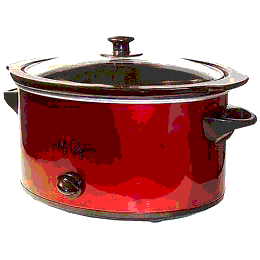
Some years ago I bought myself a second slow cooker, a small one. Except ‘slow’ cooker is the wrong term for this device: it’s a fast cooker. The chopped cauliflower and potato, frozen broth, and garlic was boiling within an hour on high, and then simmered away for another half-hour or so until I could first mash it, and then use my stick blender to puree the mix. I adjusted the seasonings, added cumin, and voilá! -today’s lunch. I’ll turn the ‘fast cooker’ on soon, on low, and bring it back to a simmer, and eat it for lunch with sourdough toast and a sharp cheese for me, and hummus for BD.

And tomorrow when I go to town, I will buy what I need to make Italian Wedding Soup (with chicken or turkey meatballs, for BD’s allergies). I suspect the ‘fast cooker’ is going to be out on the kitchen counter most days now, as the bite of fall sharpens the air, and good long fall hikes sharpen the appetite.

What are your favourite soups? Do you have recipes to share?

Not Too Much

This morning, as always, just about the first thing I did when I got up was make coffee.  As it dripped through the filter, I did a few morning chores, putting out the recycling and putting away last night’s dishes from the dish rack.  Then I reached for my favourite mug, and stopped.

That mug holds about 325 mL of coffee (12 oz.). Not a bad size, but I tend to drink coffee either while I’m writing or while I’m reading…and I rarely finish the cup.  Usually the last quarter-mug or so goes down the sink, and I start again.  And I know this is the case – so why do I keep using that mug?

It’s not just at home.  I tend to order the medium size from take-out places – and I never finish those, either.  What an incredibly bad and wasteful habit!  And why am I just thinking about it now?  It’s not like BD hasn’t been bugging me about it for thirty-five years. (Actually, he has been bugging me about drinking coffee, period.  He hates the stuff – the taste and the smell.  He drinks it under protest at the end of overnight flights if he needs to drive, and that’s it.  And perhaps I’ve grown so inured to his complaints about coffee in general I didn’t listen to the specifics. A point I need to consider.)

So now I’m sitting here at my computer with a smaller cup of coffee…and I’ve finished it.  Too small a sample size to draw any conclusions, of course.  But it’s got me thinking about portion sizes in general.

Portion size creep and its effects on the health of populations has been well documented for restaurant meals and packaged foods.  I remain annoyed at one of my favourite bistros whose burger – and I love an occasional, well-made, burger – remains at half-a-pound.  It’s just too big.  A friend and I share it, occasionally, when we lunch there.  Large portions are either eaten, increasing calorie, fat, and sodium intake beyond what is reasonable for most people, or it’s wasted.  But restaurant portion creep has also affected what we see as a reasonable meal size in our homes.

I’ve been reviewing our meals in my mind as I write this.  BD needs more food than I do, and he is by no stretch of the imagination over-fed. I, on the other hand, could stand to lose some inches. But we tend to eat the same amount of food at dinner, and at brunch.  Otherwise, no.  But while three blueberry pancakes and three turkey breakfast sausages are appropriate for him at brunch, are they for me?  Or am I eating that much just because it looks ‘right’ on the plate?  Meals based around pasta, quinoa or couscous are simply split between two bowls; occasionally I keep some of mine back for lunch the next day, but not as often as I should.

As fall approaches, and we eat more slow-cooker meals, I can see this as even more of an issue – it’s just too easy to fill up two bowls with chili or stew without really thinking about it.  I’m not worried about what I eat – our vegetable-and-fruit rich diet, low in meat, fat, added sugar, and sodium, is pretty healthy.  But it’s still quite possible to eat too much of healthy foods.  So I think it’s time to introduce a new discipline into my life – that of being mindful of how much food I am taking.

Michael Pollan summed up what he believes our approach to food should be in seven words:  Eat food.  Not too much. Mostly plants.  It’s those middle three words I need to take more seriously, for my own health and that of the planet. I’ll let you know how it goes.

Kitchen Gadgets I Wouldn’t Want to be Without # 1: the Mouli-Julienne

home

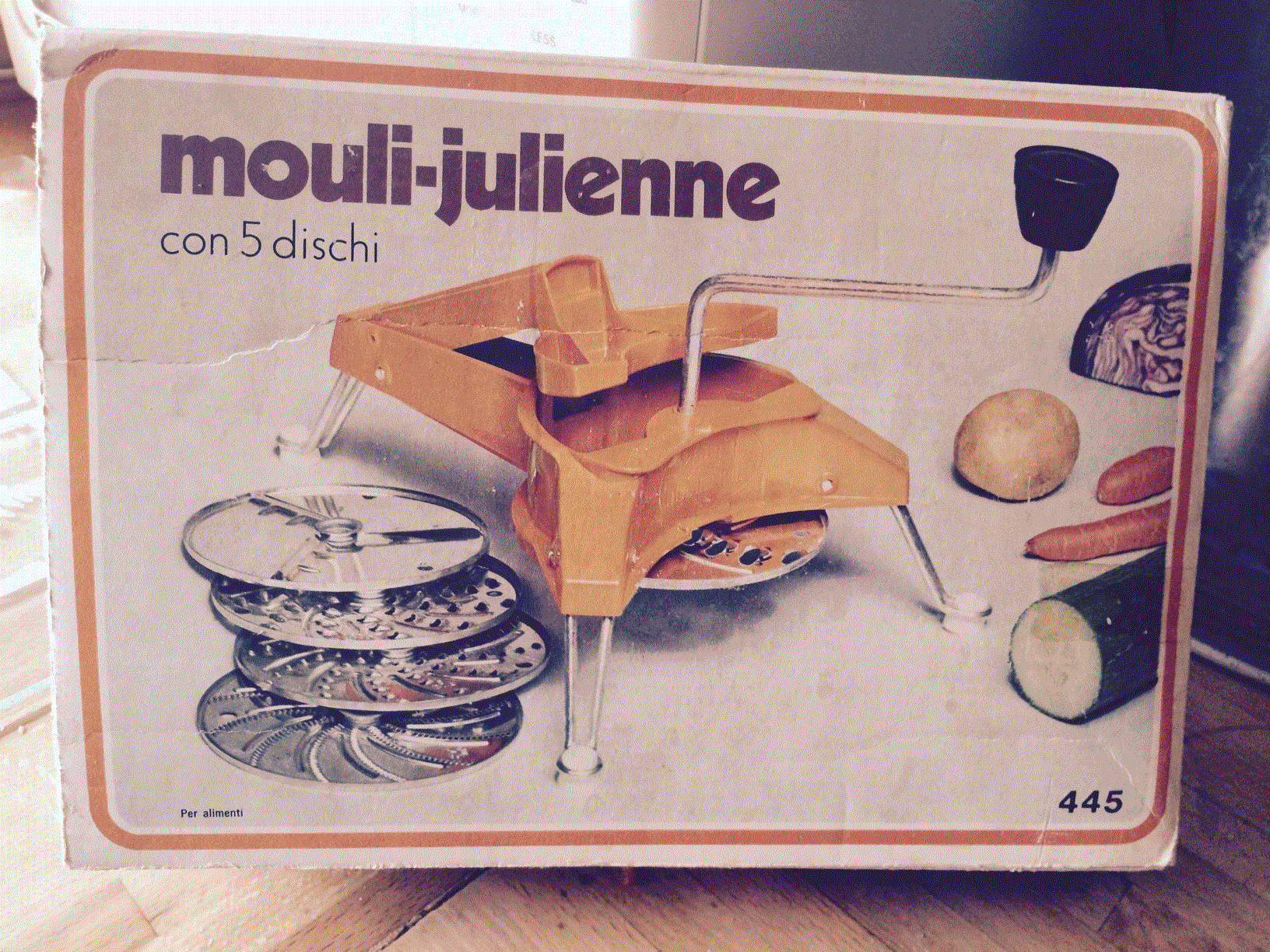
I’ve had this little manual food processor for at least thirty years.  Surprisingly, I still have both the original box and all five of the processing discs, but not the manual – not that it’s needed. It’s only got three parts: the body, the handle, and the disc. This is one of the simplest but effective tools I use in the kitchen.

Today I used it to make just enough carrot-and-broccoli slaw for lunch.  It took two minutes, I used up part of the broccoli stems I’d saved from making a stir-fry earlier in the week, and the slaw was, of course, super-fresh and therefore very tasty.  Stuffed in a kamut wrap with a bit of sliced sharp cheddar, it was a darned good lunch, along with iced green tea and greek yogurt and blueberries.

Over the years I’ve used it to grate cheese, slice radishes, cucumbers, and just about any other sort of vegetable you can think of, shred potatoes for potato cakes…even grate frozen butter for pastry. It cleans up easily:  if I’ve grated cheese, I usually put it in the top shelf of the dishwasher – the whole thing, not just the wheel; if I’ve been doing vegetables, I just hand wash it.  The wheels haven’t rusted or significantly discoloured, and they remain sharp.

I went on-line to see if they are still available; there are a few on e-bay (one described as ‘rare, vintage’ (!)) and a similar product by Westmark on Amazon.  I no longer remember where mine came from; it might have been a present from my parents, as I know they also had one.

It’s easy to use, does what it’s supposed to, has lasted a very long time, and uses no electricity.  Four stars in my book!

What are your favourite kitchen gadgets, the ones you can’t imagine cooking without?