End of July. High summer, but with the first intimations of autumn: grain ready to harvest, returning shorebirds, ripening fruit. In southern Ontario, in this year of wildfires and heat domes, floods and record temperatures, El Ninõ has given us a summer from my youth: warm, occasionally hot; humid, with many afternoons ending with thunderstorms.
The ornamental cherries and crabapples that line the streets of my community and the university grounds are heavy with fruit, branches weighted down. Everywhere vegetation is lush and green, rain-and-sun fed. Rivers are high, ponds are full.
On the nest occupying a light standard at the university playing fields, an osprey is calling. I watched the pair nest-build earlier in the year, one breaking off dead branches from trees in the adjacent maple swamp in mid-flight. Then, inexplicably, they abandoned the nest, only to reappear a few weeks later. Young birds, I assume, this year’s nest a practice one, playing house. I’m curious if they’ll return next year.

Roadsides are in full bloom: Queen Anne’s lace, chicory, birdsfoot trefoil, teasels. Purple and yellow and white, the chicory adding a rare blue. All European introductions, better suited to the artificial prairie of roadsides than the local, native wildflowers of the Great Lakes Forest that once covered this area. What native prairie plants could be here instead? Joe Pye weed? Bluestem grasses? I should know; I would have, once. It annoys me that I no longer remember, knowledge crowded out by other interests and concerns.

The garter snake that slid out from the roadside onto the tarmac of the road, perhaps seeking warmth, doesn’t know those plants aren’t native; they provide a hunting ground for insects and perhaps mice. I managed not to run the snake over with my bike, just. I stopped a few feet ahead to watch it, cognizant that a bus approached. But the bus, unlike my bike, appeared to send enough vibration through the road surface to warn the snake. It slithered back into the vegetation and disappeared.
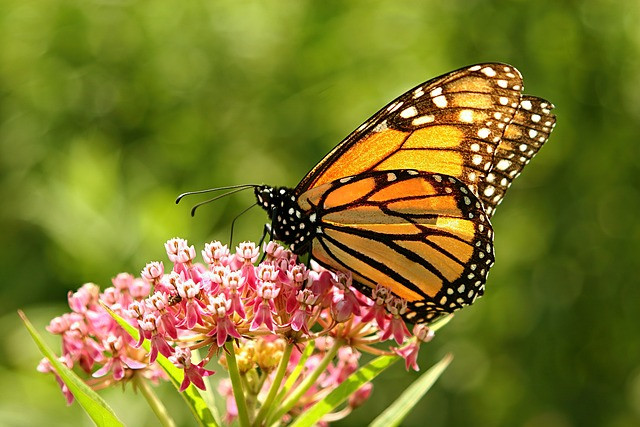
A monarch butterfly half-flies, half-floats by, perhaps heading for the stand of swamp milkweed that borders the stream I’ve just passed. I’m seeing more this year, consistent with the recent data from Journey North, and hopeful.
Days like this—the weather, the wildflowers, the monarchs—blur time, especially as I ride along the gravel road in the north half of the university’s arboretum. I could (if I forget the creaky knee, and all the tasks waiting at home) be ten again, riding the farm lanes and unpaved roads of my home town, summer-free.
 Random Ramblings